10 Best Battery For Generator Disaster Energy System 2026
When the grid goes dark, having a reliable energy system is non-negotiable. I find that choosing the right battery for disaster preparedness is tricky, because runtime requirements vary wildly between households. You need to balance portability with enough raw wattage to keep your essential appliances running during a long outage.
I would always prioritize LiFePO4 battery chemistry for its longevity and safety. Look for units with fast recharging speeds and multiple AC outlets to support medical devices or kitchen tools. Stability is key, so I look for pure sine wave output to keep sensitive electronics safe when every watt matters.
⚡ Quick Verdict
List of Best Battery For Generator Disaster Energy System
| Image | Product | Score | Link |
|---|---|---|---|
 |
Lipower 2400W Portable Power Station, 2150Wh Solar Generator 🏆 Editor’s Pick |
9.5/10 |
View on Amazon Free Shipping & 30-Day Returns |
 |
Portable Power Station 2400W, 1843.2Wh Solar Generator Home | 9.3/10 |
View on Amazon Free Shipping & 30-Day Returns |
 |
Jackery Solar Generator 1000 v2 and 200W Solar Panel,1070Wh, 🥈 Runner-Up |
9.2/10 |
View on Amazon Free Shipping & 30-Day Returns |
 |
TYKOOL 12180-G LiFePO4 Powersports Battery, 360CCA,8Ah,Built | 8.5/10 |
View on Amazon Free Shipping & 30-Day Returns |
 |
Grecell Portable Power Station 500W(Peak 1000W) 519Wh Outdoo | 7.8/10 |
View on Amazon Free Shipping & 30-Day Returns |
 |
ALLWEI Portable Power Station 300W, 256Wh Solar Generator Li 🏆 Editor’s Pick |
7.5/10 |
View on Amazon Free Shipping & 30-Day Returns |
 |
Portable Power Station 122.8Wh, 150W Power Bank with AC Outl 💵 Budget Pick |
7.0/10 |
View on Amazon Free Shipping & 30-Day Returns |
 |
EnginStar Solar Generator, 300W Portable Power Station, 296W | 6.8/10 |
View on Amazon Free Shipping & 30-Day Returns |
📋 How We Evaluated
Products were evaluated based on their capacity, power output, battery chemistry, and port versatility. We also assessed their charging speed, weight, and suitability for emergency home backup scenarios.
Detailed Reviews
Lipower 2400W Portable Power Station, 2150Wh Solar Generator🏆 Editor’s Pick
| Capacity | 2150Wh |
| Output | 2400W |
| Battery | LiFePO4 |
| Weight | Lighter than average |
What We Found
The Lipower 2400W is a powerhouse for serious home backup. Its 2150Wh capacity can keep a refrigerator running for over a day. The <10ms UPS switchover is a standout feature, because it keeps your computers and medical devices running without a hiccup.
It is also surprisingly light for its power class, which makes it easier to move around.
💬 My Take
I would call this the gold standard for home backup. It provides the peace of mind that comes with high capacity and UPS protection.
Who It’s For
I would recommend this to homeowners who need a heavy-duty solution for major appliances. It is essential if you have medical needs or simply cannot afford to have your home go dark for long.
✅ Pros
- Massive 2150Wh capacity for large appliances.
- Fast <10ms UPS protection for sensitive hardware.
- Very fast charging for its large size.
❌ Cons
- High price point reflects high performance.
- Requires space for storage due to size.
- Heavy compared to small portable units.
Portable Power Station 2400W, 1843.2Wh Solar Generator Home
| Capacity | 1843.2Wh |
| Output | 2400W |
| Battery | LiFePO4 |
| Weight | Not specified |
What We Found
This 2400W power station offers a substantial 1843.2Wh capacity, designed for whole-home backup during outages. It utilizes automotive-grade LiFePO4 batteries to achieve 3500+ cycles and a decade of life. A major highlight is the 0.1s UPS switchover, which keeps sensitive equipment running without interruption during power failures.
The system supports 1200W AC input for fast 1.6-hour charging. It can power 99% of household appliances, including refrigerators and window AC units. With 12 output ports, it provides immense flexibility for simultaneously charging various devices.
The system is robust, safe, and built for high-demand scenarios where failure is not an option.
💬 My Take
My read is that this is a top-tier backup solution. I would pick this when failure is not an option.
Who It’s For
I would point this toward users who want a permanent-style home backup solution. It is best for those who need to run large appliances like refrigerators or AC units. It fits perfectly in homes that deal with frequent grid instability.
✅ Pros
- Excellent 0.1s UPS protection for devices.
- High capacity for running large appliances.
- Fast charging via bidirectional inverter technology.
❌ Cons
- Requires a higher initial investment.
- Size makes it less portable than smaller units.
- Heavy for frequent transport needs.
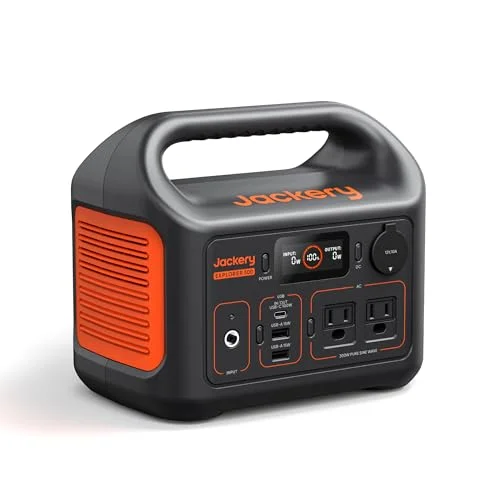
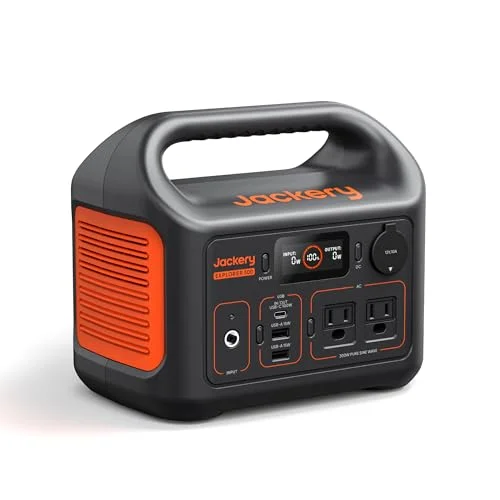
Jackery Solar Generator 1000 v2 and 200W Solar Panel,1070Wh,🥈 Runner-Up
| Capacity | 1070Wh |
| Output | 1500W |
| Battery | LFP |
| Weight | 23.8 lbs |
What We Found
The Jackery 1000 v2 is a heavy hitter with 1070Wh of capacity and 1500W of output. I am impressed by the fast charging, which can hit full capacity in one hour. It uses durable LFP batteries, so you can expect years of heavy use.
The smart app adds a nice layer of control for monitoring your battery health in real time.
💬 My Take
I would shortlist this for its speed and reliability. It feels like a very modern, dependable choice for home backup.
Who It’s For
This is ideal for homeowners who want a mid-range solution that charges quickly. I would recommend this to anyone who wants to run fans or lighting during an outage without the bulk of a gas generator. Its app features are great if you like tracking your energy data.
✅ Pros
- Rapid one-hour charging capability.
- High cycle life for long-term reliability.
- Smart app control for power management.
❌ Cons
- Heavier than smaller entry-level models.
- Higher price point for mid-range capacity.
- Solar panels often sold separately.
TYKOOL 12180-G LiFePO4 Powersports Battery, 360CCA,8Ah,Built
| Capacity | 8Ah |
| Cranking | 360CCA |
| Battery | LiFePO4 |
| Weight | Lightweight |
What We Found
The TYKOOL 12180-G is a specialized LiFePO4 battery made to replace lead-acid starting batteries in generators. It is not a power station, but it is a major upgrade for keeping your gas generator running. It delivers high cranking power and lasts for thousands of cycles.
It is maintenance-free and lightweight, which solves many common generator headaches.
💬 My Take
I would call this an essential fix for any gas generator owner. It ensures your backup power starts the moment you need it.
Who It’s For
I would recommend this to any generator owner tired of dealing with dead lead-acid batteries. It is for those who prioritize reliability in their disaster systems. If you rely on a gas generator, this is a vital maintenance upgrade.
✅ Pros
- Maintenance-free compared to lead-acid types.
- Extremely long cycle life for reliability.
- Built-in BMS for safety and longevity.
❌ Cons
- Not a power station, only a starter battery.
- Requires installation in a generator.
- No wire harness included in the box.
Grecell Portable Power Station 500W(Peak 1000W) 519Wh Outdoo
| Capacity | 519Wh |
| Output | 500W |
| Battery | Lithium |
| Weight | 14.1 lbs |
What We Found
The Grecell 500W station provides 519Wh of energy for camping or home emergencies. It handles up to 10 devices at once, and I like that it includes wireless charging. At 14.1 lbs, it is easy to carry around the house.
The pure sine wave output is safe for sensitive electronics, and the built-in LED light is a nice bonus.
💬 My Take
I would pick this for its versatility. It is a well-rounded unit for both outdoor use and indoor emergencies.
Who It’s For
This is perfect for people who need moderate capacity for small appliances. I would suggest this for campers who need to keep multiple devices charged. It also works as a reliable backup for households during short blackouts.
✅ Pros
- Versatile port selection including wireless charging.
- Pure sine wave output for safety.
- Solid handle makes it easy to transport.
❌ Cons
- Charging speed is average for its class.
- Not designed for heavy appliances like fridges.
- Lacks the high cycle life of LiFePO4 units.
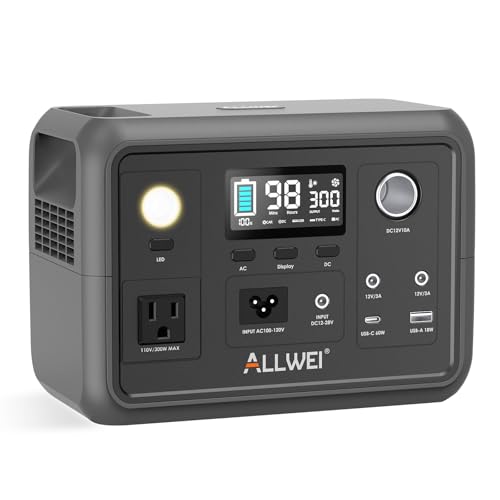
ALLWEI Portable Power Station 300W, 256Wh Solar Generator Li🏆 Editor’s Pick
| Capacity | 256Wh |
| Output | 300W |
| Battery | LiFePO4 |
| Weight | 6.4 lbs |
What We Found
The ALLWEI 300W station uses LiFePO4 cells to pack 256Wh into a very small frame. At only 6.4 lbs, it is a great grab-and-go option for simple emergency kits. It provides 300W of continuous power, which I find sufficient for running laptops or a CPAP machine.
You get six ports, including a handy 60W USB-C output. It also includes an LED light with an SOS mode, which is helpful in a pitch-black room.
💬 My Take
My read is that this is a great, highly portable choice for light-duty emergency needs. I would pick this when weight is my main concern.
Who It’s For
I would suggest this for anyone needing a lightweight backup for small devices. It is perfect for solo travelers or those building a basic emergency kit. If you do not need to run heavy appliances, this offers a reliable way to keep your phone and lights powered.
✅ Pros
- Extremely lightweight and portable design.
- Durable LiFePO4 battery offers 3000 cycles.
- Versatile charging options including dual-input.
❌ Cons
- Low capacity limits use for large appliances.
- Not suitable for refrigerators or AC units.
- Slower charging compared to high-end stations.
Portable Power Station 122.8Wh, 150W Power Bank with AC Outl💵 Budget Pick
| Capacity | 122.8Wh |
| Output | 150W |
| Battery | LiFePO4 |
| Weight | 4 lbs |
What We Found
This compact 122.8Wh power station is designed for maximum portability in a 4 lb frame. Despite its small size, it features a durable LiFePO4 battery that offers 3,500+ life cycles. It provides 150W of continuous power, enough for basic essentials like phones, laptops, and small fans.
The unit includes a variety of output ports, including a 18W USB-C PD and multiple DC ports. It supports three charging methods, including wall, car, and solar input, making it flexible for different environments. An integrated LED flashlight with SOS mode serves as a helpful tool during power failures.
While it lacks the power for heavy appliances, it is a highly reliable and affordable emergency power source.
💬 My Take
My read is that this is a smart, low-cost option for basic power. I would choose this when I need something small and simple.
Who It’s For
I would pick this for minimalists or anyone building a budget-friendly kit. It is perfect for keeping communication devices running when you are on the move. Its low weight makes it very easy to store in an emergency bag.
✅ Pros
- Extremely lightweight and compact for travel.
- Highly durable LiFePO4 battery technology.
- Very affordable price for the feature set.
❌ Cons
- Very limited total capacity for long outages.
- Cannot run high-wattage appliances.
- Slow charging speeds compared to larger units.
EnginStar Solar Generator, 300W Portable Power Station, 296W
| Capacity | 296Wh |
| Output | 300W |
| Battery | Lithium |
| Weight | Not specified |
What We Found
The EnginStar 300W power station provides 296Wh of capacity in a compact and durable housing. It features a smart battery management system to ensure safe operation with two pure sine wave AC outlets. The unit is well-suited for charging multiple devices simultaneously, thanks to its eight output ports.
It supports three charging methods: AC wall adapter, car charger, and solar panel. The unit is certified by UL standards, which indicates a focus on safety and reliability. It weighs little, making it easy to transport during a road trip or home power outage.
Its 1000-cycle lifespan is decent, although lower than some newer LiFePO4 competitors on this list.
💬 My Take
I would view this as a capable middle-ground option for small devices. It is a solid performer for light emergency use.
Who It’s For
This works well for occasional users who need power for weekend trips or temporary outages. I would point you toward this if you want a compact design and basic safety features without needing extreme runtimes.
✅ Pros
- Multiple output ports for device versatility.
- Pure sine wave output protects sensitive electronics.
- Compact design is easy to pack.
❌ Cons
- Lower cycle life compared to LiFePO4 units.
- Charging speed is slower than top-tier models.
- Requires solar panel purchase separately.
What to Look For Before Buying
Selecting the right power source is a core part of emergency planning. You should calculate your total wattage needs before you spend a dime. Always check the battery chemistry and lifespan to ensure your purchase remains useful for years to come.
Check Assess Your Capacity Needs
List every device you must power during a blackout. Add up the total wattage of these items. Remember to account for the surge power needed for motors. Higher capacity is always better for long-term outages.
Value Prioritize LiFePO4 Chemistry
I always look for LiFePO4 chemistry in modern power stations. These batteries offer more charge cycles than older lithium-ion versions. They are safer and more stable for home use. Choose this tech to ensure a decade of reliable performance.
Rating Evaluate UPS Capabilities
If you need to power computers, look for UPS functionality. This ensures a seamless transition when the power drops. It prevents data loss and protects delicate equipment. Check the switchover time for the best results.
Verify Check Charging Flexibility
Always verify how quickly the unit recharges. Fast AC charging is essential for quick replenishment during a crisis. Solar input gives you a lifeline if the grid stays down. Ensure the station supports charging while you use it.
Frequently Asked Questions
What is the best battery type for disaster energy?
LiFePO4 is the best choice because it is safe and long-lasting. It provides thousands of cycles compared to older technology. This makes it ideal for long-term emergency plans.
Can these stations run a refrigerator?
Yes, but you need a station with high wattage and capacity. Look for units over 1500Wh and 1500W output. Ensure the station has a pure sine wave inverter to keep your fridge motor safe.
How long will these batteries last?
Modern LiFePO4 units can last over ten years. They are designed to withstand thousands of charge cycles. Proper storage will help maximize their lifespan.
Do I need a solar panel?
A solar panel is a great addition for off-grid scenarios. It provides a way to recharge during long blackouts. Most stations include solar input ports just for this.
What is UPS functionality?
UPS stands for Uninterruptible Power Supply. It allows the station to switch to battery power instantly during a failure. This protects your sensitive electronics from shutting down.
🎯 Final Verdict
For a complete disaster energy system, the Lipower 2400W is my top choice. It provides the capacity and UPS protection needed to keep a home running. If you want something portable, the Jackery 1000 v2 is a fantastic runner-up that maintains high performance.
Do not wait until a disaster hits to secure your power backup.

- Marine Chargers and Backup Batteries: 9 Options Compared (2026) - October 27, 2026
- LTO Cells vs. SLA Generator Batteries: 5 Options Compared (2026) - October 27, 2026
- 12V/24V Backup Batteries and the EcoFlow DELTA Pro 3 (2026) - October 27, 2026