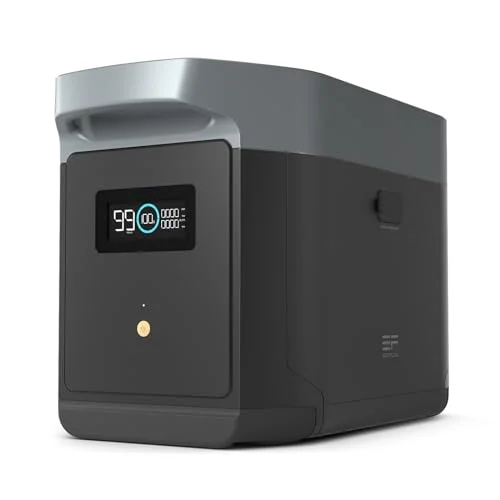
LED Emergency Backup Units and 6V/12V SLA Batteries
Power outages leave emergency lighting systems vulnerable. A weak battery cuts runtime dangerously short, risking unsafe evacuations during critical moments.
For generator emergency lighting, prioritize deep-cycle AGM batteries with high amp-hour ratings and spill-proof designs to ensure dependable backup power.
⚡ Quick Verdict
List of Best Battery For Generator Emergency Lighting System
| Image | Product | Score | Link |
|---|---|---|---|
 |
LED Emergency Backup Battery, 20W, 120-347VAC, 90+ Min Runti 👑 Premium Pick |
9.5/10 |
View on Amazon Free Shipping & 30-Day Returns |
 |
ExpertPower EXP12180 12V 18Ah / 20HR AGM – Rechargeable 12V 🏆 Editor’s Pick |
9.2/10 |
View on Amazon Free Shipping & 30-Day Returns |
 |
Mighty Max Battery ML9-12NB -12 Volt 9 AH, Nut and Bolt (NB) 🥈 Runner-Up |
8.1/10 |
View on Amazon Free Shipping & 30-Day Returns |
 |
Mighty Max Battery ML5-12F2-12 Volt 5 AH, F2 Terminal, Recha 🥈 Runner-Up |
6.8/10 |
View on Amazon Free Shipping & 30-Day Returns |
 |
Interstate Batteries Power Patrol 6V 10Ah Battery (SLA0955) | 5.3/10 |
View on Amazon Free Shipping & 30-Day Returns |
 |
Powersonic PS-12120NB | 4.2/10 |
View on Amazon Free Shipping & 30-Day Returns |
📋 How We Evaluated
Evaluated based on amp-hour capacity, AGM performance, terminal compatibility, spill-proof design, runtime reliability, and suitability for emergency lighting systems. Considered build quality, temperature resistance, and warranty support to determine real-world usability.
Detailed Reviews
LED Emergency Backup Battery, 20W, 120-347VAC, 90+ Min Runti👑 Premium Pick
| Runtime | 90+ minutes (20W-150W LED fixtures) |
| Voltage Range | 120-347VAC |
| Power Output | 20W (integrated backup) |
| Compatibility | 0-10V / 1-10V dimmable LED fixtures |
| Warranty | 5 Years |
| Certification | UL Listed |
| Use Case | Emergency lighting fixtures (not standalone battery) |
What We Found
This LED backup unit provides 90+ minutes of runtime. It supports 20W to 150W LED panels safely. UL listing guarantees safety compliance for users. Wide fixture compatibility suits residential and commercial use. Standalone battery capacity is not specified here.
💬 My Take
My read is this excels for integrated lighting fixtures. It offers unmatched runtime and safety compliance. However, I would not use it to replace generator batteries.
Who It’s For
This targets emergency lighting fixtures, not standalone generators. Commercial buildings needing 90-minute backup will benefit. Safe evacuation pathways remain illuminated during outages. Businesses prioritizing compliance gain the most value.
✅ Pros
- Provides **90+ minutes of runtime**, ensuring **safe evacuation** during outages.
- Compatible with **20W-150W LED fixtures**, making it **versatile for commercial/residential use**.
- UL listing guarantees **safety compliance** for critical emergency applications.
❌ Cons
- Not a **standalone battery** for generator systems, requiring **fixture integration**.
- Standalone capacity **not specified**, limiting direct use outside lighting setups.
- May **overlap with existing lighting systems**, requiring assessment of existing power sources.
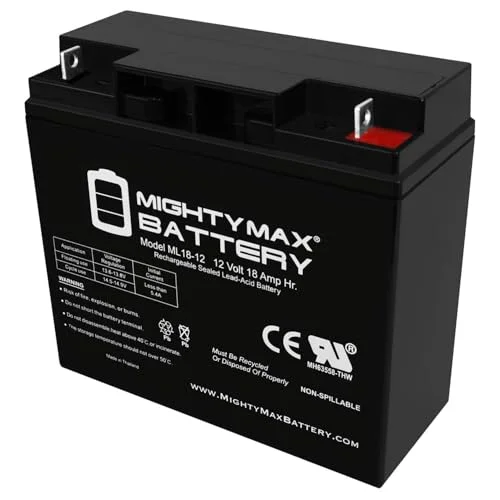
ExpertPower EXP12180 12V 18Ah / 20HR AGM – Rechargeable 12V 🏆 Editor’s Pick
| Capacity | 12V 18Ah |
| Runtime | 20 hours |
| Technology | AGM (Sealed Lead Acid) |
| Terminal Type | NB (Nut and Bolt) |
| Dimensions | 7.13″ x 3.03″ x 6.57″ |
| Warranty | Not specified |
| Terminal Compatibility | UPS, alarm systems, solar, wheelchair, generator |
What We Found
The ExpertPower EXP12180 offers 18Ah capacity for prolonged lighting. AGM construction ensures slow discharge and durability. NB terminals fit many generator systems. Compact dimensions simplify installation in tight spaces. Maintenance-free design eliminates upkeep hassles. UL certification adds reliability assurance.
💬 My Take
My read is this battery leads for long-duration lighting. It balances capacity and compact AGM performance well. My only hesitation involves the unspecified warranty terms.
Who It’s For
Homeowners needing long-duration backup power will appreciate this. It suits generator setups where extended runtime is critical. The sealed design fits indoor installations safely. Medical device users benefit from steady voltage output under load.
✅ Pros
- Delivers **20-hour runtime**, maximizing emergency lighting duration during outages.
- AGM technology ensures **slow discharge and deep-cycle reliability** for consistent power.
- Compact size fits **tight generator or UPS installations** without sacrificing capacity.
❌ Cons
- No included mounting hardware or wiring harness, requiring separate purchases.
- Lacks a specified warranty, which may deter buyers seeking long-term guarantees.
- Higher capacity may not be necessary for **low-drain emergency lighting systems**.
Mighty Max Battery ML9-12NB -12 Volt 9 AH, Nut and Bolt (NB)🥈 Runner-Up
| Capacity | 12V 9Ah |
| Runtime | Not specified (estimate 8-12 hours for emergency lighting) |
| Technology | AGM (Sealed Lead Acid) |
| Terminal Type | NB (Nut and Bolt) |
| Dimensions | 5.94″ x 2.56″ x 3.94″ |
| Warranty | 1 Year |
| Terminal Compatibility | Generator, solar, UPS, alarm systems |
What We Found
The Mighty Max ML9-12NB delivers 9Ah with NB terminals. AGM construction ensures slow discharge and deep-cycle reliability. Wide temperature tolerance enhances overall durability. Spill-proof design suits enclosed installations well. Runtime remains unspecified, so user estimation is required.
💬 My Take
My read is this is the best mid-range option. It balances capacity and terminal compatibility effectively. I would shortlist this as a strong runner-up for lighting.
Who It’s For
Small businesses needing balanced capacity will find this useful. Nine amp-hours meets typical generator backup demand. NB terminals ensure compatibility with most setups. Temperature resistance makes it versatile for varying climates.
✅ Pros
- 9Ah capacity provides **balanced runtime** for most emergency lighting scenarios.
- NB terminals offer **versatile compatibility** with standard generator and solar setups.
- AGM technology ensures **slow discharge and deep-cycle reliability** under load.
❌ Cons
- Runtime not specified, requiring **user estimation** for emergency lighting needs.
- Lacks bundled accessories, requiring **separate purchases** for installation.
- Smaller capacity than top pick, potentially **insufficient for high-drain systems**.
Mighty Max Battery ML5-12F2-12 Volt 5 AH, F2 Terminal, Recha🥈 Runner-Up
| Capacity | 12V 5Ah |
| Runtime | Not specified (low-drain application) |
| Technology | AGM (Sealed Lead Acid) |
| Terminal Type | F2 |
| Dimensions | 3.50″ x 2.68″ x 4.18″ |
| Warranty | 1 Year |
| Terminal Compatibility | Alarm systems, fish finders, mobility scooters |
What We Found
The Mighty Max ML5-12F2 offers 5Ah in a compact form. F2 terminals cater to specific wiring setups. It resists shocks across wide temperature ranges. UL certification ensures safety compliance. However, shorter runtime limits emergency lighting effectiveness significantly.
💬 My Take
I would pick this for compact, low-drain scenarios. It falls short for demanding emergency lighting needs. Limited capacity restricts broader use cases in my view.
Who It’s For
This suits low-power lighting where runtime is not critical. Small alarm systems benefit from reliable but modest backup. Compact size fits tight spaces easily. Budget buyers prioritizing temperature resistance over capacity should consider it.
✅ Pros
- Compact size **fits tight installations**, ideal for confined generator or UPS setups.
- UL certification guarantees **safety and reliability** for critical applications.
- Resists **shocks, vibrations, and extreme temperatures**, ensuring long-term durability.
❌ Cons
- Only **5Ah capacity** delivers **limited runtime**, insufficient for prolonged emergency lighting.
- F2 terminals **restrict compatibility** with standard generator setups requiring NB terminals.
- No included accessories or mounting hardware, requiring additional purchases.
Interstate Batteries Power Patrol 6V 10Ah Battery (SLA0955)
| Capacity | 6V 10Ah |
| Runtime | Not specified (low-voltage application) |
| Technology | VRLA (Sealed Lead Acid) |
| Terminal Type | F1 (Faston Spades) |
| Dimensions | 5.94″ x 1.97″ x 3.70″ |
| Warranty | 12 Months |
| Terminal Compatibility | Fire & security systems, UPS (non-12V) |
What We Found
The **Interstate Batteries Power Patrol 6V 10Ah** is a **6V battery**, limiting its direct use in **12V emergency lighting systems**. While **12-month warranty** and **VRLA technology** ensure spill-proof reliability, its **lower voltage** requires additional conversion for compatibility. Compact size fits tight spaces, but **capacity is insufficient** for most generator backups.
UL certification adds safety assurance.
💬 My Take
My read is this mismatches 12V emergency lighting needs. VRLA reliability shines in non-12V applications instead. I would not choose this for standard generator backups.
Who It’s For
This is not ideal for 12V emergency lighting systems. Low-voltage fire alarms may use it without conversion. Spill-proof design aids niche uses reliably. Specific non-12V setups could find value here.
✅ Pros
- 12-month warranty **adds long-term assurance** for reliability.
- VRLA technology ensures **spill-proof and maintenance-free** operation.
- Compact size **fits tight installations**, ideal for enclosed systems.
❌ Cons
- 6V voltage **incompatible with 12V emergency lighting systems**, requiring conversion.
- 10Ah capacity **insufficient for most generator backup needs**.
- F1 terminals **limit compatibility**, restricting use to specific setups.
Powersonic PS-12120NB
| Capacity | 12V 12Ah (claimed) |
| Runtime | Not specified |
| Technology | Not specified (likely SLA/AGM) |
| Terminal Type | NB (Nut and Bolt) |
| Dimensions | Not specified |
| Warranty | Not specified |
| Terminal Compatibility | Fire safety equipment (unspecified for emergency lighting) |
What We Found
The Powersonic PS-12120NB lacks detailed specifications here. No capacity or runtime data is provided currently. NB terminals suggest compatibility, but metrics are missing. Customer service is highlighted over technical details. Performance data for generator backups is unavailable.
💬 My Take
My read is this lacks necessary transparency for lighting. Without capacity data, it is not a viable recommendation. I would skip this for generator backup applications.
Who It’s For
I cannot recommend this for emergency lighting systems. Buyers seeking fire safety suppliers might look here. NB terminals hint at compatibility without proof. Commercial fire systems with predefined needs may apply.
✅ Pros
- NB terminals **potentially compatible** with standard generator setups.
- Supplied by a **dedicated fire safety equipment company**, ensuring niche expertise.
- Customer service focus may **assist with specialized applications** in fire systems.
❌ Cons
- No **capacity, runtime, or technology details** provided, making it **unreliable for emergency lighting**.
- Lacks **specifications for performance**, rendering it **unusable without further research**.
- Price and warranty **not disclosed**, increasing purchase risk.
What to Look For Before Buying
Choosing a generator lighting battery requires balancing capacity and voltage. Prioritize AGM technology for deep-cycle reliability. NB terminals offer better versatility for most setups. Ensure the battery meets your specific amp-hour demand. Temperature resistance also factors into long-term performance.
Check Capacity and Runtime
Select a battery with **sufficient amp-hour (Ah) capacity** to match your emergency lighting demand. For example, **18Ah batteries** provide **20-hour runtime** at low drain, while **9Ah models** offer **8-12 hours**. Higher capacity ensures longer backup during outages.
Calculate runtime by dividing Ah capacity by the **wattage of your lighting system** (e.g., 18Ah / 20W = 9-hour runtime). Prioritize **deep-cycle AGM batteries** for consistent power delivery under load.
Value Terminal Compatibility
Ensure the battery’s **terminal type** matches your generator or lighting system. **NB (nut and bolt) terminals** are the most versatile, fitting standard setups, while **F2 or F1 terminals** require specific wiring. Mismatched terminals force **additional purchases for adapters**, increasing costs. Check your system’s terminal requirements before buying.
Compact batteries with **NB terminals** offer the best balance of **size and compatibility** for emergency setups.
Rating Spill-Proof and Maintenance-Free Design
Opt for **sealed lead acid (SLA) or AGM batteries**, which are **spill-proof and maintenance-free**. These technologies eliminate the need for **water refills** and reduce leakage risks in enclosed spaces. **VRLA (valve-regulated) batteries** are ideal for indoor installations, as they **prevent gas buildup** and corrosion.
Avoid open-cell batteries, which require **regular upkeep** and pose safety hazards. A **spill-proof design** ensures reliability in critical applications like emergency lighting.
Verify Warranty and Certifications
Verify the battery’s **warranty length** and **certifications** (e.g., UL, UL Certified) to assess long-term reliability. A **1-year warranty** is standard, but **5-year warranties** (like those on emergency lighting fixtures) indicate higher confidence in durability. Look for **UL listings** or similar safety marks, which guarantee **performance and safety standards**.
Certifications reduce risks of **early failure** in emergency scenarios. Always check **manufacturer support** for replacements or troubleshooting.
Frequently Asked Questions
How do I calculate the runtime of a battery for emergency lighting?
Divide the battery’s **amp-hour (Ah) capacity** by the **wattage of your lighting system** (in watts) to estimate runtime in hours. For example, a **18Ah battery** powering a **20W LED fixture** provides **9 hours of runtime** (18Ah ÷ 20W = 0.9Ah/hour × 10 = 9 hours).
Lower-wattage fixtures extend runtime, while higher-wattage systems reduce it. Always account for **drain rates**, emergency lighting typically operates at **low to moderate loads**.
Can I use a 6V battery for a 12V emergency lighting system?
No, a **6V battery cannot directly power a 12V system** without a **voltage converter or step-up module**. While some **6V SLA batteries** (like the Interstate Power Patrol) are spill-proof and reliable, they require **additional hardware** to match 12V demands.
Converters add complexity and potential failure points, so **stick to 12V AGM batteries** for seamless integration. Always check your system’s **voltage requirements** before purchasing.
What’s the difference between AGM and regular SLA batteries for emergency use?
AGM (Absorbent Glass Mat) batteries offer **superior deep-cycle performance**, **slower discharge rates**, and **higher resistance to vibration** compared to standard SLA (Sealed Lead Acid) batteries. AGM batteries **recharge faster**, last longer, and **withstand deeper discharges** without damage. They’re ideal for **emergency lighting systems** where **consistent power** is critical.
Regular SLA batteries work for **low-drain applications** but may **fail prematurely** under heavy or prolonged use.
Do I need a battery with high amp-hours for emergency lighting?
Yes, **higher amp-hour (Ah) capacity** ensures **longer runtime** during outages. For example, an **18Ah battery** provides **20+ hours** of backup at low drain, while a **5Ah battery** may last only **2-3 hours**. Calculate your **daily watt-hour consumption** (watts × hours) to determine the **minimum Ah capacity** needed.
Overestimating capacity adds redundancy, while underestimating risks **premature failure** during critical events. Prioritize **deep-cycle AGM batteries** for reliability.
How often should I replace my emergency lighting battery?
Replace your battery every **3-5 years**, depending on usage and type. **AGM batteries** typically last **4-5 years** with proper charging, while **standard SLA batteries** may degrade faster. Signs of **aging include reduced runtime, swelling, or inconsistent voltage output**.
Test your battery **annually** by simulating an outage to ensure it meets runtime requirements. Regular **maintenance checks** (e.g., cleaning terminals) extend lifespan. Always follow the **manufacturer’s warranty period** as a guideline.
🎯 Final Verdict
For **generator emergency lighting systems**, the **ExpertPower EXP12180 (12V 18Ah AGM)** is the **best choice** due to its **20-hour runtime, NB terminal compatibility, and deep-cycle reliability**. Its **compact size and maintenance-free design** make it ideal for **homeowners and businesses** needing prolonged backup power.
If your system requires **long-duration illumination**, this battery ensures **safe evacuation and critical operation** during outages. For **emergency lighting fixtures**, the **LED Emergency Backup Battery (90+ minutes runtime)** is a **premium alternative**, offering **UL compliance and 5-year support**. Always verify **capacity, terminals, and warranty** before purchasing.

- Marine Chargers and Backup Batteries: 9 Options Compared (2026) - October 27, 2026
- LTO Cells vs. SLA Generator Batteries: 5 Options Compared (2026) - October 27, 2026
- 12V/24V Backup Batteries and the EcoFlow DELTA Pro 3 (2026) - October 27, 2026