Does Mobile Hotspot Really Drain Your Battery? The Truth Explained
Sharing your hotspot with friends or family can be essential, especially when you don’t have a Wi-Fi router but need to connect important devices. For example, I’m currently running my computer using my mobile hotspot. Over the past three years, I’ve regularly shared my hotspot with both my computer and a second phone. In this content, I’ll share my experience and explain the technical reasons behind how hotspot usage affects your battery.
The short answer is yes, using a hotspot does drain your battery. However, the amount of battery it consumes depends on several factors, including your phone’s battery capacity, network type (4G or 5G), and the device brand.
For instance, iPhones may experience faster battery drain, since many users already face limitations with long-lasting battery life. On the other hand, many latest Android smartphones come with larger batteries often 5000 mAh or more, which can handle hotspot usage for a longer period before needing a recharge.
How actually Hotspots Drain Battery?
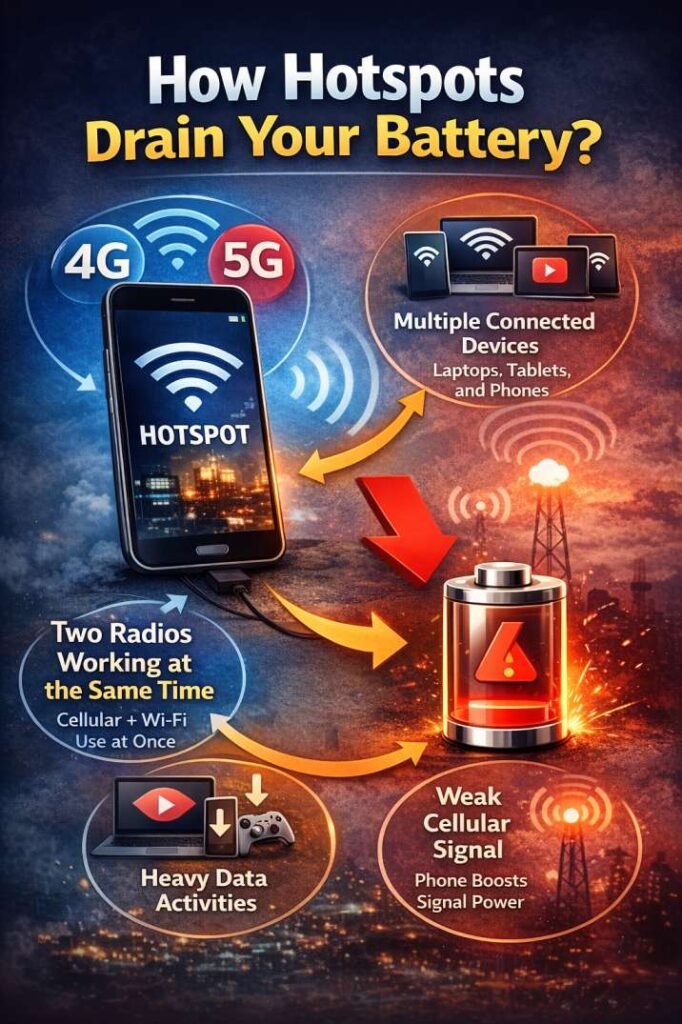
When you enable a mobile hotspot, your phone takes on the role of a small wireless router. Instead of only using the internet for itself, the device must share that connection with other devices and keep them connected at all times. This additional responsibility requires more processing power and energy, which increases battery consumption.
One major reason for the extra battery drain is that the phone’s cellular connection remains highly active while transferring internet data. Compared to normal activities like browsing or messaging, hotspot usage forces the device to constantly send and receive larger amounts of data. At the same time, the Wi-Fi transmitter stays active to broadcast the hotspot signal and maintain connections with every linked device.
Battery usage also depends on how much data is being used. If connected devices are streaming videos, downloading large files, or running updates, the phone must handle a much heavier data load. As a result, both the cellular and Wi-Fi components work harder, which causes the battery to drain more quickly.
Does Network Frequency Affect Hotspot Battery Drain?
Yes, the type of network your phone uses 4G or 5G can significantly affect how much battery your hotspot consumes. While both networks allow you to share internet through a mobile hotspot, they do not use the same amount of power.
4G Usually Uses Less Battery
When your hotspot runs on a 4G network, the battery consumption is generally lower compared to 5G. This is because 4G technology is more mature and optimized for power efficiency on most smartphones. If you are using your hotspot for simple tasks like browsing, emails, or light downloads, a 4G connection can provide stable performance while using less battery power.
5G Can Drain Battery Faster
A 5G network offers much faster speeds and lower latency, which is great for heavy internet usage. However, these higher speeds also require more processing power and stronger signal transmission from your device. Because of this, 5G hotspot usage often drains the battery faster than 4G.
The effect becomes even more noticeable when connected devices perform high-bandwidth activities such as:
-
Streaming high-resolution videos
-
Downloading large files
-
Video conferencing
During these tasks, the phone must handle large amounts of data at high speed, which increases power consumption.
When to Use 4G Instead of 5G?
If your main goal is to extend hotspot battery life, switching your phone to 4G instead of 5G can reduce battery usage. While the internet speed may be little bi slower, the battery often lasts longer.
Negative Effects of Using Your Phone as a Hotspot
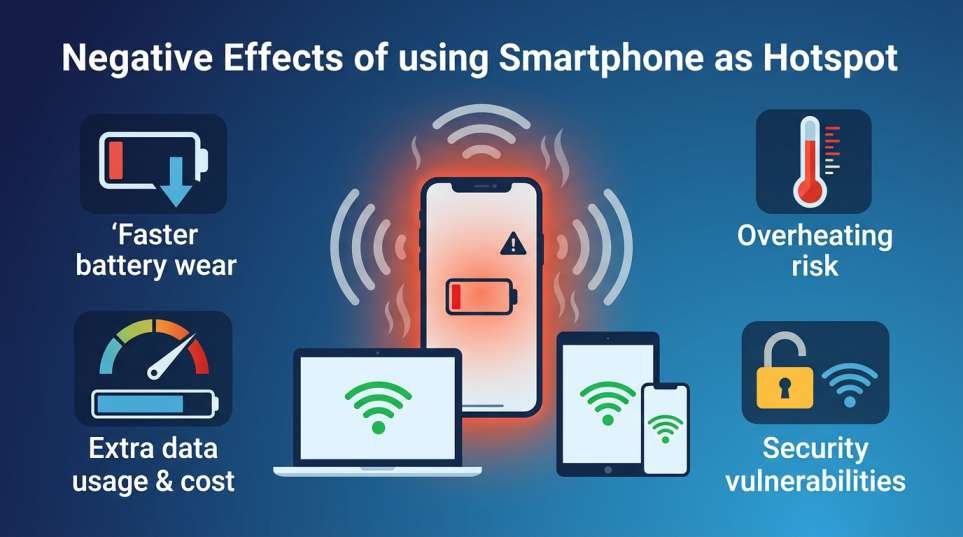
Using your phone as a mobile hotspot is convenient, but frequent or long-term hotspot usage can have some negative effects on your device. These effects usually appear in two ways: short-term impacts during use and long-term impacts on the device and battery health.
Short-Term Effects
When hotspot is enabled, your phone operates under heavier workload conditions. This can cause several temporary issues while the hotspot is active.
1. Faster Battery Drain
Hotspot sharing requires both the cellular network and Wi-Fi transmitter to run continuously. Because of this, your phone consumes much more power than during normal use.
2. Device Heating
Mobile hotspots often cause the phone to heat up, especially when multiple devices are connected or large amounts of data are being transferred. Streaming videos or downloading files can increase the processor load, which raises the device temperature.
3. Reduced Device Performance
When your phone is handling hotspot traffic, it is simultaneously managing network routing, data transfer, and normal system tasks. This can sometimes lead to slower performance, such as lagging apps or reduced responsiveness.
Long-Term Effects
Occasional hotspot use is generally safe, but regular heavy hotspot usage may gradually affect your device over time.
1. Battery Health Degradation
Frequent battery drain and charging cycles can reduce the overall battery lifespan. Since hotspot use often drains the battery quickly, it can increase the number of charge cycles, which may shorten long-term battery capacity.
2. Increased Heat Stress on Components
Repeated overheating can slowly impact internal components such as the battery and processor. Over time, constant heat exposure may contribute to faster hardware wear.
3. Higher Charging Frequency
If you rely on your phone hotspot daily—for example, to power a laptop or other devices—you may find yourself charging the phone more often. More frequent charging cycles can eventually reduce battery efficiency.
Why Does a Mobile Hotspot Drain Battery Faster?
When you turn on a mobile hotspot, your phone works much harder than during normal use. It essentially becomes a portable Wi-Fi router, sharing your cellular internet with other devices such as laptops, tablets, or other phones. Because of this extra workload, the battery drains faster.
Here are the main reasons why hotspot usage consumes more power.
1. Two Wireless Radios Are Working at the Same Time
Normally, your phone uses either cellular data or Wi-Fi for internet access. However, when hotspot is enabled, both systems operate simultaneously.
Your phone must:
-
Receive internet data through the cellular network (4G or 5G)
-
Broadcast that connection through the Wi-Fi hotspot signal
Running both radios continuously requires additional energy, which leads to faster battery drain.
2. Multiple Devices Increase the Workload
If only one device is connected, your phone handles a moderate amount of traffic. But when multiple devices connect to the hotspot, the phone must process and distribute more data simultaneously. This increases processor activity, network usage, and overall power consumption.
As a result, the battery drains much faster when several devices share the same hotspot.
3. Heavy Internet Activities Use More Power
Battery drain becomes even more noticeable when connected devices perform high-data activities. Examples include:
-
Streaming videos on platforms like YouTube or Netflix
-
Downloading large files or software updates
-
Online gaming
-
Video calls and live streaming
These activities require constant data transfer, forcing the phone’s cellular and Wi-Fi systems to work continuously. The heavier the data usage, the faster the battery drains.
4. Weak Signal Strength Can Increase Battery Usage
Signal strength is another important factor that many people overlook. When your phone has a weak cellular signal, it must work harder to maintain a stable connection with the network. This increases power consumption because the device constantly boosts its transmission power to stay connected.
If you use a hotspot in areas with poor reception, your battery may drain significantly faster.
5. Battery Size and Phone Model Matter
Not all smartphones handle hotspot usage the same way. Phones with larger batteries (5000 mAh or more) can generally support hotspot usage for a longer period. Many modern Android devices fall into this category. Meanwhile, devices with smaller batteries, such as some older smartphones, may lose battery much faster during hotspot use.
Software optimization also plays a role, which means battery performance can vary between different phone brands and models.
Tips to Reduce Battery Drain When Using Hotspot
Although hotspot usage naturally consumes more power, you can reduce battery drain by following a few practical tips:
-
Limit the number of connected devices to reduce network load.
- Turn on 4g only network to save battery.
-
Avoid heavy activities like streaming or large downloads when possible.
-
Use hotspot in areas with strong signal to prevent extra power usage.
-
Turn off hotspot when not in use to conserve battery.
-
Keep your phone plugged in if you plan to share internet for a long time.
Quick Summary
-
Yes, mobile hotspots do drain your battery faster than normal phone usage.
-
The main reasons include running cellular and Wi-Fi radios simultaneously.
-
More connected devices and heavy data usage increase battery consumption.
-
Weak network signals can make the battery drain even faster.
-
Managing connections and limiting data usage can help reduce battery drain.
Frequently Asked Questions
Does using a hotspot drain my phone’s battery quickly?
Yes, using a hotspot can significantly drain your phone’s battery. The process of sharing your mobile data requires more power, as your phone is actively transmitting data and maintaining a connection with other devices.
How much battery can I expect to lose while using a hotspot?
The battery drain varies based on usage, but you can expect to lose around 10-20% of your battery per hour when using a hotspot. This can be higher if multiple devices are connected or if the data usage is intensive.
Are there ways to minimize battery drain while using a hotspot?
Yes, you can minimize battery drain by reducing the number of connected devices and limiting data usage. Additionally, keeping your phone plugged into a charger while using the hotspot can help maintain battery levels.
Does the type of phone affect hotspot battery drain?
Yes, different phone models and operating systems can impact battery efficiency when using a hotspot. Generally, newer models with optimized software and better battery technology will perform more efficiently compared to older devices.
Is it better to use a dedicated mobile hotspot device instead of my phone?
Using a dedicated mobile hotspot device can be more efficient for prolonged use, as these devices are designed specifically for that purpose and often have larger batteries. They can provide better battery life compared to using your phone as a hotspot, allowing you to conserve your phone’s battery for other uses.

- How to Jump-Start a Motorcycle with a Car Battery Safely - February 22, 2026
- Does Life360 Really Drain Your Battery? What You Should Know - February 22, 2026
- Do Hardwired Smoke Detectors Need Batteries for Backup Support? - February 22, 2026