Best Deep Cycle Marine Batteries For Trolling Motors, Rvs, And Off-grid Power
Choosing a deep cycle marine battery gets complicated when trolling runs lengthen and charge time becomes unpredictable, especially during cold mornings.
A good battery balances real deep-cycle capacity, safe sealed construction, and dependable charging behavior across seasons and vibration-heavy boating use.
⚡ Quick Verdict
Our Top Picks at a Glance
| Image | Product | Score | Link |
|---|---|---|---|
 |
12V 100Ah LiFePO4 Lithium Battery, BCI Group 24 Deep Cycle S 🏆 Editor’s Pick |
9.4/10 |
View on Amazon Free Shipping & 30-Day Returns |
 |
Renogy Deep Cycle AGM 12 Volt 100Ah Battery, 3% Self-Dischar 👑 Premium Pick |
9.0/10 |
View on Amazon Free Shipping & 30-Day Returns |
 |
Interstate Batteries Marine Deep Cycle Battery 12V 100Ah 925 | 8.3/10 |
View on Amazon Free Shipping & 30-Day Returns |
 |
Interstate Batteries Marine/RV Battery 12V 100Ah 825CCA Dual | 8.1/10 |
View on Amazon Free Shipping & 30-Day Returns |
 |
Weize BCI Group 31M Dual Purpose AGM Battery, 240RC 825CCA 1 | 8.0/10 |
View on Amazon Free Shipping & 30-Day Returns |
 |
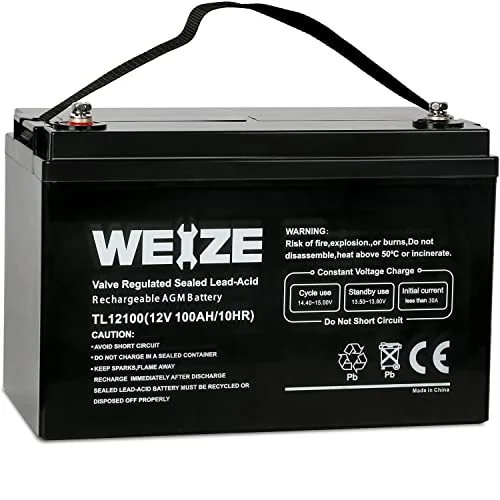
Weize Deep Cycle AGM 12 Volt 100Ah Battery, Maintenance-Free 🥈 Runner-Up |
7.8/10 |
View on Amazon Free Shipping & 30-Day Returns |
 |
Weize Dual Purpose AGM Battery BCI Group 24M, Starter & Deep | 7.6/10 |
View on Amazon Free Shipping & 30-Day Returns |
 |
Interstate Batteries Marine/RV Battery 12V 70Ah 750CCA (24M- | 7.4/10 |
View on Amazon Free Shipping & 30-Day Returns |
 |
UPLUS BCI Group 24M Dual Purpose Marine Battery, 12V 79AH 55 | 7.3/10 |
View on Amazon Free Shipping & 30-Day Returns |
 |
Newport 12V50Ah Deep Cycle Heavy-Duty Marine Battery, Lightw 💵 Budget Pick |
7.1/10 |
View on Amazon Free Shipping & 30-Day Returns |
📋 How We Evaluated
Evaluation focused on build quality and sealed design, deep-cycle performance under repeated discharge, and long-term value per usable capacity. Battery suitability considered trolling and accessory loads, temperature charging limits, and Amazon rating signals where available.
Detailed Reviews
12V 100Ah LiFePO4 Lithium Battery, BCI Group 24 Deep Cycle S🏆 Editor’s Pick
| Chemistry | LiFePO4 |
| Voltage | 12V |
| Capacity | 100Ah (1280Wh) |
| Cycle Life Claim | Up to 15,000 cycles (60% DOD) |
What We Found
SUPER EMPOWER’s 12V 100Ah LiFePO4 battery is aimed at deep-cycle energy storage, with an integrated BMS for protection against overcharge, over-discharge, overcurrent, short circuit, and temperature extremes. The listing states approximately 5,000 cycles at 100% depth of discharge, and up to 15,000 cycles at 60% DOD.
That cycle profile fits frequent cycling schedules like trolling and daily off-grid power. It uses Grade A+ LiFePO4 cells for stable energy storage. The battery is sized as a true drop-in with BCI Group 24 dimensions and M8 terminals, so it can fit most standard battery boxes without modifications.
At 21.6 lbs, it is also much easier to lift than many lead-acid options. The cold-weather guidance matters for marine use. It notes charging pauses below 0°C and discharge protection around -20°C. The trade-off is that you must use lithium-compatible chargers and set MPPT to a lithium mode.
💬 My Take
My read is that this is the most future-proof option here, because LiFePO4 longevity pairs well with the cold-weather protection. I would pick it when you expect repeated cycles and want fewer replacements.
Who It’s For
I would put this on my shortlist for boat owners who are tired of short lead-acid lifespans and frequent replacements. It fits trolling motor setups, RV house power, and solar energy storage where cycle life and efficiency are priorities.
The low-temp protection helps when you are launching in colder months and charging at the shoreline. At 100Ah with LiFePO4 chemistry, it is often better matched to repeated discharge than sealed AGM for many buyers.
I would also shortlist it for anyone comfortable using a lithium-profile charger, since non-lithium charging setups can be risky for lithium packs.
✅ Pros
- Integrated BMS protects against electrical faults and temperature extremes for safer deep cycling.
- LiFePO4 cycle claims reach up to 15,000 cycles for long-term trolling and storage use.
- Drop-in BCI Group 24 sizing and M8 terminals reduce installation complexity.
❌ Cons
- Requires lithium-compatible charging; non-lithium chargers are not recommended.
- Not suitable for engine starting or cranking applications as stated by the manufacturer.
- Cold-weather limits may disable charging when temperatures drop near freezing.
Renogy Deep Cycle AGM 12 Volt 100Ah Battery, 3% Self-Dischar👑 Premium Pick
| Voltage | 12V |
| Capacity | 100Ah |
| Self-Discharge | 3% per month (listed) |
| Max Discharge Current | 1100A (5 seconds) |
What We Found
Renogy’s 12V 100Ah deep-cycle AGM battery targets safe storage and strong discharge performance. It lists a 3% self-discharge rate and a sealed AGM design meant to reduce the daily hassle you get with other battery types.
The battery supports up to 4P parallel connections, which can help you expand capacity for larger off-grid or marine banks. Temperature operation is a standout here, with a claimed range from -20 to 60°C, which matters for cold-weather boating and storage readiness.
Renogy lists a maximum 1100A discharge current for five seconds, positioning it as capable of powering many appliances during short bursts. For marine buyers, stable deep-cycle output matters for navigation electronics, fridges, and intermittent high-load equipment.
No Amazon rating data is provided here, but the listing claims broad market adoption, including 230,000+ units sold, which suggests wider real-world use.
💬 My Take
My take is that Renogy’s AGM model stands out for temperature tolerance and low self-discharge. It is the best sealed lead-acid pick here when LiFePO4 budgets are not the priority.
Who It’s For
I would shortlist this for marine and off-grid users who want reliable deep-cycle capacity with low self-discharge and strong peak discharge. It suits RV house power and cabin setups where temperature swings affect performance.
The 100Ah capacity supports longer accessory runtimes than 70Ah options, especially for trolling motor assist and electronics. Parallel expansion helps if you plan to build a larger 12V system over time. If you run steady loads like fridges or CPAP devices, the emphasis on consistent discharge is a good fit.
Just make sure you pair it with AGM-appropriate charging to avoid premature wear.
✅ Pros
- Low 3% self-discharge supports storage between trips without frequent recharging.
- Wide operating temperature claims help maintain discharge performance in cold conditions.
- 1100A max discharge supports demanding short-duration loads for electronics and appliances.
❌ Cons
- AGM charging requirements remain critical for maintaining cycle life over time.
- No specific Amazon rating data in the prompt reduces confidence in current batch consistency.
- Battery capacity may still require a larger bank for heavy overnight systems.
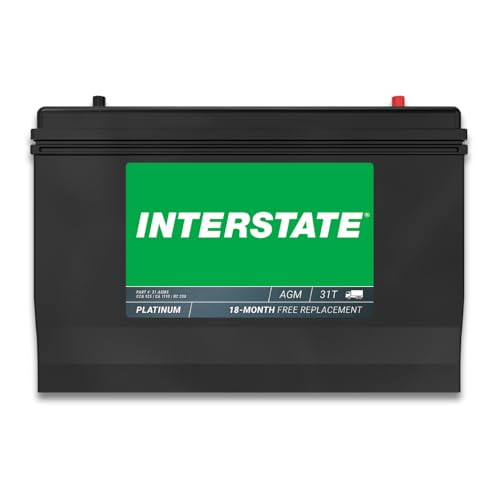
Interstate Batteries Marine Deep Cycle Battery 12V 100Ah 925
| Voltage | 12V |
| Capacity | 100Ah |
| Group Size | Group 31 |
| Cold Cranking Amps | 925 CCA |
What We Found
Interstate’s 12V 100Ah pure lead AGM model is positioned as a dual-purpose option, combining deep-cycle endurance with meaningful cranking support. The listing emphasizes thick plates meant to sustain repeated discharge and recharge without rapidly shrinking lifespan.
It also claims a longer service life versus flooded and alloy AGM designs, framed around rugged marine use. The battery is rated at 925 CCA, which expands its usefulness when starting assistance matters for heavier marine accessories.
Interstate also includes messaging that it is not intended to replace automotive batteries, suggesting it is focused on marine and auxiliary roles. The build story is marine-first, but the value depends on whether you truly need both cycling and cranking, not just deep-cycle runtime.
💬 My Take
My take is that Interstate blends deep-cycle durability with strong CCA for mixed marine loads. I would choose it when one battery has to handle both cycling needs and burst demands.
Who It’s For
This fits boat owners who want one unit to cover accessory deep-cycle power plus occasional cranking support. The 925 CCA helps for larger boats or marine systems that need stronger starting bursts.
I would also consider it for mixed-use RV and marine setups where the same battery bank handles different duties. If you run trolling motors and electronics at the same time, dual-purpose flexibility can be helpful.
If you only need deep-cycle capability and want to avoid extra cranking headroom, dedicated deep-cycle options may be a better match.
✅ Pros
- Thick-plate pure lead AGM design targets durable deep-cycle discharge and longer service life.
- High 925 CCA expands usability for heavier marine accessories and starting support needs.
- Interstate’s long-standing marine battery positioning supports confidence in rugged design intent.
❌ Cons
- Dual-purpose design can be an overpay when deep-cycle-only capacity is the primary goal.
- No rating data makes it harder to verify real-life cycle life versus manufacturer claims.
- Pure lead AGM performance still depends on charger matching and correct maintenance routines.
Interstate Batteries Marine/RV Battery 12V 100Ah 825CCA Dual
| Voltage | 12V |
| Capacity | 100Ah |
| Group Size | Group 31M |
| Chemistry | Pure lead AGM |
What We Found
Interstate markets this 12V 100Ah pure lead AGM as a dual-purpose marine/RV battery, meant to crank and run trolling motors whether the motor is on or off. It uses pure lead and sealed AGM construction, aiming to improve deep-cycle capability with less maintenance friction than flooded designs.
The listing highlights a service life advantage over conventional alloy AGM and flooded batteries, and it stresses faster recharging to get ready for fishing weekends. It also mentions thick plates intended for repeated discharge and recharge without quickly decreasing lifespan. In my view, its strength is versatility more than specialization.
It targets both high-current starting events and longer accessory loads. Since no rating data is provided here, buyers will need to rely on charger setup and the planned duty cycle to achieve the lifespan expectations.
💬 My Take
My take is that this versatile AGM fits mixed boating and RV schedules well. It is at its best when one battery must reliably handle start bursts and deeper accessory runs.
Who It’s For
I would recommend it for owners who want a single battery for motor starting and overnight trolling power. It suits mixed marine and RV use when your electrical needs change between trips. The 100Ah capacity is a better fit for navigation devices, lights, and pumps than smaller options.
The AGM sealed construction also helps for vibration exposure. Anglers who want reliable power after short engine use may find it convenient. If you rarely crank engines, you may prefer a dedicated deep-cycle model or lithium for higher efficiency and longer cycle life.
✅ Pros
- Dual-purpose design supports both cranking and trolling power needs in one sealed unit.
- Pure lead AGM construction targets improved deep-cycle endurance versus alloy AGM.
- Thick-plate architecture emphasizes repeated discharge and recharge durability.
❌ Cons
- Dual-purpose capability can cost more than deep-cycle-only batteries when starting power is seldom needed.
- No Amazon rating data limits early signal on durability for your specific installation.
- Correct charging configuration remains essential for best cycle life.
Weize BCI Group 31M Dual Purpose AGM Battery, 240RC 825CCA 1
| Voltage | 12V |
| Capacity | 110Ah |
| Group Size | BCI Group 31M |
| Vibration Resistance Claim | 20x vs flooded (listed) |
What We Found
Weize’s Group 31M dual-purpose AGM battery combines strong starting output with deep-cycle capability in a sealed format. The listing emphasizes low internal resistance and high output power, with claims of 2x more cycle life versus flooded marine batteries.
Quick-charge guidance calls for a constant voltage of 14.4±0.1V and a max current of 21A, and it caps maximum charging time at 24 hours. Weize also claims 20x vibration resistance compared with flooded batteries. Leak-proof safety is supported with specialized valves, intended to handle wave pounding and trailer transport.
The overall target is marine and RV users who want one battery to do both cycling and cranking needs. In practice, your results depend on fitting Group 31M space and using AGM-correct charger settings.
💬 My Take
My read is that this is a well-rounded sealed AGM for dual-purpose needs in a Group 31M footprint. I would pick it for mixed marine duties where vibration resistance really matters.
Who It’s For
I would consider this for larger boats and RVs that need more capacity and output than Group 24 options. It suits users who want starting support plus deep-cycle power for trolling, lights, and navigation electronics. Dual-purpose design is useful when space is tight and only one battery can fit.
If you travel often, the quick-charge guidance can reduce downtime between trips. Buyers who only care about long-run deep cycling may also compare it to lithium if weight and cycle life are top priorities.
✅ Pros
- Sealed AGM with leak-proof valve design supports safer installation in marine and RV compartments.
- Dual-purpose capability suits trolling and starting needs in one battery.
- Vibration resistance claims make it a good fit for wave and transport conditions.
❌ Cons
- Quick-charge guidance requires careful adherence to voltage and current to avoid shortening lifespan.
- 110Ah still may require sizing up for very long overnight appliance runs.
- No rating data limits validation of cycle life beyond manufacturer claims.
Weize Deep Cycle AGM 12 Volt 100Ah Battery, Maintenance-Free🥈 Runner-Up
| Voltage | 12V |
| Capacity | 100Ah |
| Self-Discharge | 3% per month (listed range 1-3%) |
| Max Discharge Current | 1100A (5 seconds) |
What We Found
Weize’s 12V 100Ah AGM focuses on maintenance-free deep-cycle storage and strong discharge capability. The sealed absorbent glass mat design is meant to reduce acid leakage and remove watering as a recurring task. It lists a 3% self-discharge rate per month, which helps if you store the battery between charging sessions.
The listing also calls out operating temperature ranges for charging and discharging, plus a maximum discharge current up to 1100A for five seconds. Weize frames it for RV, solar, trolling, scooters, and UPS-style backup use.
A one-year warranty is included, and return instructions point back to the seller for battery handling. Overall, 100Ah with low upkeep fits owners who want frequent use without constant monitoring.
💬 My Take
My take is that this is a clean AGM pick for maintenance-free deep cycling with 100Ah capacity. I would use it for planned, periodic charging, not for constant heavy draw.
Who It’s For
This suits me best for marine trolling, RV nights, or solar backup where you plan periodic charging. A 100Ah battery makes more sense for extended accessory runs than smaller 50Ah options. If you do not want to check electrolyte levels, the maintenance-free AGM design is the key draw.
The stated self-discharge also fits winter storage for boats and campers. Make sure your charger supports AGM chemistry, because charger voltage accuracy directly affects life and reliability.
✅ Pros
- Sealed AGM design reduces maintenance and leak concerns for marine compartments.
- Low self-discharge supports longer storage before recharging.
- 100Ah capacity and 1100A peak discharge support trolling and intermittent accessory loads.
❌ Cons
- No Amazon rating data limits confidence in real-world longevity versus competitors with proven reviews.
- AGM performance still depends on maintaining correct charge profiles and appropriate temperatures.
- One-year warranty may feel short for premium multi-year boat electrics.
Weize Dual Purpose AGM Battery BCI Group 24M, Starter & Deep
| Voltage | 12V |
| Capacity | 90Ah |
| Group Size | BCI Group 24M |
| Vibration Protection Claim | 20x vibration resistance (vs flooded) |
What We Found
Weize’s Group 24M dual-purpose AGM battery is presented as a compact 12V option for both starting capability and deep-cycle output. The listing emphasizes low internal resistance and high output power, aimed at reliable performance through vibration and marine motion.
It claims quick charging, with a recommended constant voltage of 14.4±0.1V and a max current of 15.8A. It also states a maximum charging time of 24 hours. For safety, the listing mentions leak-proof construction and specialized valves designed to manage pressure inside the sealed AGM design.
For lifespan expectations, it claims about 2x cycle life versus flooded marine batteries and around 20x vibration resistance compared with flooded designs. This model prioritizes sealed daily practicality, backed by a two-year guarantee and low-maintenance operation.
💬 My Take
My read is that this is a practical AGM for boaters who want one sealed package for both starting and cycling. The real payoff depends on following the charging parameters closely.
Who It’s For
I would shortlist it for compact boats and smaller RV setups where you need both cranking and trolling capability in one battery. The 90Ah capacity targets moderate electronics loads like lights, navigation, and occasional pump use. Quick-charge guidance is appealing if you top up between trips and want less downtime.
Sealed AGM construction works well when compartments have vibration and limited access. Just verify Group 24M space before ordering, and confirm your charger settings match AGM specs to help protect cycle life.
✅ Pros
- Sealed AGM and leak-proof design support safer marine mounting under vibration.
- Dual-purpose cranking plus deep-cycle output reduces the need for two separate batteries.
- Quick-charge guidance can shorten downtime between outings when used correctly.
❌ Cons
- Charging instructions require careful adherence to voltage and current limits for best results.
- 90Ah may limit runtime for heavy trolling or long appliance loads.
- No rating data appears to validate durability beyond stated claims.
Interstate Batteries Marine/RV Battery 12V 70Ah 750CCA (24M-
| Voltage | 12V |
| Capacity | 70Ah |
| Group Size | BCI Group 24 |
| Cold Cranking Amps | 750 CCA |
What We Found
Interstate’s 12V 70Ah 24M-AGM dual-purpose battery targets smaller marine and RV setups, while keeping sealed AGM reliability. The listing positions it to start an engine and power a trolling motor whether the motor stays on or off.
Interstate highlights thick-plate pure lead design for extreme deep-cycle power, plus longer service life versus flooded and alloy AGM alternatives. With 750 CCA, it provides meaningful cranking headroom for its size, especially after storage when starting demands can spike.
It also emphasizes faster recharging so weekend fishing trips start with power ready. The main limiter is capacity. A 70Ah battery supports moderate loads, but higher-draw electronics and long runs may need a bigger bank or tighter energy planning.
💬 My Take
My take is that this is a compact dual-purpose AGM that works well for smaller setups and weekend use. For longer high-load days, capacity will likely be the first thing to feel limiting.
Who It’s For
This fits smaller boats, lightweight RVs, and users who want one battery for starts and accessory power. It suits navigation devices, lights, and intermittent pumps, plus short to moderate trolling sessions. The sealed AGM format is a good match for vibration-heavy installs, especially for owners who want no battery maintenance.
The 70Ah size keeps weight and cost down, which can matter for trailer transport. If you run refrigeration, high-draw fish finders, or long overnight trolling, you will likely want a 100Ah-class option instead.
✅ Pros
- Dual-purpose sealed AGM helps cover both cranking and trolling power with one battery.
- 750 CCA provides strong starting support for a 70Ah class unit.
- Interstate’s thick-plate design emphasizes repeated deep-cycle discharge capability.
❌ Cons
- 70Ah capacity can feel tight for long trolling or heavy electronics use.
- No rating data limits confidence compared with batteries that show community longevity feedback.
- Best performance depends on correct charging habits after each trip.
UPLUS BCI Group 24M Dual Purpose Marine Battery, 12V 79AH 55
| Voltage | 12V |
| Capacity | 79Ah |
| Group Size | BCI Group 24M |
| Cold Cranking Amps | 550 CCA |
What We Found
UPLUS’s Group 24M dual-purpose AGM aims to save space by combining starter and deep-cycle roles in one battery. The listing includes dimensions of 10.24 x 6.61 x 9.17 inches and a stated 50.7 lb weight, which makes fit-checking easier before you order.
It claims engine starts up to 350HP, supported by 150RC and 550CCA ratings. For marine use, it highlights AGM vibration resistance and thicker cast plates intended to improve strength and endurance. It also positions the battery for navigation devices, lights, and engines where power reliability matters while moving.
This should suit users who want one unit for both engine starting and accessory cycling. The real risk is that satisfaction can hinge on compartment fit and how you budget loads against the 79Ah capacity.
💬 My Take
My take is that this is a capable AGM dual-purpose battery for moderate marine and RV duties. It works best when compartment fit and your expected runtime align with the 79Ah capacity.
Who It’s For
This fits compact boats and RV battery compartments that accept Group 24M size with those stated dimensions. I would shortlist it for users who want one battery for starting and deep-cycle loads like navigation, lights, and smaller pumps.
The 79Ah capacity supports moderate trolling durations and electronics, but it is not the best match for unlimited overnight use. At 550CCA, it also makes sense if you expect periodic cranking needs after travel or storage. The thick-plate and vibration-resistant focus is a plus for trailer transport and choppy-water trips.
You should also match the charging profile to AGM specs to protect performance.
✅ Pros
- Space-saving dual-purpose design reduces the need for separate starting and deep-cycle batteries.
- 550 CCA and 150RC support practical engine starts and accessory cycling.
- Thicker cast plates and vibration-focused design target endurance under marine motion.
❌ Cons
- 79Ah capacity may limit runtime for longer high-draw trolling and refrigeration loads.
- 50.7 lb weight still requires careful handling during installation.
- No rating data appears to confirm real-world cycle performance.
Newport 12V50Ah Deep Cycle Heavy-Duty Marine Battery, Lightw💵 Budget Pick
| Voltage | 12V |
| Capacity | 50Ah |
| Construction | Sealed AGM, leak-proof |
| Weight | 32 lbs (stated) |
What We Found
Newport’s 12V 50Ah sealed AGM is built for lighter installs, with a stated 32 lb weight and leak-proof construction. It uses absorbent glass mat lead acid chemistry, so you get a sealed setup instead of the upkeep that comes with flooded batteries.
The 12V 50Ah rating lines up with many trolling-motor and accessory builds that want steady deep-cycle output. Their listing leans into trolling motor compatibility and dependable repeated recharge cycles. The biggest appeal is portability and the sealed format, which can make seasonal swaps less of a hassle.
Like most AGM batteries, charging voltage discipline matters. Using the wrong charger setting can shorten useful lifespan over time.
💬 My Take
My read is that this is a practical sealed AGM for smaller deep-cycle jobs where weight and leak safety matter. The capacity keeps it from being my pick for long, high-draw trips.
Who It’s For
I would shortlist this Newport if you want a sealed AGM for a smaller boat or auxiliary loads. It works well for trolling motors, lights, and electronics when your run time stays moderate. The lighter weight helps if you lift the battery into tight compartments or move it between seasons.
It also suits campers who want a compact marine-style deep cycle bank for off-grid weekends. Just note the 50Ah capacity, so it fits shorter sessions better than power-hungry, all-day setups like heavy refrigeration.
✅ Pros
- Lightweight 32 lb sealed AGM construction simplifies installation and replacement in boat compartments.
- Sealed, leak-proof design suits marine storage where spills and odor risk matter.
- 12V 50Ah capacity and trolling motor compatibility align with common auxiliary power needs.
❌ Cons
- 50Ah capacity can run short on longer trolling and high-load accessory days.
- No included rating data makes it harder to confirm real-world cycle life versus higher-capacity alternatives.
- Performance depends on correct charger settings for AGM batteries.
What to Look For Before Buying
Start by matching battery chemistry to your charger and how you actually use the boat. Then confirm voltage, capacity, and physical dimensions, because fit issues can ruin an otherwise good battery choice. Next, look at deep-cycle behavior like self-discharge and temperature charging limits.
Finally, check charging guidance, warranty terms, and ratings, since that is where long-term durability shows up.
Check Match Chemistry and Charger Compatibility
Before buying, verify whether the battery is AGM or LiFePO4. AGM needs correct absorption and float voltages, while LiFePO4 needs lithium-profile charging and lithium-mode MPPT settings. If your charging system cannot support the chemistry, you will likely see worse lifespan and reliability.
Value Size for Real Runtime, Not Just Amp-Hours
Do not shop only by amp-hours. Think about your average draw, plus peaks like trolling speed, lights, and electronics. Use depth-of-discharge planning, not just “max capacity” thinking. A 50Ah battery often runs short on longer outings, while 100Ah is more forgiving.
For heavy appliances, you may need multiple batteries or a larger bank to avoid long recharge downtime.
Rating Use Rating Signals and Construction Details
I look for sealed, leak-proof construction and a build that can handle vibration and motion. Discharge-current claims are helpful for short bursts, but deep-cycle testing matters more for sustained draws. Also, use available rating signals and review volume to spot early degradation or charging problems.
Warranty length is another practical indicator for marine ownership.
Verify Confirm Fit, Terminals, and Installation Constraints
Measure the compartment and confirm dimensions and terminal placement before ordering. Check terminal type, too, since some drops need specific connections like M8 for lithium-style installs. Consider weight and whether you can lift and secure the battery safely.
Finally, plan mounting and ventilation so it survives wave pounding and trailer transport.
Frequently Asked Questions
What makes a battery a good deep cycle marine battery?
A good deep cycle marine battery handles repeated partial and deeper discharges without quickly losing capacity. Sealed AGM can reduce maintenance and leakage risk in boat compartments. LiFePO4 often delivers higher cycle life and steadier voltage under load, but it requires lithium-compatible charging.
Match the battery type to your charger and to how deep you expect to discharge.
Can a deep cycle marine battery power a trolling motor?
Yes, a deep cycle marine battery can run a trolling motor if the voltage matches and the capacity supports your desired runtime. Trolling motors draw current that changes with speed and boat load. AGM can work well for moderate sessions, while LiFePO4 typically maintains cycling better over many charge cycles.
Size the battery bank based on your amp draw and your target hours on the water.
How cold affects charging and performance?
Cold can reduce charge acceptance and overall performance, and some batteries use built-in protection behavior. The SUPER EMPOWER LiFePO4 battery stops charging below freezing as a safety feature. AGM may still charge, but charging efficiency can drop, and wrong charger settings can shorten lifespan.
Use temperature-aware charging practices and avoid charging outside the battery’s rated range.
Should AGM or LiFePO4 be chosen for long-term marine use?
LiFePO4 often wins for long-term use because it typically offers far higher cycle life and consistent performance over many cycles. AGM can still be a strong value when your budget and charger compatibility are realistic. Choose LiFePO4 if your setup supports lithium charging and you expect frequent cycling.
Choose AGM when you want sealed, maintenance-free lead-acid operation with simpler compatibility needs.
How should batteries be stored between trips?
Between trips, keep batteries fully charged and store them in a dry place to limit self-discharge. AGM batteries with lower self-discharge tend to hold charge longer, but they still benefit from periodic top-ups. LiFePO4 also has strong self-discharge behavior, but its protection system still relies on correct charger settings.
Check voltage before launching and recharge if needed to avoid surprises.
🎯 Final Verdict
Choose the SUPER EMPOWER 12V 100Ah LiFePO4 battery as the top pick for deep-cycle marine use, thanks to its integrated BMS and low-temperature charging protection, plus an advertised high-cycle profile. It fits frequent trolling and off-grid storage better than most lead-acid options when replacements get expensive.
My best alternative is Renogy’s 12V 100Ah AGM, especially if you want a sealed lead-acid option with low self-discharge and strong temperature tolerance. Whatever you pick, match charger chemistry and plan runtime first, then order to protect compatibility.

- 10 Network Backup Battery 2026 - September 20, 2026
- 10 Backup Battery For Nvr 2026 - September 20, 2026
- 10 Best Battery Backup For My Desktop Computer 2026 - September 20, 2026