Can You Safely Charge Your Car Battery While It’s Still Installed?
Most car batteries can be charged while left in the vehicle, but the single spec that matters most is the battery chemistry. A common mistake is using a charger on the wrong profile, which can harm AGM, gel, or LiFePO4 starter packs. First check the battery label and the charger chemistry setting, then measure the resting voltage before connecting.
can i charge my car battery in the car? Yes, usually you can, provided the charger matches the battery chemistry and wiring; the alternator provides about 13.7 to 14.7 V for topping, and a 10 A smart charger will take roughly 4 hours to move a 50 Ah battery from 50 percent to 90 percent.
Charging Options Compared
Yes, you can charge your car battery while it is still in the car using several methods, though each has its pros and cons. The best approach depends on your specific situation, battery type, and vehicle configuration.
Charging methods include using the alternator while the engine is running, an external smart charger, a portable jump-starter, or a 12V socket/solar panel. Each method has different safety considerations and charging efficiencies.
Alternator Charging
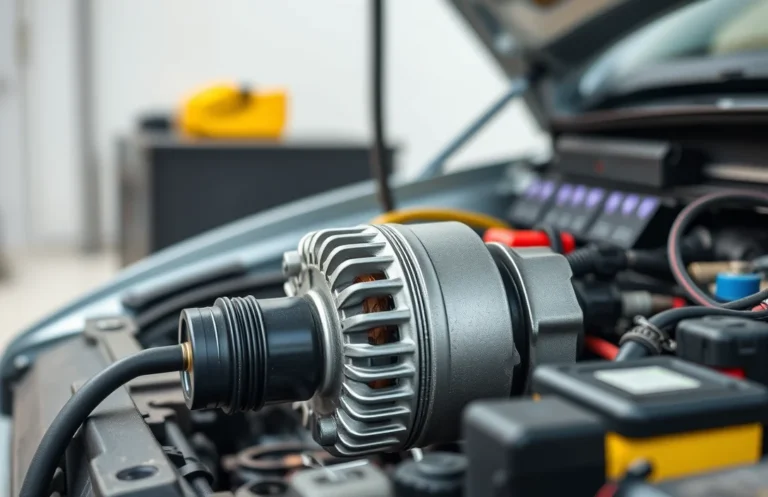
Charging via the alternator occurs when the engine is running, providing a voltage output typically between 13.7 to 14.7 volts. This method is efficient for maintaining battery health but is not ideal for deeply discharged batteries. If the battery is too low, it may prevent the vehicle from starting.
Onboard Charging with Smart Charger
Using a smart or trickle charger while the battery is connected requires specific chargers that can manage the charge without overloading the vehicle’s electrical system. Smart chargers automatically adjust the charge rate and can be used safely even when the engine is off, though they can take longer to fully charge the battery.
Portable Jump-Starter / Booster Packs
Portable jump-starters are handy for quickly boosting a weak battery. They can usually deliver a sufficient charge to start the engine but are not designed for prolonged charging. Ensure they are compatible with your battery type, especially if you have a lithium-ion starter battery.
12V Socket or Solar Panel Charging
Using a 12V socket or a solar panel can be convenient for trickle charging but may take a significant amount of time to provide a meaningful charge. This method is best suited for maintaining a healthy battery rather than charging a deeply discharged one.
| Method | Pros | Cons |
|---|---|---|
| Alternator | Quick charging, efficient | Not for deeply discharged batteries |
| Smart Charger | Safe, adjustable charge | Slower charging time |
| Portable Jump-Starter | Quick boost, portable | Not for prolonged use |
| 12V Socket/Solar Panel | Convenient, low-cost | Time-consuming, low output |
Always ensure that you monitor the battery’s state-of-charge using a voltmeter and be aware of safety precautions. If the battery shows signs of swelling, leaking, or overheating, it’s crucial to stop charging immediately and consult a professional.
How to Charge In-car
You can charge a car battery while it remains in the vehicle using several methods, each with specific procedures. However, it’s crucial to follow safety precautions and understand your vehicle’s electrical system to avoid damage or injury.
Regardless of the method chosen, always prioritize safety by wearing gloves and eye protection. If you experience issues like the battery not holding a charge or the alternator failing to charge it, consider seeking professional assistance.
Battery Type Compatibility
Charging a car battery while it is still in the vehicle is generally safe, but the approach depends on the battery type and vehicle system. For flooded lead-acid batteries, using the vehicle’s alternator while running is effective, while modern vehicles with complex electronics may require caution with AGM, gel, or lithium batteries.
For each battery type, consider the following compatibility guidelines:
Before charging, always check:
In practice, if you are unsure about the battery type or its condition, it may be safer to remove the battery and use a dedicated charger in a controlled environment. For modern vehicles equipped with a start-stop system or advanced BMS, following manufacturer guidelines is crucial to avoid damaging the vehicle’s electronic systems.
Safety, Tools & PPE
Yes, you can usually charge a car battery while it stays in the vehicle, but only with proper personal protective equipment, correct charger type, and attention to vehicle electronics and fusing. Charging in-car is common for maintenance and boost charging, however poor setup, sparks, or the wrong charger can damage the battery or the car’s electrical systems.
Personal protective equipment is mandatory: safety glasses, acid‑resistant gloves, and remove rings, watches, and metal bracelets before working. Wear non-synthetic, fit clothing and keep long hair secured to avoid entanglement or contact with terminals.
Hydrogen and ventilation, never charge in a closed garage with poor airflow; batteries can emit hydrogen gas while charging and a single spark can ignite it. Keep all sparks, open flames, and smoking away from the battery area and position the battery so fumes escape, not collect under the hood.
Clamps, cable size and order matter. Connect the positive clamp first, then the negative to a clean metal chassis ground point away from the battery when using an external charger or booster. When removing connections, undo negative first. Use insulated clamps and avoid metal tools crossing both terminals.
| Item | Amount / Specification | Notes |
|---|---|---|
| Safety glasses | 1 pair | Wraparound style, impact rated |
| Acid resistant gloves | 1 pair | Rubber or nitrile, long cuff |
| Remove jewelry | Every time | Metal near terminals creates short risk |
| Cable gauge | 16 – 14 AWG for 2 – 10 A, 4 – 6 AWG for 40 A | Heavier gauge for higher currents and short runs |
| Inline fuse / isolation | Fuse within 18 inches of battery | Rating slightly above max expected current, protects cable and vehicle |
| Multimeter | 12 V DC capable | Check open-circuit voltage and charging voltage |
| Smart charger | 2 – 10 A, multi-stage | Use vehicle-compatible modes for AGM and flooded cells |
| Booster / jump-starter | Up to 40 A rated clamps | Short boost pulses, follow manufacturer wiring |
| Li-ion specific charger | Match battery chemistry | Do not use lead-acid charger on LiFePO4 without confirmation |
| Battery terminal cleaner & protector | Wire brush, spray | Clean connections before charging for reliable contact |
Rates, Voltages, Timelines
Yes, you can usually charge a car battery while it stays in the car, but how fast and how safe depends on method, battery type, and vehicle electronics. Alternators normally hold charging voltage about 13.7 to 14.7 volts, while dedicated chargers supply controlled current and multi-stage voltage to finish charging without damage.
Safe charger current rules expressed as percent of battery capacity (C): trickle charge is 0.01C to 0.03C (1 to 3% of Ah), normal multi-stage charge is about 0.1C to 0.2C (10 to 20% of Ah), and aggressive/boost charging is usually 0.3C or higher but should only be used when the battery manufacturer approves it. For a 50 Ah starter battery, that means roughly 0.5 to 1.5 A for trickle, 5 to 10 A for normal, and 15 A plus for fast or boost work.
For example, a 50 Ah battery taken from 50% to about 90% needs about 20 Ah added. The simple math and practical times are in the table below.
| Charger current | C rate for 50 Ah | Theoretical time to add 20 Ah | Realistic time (includes inefficiency and absorption) |
|---|---|---|---|
| 2 A | 0.04C (4%) | 10 hours | 12 to 16 hours, long absorption stage |
| 10 A | 0.2C (20%) | 2 hours | 2.5 to 4 hours, absorption slows final 10% |
| 40 A | 0.8C (80%) | 0.5 hour | 1 to 2 hours, limited by alternator and battery acceptance, heat and BMS may reduce speed |
Absorption time increases final top-up because chargers or alternators hold a fixed voltage and current tapers as internal cell resistance rises, so the last 10 to 20% of charge can take as long as the prior 70 to 80% of energy added. That is why a fast current gets you most of the charge quickly, but finishing to true full state takes much longer.
Tests, Troubleshooting & Checklist
Yes, you can usually charge a car battery while it remains in the car, either from the alternator with the engine running or with an external smart charger, but do not assume every vehicle or chemistry is safe without checks. Modern start-stop systems, AGM or lithium starter batteries, and cars with battery management systems often require specific charger settings or professional service.
Quick Summary
Yes, you can charge a car battery while it stays in the vehicle, but confirm specifications, follow safety steps, and use the right charger.
Frequently Asked Questions
Can I charge my car battery in the car with a regular plug-in charger?
You can charge the battery in the car if the charger is rated for in-vehicle use and the ignition is off, otherwise remove the battery first; the vehicle electrical system is nominal 12 V. Check the charger manual for an “in-vehicle” or “engine off” mode and follow the manufacturer’s connection steps.
Will charging my car battery in the car cause overheating or damage?
You can avoid damage by using a charger or alternator that keeps voltage in the correct range, normal charging voltage is about 13.8 to 14.4 V. Stop charging and check the battery if you notice swelling, strong heat, or a rotten-egg odor.
How long does it take to charge a car battery in the car?
You can estimate time from battery capacity and charger current, for example a 50 Ah battery charged at 5 A takes about 10 hours. Using the alternator while the engine runs usually gives higher current and charges faster than a low-amp trickle charger.
Is it safe to use a portable jump-starter or charger to charge the battery while it is still in the car?
You can use a portable unit if it is set for the correct battery chemistry, make sure the charger is set to 12 V lead-acid and connect positive to positive and negative to chassis or battery negative as instructed. Always work outside or in a well ventilated area, wear eye protection, and follow the device manual for polarity and connection order.
If charging in the car gets the battery to turn over, does that mean I do not need to replace it?
You can get a dead battery to start after charging, but replace it if it is old or fails a post-charge test; many automotive batteries are due for replacement after about 3 to 5 years. If the resting voltage stays under 12.4 V after a full charge, plan to have the battery load-tested and possibly replaced.

- 10 Best Battery Backup For My Desktop Computer 2026 - September 20, 2026
- 10 Best Battery Backup For Mac Mini 2026 - September 19, 2026
- 10 Best Battery Backup For Medical Equipment 2026 - September 19, 2026