Can You Charge A 12v Battery With A 6v Charger?
A 6V charger cannot bring a 12V battery up to full charge because the charger voltage is too low. The single most important spec is the charger output voltage, not the amp rating or connector shape. First check the charger’s output voltage label and the battery’s recommended charge voltage before connecting anything.
Charging a 12V battery with a 6V charger will not properly charge it, because a 12V lead-acid battery requires about 13.6 to 14.8 volts; a 6V charger at 6 volts will leave the battery undercharged even after many hours and increase sulfation risk.
Can a 6V charger work?
Recommended Products


No. A 6 volt charger cannot properly charge a 12 volt battery because it cannot reach the higher voltage the battery needs to accept and finish a charge. At best a 6V charger might push a small trickle of current into a 12V battery but it will leave the battery undercharged and can cause long term damage to lead acid cells.
The core reason is voltage mismatch: charging requires the charger to produce a voltage higher than the battery’s open circuit voltage so current flows until the battery reaches its absorption/float voltage. A typical 12V lead acid battery needs roughly 13.6 to 14.8 volts for full charge, so a 6V output cannot drive that process.
| Charger output | Effect on a 12V battery | Risk / result |
|---|---|---|
| 6 volts | May supply tiny or no charge, will not reach full charge | Undercharge, sulfation for lead acid, reduced capacity |
| 12 – 13 volts (no regulation) | May slowly raise voltage but still likely undercharge | Partial charge, unreliable state of charge readings |
| 13.6 – 14.8 volts (proper 12V charger) | Charges correctly through bulk, absorption, float stages | Safe full charge when charger matches chemistry |
For example, using a small 6V trickle charger on a 12V car battery might make the battery show a slight rise in voltage but it will never reach the 13.8 to 14.4V absorption level and the battery will remain partially charged. Over weeks that partial charge can cause sulfation or permanent capacity loss in lead acid batteries.
Safety warning: Do not jury‑rig chargers or assume current alone will fix it, mismatched voltage or improvised series connections can damage batteries, chargers, or cause fire; use the correct charger or a proper adjustable unit.
Why voltage matters
Recommended Products


No, a 6V charger cannot properly charge a 12V battery because it cannot reach the voltage the battery needs for bulk and absorption charging. Charging is driven by voltage, not just current, so a charger must exceed the battery’s full-charge setpoint for the correct chemistry to move significant charge into the cells.
Battery “nominal” voltage is a convenient label, not the voltage needed to charge. A 12V lead-acid battery is labeled 12V but its full open-circuit voltage sits higher, and the charger must push the pack above that level during bulk and absorption phases to complete charging.
Chargers use stage voltages: bulk raises pack voltage, absorption holds a higher voltage while current tapers, and float keeps a lower maintenance voltage. Those stage voltages differ by chemistry, so the charger’s fixed or programmed voltage must match the chemistry’s required setpoints, otherwise the battery will remain undercharged or the charger will be stressed.
| Chemistry / Pack | Nominal voltage (label) | Typical fully charged (OCV) | Typical bulk/absorption charging voltage | Typical float voltage |
|---|---|---|---|---|
| 12V lead-acid (flooded, AGM, gel) | ~12V | ~12.6 to 12.8V | ~14.2 to 14.8V | ~13.2 to 13.8V |
| 12V Li-ion (3S Li-ion / LiPo) | ~11.1V | ~12.6V | ~12.6V (constant-voltage) | Usually not used |
| 12.8V LiFePO4 (4S) | ~12.8V | ~14.4V | ~14.4V | ~13.6V (vendor dependent) |
| 6V lead-acid | ~6V | ~6.6 to 6.8V | ~7.2 to 7.4V | ~6.6 to 6.8V |
A charger must be able to raise the battery above its open-circuit voltage to the chemistry’s bulk and absorption setpoints; if the charger voltage is lower than those setpoints, it cannot finish charging.
For example, connecting a 6V charger to a 12V lead-acid battery will usually do nothing useful: the charger cannot reach the 14+ volts needed for bulk charge, so the battery stays undercharged and sulfation risk rises. If the charger lacks reverse or diode protection it could also overheat or be damaged when connected to a higher voltage battery.
Charger compatibility basics
Recommended Products


No, a 6 volt charger cannot properly charge a 12 volt battery, because its output voltage is well below the voltage needed to drive the charge stages of a 12 volt battery. A 6V charger will at best deliver a small trickle and will not reach absorption or float voltages, leaving the battery undercharged and at risk of long term damage.
Exact charger specs and labels to check
Output voltage and regulation type are the first things to find on the charger label, stamped housing, or datasheet. You need to see a rated DC voltage and whether the charger is fixed-voltage, constant-current, constant-voltage, or CC-CV, because each battery chemistry and size expects a particular voltage curve during bulk, absorption, and float stages.
Maximum current and C-rate guidance are shown as output amps or milliamps and sometimes as a recommended battery Ah range. Compare the charger amp rating to the battery capacity, expressed in amp hours, and aim for a safe charge current (lower is safer if you are unsure) so you do not overheat the cells or trip protection circuits.
Isolation and common ground information may appear as “isolated output”, “floating output”, or with earth-connection symbols. Isolated chargers keep the DC output separate from mains earth, which matters when charging batteries tied into vehicle electrical systems, inverter inputs, or multiple batteries in series, because shared grounds can create loops, stray currents, or damage sensitive electronics.
| Charger marking | What to verify | Why it matters |
|---|---|---|
| Output voltage (V DC) | Is it 12V nominal, 13.8V float, or only 6V? | Voltage determines whether the charger can drive full charge stages; too low = undercharge. |
| Output current (A) | How many amps and recommended battery Ah range | Controls charge speed and heating; mismatch can stress battery or be too slow. |
| Regulation / profile | CC, CV, CC-CV, multi-stage, or chemistry-specific labels | Correct profile prevents overcharge, undercharge, and protects cells. |
| Isolation / earth symbol | Is isolated output indicated? | Prevents ground loops and interference with other equipment. |
| Polarity / connector | Positive and negative clearly marked | Prevents reverse connection and short circuits. |
Warning: Do not assume a lower-voltage charger is safe to use on a higher-voltage battery; check the charger label and the battery manual, and replace the charger with one rated for the battery voltage and chemistry when needed.
What happens in practice?
Recommended Products


No, a 6 volt charger will not properly charge a 12 volt battery. In practice the charger voltage is too low to reach the battery’s bulk or absorption thresholds, so you either get no meaningful charge or only a tiny, temporary top up until the two voltages equalize.
For example, if a car battery reads 12.2 volts at rest, a 6 volt charger cannot push it up to 13.8 volts so no bulk charging happens. If a badly damaged battery reads 4 or 5 volts, the 6 volt charger might inject some current and raise the voltage briefly, but the battery will not be fully charged and will lose capacity faster over time.
In short, a 6 volt charger is unsuitable for properly charging a 12 volt battery: expect either no effect or only an inadequate top-up that leaves the battery undercharged, with reduced capacity and shorter runtime until you use the correct charger and charging profile.
Safety and damage risks
You should not try to charge a 12 volt battery with a 6 volt charger, because the charger cannot reach the voltage needed to bring the battery to a full, healthy state of charge. Running a 6 volt charger on a 12 volt battery will usually leave the battery chronically undercharged and can trigger failure modes that shorten life and create safety hazards.
Undercharging a lead acid battery causes sulfation, which raises internal resistance and reduces usable capacity over time. For lithium and sealed chemistries, a 6 volt source will not meet the cell voltage or the BMS thresholds, so the battery may appear to charge slowly or the BMS may refuse to accept charge, producing stress on protection circuits.
Trying to force compatibility by wiring chargers in series or parallel creates other hazards because most small chargers are not isolated or balanced for those configurations. If chargers are mismatched, one unit can be driven into overload or reverse current, which raises internal temperature and may fail catastrophically.
For example, connecting two consumer 6 volt chargers in series to reach 12 volts can cause one charger to see most of the load if their output voltages or current limits differ, producing overheating, smoke, or a fire risk. Small transformers and cheap switchers are especially at risk.
| Misuse | Why it is dangerous | Probable result |
|---|---|---|
| 6V charger alone on 12V battery | Never reaches full voltage, causes chronic undercharge | Sulfation, loss of capacity, shorter life |
| Two 6V chargers in series | Unequal outputs and non-isolated grounds | Overheated charger, smoke, possible fire |
| Paralleling chargers | Current hogging by the stronger unit | One charger fails, wiring overheating |
Warning: using the wrong voltage or jury-rigged adapters can cause permanent battery damage, melted wiring, acid leaks, or fire; stop and assess before continuing.
Manufacturers list approved charge voltages and charger types on labels and in manuals, and using a wrong-voltage charger is a common reason for voiding warranty. Evidence of overheating, melted insulation, acid corrosion, or modifications usually triggers repair denial and may create safety liability.
Correct charging alternatives
Recommended Products
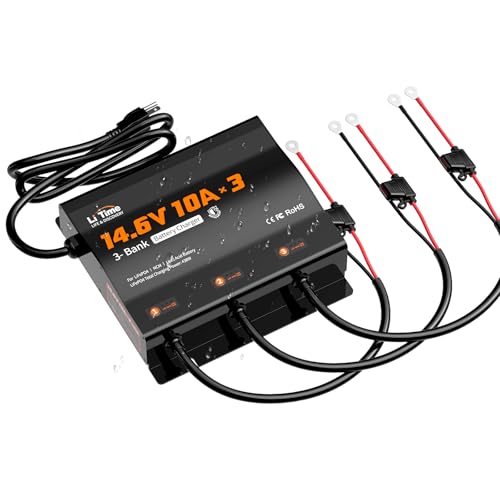
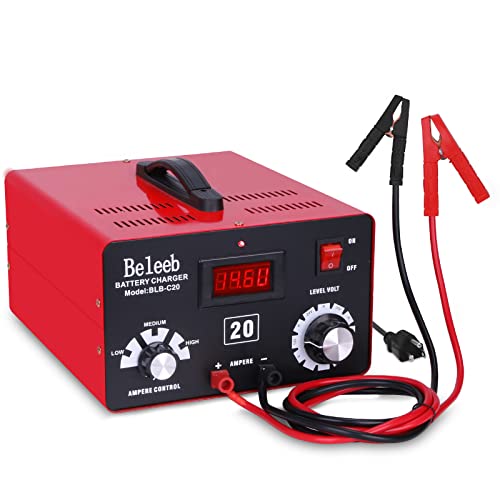
Charging a 12V battery with a 6V charger is not suitable or effective, as the voltage output is insufficient to charge the battery properly. Instead, using a dedicated 12V smart charger or a compatible multi-voltage charger is essential for safe and effective charging.
Consider the following alternatives for charging a 12V battery:
For instance, when using two 6V chargers in series, ensure that:
“Using incompatible chargers can lead to battery damage or unsafe charging conditions. Always verify charger specifications.”
When choosing a DC-DC boost charger, look for features such as:
Using the correct charger for your battery type is crucial. Always consult the battery manufacturer’s recommendations and verify charger compatibility to avoid safety hazards and ensure efficient charging.
Buying and troubleshooting checks
Charging a 12V battery with a 6V charger is not advisable, as the lower voltage charger will not provide sufficient power to charge the battery effectively. This can lead to incomplete charging, potential damage to the battery, or failure to charge altogether.
Always prioritize safety when working with batteries and chargers. Ensure connections are secure and observe any safety warnings on the devices. If in doubt about compatibility or safety, consult the manufacturer’s documentation or a professional for guidance.
Quick Summary
You cannot charge a 12V battery with a 6V charger, as the voltage difference prevents effective charging.
Frequently Asked Questions
Can I charge a 12v battery with a 6v charger?
No, you cannot charge a 12v battery with a 6v charger because the voltage from the charger is insufficient. A charger must match or exceed the battery’s voltage for effective charging.
What happens if I use a 6v charger on a 12v battery?
Using a 6v charger on a 12v battery will not charge the battery, and it may lead to battery damage over time if attempted repeatedly. It’s essential to use the correct voltage to prevent overheating or reduced battery lifespan.
How can I safely charge a 12v battery?
To safely charge a 12v battery, use a charger specifically designed for 12v batteries, ensuring it has the correct amperage rating. Always monitor the charging process to prevent overheating and disconnect the charger once the battery is fully charged.
What are common mistakes when charging batteries?
A common mistake is using a charger with the wrong voltage, like a 6v charger for a 12v battery, which can damage the battery. It’s also important to avoid overcharging, so using a smart charger that automatically stops when the battery is full is advisable.
When should I replace my 12v battery?
You should consider replacing your 12v battery if it shows signs of swelling, leaks, or if it holds less than 80% of its original capacity. Regular testing can help determine the battery’s health and when it needs replacement.

- 10 Best Battery For Generator Battery Safety System 2026 - October 12, 2026
- 10 Best Battery For Generator Battery Safety Option 2026 - October 12, 2026
- 10 Best Battery For Generator Battery Safety 2026 - October 12, 2026