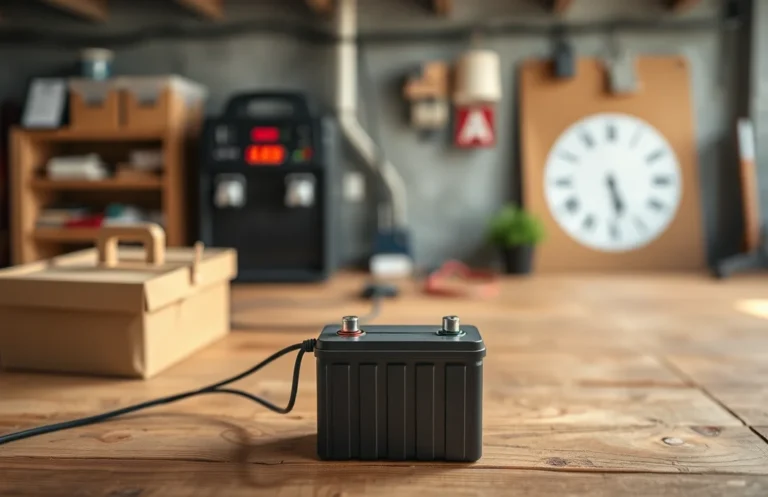
Can You Leave A Battery Tender On All The Time?
A smart battery tender can sit on a battery for months without frying it, but only if the charger actually has automatic float control and the float voltage matches the battery type. The most important spec is the charger s float or maintenance voltage and charge mode. A common mistake is treating a simple trickle charger like a smart maintainer, so check the label now.

Battery tender can be left connected 24/7 for extended storage when it is a smart float charger matched to your battery chemistry; verify the float/maintenance mode, the output voltage (for example 12V batteries), and the manufacturer s instructions to avoid heat, swelling, or warranty issues.
What a Battery Tender Is
A battery tender is a charger that brings a battery to full charge, then automatically reduces and regulates output to hold the battery at a safe, maintenance level without supplying constant high current. True tenders monitor battery voltage and switch between bulk, absorption, and float or pulse modes so the battery is topped but not continuously overcharged.
The core function is maintenance, not fast charging. Tenders are most often designed around lead-acid family batteries, including wet/flooded, AGM, and gel types, and some models include selectable settings or temperature compensation for different chemistries. For lithium batteries the tender must explicitly state compatibility, because lithium needs different voltage limits and usually a battery management system to avoid damage.
Tender versus trickle versus smart charger is about control and intent, not just current size. A trickle charger is a simple constant-current device that can deliver a low continuous current and may cause overcharge if left on indefinitely. A smart charger is a broader category that includes tenders; it measures voltage, applies multi-stage charging, and can return to a maintenance float or pulse when the battery is full.
Common use cases for battery tenders include motorcycles kept in storage, seasonal vehicles such as classic cars or tractors, boats with long off-season moorage, and lawn or garden equipment that sits idle.
For example, riders often use a tender over winter to prevent battery sulfate buildup, and boat owners use tenders during winter storage to avoid deep discharge while shore power is unavailable.
Safety note: never assume any charger is safe for continuous connection without checking the label and manual. Swollen batteries, overheating, damaged cables, or incompatible chemistry are real risks, so verify charger type, battery chemistry, and manufacturer recommendations before planning long-term use.
Can You Leave It Connected?
Yes, you can leave a battery tender connected continuously when the tender is an automatic, float-mode charger matched to the battery chemistry and the manufacturer states it is safe for long-term maintenance. Leaving a basic, unregulated charger on all the time can lead to overcharge, heat, and battery damage.
For example, many modern “smart” tenders switch to a low-current maintenance or float state after topping the battery, which replaces self-discharge without forcing charging currents. Older or cheap chargers may keep supplying high current and will not protect the battery once it is full.
Battery Chemistry Matters
You can leave a battery tender connected all the time only when the charger and the battery chemistry are correctly matched and the charger truly enters a low-rate maintenance or float state. If the tender is the wrong type or lacks a proper float/maintenance mode, continuous connection will reduce capacity, cause water loss or venting on lead acid, or trigger protective shutdown and stress on lithium cells.
Lead acid batteries are not all the same. Flooded, AGM, and gel cells have different ideal float voltages and responses to long-term charging, so a tender that is correct for one may damage another if left on continuously.
For example, using a motorcycle tender that has an AGM or LiFePO4 setting during winter storage is usually safe if the charger explicitly supports the battery type and drops to maintenance current. If unsure, remove the battery or use a charger labeled for that chemistry.
Safety warning: stop using a charger immediately if the battery becomes hot, swollen, smells of electrolyte, or shows corrosion around terminals. When in doubt, verify specs with the battery maker or pick a charger that lists the exact chemistry on its label.
How Maintenance Charging Works
You can leave a battery tender connected indefinitely if the device truly has a float or maintenance mode that reduces charging to a small, controlled rate after topping the battery. Leaving a constant bulk or high-current charger on a battery will cause overcharge, heat, water loss on flooded cells, or permanent capacity loss.
Float and maintenance modes protect a battery by reducing average current and holding voltage within safe bounds, preventing continuous gassing or heat. However, those modes only work if the charger is designed for the battery chemistry, has accurate voltage regulation, and senses when to stop delivering bulk current.
Always verify charger and battery specs. Check the charger’s label or manual for explicit “float” or “maintenance” settings and a stated maximum charge current and float voltage. If the manual does not permit continuous connection, do not assume it is safe to leave the unit on.
Match charger current to battery amp hours by thinking in C-rate terms: how much of the battery’s capacity the charger delivers each hour. For routine bulk charging many systems limit current to a fraction of the battery Ah, while long-term maintenance requires only a small percentage of Ah to offset self-discharge; if you cannot find clear specs, choose a lower rated maintainer and verify temperature and voltage remain normal.
For example, a small motorcycle battery commonly uses a low-amp tender that holds voltage and periodically tops the battery; that style of maintainer is designed to stay connected for weeks or months during storage, but you should still verify the charger shows a maintenance or float status and check the battery periodically for heat or swelling.
Pros and Cons of Constant Use
Yes, you can often leave a modern “smart” battery tender connected indefinitely because good maintainers switch to a low float or pulse mode and only replace tiny losses. That said, whether you should depends on the charger design, the battery chemistry, and the specific application.
For example, a good maintainer on a motorcycle battery during winter storage often yields net benefit because the battery stays full and sulfation is reduced, while an incorrectly configured charger on a lithium battery could cause unnecessary stress. Match the tender to the chemistry and check for an explicit “maintenance” or “float” mode.
Practical next steps, read the tender’s specifications for float voltage and standby current, confirm the battery chemistry in the battery or vehicle manual, and inspect the setup periodically for heat, corrosion, or swelling. If in doubt, choose a commercially labeled maintainer designed for your battery chemistry or remove the charger after the battery reaches full charge.
Safety Risks and Warning Signs
Many modern battery tenders are designed to be left connected for long periods because they switch to a low-voltage float or maintenance mode, but continuous connection still carries risks if the charger or battery is faulty or incompatible. Always check the charger and battery manuals before leaving a tender on indefinitely, and watch for the warning signs below.
Practical trade-off: leaving a certified smart tender attached is often safe for seasonal storage, but only when you verify compatibility, monitor temperature and charger indicators, and replace batteries that show the signs above. When in doubt, disconnect and inspect.
Buying, Setup, Monitoring
Yes, you can leave a modern smart battery tender connected for long-term maintenance, provided the tender’s charge profile matches the battery chemistry and the tender actually switches to a low-voltage float or maintenance mode. Always verify the tender’s float voltage, maximum float current, and manufacturer guidance before leaving it on indefinitely, and install it with proper fusing and secure connections.
For example, when storing a motorcycle for months, use a smart tender rated for that battery chemistry, mount the unit under the seat or inside a dry box, fuse the positive lead near the battery, and check voltage monthly with a multimeter. That setup minimizes risk and preserves capacity while allowing safe continuous connection.
Quick Summary
Yes, you can usually leave a battery tender connected continuously if it is a proper automatic float charger matched to the battery.
Frequently Asked Questions
Can you leave a battery tender on all the time?
You can leave a modern smart battery tender connected indefinitely if it has an automatic float or maintenance mode, check the manual to confirm. Look for a float voltage around 13.2 to 13.8 V for 12 V lead-acid as a sign it is a proper maintainer.
Is it safe to leave a battery tender connected 24/7 to my vehicle battery?
You can leave a maintainer connected 24/7 for a 12 V lead-acid, AGM, or gel battery only if the charger manual explicitly lists those chemistries and automatic float operation. If the charger is not labeled for your battery type, disconnect it and check specs first.
Will leaving a battery tender on all the time cause the battery or charger to overheat?
You can reduce heat risk by using a proper smart maintainer, but stop and investigate if the battery feels hot or the charger is delivering more than 1 A continuously, which suggests a fault. Always place the charger and battery in a ventilated area and inspect connections for corrosion or looseness.
How long can I leave a battery tender on all the time without supervision?
You can leave a smart maintainer connected indefinitely, but if the unit is not fully automatic, limit the connection to 24 to 48 hours and check battery voltage and fluid levels during that period. When in doubt, follow the charger manual and the battery maker’s maintenance guidance.
What buying mistakes should I avoid if I want to leave a battery tender on all the time?
You can avoid problems by not buying a non-automatic or incompatible charger, and by choosing a maintainer rated at or below C/10 for the battery capacity, for example 5 A for a 50 Ah battery; also verify the charger lists supported chemistries and safety certifications. Avoid high-current chargers intended for rapid charging if you plan to use it as a long-term maintainer.

- Top 10 Best Solar Backup Batteries Austin 2026 - July 28, 2026
- Top 10 Best Solar Battery Charger For Rv 2026 - July 28, 2026
- Top 10 Best Solar Charger For Trolling Motor Battery 2026 - July 28, 2026