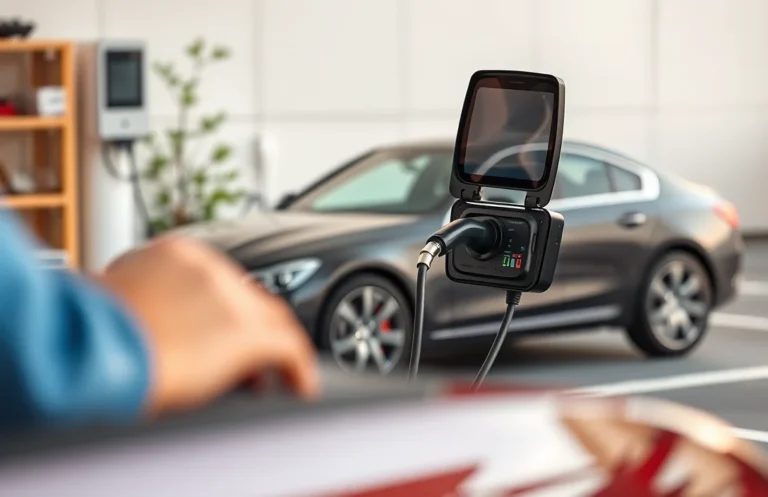
Is It Safe To Start A Car With A Battery Charger Connected?
The single spec that matters most is the charger output voltage, it must match the vehicle 12 V system. A common mistake is trying to crank the engine with a trickle or float charger still connected, which can cause sparks or voltage transients. First check the charger’s label or front-panel setting for 12 V and an explicit engine-start or boost mode.

Can you start a car with a battery charger connected? Generally no, unless the charger has a dedicated engine-start or boost mode rated for vehicle use; otherwise remove the charger before cranking to avoid sparks and voltage spikes. Always confirm the charger is set to 12 V and read the manual.
Types of Battery Chargers
You can start a car with a charger connected only under certain conditions, it depends on the charger type. Trickle chargers are not designed to supply cranking current, smart chargers may allow a start if they have a dedicated engine-start or boost mode, and jump starters are built to deliver the high current needed for cranking.
Trickle chargers provide a low, steady current meant to maintain or slowly top off a battery over hours or days. They usually provide under 2 amps and will not supply the sudden hundreds of amps the starter motor needs, so attempting to crank with a trickle charger connected will typically fail and can stress the charger.
Smart chargers monitor battery voltage and apply multi-stage charging, and many can detect battery condition and switch to float mode when full. Some smart chargers include a temporary boost or engine-start function that raises output current briefly to help start an engine, but that feature is model specific and often limited in duration and current.
Jump starters and dedicated booster chargers are designed for starting while connected, they deliver high pulse current and have protection circuits for reverse polarity and short circuits. Portable lithium jump packs or lead-acid booster units are the correct choice when the intent is to start the engine rather than just maintain charge.
| Charger Type | Typical Output | Intended Use | Can you start while connected? | Notes |
|---|---|---|---|---|
| Trickle Charger | Low (about 0.5-2 A) | Long-term maintenance, slow charge | Usually no | Will maintain voltage but not cranking current |
| Smart Charger | Variable (2-20 A), model dependent | Regular charging, battery conditioning | Sometimes | Only if manufacturer states an engine-start or boost mode |
| Jump Starter / Booster | High pulse current (tens to hundreds of A) | Starting dead or weak batteries | Yes | Designed for cranking, includes protections |
Quick rule: if your goal is to crank the engine now, pick a jump starter or a charger with a specified engine-start boost; do not assume a trickle or basic smart charger will do the job.
Safety Precautions When Charging
Starting a car while a battery charger is connected is only safe when the charger is specifically designed for engine cranking or when the charger is switched off and disconnected before you crank the engine. Using a standard mains-connected or unregulated charger during cranking can produce sparks, voltage spikes, and possible damage to the charger, the vehicle electronic systems, or the battery.
Avoiding sparks is the immediate priority because batteries can emit hydrogen gas that ignites from a single spark. Always wear eye protection and avoid metal jewelry when working near the battery, and work in a well ventilated area with no smoking or open flames.
Preventing electrical surges protects vehicle electronics and the charger. Alternators can generate voltage spikes during cranking, and an active charger tied to mains power can feed or receive dangerous transients that damage control modules or the charger itself.
| Charger type | Safe to start while connected? | Risk notes |
|---|---|---|
| Smart charger with engine-start mode | Sometimes, with precautions | Designed to handle cranking, follow manual and secure clamps. |
| Trickle/maintenance charger | Generally no | Low current but not rated for cranking, risk to charger and electronics. |
| Bench/unregulated charger | No | High risk of sparks and voltage spikes, do not start vehicle while connected. |
| Portable jump starter/booster pack | Yes, by design | Intended for cranking, follow manufacturer instructions. |
Warning: If you are unsure whether your charger or vehicle allows starting while connected, always disconnect the charger before cranking. Verify settings and procedures in both manuals to avoid fire, electric shock, or permanent electronics damage.
Can You Start a Car with Charger Connected?
You can sometimes start a car with a charger connected, but only when the charger is specifically designed for engine starting or supplying limited, controlled current and the vehicle and charger manuals allow it. Connecting a regular bulk or trickle charger and then cranking the engine can create sparks, voltage spikes, or damage to the charger, battery, or vehicle electronics.
Starting while a charger is attached carries distinct risks that differ from normal charging. Those risks depend on charger type, connection quality, and whether the charger has a boost or engine-start mode.
Charger capability determines whether starting is safe. Devices fall into clear groups: maintainers and trickle chargers are for long-term float charging and are not meant for cranking; smart multi-stage chargers may have a boost mode but may still refuse under heavy load; dedicated jump-start-capable chargers or portable jump packs are built to supply the high current a starter needs.
| Charger Type | Safe to Start While Connected? | Notes |
|---|---|---|
| Trickle / Maintainer | No | Low current, will not support cranking and may be damaged. |
| Smart multi-stage charger (no boost) | No, unless manufacturer states otherwise | May shut off under load or be damaged by alternator feedback. |
| Charger with engine-start / boost mode | Yes, if manual allows | Designed for brief high-current assist but follow charge unit instructions. |
| Portable jump starter / booster pack | Yes | Made for cranking; follow safety and connection guidance. |
Rule of thumb: if the charger manual does not explicitly allow engine starting or boost mode, disconnect the charger before cranking.
When it is safe to start with a charger connected, two conditions must be true: the charger is rated for engine-starting or boost duty, and all connections are secure with correct polarity. You must also ensure the charger will tolerate alternator output and not attempt to provide constant current while the starter draws a large transient.
Practical choice: for routine battery maintenance, use a maintainer and disconnect before starting; for a dead battery, use a jump starter or a charger with a documented boost mode. Always follow the specific instructions in the charger and vehicle manuals to avoid damage or injury.
Step-by-Step Starting Procedure
You can start a car with a charger connected only when the charger is designed to allow engine starts or has a restart/boost mode; using a basic slow charger while cranking can cause sparks, voltage stress, or damage to the charger and vehicle electronics. Always check the charger’s label and the vehicle manual before attempting to start with a charger attached.
Preparing the Charger
Confirm the charger is set to the vehicle voltage, usually 12 volts, and that it has an engine-start, boost, or jump-start mode that explicitly allows cranking while connected. If the charger has selectable amperage, choose the higher momentary start setting only if the manual permits it, otherwise use a maintenance or float mode for charging before starting. Inspect clamps and cables for corrosion, frayed insulation, or loose connections, and clean terminals so clamps make solid contact.
Work in a well ventilated area and keep sparks away from the battery top. Remove metal jewelry and turn off vehicle accessories, lights, and the ignition before connecting. If you cannot confirm the charger supports engine starts, do not attempt to crank with it attached; instead charge the battery until it can hold a crank or use a dedicated jump starter.
Starting the Car
With the charger prepared and confirmed safe to use, attach clamps with the charger unplugged or the unit switched off. Attach the red clamp to the battery positive terminal, then attach the black clamp to the negative terminal or a grounded metal point on the engine block, away from the battery acid, to reduce spark risk.
Potential Consequences of Improper Use
Starting a car with a battery charger attached can cause real harm if the charger or connections are wrong: you can damage vehicle electronics, injure the battery, create sparks that ignite hydrogen, or destroy the charger. The risk is not hypothetical, it depends on charger behavior, clamp condition, battery health, and whether the charger limits voltage and current properly.
Damage to electronics often comes from voltage spikes or reversed polarity during connection or crank, and from chargers that cannot isolate transient currents. Modern vehicles have multiple electronic control units and sensors that can be upset by sudden overvoltage or long voltage excursions. Repairs can be expensive, and symptoms may appear intermittently, making diagnosis slow and costly.
For example, a momentary high-voltage spike during starting can corrupt the memory in radios, body control modules, or engine control units, leading to erratic faults or complete failures that do not trigger a clear diagnostic code.
Battery risks include overheating, internal shorting, plate shedding for lead-acid cells, and thermal runaway for lithium chemistries when they are present. Poor contacts or reversed clamps can produce intense local heating and arcing, which can warp plates or melt terminals. Overcurrent from a non-regulating charger during cranking can also split plates in a lead-acid battery and shorten its life dramatically.
For instance, applying a high current source to a weak or sulfated lead-acid battery while cranking can force boiling of electrolyte, vent hydrogen, and cause case deformation or an explosion if sparks are present near the battery vent.
| Consequence | Likely Cause | What to Watch For | Immediate Action |
|---|---|---|---|
| ECU or module failure | Voltage spike or sustained overvoltage | Gauges erratic, lights on, codes that persist | Disconnect charger and battery, do not crank again, seek diagnostics |
| Sparks, fire, or explosion | Poor clamp contact, reversed polarity, hydrogen ignition | Arcing, strong sulfur smell, visible venting | Evacuate, cut power to charger, handle battery only after cool down |
| Battery internal damage | Excessive current or overheating during crank | Swollen case, reduced capacity, rapid voltage collapse | Replace battery, avoid further cranking attempts |
| Charger failure | Overload, short, or thermal stress when cranking | Charger shuts down, smells, or shows fault lights | Unplug charger, let it cool, test elsewhere or replace |
Never attempt to start if you see arcing, smoke, or a leaking battery; disconnect the charger first and reassess the situation safely.
Putting safety first means accepting tradeoffs: using the wrong charger for a quick start may save time but can cost you a battery or electronic module. When in doubt, stop and isolate the system, check polarity and clamp condition, and get professional help rather than forcing a start that could make repairs necessary and create personal risk.
Charger Compatibility Considerations
You can only safely attempt to start a car with a charger connected if the charger and vehicle share the correct system voltage and the charger is rated or designed for engine-start/boost use. Using a low-current maintainer while cranking will usually do nothing and can stress the charger or its electronics; using an incompatible higher-voltage unit can damage the vehicle electrical system.
Voltage requirements
Most passenger cars use a nominal 12 volt electrical system, while some commercial trucks and heavy equipment use 24 volt systems. Always confirm the vehicle battery voltage and the charger’s output voltage on their labels before making any connection.
If the charger does not match the battery voltage, do not connect it, even briefly. A 24 volt charger on a 12 volt battery can overheat wiring and electronics, while hooking a 12 volt-only charger to a 24 volt system will not charge and may be damaged.
Amp ratings
Chargers are built for different purposes: maintenance, charging, or starting. Maintenance or float chargers supply low current continuously to keep a battery topped up; they are not meant to provide the large burst of current an engine starter motor requires.
Engine-start capable chargers or booster/jump packs are designed to deliver high current or a short burst labelled as “start” or “boost.” If you plan to crank the engine with a charger connected, use equipment explicitly rated for starting, and follow the manufacturer’s instructions for connection, mode selection, and timing.
| Charger type | Intended use | Voltage match | Starting allowed? |
|---|---|---|---|
| Maintainer/float | Keep battery topped up | Must match battery voltage | No, not for cranking |
| Multi-stage smart charger | Recharge and condition battery | Must match battery voltage | Only if model lists start/boost mode |
| Engine-start/boost charger or jump pack | Provide high current for cranking | Match vehicle voltage (12V or 24V) | Yes, when rated and used per instructions |
If the charger label and the vehicle manual disagree, follow the vehicle manual and do not attempt to start the engine with a charger connected unless the charger explicitly supports starting.
Troubleshooting Charging Issues
You can only safely start a car with a charger connected if the charger is explicitly designed to allow cranking, for example a unit with an engine-start or boost mode. Most basic trickle or float chargers should be disconnected before you crank, because the starter and alternator can create voltage and current conditions that damage the charger or vehicle electronics.
Not Charging
If the charger is connected but the battery will not charge or the car will not start, begin with basic electrical checks and rule out simple failures. Verify clamps are on correct terminals and making firm metal-to-metal contact, check charger fuse or internal protection indicator, and confirm mains power to the charger is live. Also confirm the battery voltage with a multimeter before and during attempted charging; a healthy 12 volt lead acid battery at rest reads around 12.4 volts or higher, but a deeply discharged battery will read much lower and may trigger charger protections.
Overheating Issues
Overheating can occur in the charger, the battery, or the cables when you attempt to start with a charger attached, and it often indicates an unsafe condition that must be corrected immediately. Overheating may be caused by excessive current draw when the starter engages, a charger that is underspecified for transient current, poor connections that create resistive heating, or a failing battery that produces heat under load. If any component becomes hot to the touch, stop and disconnect the charger, allow parts to cool, and inspect for damage before proceeding.
Quick Summary
Yes, sometimes you can start a car with a battery charger connected, but only if the charger and procedure are specifically rated and followed.
Frequently Asked Questions
Can you start a car with a battery charger connected?
You can sometimes start a car while a charger is connected, but you should usually disconnect first to avoid voltage spikes; the starter typically draws several hundred amps while most chargers supply only 1 to 3 amps.
Is it safe to start my car with the battery charger still connected to the terminals?
It is not generally safe unless the charger manual explicitly allows it, so you should turn the charger off or disconnect the leads before cranking; check your charger for a labeled “engine start” or boost mode rated at 20 to 50 A if you plan to use that feature.
Will the charger or battery overheat if I try to start the engine with the charger attached?
Yes, a maintainer rated at 1 to 3 A can overheat or be damaged when exposed to cranking currents above 100 A, so avoid attempting starts while a low-current charger is tied to the battery.
How long should I charge before attempting to start the car without removing the charger?
If you must rely on charging for a recovery, a higher-current charger like 10 A can give noticeable improvement in about 30 minutes, while a 1 A maintainer may need several hours to restore cranking capability.
Is it a common mistake to try starting with a cheap charger connected, and what should I buy instead?
Yes, a common mistake is using a low-cost maintainer without protection, so you should buy a charger with clear safety protections and an explicit engine-start or boost rating of at least 20 A if you need that function.

- Top 10 Best Solar Backup Batteries Austin 2026 - July 28, 2026
- Top 10 Best Solar Battery Charger For Rv 2026 - July 28, 2026
- Top 10 Best Solar Charger For Trolling Motor Battery 2026 - July 28, 2026