Do Agm Batteries Need A Special Charger?
AGM batteries are sealed lead-acid cells that cannot be topped up with water, so how you charge them directly affects life and safety. The single spec that matters is the charger voltage and charge profile, not the brand or flashy “fast” label. Before you connect, check the charger chemistry setting and voltage range on the label.

AGM batteries need a charger made for sealed lead-acid chemistry, with controlled bulk, absorption, and float stages; a 12 V AGM typically charges at about 13.6 to 14.4 V and at currents under 0.2C to avoid drying or damage, so avoid generic high-voltage or fast-charge settings.
AGM battery basics
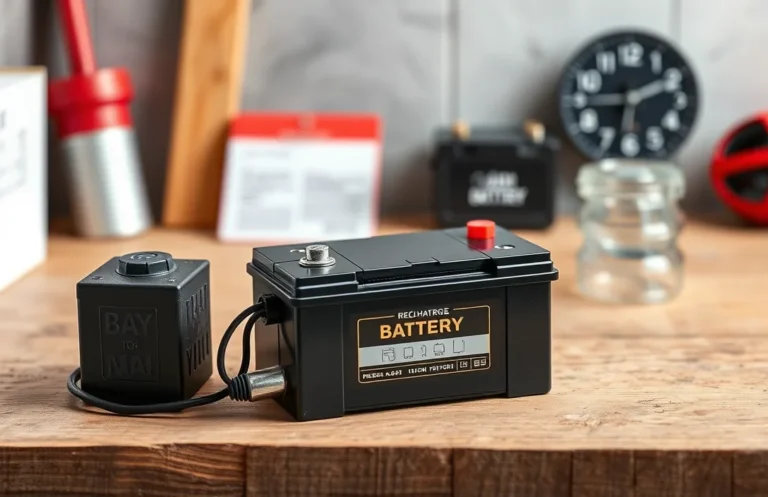
AGM batteries are sealed, valve-regulated lead-acid cells that use glass-mat separators to hold the electrolyte; they do need a charger that recognizes sealed lead-acid or AGM charge behavior rather than a generic battery or USB adapter. Using the wrong charger shortens life, raises internal resistance, and can cause permanent capacity loss or premature failure.
AGM is short for absorbed glass mat, where thin glass fibers trap the electrolyte against the plates so the battery is effectively sealed. That construction reduces gassing, allows mounting in more orientations, and raises the battery’s tolerance for vibration compared with flooded lead-acid cells.
AGM cells are sold in many voltages and capacities for different roles. Small AGM packs go into alarm systems and UPS units, medium 12 volt packs serve motorcycles and small solar setups, and larger 12 volt and 24 volt versions are used for deep-cycle applications in RVs, marine, and backup power.
| Format | Common Voltage | Typical Ah Range | Typical Use |
|---|---|---|---|
| Small sealed | 6V or 12V | 1 – 10 Ah | Alarms, small UPS, mobility |
| Starter/dual purpose | 12V | 20 – 70 Ah | Motorcycles, small vehicles |
| Deep-cycle / solar | 12V or 24V | 50 – 200+ Ah | RV, marine, backup power |
Because AGM cells have lower internal water loss and different internal resistance than flooded lead-acid, their charge acceptance and float behavior are different enough that a charger tuned for flooded batteries or generic chargers can undercharge or overcharge them. Both undercharge and overcharge harm capacity over repeated cycles.
For example, an AGM used in a standby UPS will spend most of its life on float charge, while one in a solar setup sees frequent partial cycles; each use requires checking different specs from the battery and the charger before pairing them.
Bottom line: AGM batteries require chargers that respect AGM/VRLA characteristics. Verify the battery’s labeled voltage, Ah, and recommended charge specs before connecting any charger.
AGM charging requirements
AGM batteries need a charger that follows an AGM/VRLA charge profile: multi-stage control with the correct absorption and float voltages and temperature compensation. They do not require a proprietary charger, but they do require a charger that can hold the right voltages and stop when the battery reaches end-of-charge, otherwise life and capacity will fall.
Charging is normally done in stages: bulk, absorption, and float. Each stage has a distinct goal, so a charger that simply supplies a fixed voltage or a constant current is usually inadequate for long life.
| Stage | Purpose | Typical voltage range (verify with manufacturer) |
|---|---|---|
| Bulk | Fastest charging, brings battery up to most of its capacity | Higher voltage, limited by charger current |
| Absorption | Finishes charging at controlled voltage until current tapers | Slightly lower than bulk, held for a set time or until current drops |
| Float | Maintains full charge at lower voltage to prevent overcharge | Lower than absorption, long-term standby voltage |
Float versus absorption is important because float voltage must be low enough to prevent gassing and dry-out, while absorption voltage must be high enough to fully top the plates without excessive gassing. If float is too high the battery will vent and lose capacity; if absorption is too low the battery will suffer sulfation and reduced usable capacity.
Always check the battery label or datasheet for the manufacturer’s recommended absorption and float voltages and the required temperature compensation coefficient.
Temperature compensation matters because charging voltage needs to be reduced as battery temperature rises, and increased when it is cold. Without compensation you can overcharge warm batteries or undercharge cold batteries, both of which shorten cycle life.
Charger features for AGM
Yes, AGM batteries do better with chargers that have an AGM-selectable or AGM-specific profile, because those chargers control charge stages, limit current, and include temperature compensation to avoid shorten life. Using a basic, single-stage or automotive alternator-style charger can lead to undercharging, overcharging, or stress during cold and hot conditions.
An AGM-selectable or AGM-specific profile means the charger can change its stage timing and float behavior for sealed absorbent-glass-mat construction, rather than treating the battery like a flooded cell. Selectable models let you switch modes when you have mixed battery types in different equipment, while AGM-specific units default to the safest sequence for sealed lead-acid cells.
Multi-stage control is important because it moves the charger through bulk, absorption, and float phases and can shorten or lengthen absorption based on battery condition. Adaptive or “smart” chargers monitor voltage and charge acceptance to end absorption when appropriate, which reduces stress and improves calendar life compared with fixed-timer chargers.
Temperature compensation is a safety feature that adjusts charge targets as battery temperature changes, which matters if the battery will see a range of ambient conditions or is mounted outdoors. Chargers with a remote temperature sensor are preferred for stationary installs, while on-board sensors are acceptable for single-location use.
Current limiting, soft-start, and auto-cutoff protect both battery and charger during charging. Soft-start prevents a sudden inrush when connecting a deeply discharged battery, current limiting prevents overheating or excessive plate stress, and reliable auto-cutoff or maintenance/float mode prevents continuous overcharge and unnecessary gassing.
The table below compares common charger types and which AGM-focused features they typically include, to help you spot what matters when choosing or evaluating a charger.
| Charger type | AGM profile | Multi-stage control | Temp compensation | Current limit / soft-start | Auto-cutoff / maintenance | Practical trade-off |
|---|---|---|---|---|---|---|
| Basic single-stage | No | No | No | No | No | Cheap, risk of over/undercharge |
| Standard flooded charger | Sometimes (switch) | Limited | Rare | Partial | Manual or timer | Designed for flooded cells, may need monitoring |
| AGM-selectable | Yes (user-selectable) | Yes | Often | Yes | Yes | Good balance for mixed use and retrofit |
| AGM-specific smart charger | Yes (default) | Advanced / adaptive | Yes (remote sensor option) | Yes, controlled | Yes, long-term float | Best for lifecycle and maintenance, higher cost |
| Multi-chemistry smart charger | Yes (profile select) | Advanced | Yes | Yes | Yes | Flexible, verify AGM settings before use |
Visual aids that help compare chargers include a simple checklist grid (features vs models), icon flags for safety-critical features, and color coding for “Safe for AGM”, “Partial”, and “Avoid”. Include notes for whether a charger has a remote temp sensor and whether AGM is a default or selectable mode.
Recommended charger specs
AGM batteries need chargers that reach the correct absorption and float voltages and that control charge current; using a charger without an AGM profile risks undercharging, sulfation, or overvoltage that shortens life. Verify the battery label or datasheet for the exact absorption and float voltages and the maximum recommended charge current before selecting a charger.
Check the battery label for these values, then match the charger settings: nominal system voltage, absorption voltage (often listed as “charge voltage”), float voltage, and maximum charge current in amps. If any of those numbers are missing on the label, contact the battery maker or treat the battery as requiring conservative settings (lower voltage and lower current).
Use the C-rate rule of thumb to size amperage: a steady charge current near 0.1C (10 percent of rated amp hour) is safe for routine charging, while short boosts up to about 0.2C to 0.3C can be acceptable if the manufacturer allows it. For long term health, lower continuous charge rates are better; if you do not have manufacturer guidance, choose a lower current and longer charge time.
| Battery capacity | Typical routine charge (0.1C) | Short-term max (approx 0.3C) | Float/maintain |
|---|---|---|---|
| 20 Ah | 2 A | 6 A | 0.2-0.4 A |
| 50 Ah | 5 A | 15 A | 0.5-1 A |
| 100 Ah | 10 A | 30 A | 1-2 A |
| 200 Ah | 20 A | 60 A | 2-4 A |
Choose charger type by use case. For garage or bench work buy a multi-stage, adjustable charger with an explicit AGM or sealed lead acid mode so you can set absorption and float voltages. For vehicles, choose an on-board smart charger or DC-DC charger that can accept alternator input and output a controlled AGM profile.
Safety: using a charger that exceeds the battery’s absorption voltage or sustained current can cause permanent damage, heat, or venting. When in doubt, use lower voltage and lower current and verify with the battery maker.
Risks using wrong charger
AGM batteries require charging profiles for sealed lead acid cells, not generic or lithium-only chargers; using the wrong charger can cause overcharge, undercharge, or improper current taper that shortens life and creates safety hazards. Overcharging can force gas and heat, while chronic undercharging causes sulfation and permanent capacity loss.
Wrong chargers can create immediate safety issues or slowly degrade the battery so it fails unexpectedly. Below are the main failure modes, visible signs, and useful measurements to spot trouble early.
For immediate steps, stop charging if you see bulging, strong heat, hissing, or leakage, ventilate the area, disconnect the battery, and test it with the correct equipment or a qualified technician. Continuing to use an improperly charged AGM risks fire, permanent capacity loss, and warranty denial.
AGM vs other chemistries
Yes, AGM batteries need a charger that supports sealed lead acid (SLA) or AGM charging profiles rather than a generic one-size-fits-all unit. AGM cells accept a slightly different absorption and float behavior than flooded, gel, or LiFePO4 batteries, so using the wrong algorithm can shorten life or prevent full charge.
Flooded lead-acid: AGM and flooded lead-acid share the same basic chemistry and can often use the same charger family, but there are important cautions. Flooded batteries tolerate periodic equalization and higher charge voltages that can harm sealed AGM cells, because AGM cannot vent water the same way and will lose capacity if overvoltage occurs.
For example, if you swap a charger set for flooded into an AGM bank without disabling equalization, the AGM may be exposed to higher-than-recommended voltages. That will reduce lifespan and void some warranties, so verify charger modes before use.
Gel batteries: Gel cells prefer lower and slower absorption voltages and can be more sensitive to rapid bulk charging. Chargers labeled gel use a gentler profile, and while some AGM chargers include a gel mode, you should choose the mode that matches the battery label to avoid premature hardening or capacity loss.
Lithium (LiFePO4): Lithium and AGM are not interchangeable for charging. LiFePO4 requires a different charge cutoff, a distinct absorption behavior, and usually a battery management system, so a lithium charger or a configurable multi-chemistry charger must be used to avoid undercharge or unsafe conditions.
Alternator and solar charging interactions matter because those power sources often rely on set voltages or controllers, not full multi-stage chargers. Many vehicle alternators output a higher voltage for lead-acid bulk charging, so adding a DC-DC charger or a properly configured regulator is a safer way to charge AGM from an alternator or MPPT solar controller.
| Chemistry | Charge profile notes | What to verify on the charger |
|---|---|---|
| Flooded | Tolerates equalization and slightly higher absorption voltages, needs water maintenance. | Equalization capability, higher absorption mode, user control over float. |
| Gel | Lower, slower absorption; sensitive to overvoltage and rapid charging. | Gentle absorption, gel mode, conservative voltage limits. |
| AGM | Sealed lead-acid profile, no equalization; prefers controlled absorption and lower float than flooded. | AGM/SLA preset, disable equalization, configurable absorption/float. |
| LiFePO4 | Different cutoff and charge algorithm, often needs BMS and lower final voltage | Lithium preset or programmable profile, allow correct end voltage and charge termination. |
Buying checklist & troubleshooting
AGM batteries do not require a proprietary charger, but they do need a charger set for sealed lead-acid/AGM profiles, with proper bulk, absorption and float stages and a low maintenance current. Using a charger that applies the wrong voltage, high constant current, or no float stage can reduce capacity or damage the battery.
Safety: always inspect for swelling, heat, cracked cases, or acid smell before charging and stop if any are present. Use gloves and eye protection when handling lead-acid batteries and keep sparks and open flames away.
When to repair versus replace: if the battery cannot reach a proper resting voltage after correct charging or shows physical damage, replacement is the safe option. Some desulfation or pulse chargers claim recovery, but AGM cells often do not recover reliably; treat such attempts as convenience trials, not guaranteed fixes.
Quick Summary
AGM batteries do not strictly need a unique charger, but they require a charger with an AGM/absorbent glass mat charging profile and correct voltage.
Frequently Asked Questions
Do AGM batteries require a specific type of charger?
Yes, AGM batteries typically require a smart charger designed for their unique charging needs. Using an incorrect charger can lead to overcharging and reduced battery life.
What happens if I use a regular charger on an AGM battery?
If you use a regular charger, the AGM battery may experience overheating and possible damage. Regular chargers do not always provide the correct voltage or charging profile needed for AGM batteries.
How long do AGM batteries last on a single charge?
The runtime of an AGM battery can vary greatly depending on its capacity and the load you are using it with, but many AGM batteries can last 4 to 8 hours under moderate use. Always check the manufacturer’s specifications for more accurate estimates.
What safety precautions should I take when charging AGM batteries?
When charging AGM batteries, ensure they are in a well-ventilated area to prevent gas buildup, and avoid charging them in extreme temperatures. Always use a charger designed specifically for AGM batteries to enhance safety.
When should I replace my AGM battery?
Typically, you should consider replacing your AGM battery every 3 to 5 years depending on usage and maintenance. Signs of aging include reduced capacity and slower charging times.

- Top 10 Best Solar Backup Batteries Austin 2026 - July 28, 2026
- Top 10 Best Solar Battery Charger For Rv 2026 - July 28, 2026
- Top 10 Best Solar Charger For Trolling Motor Battery 2026 - July 28, 2026