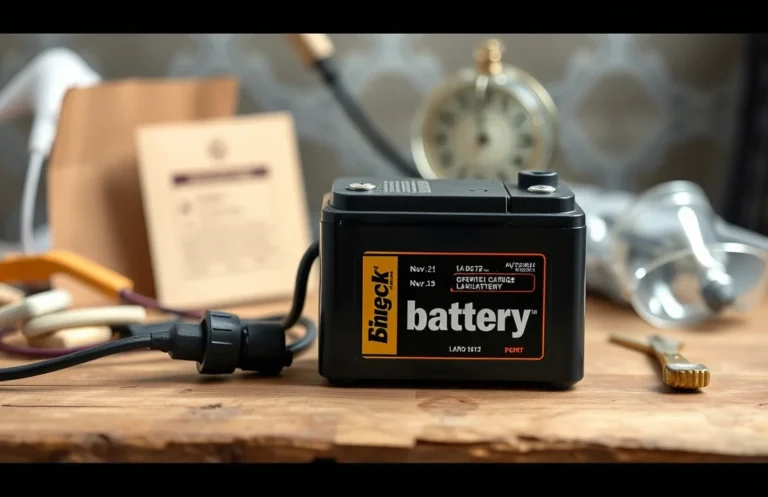
Can You Charge A Car Battery In The House?
Most car batteries are 12 V, so the single most important spec when charging indoors is voltage. You can charge a car battery at home, but only with the right charger, ventilation, and supervision. A common mistake is using a high current booster or charging in a sealed room, so check the charger voltage and battery type first.

Can you charge a car battery in the house? Yes, with a proper 12 V smart charger, good ventilation, and monitoring; limit charge current to about C/10 (roughly 4 to 10 A for 40 to 100 Ah batteries) and use a charger with automatic float/maintenance mode to avoid overcharge.
Charge a car battery indoors?
Yes, you can charge a 12 volt starter car battery indoors in limited cases, provided you use an automatic or smart charger, keep the area well ventilated, and follow safety precautions. You should not charge flooded or damaged batteries inside living spaces, and you must not attempt to service or charge an EV traction battery outside its approved systems or without certified equipment.
When indoor charging is reasonable, the battery is a removable 12 volt starter type, it is cool to the touch, shows no leaks or swelling, and the charger is automatic or has an approved float mode. The charging location should be a garage or utility room with the door or windows open, away from flammable materials, and on a non-conductive surface.
For example, connecting a small smart charger to a healthy, out-of-vehicle 12 volt battery on a concrete garage floor with the door open is commonly acceptable for topping up or slow charging. Always read the charger label for recommended amp limits and the battery label for charging instructions before you start.
When you should not charge indoors: avoid charging flooded cell batteries in living areas, never leave charging batteries unattended for long periods if you cannot verify the charger will regulate properly, and do not attempt to open or repair EV traction battery packs. High-voltage EV batteries require service in certified facilities or via the vehicle’s onboard charger and a certified EVSE for safety and warranty reasons.
| Battery type | Indoor charging acceptable? | What to use |
|---|---|---|
| 12 volt starter battery | Yes, with precautions | Smart/automatic charger, ventilation, protective gear |
| EV traction battery | No, not with DIY methods | Onboard charger, certified EVSE, or qualified service center |
Stop and move the battery outside if it gets hot, begins to swell, smokes, or leaks acid; continuing to charge in that state risks fire and injury.
Bottom line, indoor charging is acceptable for small 12 volt starter batteries when you follow ventilation, charger choice, and condition checks, but it is unsafe for damaged batteries and inappropriate for EV high-voltage packs. If you have any doubt, put the battery outdoors on a non-flammable surface and contact a professional.
Battery chemistries to check
Charging a car battery indoors is feasible, but specific battery chemistries require different precautions. Flooded lead-acid batteries can emit explosive gases, while AGM and gel batteries are sealed and safer for indoor use. Lithium batteries, especially LiFePO4, need compatible chargers to avoid risks, and high-voltage EV batteries demand specialized equipment.
Flooded lead-acid batteries release hydrogen gas during charging, which can accumulate and pose an explosion hazard if not ventilated properly. They require a well-ventilated area to ensure safe operation. Users should check for:
AGM (Absorbent Glass Mat) and gel batteries are designed to be spill-proof and can be charged indoors without as much concern for gas emissions. However, some considerations include:
Lithium-based batteries, such as LiFePO4 and Li-ion, are increasingly common in automotive applications. While they are generally safer than lead-acid batteries, they require specific care:
High-voltage EV batteries should never be charged indoors without professional equipment and expertise due to their complexity and risk of electric shock.
Understanding the chemistry of your battery is crucial for safe indoor charging. Always refer to the battery manufacturer’s guidelines for specific instructions and safety precautions.
Charger types and compatibility
You can charge a car battery in the house, but it requires the right charger to ensure safety and efficiency. Smart chargers are preferable for home use because they adjust the charge rate and prevent overcharging, while dumb chargers provide a constant charge that can lead to battery damage.
In practice, ensure the charging area is well-ventilated to dissipate heat and prevent gas buildup, especially with lead-acid batteries. Following these guidelines will help you safely charge a car battery in your home.
Capacity, wattage, runtime
You can estimate the energy in a car battery by multiplying ampere-hours, Ah, by the battery’s nominal voltage to get watt-hours, Wh. Approximate charge time is the battery Ah divided by charger amps, then multiplied by an inefficiency factor to allow for heat, gassing, and charge taper.
Convert Ah to Wh by using the battery’s nominal voltage, usually 12 volts for automotive starting batteries: Wh = Ah × volts. That Wh number is the total electrical energy the battery holds at nominal voltage; chargers are rated in amps or watts, so convert when needed by using watts = volts × amps.
For example, a 60 Ah, 12 V starting battery contains about 720 Wh. If you use a 10 amp charger at 12 V, the raw time would be 60 Ah / 10 A = 6 hours, and with a typical lead-acid charging inefficiency multiplier of 1.25 the realistic time becomes about 7.5 hours.
| Battery | Energy (Wh) | Charger (A) | Approx. hours (Ah/A × 1.25) |
|---|---|---|---|
| 60 Ah, 12 V | 720 Wh | 5 A | 15.0 h |
| 60 Ah, 12 V | 720 Wh | 10 A | 7.5 h |
| 60 Ah, 12 V | 720 Wh | 20 A | 3.75 h |
Chargers impose current limits, often expressed relative to battery capacity, to prevent overheating and gassing; battery manufacturers commonly list a maximum recommended charge current, often shown as a fraction of Ah. Check the battery manual or label for the max charge current and do not exceed it, because faster is not always better for battery life.
Before you start charging at home, confirm the battery voltage, charger amps, and that your power source can supply the charger wattage. If any specification is missing, contact the manufacturer or consult the vehicle manual rather than guessing.
Safety risks and precautions
You can physically charge a car battery inside a home, but it creates real hazards: lead acid batteries can release hydrogen gas during charging, and a spark or high heat can ignite that gas or trigger thermal failure. If you must charge indoors, treat the process like a controlled hazardous operation and follow strict precautions.
Quick pre-checks:
Where to charge at home
Yes, you can charge a car battery at home, but choose a location with good ventilation, a solid nonconductive surface, and an electrical circuit that can supply the charger’s rated current. Stick to garages or outdoor spaces when possible; living rooms and bedrooms are poor choices unless the battery is sealed and you control ventilation and monitoring carefully.
| Location | Pros | Cons | Recommended setup |
|---|---|---|---|
| Attached garage | Convenient, near house power, sheltered from weather | Connected to living space, may need ventilation and detectors | Place on stand, open door/window, detector near ceiling, use dedicated circuit or GFCI |
| Driveway / outdoors | Best ventilation, lowest risk of fumes indoors | Weather exposure, theft risk, longer extension cord runs | Use covered workbench, heavy-gauge outdoor-rated cord, protect charger from rain |
| Basement / utility room | Out of everyday living space, easy to contain spills | Often poor ventilation, risk of gas buildup in low points | Keep door closed, run fans to outside, place detector high and ensure air exchange |
| Living area / bedroom | Extremely convenient | Indoor air concerns, cannot recommend unless battery is sealed and charger is low-current | Avoid unless absolutely necessary; if used, isolate in ventilated container and monitor closely |
Charging the battery while it is installed in the vehicle is often easiest, because terminals are accessible and the battery stays secure. For damaged batteries, heavy corrosion, or if the vehicle interior prevents ventilation, remove the battery and charge it outdoors or in a garage on a stable platform instead.
For example, when charging on a bench, place the battery on a nonconductive stand or a thick rubber pad and set a shallow drip tray beneath it. Keep the area clear of flammable materials, keep the charger and clamps off the floor, and position any gas detector close to the ceiling because hydrogen is lighter than air and will collect high.
Buy, inspect, troubleshoot
You can charge a car battery inside the house, but only with the right charger, correct settings, and strict safety steps, and you must stop and move the battery outdoors if it emits heat, fumes, or swells. Use a charger with automatic cutoff, the proper chemistry setting, and place the battery on a nonflammable surface with ventilation to limit hydrogen buildup.
Before connecting any charger, perform a careful pre-charge inspection following the sequence below. Do these checks in order to reduce risk and to let the charger work as intended.
For example, if you have a 12 volt flooded battery and doubt the correct charge rate, set the charger to a conservative current (often around one tenth of the amp-hour rating) or choose maintainer mode; if the charger offers a chemistry setting, select flooded rather than an automatic lithium preset.
Indoor charging is practical for maintainers and slow chargers, but prioritize safety over convenience; if any inspection step or troubleshooting outcome is unclear, stop and consult a professional or move the battery outdoors before continuing. Keep records of charger settings and battery condition to decide when replacement is the safer, cheaper long-term option.
Quick Summary
Yes, you can sometimes charge a car battery indoors if you use the correct charger, ventilate properly, and follow safety steps.
Frequently Asked Questions
Can you charge a car battery in the house with a standard 12V charger?
You can charge a car battery indoors if the charger is the right type, but verify the charger is labeled for 12 V lead-acid batteries and use a ventilated area away from living spaces.
Is it safe to charge a car battery indoors because of heat or gas?
You can, but charging produces heat and hydrogen gas, so keep the battery in a well-ventilated spot away from open flames and sparks, because hydrogen becomes explosive at about 4 percent concentration in air.
How long does it take to charge a car battery at home?
You can estimate time by dividing the battery amp-hour capacity by the charger current, so a 50 Ah battery on a 5 A charger will take roughly 10 hours to replenish that capacity.
How do you safely charge a car battery inside the house?
You can minimize risk by placing the battery on a noncombustible surface, opening a window for ventilation, disconnecting it from the vehicle, and connecting clamps correctly, and use a smart charger with automatic shutoff to prevent overcharging.
What common buying mistakes should I avoid when buying a charger to charge a car battery at home?
You can avoid problems by matching the charger to battery voltage and chemistry, checking the amp rating and safety certifications, and ensuring the unit lists 12 V for standard car batteries instead of buying a no-name trickle charger with no automatic control.

- Top 10 Best Solar Backup Batteries Austin 2026 - July 28, 2026
- Top 10 Best Solar Battery Charger For Rv 2026 - July 28, 2026
- Top 10 Best Solar Charger For Trolling Motor Battery 2026 - July 28, 2026