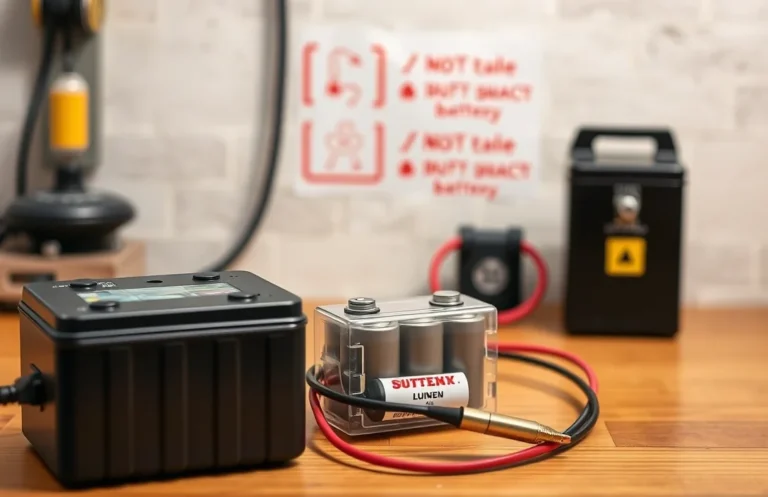
Can You Charge Motorcycle Battery With Car Charger?
Most motorcycle batteries are 12 V, so voltage matching is the single most important spec to check before using a car charger. A common mistake is using a high-amp starter or wrong chemistry setting that overcharges a small bike battery. First check the charger label for a 12 V setting and a low-amp or smart mode, then read the battery type.

Charging a motorcycle battery with a car charger is possible if the charger is set to 12 V, limited to a low current (commonly 1-4 A), and matched to the battery chemistry; otherwise use a motorcycle-specific smart charger to avoid overcharge, heat, or damage during several hours of charge.
Using car charger on motorcycle?
Yes, in many cases you can charge a motorcycle battery with a car battery charger, provided the charger supports the battery chemistry and has a low-current or automatic charge mode suitable for smaller batteries. Do not use car chargers that have an engine-start or high-current mode, and avoid any charger that does not list support for the specific chemistry in your motorcycle, especially lithium types.
Safe use depends on three things: the charger type, the battery chemistry, and the battery condition. A modern smart or multi-chemistry charger that includes a small-battery or maintenance program is usually safe; manual, high-current, or automotive-only chargers create the most risk.
| Charger type | Compatible with typical motorcycle lead-acid | Compatible with motorcycle lithium | Notes |
|---|---|---|---|
| Smart/automatic car charger | Yes, usually | Only if the charger lists lithium support | Best option when labelled for small batteries |
| High-current engine-start or jump charger | No | No | Designed for short bursts, risks overheating and plate damage |
| Basic manual “dumb” charger | Risky unless set for small batteries | No | Requires careful monitoring to avoid overcharging |
| Multi-chemistry bench charger | Yes when set correctly | Yes when set to the correct lithium profile | Good for removed batteries or bench servicing |
Warning: Do not charge swollen, cracked, or leaking batteries. If a charger does not explicitly support your battery chemistry, stop and get a compatible charger or professional service.
Voltage and amperage differences
Most motorcycle batteries are nominally 12 volts like car batteries, but they are much smaller in capacity and typically require lower charging current. Using a car charger that delivers high amperage can overheat, boil off electrolyte in wet lead acid batteries, or damage AGM and small lithium packs unless the charger can be set to an appropriate low-current or battery-specific program.
Read both battery and charger labels before you connect anything. The battery label or owner’s manual will list nominal voltage, capacity in amp-hours, and chemistry type; the charger label will list output voltage, maximum output current, and supported battery chemistries or modes.
Why charger amps matter: charging a small motorcycle battery at the same amp rate used for car batteries shortens battery life and can cause heat or venting. A practical guideline is to keep charge current well under the battery capacity expressed in C-rate terms, and to prefer chargers that offer low-current trickle or maintenance modes.
Safety precautions before charging
You can use a car charger on a motorcycle battery only when the charger matches the battery type and voltage and you follow strict safety steps; otherwise you risk acid release, fire, or damage to the bike’s electronics. Use a low-current, automatic or smart charger and never charge a physically damaged, swollen, or leaking battery.
Warning: If you are unsure about the battery chemistry, charger settings, or how to isolate your bike’s electrical system, get help from a mechanic or use a purpose-built motorcycle charger. Charging the wrong way can destroy the battery and electronics.
Step-by-step charging process
You can often charge a motorcycle battery with a car charger if the charger is set to 12 volts and the charger supports the battery chemistry and a low charge current or a motorcycle/maintenance mode. If the charger cannot be set appropriately or the battery is a lithium type that requires a specific charge profile, stop and use a motorcycle-specific charger.
Quick checks to run before you start: verify the battery voltage and chemistry on the label, confirm the charger has a motorcycle or low-amp mode, and make sure the charger’s chemistry setting matches the battery. If any of those do not match, use a proper motorcycle charger or consult the battery manual to avoid damage.
Pros and cons comparison
Yes, a car charger can charge a motorcycle battery when its output matches the battery voltage and the charger can be set to a low, controlled current; however, many car chargers are designed for larger lead acid packs and can overcurrent or overcharge smaller motorcycle batteries. For routine maintenance and batteries with sensitive chemistries, a dedicated motorcycle or smart charger reduces risk and preserves battery life.
Benefits of using a car charger include convenience and availability, especially in a pinch. Some modern car chargers have adjustable current or 12 volt smart modes that can be suitable for motorcycle batteries if set correctly.
| Feature | Typical car charger | Dedicated motorcycle / smart charger |
|---|---|---|
| Convenience | Easy to find, common in garages and service shops | May require purchase or carrying one on trip |
| Typical output current | Often 10 A or higher, can be too high for small bikes | Low-current modes (0.8 A to 3 A) for small batteries |
| Charge control | Some are dumb constant-voltage or high current | Multi-stage charging, float mode, automatic cut-off |
| Chemistry support | Usually for flooded lead acid, may not have AGM or Li modes | Many support flooded, AGM, GEL, and LiFePO4/Li-ion profiles |
| Risk to bike electronics | Higher risk if charger lacks regulation or has poor grounding | Lower risk, often has reverse-polarity and spark protection |
| Battery life impact | Possible reduced life from high current or improper profile | Preserves life with correct profile and gentle float charging |
| Price | Often cheaper or already owned | Higher cost but designed for motorcycles |
Risks and downsides: using a high-current car charger risks overheating, plate damage, and boiling off electrolyte in flooded cells. Cheap chargers can lack polarity protection and may introduce voltage spikes that stress motorcycle electronics.
What to check before using a car charger
For example, if your motorcycle has a small 6 to 15 Ah lead acid battery, a car charger set to 10 A will fully charge it quickly but may shorten service life; a 1 to 3 A smart charger will take longer but finish with a proper float and cause less stress.
When a dedicated charger is preferable: choose one when the battery is small, when it is AGM or lithium, when you need long-term maintenance float, or when on-board electronics are sensitive. Spending more on a smart charger is a safety-first trade-off that preserves battery capacity and reduces risk to your motorcycle.
Alternatives and recommendations
You can sometimes charge a motorcycle battery with a car charger, but it is safer and better for battery life to use a charger made for small 12 volt batteries or a smart charger with a low-current mode. Car battery chargers often supply higher charge current and lack motorcycle-specific charge profiles, which raises the risk of overheating, overcharging, or boiling flooded cells.
Safety first: always confirm the battery chemistry and voltage on the battery label, never charge a swollen or leaking battery, and provide ventilation when charging flooded lead-acid cells. If the charger does not have automatic voltage sensing, do not leave it unattended for long periods.
| Option | Best for | What to check |
|---|---|---|
| Smart motorcycle charger | Routine charging, recovery from partial discharge | Low-current modes, chemistry selection, automatic float |
| Maintainer / desulfator | Long-term storage, recovering lightly sulfated lead-acid cells | True float mode, pulse desulfation only on lead-acid, not for badly damaged batteries |
| Portable jump-starter with charging output | Emergency starts and occasional top-up | Has 12V output/charger mode, rated for small batteries, safety protections |
| Solar trickle charger | Slow maintenance while storing bike outside | Has charge controller, correct voltage, compatible with battery chemistry |
Maintainers and desulfators are distinct from basic chargers, because they are designed to keep a battery topped up over weeks or months and to reverse mild sulfation with pulsed charging. Use them for seasonal storage or infrequent use, and stop using a desulfator on a battery that shows physical damage or will not hold any charge.
For portable and solar options, prefer units with built-in charge controllers and specifically listed compatibility for small 12 volt batteries; many small solar panels need a regulator to avoid overcharge. For emergency readiness, carry a compact jump-starter rated for your motorcycle and a small smart maintainer for storage.
Overall recommendation: buy a multi-stage smart charger or a dedicated motorcycle charger with low-current modes and float maintenance, and keep a maintainer or solar trickle unit for long-term storage. If you ever doubt compatibility, check the motorcycle manual and charger spec sheet before connecting.
Battery health and storage
Yes, you can often charge a 12 volt motorcycle battery with a car charger, but only when the charger is set for the correct voltage, chemistry, and a low enough current for the battery’s capacity. Using a high-current automotive-only charger on a small motorcycle battery can cause overheating, reduced capacity, or permanent damage.
Capacity is shown in amp-hours, AH, and it determines how long a battery will run a load; a 10 AH battery will supply 1 amp for roughly 10 hours, or 5 amps for about 2 hours, ignoring inefficiencies and age. When choosing charge current, use a small fraction of the AH rating (this C-rate approach keeps charging gentle), and check the battery chemistry label because flooded lead-acid, AGM, gel, and lithium require different charge profiles.
Failure signs include persistent heat during charging, visible swelling, cracked case, strong sulfur smell, and inability to hold voltage after a full, correctly performed charge. Any of these signs are grounds to replace the battery rather than repeatedly attempting repairs.
For long-term storage, keep the battery at a partial state of charge recommended by the manufacturer and use a smart maintainer that provides a safe float current. Recharge and test after storage periods, and replace batteries that fail to hold charge or show physical damage, because a maintainer can preserve health but cannot reverse core capacity loss.
Quick Summary
Yes, but only if the charger matches the battery voltage and provides a safe, controlled charging current appropriate for motorcycle batteries.
Frequently Asked Questions
Can you charge a motorcycle battery with a car charger?
You can in many cases if the battery and charger are both 12 V and the charger is adjustable or a smart type, but check the battery chemistry first. Confirm the charger is set to 12 V and the charge current is appropriate for the battery, commonly around 0.1C or 10% of the battery Ah rating.
Can you use a car charger to charge a small motorcycle battery without overheating it?
You can, provided the charger current is not too high for the battery, because excessive current raises internal temperature. A common guideline is to avoid charging above roughly 10% of the battery Ah, and stop if the battery surface becomes very hot or exceeds the temperature limit in the manual.
Can you estimate how long it will take to charge a motorcycle battery with a car charger?
You can estimate charge time from battery capacity and charger current, keeping in mind charging tapers near full. As a rough rule, charging a 10 Ah battery at 1 A takes about 10 hours, while at 4 A it takes about 2.5 hours before tapering slows final full charge.
Can you safely use a car trickle or automatic charger on a motorcycle battery, and what safety steps should you take?
You can safely use a trickle or smart automatic car charger if you follow polarity, ventilation, and battery-type settings, and never leave a mismatched high-current charger connected unattended. Always verify the battery voltage is 12 V, confirm correct polarity, and use a charger with a motorcycle or low-current mode when available.
Can you avoid common mistakes when charging a motorcycle battery with a car charger, and what should you not do?
You can avoid problems by not using a high-amp starter charger on a small motorcycle battery, not leaving it charging unattended, and not ignoring the battery or charger manual. Do not exceed about 10% of the battery Ah as a charging current guideline, and always check the battery label or manual before connecting.

- Top 10 Best Solar Backup Batteries Austin 2026 - July 28, 2026
- Top 10 Best Solar Battery Charger For Rv 2026 - July 28, 2026
- Top 10 Best Solar Charger For Trolling Motor Battery 2026 - July 28, 2026