Difference Between Cr2025 And Cr2032 Battery
The single most important spec when choosing CR2025 versus CR2032 is thickness, not voltage or brand. Many people assume the two are interchangeable and end up with a cell that fails to make contact or gives shorter runtime. Check the battery compartment stamp or device manual for 20 mm diameter and allowed thickness, and never force a thicker cell into a tight holder. If you are unsure, measure the cavity depth or bring the old cell to a parts counter.
CR2025 and CR2032 batteries differ mainly in thickness and capacity: both are 20 mm diameter and 3 V, CR2025 is 2.5 mm thick (about 150-170 mAh), CR2032 is 3.2 mm thick (about 200-240 mAh), and polarity must match the device.
Quick Specs Comparison
CR2025 and CR2032 are both 3 volt lithium coin cells with the same 20 millimeter diameter, and the main difference is thickness. The thicker CR2032 holds noticeably more capacity, so it usually runs devices longer but may not fit holders made for a thinner cell.
| Spec | CR2025 | CR2032 | Notes |
|---|---|---|---|
| Diameter | 20.0 mm | 20.0 mm | Both use the same 20 mm diameter, so cup contacts match across both types. |
| Thickness | 2.5 mm | 3.2 mm | Thickness is the reason for different model numbers and capacity; verify fit before swapping. |
| Nominal voltage | 3.0 V | 3.0 V | Both are 3 volt lithium manganese dioxide chemistry cells, so voltage is the same at nominal load. |
| Typical capacity (mAh) | ~150 to 170 mAh (manufacturer dependent) | ~200 to 240 mAh (manufacturer dependent) | Actual capacity depends on brand and discharge rate; higher thickness generally gives higher mAh. |
Label decoding is straightforward: the letters and numbers tell you chemistry and size. “CR” denotes the common lithium manganese dioxide coin chemistry and round format, “20” is the diameter in millimeters, and the final two digits (25 or 32) indicate thickness in tenths of a millimeter, so 25 means 2.5 mm and 32 means 3.2 mm.
Physical Size Differences
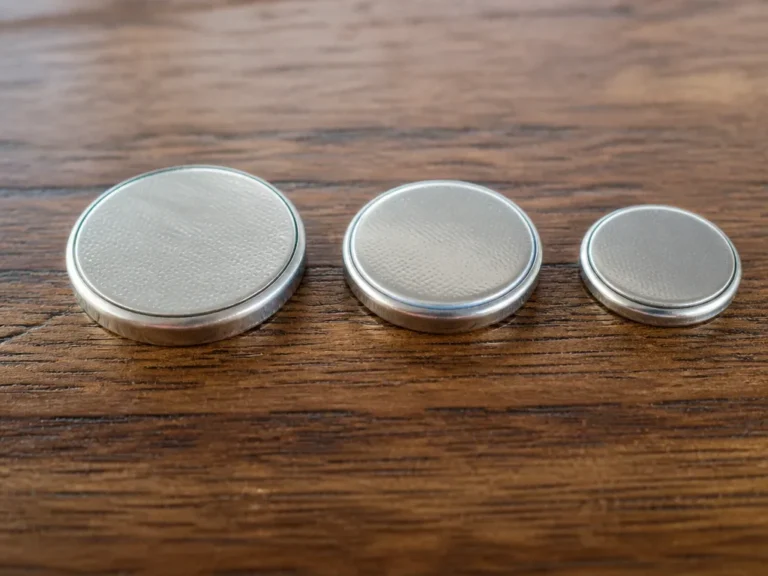
CR2025 and CR2032 both have a 20 mm diameter, but the CR2025 is 2.5 mm thick while the CR2032 is 3.2 mm thick, a 0.7 mm difference. That 0.7 mm matters for fit, contact pressure, and whether a device cover or spring will close or make reliable contact.
Having the same diameter means most holders align the positive face and outer rim the same way for both cells, so polarity and lateral fit are usually not the issue. Thickness controls the depth, so the thicker CR2032 will sit closer to the contact plate or push harder on a spring, while the thinner CR2025 may sit too low and lose contact or rattle in deep cavities.
For diagram and photo documentation, include three views: a top view showing the 20 mm diameter aligned to the device outline, a side view showing absolute thickness against the housing, and a stacked view with CR2025 on top of CR2032 to show the 0.7 mm step. Each diagram should include a scale marker such as a millimeter ruler or caliper reading so the size difference is unambiguous.
When photographing, take a close-up of the battery label, a side-on macro with a ruler, a view of the installed cell with the cover open, and a final shot with the cover closed showing any protrusion. Those angles make it easy to confirm whether the device accepts 2.5 mm, 3.2 mm, or requires the exact specified cell.
Voltage & Capacity Differences
CR2025 and CR2032 are both lithium manganese dioxide button cells rated at a nominal 3 volts, but CR2032 stores noticeably more charge because it is thicker. That extra capacity usually gives longer runtime in low-drain devices, while the voltage profile is the same for both cells.
Nominal voltage labeling of 3 V comes from the cell chemistry, not from capacity, so swapping between CR2025 and CR2032 will not change the device voltage under normal conditions. Small devices detect voltage, not mAh, so electrical behavior at turn-on is comparable unless the device demands high current briefly.
| Cell | Nominal voltage | Typical capacity range (mAh) |
|---|---|---|
| CR2025 | 3 V | ~150 to ~170 mAh (varies by manufacturer) |
| CR2032 | 3 V | ~200 to ~240 mAh (varies by manufacturer) |
Manufacturers list different mAh numbers because of production tolerances, different internal construction, and the voltage cutoff used for rating capacity. Temperature, load current, and how the manufacturer defines end-of-discharge voltage all change the quoted mAh, so labels are estimates for typical conditions.
For example, if a device draws 0.5 mA on average, a 160 mAh CR2025 gives roughly 320 hours (160 / 0.5) and a 220 mAh CR2032 gives roughly 440 hours. To convert to watt-hours, multiply mAh by 3 V and divide by 1000, so the same cells give roughly 0.48 Wh and 0.66 Wh respectively, which matters when comparing total energy available, not just voltage.
Common Device Uses
CR2032 is the thicker coin cell designers pick when a device needs longer run time and the compartment can accept more height, while CR2025 is chosen for thinner housings where space is tight. Many consumer items will accept either cell if the holder provides room and firm contact, but several devices list a strict part number and should not be substituted without checking the manual.
Devices that commonly use CR2032 include:
Devices that commonly use CR2025 include:
Devices where either cell is frequently acceptable, with caveats:
| Device type | Common cell | Interchangeable? |
|---|---|---|
| Watches | CR2032 or CR2025 depending on model | Sometimes, verify case depth and contact position |
| Car key fobs | Often CR2032; some use CR2025 | Sometimes, only if the battery fits securely |
| Motherboard CMOS | CR2032 typically | Rarely interchangeable, use specified size |
Safety note: always check the device manual or battery marking before substituting, do not force a thicker cell into a shallow holder, and do not attempt to recharge primary coin cells. A loose or poorly seated battery can cause intermittent operation, contact corrosion, or damage to the battery compartment.
Compatibility & Substitution Guidance
CR2025 and CR2032 share the same 20 mm diameter and the same nominal 3 volt chemistry, but CR2025 is thinner (about 2.5 mm) while CR2032 is thicker (about 3.2 mm), so the thicker CR2032 holds more capacity. Because thickness is the only dimensional difference, electrical interchangeability is usually fine if the thicker cell fits securely without stressing contacts or the case.
Putting a CR2032 into a device designed strictly for CR2025 can fail for mechanical reasons, for example the lid may not close or spring contacts may be bent out of alignment. Conversely, using a CR2025 in a CR2032 holder can leave the cell loose, causing intermittent contact, resets, or faster apparent depletion from poor connection.
| Cell | Thickness | Voltage / Capacity |
|---|---|---|
| CR2025 | ~2.5 mm | 3 V, lower capacity (thinner) |
| CR2032 | ~3.2 mm | 3 V, higher capacity (thicker) |
Rechargeables and Chargers
CR2025 and CR2032 are both 20 mm diameter primary lithium coin cells that deliver roughly 3 volts, but the CR2032 is thicker and therefore typically stores more energy. Do not attempt to charge CR-series cells; rechargeable coin cells use different chemistry, different nominal voltages, and require chargers designed for them.
For example, if a device lists CR2032, you can usually fit a CR2025 only if the battery compartment allows thinner cells, but you cannot replace a CR2032 with an LIR2032 unless the device tolerates the rechargeable cell’s different voltage and the manufacturer approves it.
Safety, Storage, Disposal
Both CR2025 and CR2032 batteries can present safety hazards if mishandled. Signs that either battery should be removed include swelling, leakage, or excessive heat. Always check for physical damage before disposal or storage to prevent accidents.
Storing coin cells properly is crucial for safety and longevity. Here are some best practices:
When it comes to end-of-life disposal, both CR2025 and CR2032 batteries should not be thrown in regular trash due to their chemical content. Here are the steps you should follow:
By adhering to these safety, storage, and disposal practices, you can significantly reduce risks associated with CR2025 and CR2032 batteries, ensuring a safer environment for both users and the ecosystem.
Buying & Troubleshooting Checklist
The CR2025 and CR2032 batteries differ primarily in thickness, affecting their applications and compatibility. The CR2032 is 3.2 mm thick, while the CR2025 measures 2.5 mm. Both batteries share the same voltage (3V) but have different capacities, with the CR2032 generally having a higher capacity of around 220 mAh compared to the CR2025’s 150 mAh.
Troubleshooting Common Issues
Consult the device manual or manufacturer support if you continue to experience issues after troubleshooting. They can provide specific guidance tailored to your device’s needs, especially if compatibility is a concern.
Quick Summary
The main difference is thickness: CR2025 is thinner at 2.5 mm while CR2032 is thicker at 3.2 mm, both 3V.
Frequently Asked Questions
Can I use a CR2025 instead of a CR2032 in my device?
You can sometimes swap them if the battery holder accepts the thinner cell, but they are not identical; CR2025 is 2.5 mm thick and CR2032 is 3.2 mm thick, both have a 20 mm diameter. If the CR2025 fits loosely the contacts may not touch, so check fit and the device manual before using the thinner cell.
Will a CR2025 or CR2032 get hotter during use or cause damage from heat?
Both are 3 V lithium coin cells, so both are 3 V cells, and they normally run cool in low-drain devices; excessive current, short circuits, or attempting to recharge them can cause heating. You can avoid heat problems by not shorting the cell, not charging primary lithium cells, and removing the battery if the device becomes unusually hot.
Which battery lasts longer, CR2025 or CR2032, and how does that affect runtime?
Because the CR2032 is thicker it usually has higher capacity, so CR2032 is 3.2 mm thick while CR2025 is 2.5 mm, and the 2032 typically gives longer runtime in the same device. You can confirm runtime by checking the mAh rating printed on the package and comparing it to your device current draw.
How do I know when to replace a CR2025 or CR2032 battery in a key fob or remote?
You can replace batteries when the device shows a low-battery indicator or when a fresh cell measures low on a meter; use a multimeter and replace if the cell reads under about 2.6 V or if the device behaves intermittently. For convenience many people check annually for frequently used remotes and key fobs.
What common buying mistakes should I avoid when choosing between CR2025 and CR2032?
Avoid buying the wrong thickness or the wrong chemistry, and check markings carefully – both have a 20 mm diameter but the thickness differs, 2.5 mm versus 3.2 mm, and the package should say “3 V” for a lithium cell. You can also avoid cheap counterfeit cells by buying from reputable brands or retailers and checking the manufacture or expiry date on the package.

- Top 10 Best Solar Battery For Rv 2026 - September 12, 2026
- Top 10 Best Solar Battery Installers Qld 2026 - September 12, 2026
- Top 10 Best Solar Battery Deals Qld Reviews 2026 - September 12, 2026