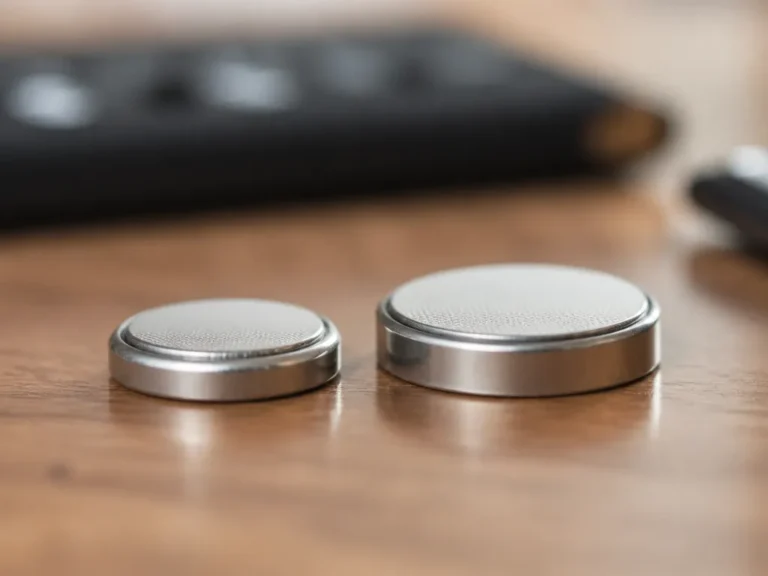
Difference Between Deep Cycle Battery And Starting Battery
A starting battery can deliver hundreds of amps for a few seconds to crank an engine, while a deep cycle battery is built to be discharged to roughly 50% repeatedly over many cycles. The spec that matters most is depth of discharge and chemistry, so check the battery label for Ah, CCA, and whether it says “deep cycle” or “starting” first. A common mistake is using a starting battery for house loads, which kills it fast.
Deep cycle vs starting battery: a starting battery delivers a short, high-current burst (hundreds of amps) for engine cranking, while a deep cycle battery is designed for steady discharge over hours and to tolerate repeated 50% depth-of-discharge cycles without immediate damage.
Deep Cycle vs Starting: Definitions
A starting battery is built to deliver a short, very high-current burst to crank an engine; a deep-cycle battery is built to provide steady current over many hours and tolerate repeated deep discharges. Using the wrong type for the job shortens battery life and risks poor performance.
Starting batteries give high cranking amps for seconds and have low tolerance for deep discharge, so their useful life falls quickly if you regularly drain them. Deep-cycle batteries give lower peak current but far higher cycle life when discharged to moderate or deep levels, making them the right choice for house loads, trolling motors, and off-grid use.
For example, a car needs a battery that delivers high Cold Cranking Amps, while an RV house bank needs batteries rated for many cycles at 50 percent or greater Depth of Discharge. Many marine or dual-purpose batteries try to compromise, but each compromise reduces either cranking reliability or cycle life.
Safety note: do not mix battery chemistries, sizes, or old and new batteries in the same bank, and stop using any battery that swells, overheats, or smells. Verify charger profiles and voltages before connecting; incorrect charging is the main cause of premature failure.
Construction, Chemistry & Visuals
Deep cycle batteries use thicker, heavier plates and more active material so they can discharge deeply and be recharged many times, while starting batteries use many thin plates to deliver very high short-term current for engine cranking. Plate geometry, separator type, electrolyte containment, and the presence or absence of a BMS are the primary physical and chemical differences you will see when comparing the two.
Plate thickness and active material differ first and most obviously. Deep cycle plates are thicker and more robust, with active material formulated to resist shedding during repeated deep discharges, while starting plates are thin to maximize surface area for high instantaneous current output.
Separators and electrolyte containment change by construction type. Flooded lead acid batteries have porous separators and free liquid electrolyte; AGM uses fiberglass mats that immobilize electrolyte for better vibration resistance and lower internal resistance; gel traps silica-thickened electrolyte to prevent stratification. Lithium cells replace heavy lead plates with stacked pouch, prismatic, or cylindrical cells and use a Battery Management System, or BMS, to monitor cell balance, voltage, and temperature.
| Construction Feature | Starting Battery | Deep Cycle Battery |
|---|---|---|
| Plate thickness | Many thin plates, high surface area | Fewer thick plates, robust active mass |
| Separator / electrolyte | Porous separators, often flooded or AGM | Thicker separators, AGM or gel common, flooded options |
| BMS / electronics | Usually none | Lead acid: usually none, Lithium: integrated BMS common |
Safety note: Never assume a sealed case means lithium chemistry; check the label. If you see swelling, overheating, or damaged vent caps, stop use and inspect further, because these are signs of failure regardless of chemistry. Verify labels for Ah, chemistry type, sealed or flooded, and presence of BMS before selecting a battery for RV, marine, or automotive work.
Capacity, Discharge, CCA & Cycle Life
Deep-cycle batteries are built to deliver energy over long periods and survive many partial discharges, while starting batteries are built to deliver a very high short burst of current for engine cranking and will be damaged by frequent deep discharge. Capacity (ampere-hours) and C-rate set available runtime, cold-cranking amps and burst current set starting ability, and cycle life is mainly driven by depth-of-discharge, temperature, and how you charge the battery.
Ah, or ampere-hours, is the nominal stored charge at the battery voltage and is the first number to check when you want runtime. To estimate usable energy convert Ah to watt-hours by multiplying by the nominal voltage, then divide by the appliance watts and reduce for usable DoD and conversion losses.
For example, a 12 volt, 100 Ah battery has about 1,200 Wh of stored energy; if you plan to use only 50 percent DoD that leaves roughly 600 Wh usable before recharging, and an inverter will further reduce that by 10 to 20 percent in typical setups. Always confirm nominal voltage and expected inverter efficiency before you count on runtime.
C-rate describes how fast a battery can be discharged relative to its capacity, expressed as 1C, 0.2C, 2C and so on; deep-cycle batteries are optimized for low to moderate continuous C-rates, while starting batteries are optimized for very high short-term C-rates during crank. CCA, or cold-cranking amps, and short burst current ratings tell you how much current the battery can supply for a few seconds at low temperatures, which is what matters for engine start.
Cycle life varies widely by chemistry and use pattern, but two practical drivers dominate: depth-of-discharge and temperature. Frequent deep discharges and operating or charging at high temperature shorten cycle life dramatically, while shallow cycles at cool temperatures extend it.
| Spec | Deep-cycle battery | Starting battery |
|---|---|---|
| Primary purpose | Long-duration energy delivery for loads and inverter use | Short-duration high-current burst to start engines |
| Rated capacity (Ah) | Usually high and designed for usable DoD | Often lower usable Ah, rated more for cranking than long runs |
| Usable DoD | Often designed for 50% or deeper repeated DoD | Designed for shallow discharge, deep DoD shortens life |
| C-rate | Optimized for low to moderate continuous discharge | Optimized for very high short peak discharge |
| CCA / burst current | Moderate burst capability compared with starters | High CCA and burst ratings for reliable cranking |
| Cycle life | Higher cycle life when used within recommended DoD | Low cycle life under repeated deep discharge |
| Typical failure mode | Loss of capacity from plate corrosion or sulfation over many cycles | Plate damage and reduced starting capacity if discharged deeply |
If you need repeated run-time or inverter use, choose a deep-cycle battery; if you only need to crank an engine, choose a starting battery, but never substitute one for the other without confirming capacity, CCA, and DoD limits.
Applications and Recommendations
A starting battery is built to deliver a short burst of very high current to crank an engine, while a deep cycle battery is built to supply lower current for long periods and to survive many deep discharges. Use starting batteries for engine cranking; use deep cycle batteries for house loads, solar storage, and repeated discharge cycles.
Automotive and motorcycle recommendation: fit a dedicated starting battery for cars and motorcycles that are used primarily for transport and starting. If you only need to power a radio or a single accessory for short periods, the stock starting battery is fine, but do not use a deep cycle battery only for cranking because it will give poor cold-start performance and may have higher internal resistance.
For marine and RV setups, separate house and start batteries whenever space and weight allow. House loads like refrigerators, inverters, pumps, and lights should go on a deep cycle bank, while the engine starter stays on a starting battery. For tight spaces, a dual-purpose battery can work, but expect shorter cycle life or weaker cranking relative to dedicated batteries.
For solar, off-grid, and backup power, choose deep cycle chemistries made for repeated discharge and recharge, such as flooded lead-acid, AGM, or lithium variants. A starting battery is not suitable for solar storage because it cannot tolerate deep discharge without damage. Do not mix different chemistries or old and new batteries in the same bank, and verify charger type matches chemistry.
Hybrid and dual-battery strategies reduce risk and improve runtime. Common isolator options include VSR or automatic relays for simple separation, DC-DC chargers for alternator-to-lithium charging and voltage regulation, and manual switches when remote control is acceptable. Each option trades cost and complexity for charging safety and performance.
| Attribute | Starting Battery | Deep Cycle Battery |
|---|---|---|
| Primary purpose | Short, high-current starts | Long, steady discharge and frequent cycling |
| Best for | Cars, motorcycles, small engines | RV house banks, marine house loads, solar/off-grid |
| Discharge profile | Shallow, brief bursts | Deep, sustained draws |
| Cycle life | Lower under deep discharge | Higher when used within rated depth of discharge |
| Charging notes | Designed for fast recharge from alternator | May need controlled charging and bulk absorption time |
| Trade-off | Strong crank, poor deep-discharge endurance | Good endurance, weaker high-current crank |
Charger Compatibility and Charging Tips
Deep cycle batteries are built to accept and sustain repeated deeper discharges and therefore need chargers that limit charge voltage and manage long absorption periods, while starting batteries are built for high short-term cranking currents and prefer quick top-up charging and a stable float. Using the wrong charger profile shortens life: overvolting or equalizing a deep cycle or lithium pack can damage it, and undercharging a starting battery can leave it unable to deliver peak cranking current.
Charge stages matter for both types: bulk, absorption, and float. Bulk supplies most energy at the maximum safe current, absorption holds the voltage to finish charging without overheating, and float maintains a lower voltage to keep the battery topped without gas or stress.
| Stage | Lead-acid typical target (12V) | LiFePO4 notes |
|---|---|---|
| Bulk | Highest safe charge current up to charger/battery limit, voltage rising toward absorption | Bulk until cell cutoff monitored by BMS, current limited per manufacturer |
| Absorption | Hold near manufacturer absorption voltage for a set time, then taper | Charging stops at BMS cutoff, long absorption is usually unnecessary |
| Float | Lower voltage to maintain charge without gassing | Often not required, and prolonged float can stress some lithium packs unless manufacturer allows |
Check labels and manuals: verify nominal voltage, recommended absorption and float voltages, maximum charge current, chemistry (flooded, AGM, gel, LiFePO4), and whether equalization is allowed. Do not equalize lithium, and only equalize flooded lead-acid when specifically recommended.
Safety, Storage, Failure Signs
Deep-cycle batteries are built to repeatedly accept deep discharges and long charge cycles, while starting batteries are built to deliver short, very high current bursts; those design differences change how they fail, how to store them, and what warning signs to watch for. Treat deep-cycle and starting batteries differently for storage, charging and end-of-life decisions to avoid heat, venting, permanent capacity loss, or dangerous failures.
Because starting batteries have thinner plates and higher active material surface area, they heat and fail quickly if used for long discharges. Deep-cycle batteries have thicker plates and survive deep discharge better, but they are more sensitive to chronic undercharge and stratification that reduce life.
For example, an RV deep-cycle battery that sits partially charged over the winter can develop stratification and sulfation, showing slow charge acceptance and reduced runtime, while a car starting battery repeatedly discharged by parasitic loads will show rapid voltage collapse and hard starting before the case ever bulges.
Buying Checklist, Pros/Cons, Troubleshooting
Starting batteries deliver short, very high current bursts to crank engines, while deep cycle batteries deliver lower current over long periods and tolerate repeated deep discharges. Pick a starting battery for ignition and a deep cycle for house loads, trolling motors, or off-grid service; mix types only with careful charging and isolation.
Pros and cons are straightforward trade-offs: choose starting when you need immediate high current, choose deep cycle when you need repeatable usable capacity. Below are concise lists to compare.
Follow this step-by-step troubleshooting to diagnose common issues before replacing a battery.
Quick Summary
Deep cycle batteries are built for repeated, sustained discharges while starting batteries provide short, very high-current bursts to start engines.
Frequently Asked Questions
What is the main difference in usage between a deep cycle battery and a starting battery?
The main difference lies in their design and intended use; a deep cycle battery is built for long, sustained discharges, while a starting battery is designed for short bursts of high current to start an engine. Typically, a deep cycle battery can be discharged up to 80% of its capacity, whereas a starting battery should not be discharged below 50% to avoid damage.
Can I use a starting battery for deep cycle applications?
Using a starting battery for deep cycle applications is not recommended because it is not designed for deep discharges, which can lead to a reduced lifespan. In contrast, deep cycle batteries are built to handle repeated discharges and recharges.
How do temperature extremes affect the performance of deep cycle and starting batteries?
Both types of batteries can be affected by temperature, but starting batteries are more sensitive to cold, as their ability to deliver high current decreases significantly below freezing temperatures. A deep cycle battery generally performs better in a wider range of temperatures but can still experience reduced efficiency in extreme heat.
When should I replace my deep cycle or starting battery?
A deep cycle battery typically lasts 3 to 10 years depending on usage and maintenance, while a starting battery generally needs replacement every 3 to 5 years. Signs of wear include difficulty starting an engine or significantly reduced runtime for deep cycle applications.
What are common mistakes people make when buying a battery?
A common mistake is purchasing a battery without checking its specifications for compatibility with your device or vehicle, such as voltage and amp-hour ratings. Additionally, ignoring the intended use – like using a starting battery for deep cycling – can lead to poor performance and premature failure.

- Top 10 Best Solar Battery Deals Qld Reviews 2026 - September 12, 2026
- Top 10 Best Solar Battery Deals Qld Price 2026 - September 12, 2026
- Top 10 Best Solar Battery Quality 2026 - September 12, 2026