Difference Between H6 And H7 Battery
If you pick the wrong H6 or H7 battery, your cables may be too short or clamps hit the wrong stud. The spec that matters most is terminal position and polarity, not just amp-hours or price. The first label to check is the existing battery’s group number and the 12 V marking on the sticker.
Difference between H6 and H7 battery is mainly physical size, terminal position, and sometimes construction; both are 12 V lead-acid batteries, so swapping is allowed only when polarity matches, the battery fits the tray, and Cold Cranking Amps meet or exceed the original manufacturer’s requirement.
TL;DR: H6 vs H7
There is no single industry-wide spec that defines H6 versus H7 battery labels, so the concrete difference most buyers encounter is physical fit and terminal arrangement rather than a guaranteed voltage or chemistry. Many manufacturers use H6 or H7 as internal size or connector codes, which change which housings or clips will accept the cell. Because the label can be vendor-specific, always compare the actual dimensions and terminal layout to your device.
Practically, check three things on the label or datasheet: nominal voltage, cell chemistry, and terminal height or connector type. Verify capacity if runtime matters, and confirm the charger or holder accepts the same chemistry and voltage. Do not substitute a different label if the terminal shape, voltage, or chemistry does not match your device.
For example, a handheld light may accept an H6-labeled pack because its clips line up with that terminal layout, while an H7-labeled pack from another vendor might be the same voltage but the terminals stop short of the contacts and will not power the unit reliably.
When to verify H6 vs H7
When you see H6 or H7 on a listing, measure or confirm the actual specs before buying; call out voltage, chemistry, and terminal orientation on the product sheet and compare to the device manual or service label. If any dimension or terminal style differs, the pack may not seat or may create intermittent connection and heat. If the seller does not publish clear voltages, dimensions, and charger compatibility, treat the labels as ambiguous and contact the manufacturer to avoid damaging the device or battery.
Takeaway: Treat H6 and H7 as vendor codes for fit and connector detail rather than guaranteed performance classes, and always match voltage, chemistry, and terminal layout before swapping packs.
H6 Physical Specs
The H6 battery is commonly used in various vehicles, particularly in European models, and has specific physical characteristics that distinguish it from the H7 battery. One notable difference is the size; the H6 battery typically measures approximately 10.9 inches in length, 6.9 inches in width, and 7.5 inches in height. This makes it a suitable option for vehicles with limited battery compartments. In terms of capacity, the H6 battery generally holds around 600 to 700 CCA (Cold Cranking Amps), providing reliable starting power in cold conditions. It’s important to note that weight can also vary, with H6 batteries usually weighing between 40 to 50 pounds. Here are some key specifications to consider: These specifications highlight the H6’s suitability for various standard applications, particularly in sedans and smaller SUVs.
When to use it
The H6 battery is ideal for vehicles that require a compact size with adequate power. If your vehicle is designed to accommodate the H6, replacing it with an H7 could lead to fitment issues. While H7 batteries generally offer higher CCA ratings, the H6 provides sufficient starting power for many applications. If your driving conditions involve colder climates, the H6’s CCA ratings should meet your needs without the added bulk of the H7. Choosing the right battery is crucial for vehicle performance. Always check your vehicle’s specifications to ensure compatibility, as using an incorrect battery can lead to poor performance and even damage.
H7 Physical Specs

H7 is commonly listed with a larger case profile and a different terminal layout compared with H6, so the physical form factor is the primary reason it appears in a differences list. That difference affects fitment: even when voltage and capacity match, a battery that does not align with mounting tabs or terminal positions cannot be installed safely.
Check three core physical items on the label and spec sheet before swapping H6 and H7 parts: external dimensions, terminal type and location, and mounting or retention points. Do not install a battery with swollen casing, damaged terminals, or mismatched polarity, because those are safety-critical faults. Also verify printed voltage and capacity markings and compare them to the device manual; if the datasheet is not available, contact the manufacturer or retailer for exact dimensions.
When to double-check dimensions and connectors
For example, when a device accepts H6 but a replacement listing specifies H7, confirm the case will clear nearby components and that connectors line up without force. Measure the battery compartment and the connector pin spacing, check whether any bracket or strap needs modification, and make sure ventilation or enclosure sealing will not be compromised by a larger H7 pack. If the exact spec sheet is unavailable, do not assume fitment; instead bring the old battery to a parts supplier or ask the manufacturer for the H7 dimensional drawing to avoid forced installations that can bend terminals or create short circuits.
Takeaway: prioritize measured dimensions and terminal layout over model names when comparing H6 and H7, and always verify label specs or vendor drawings before buying a replacement to avoid unsafe fitment.
Electrical Spec Comparison
Many devices require a specific nominal voltage like 12 V, so comparing H6 and H7 electrical specs is important to avoid mismatched voltages and incorrect charging. Voltage, amp-hour or mAh capacity, and maximum discharge current determine compatibility and runtime for whatever application the battery is intended for.
Most useful comparisons list nominal voltage, capacity in Ah or mAh (and watt-hours for energy), and maximum continuous plus peak discharge current, while datasheets sometimes include internal resistance and recommended charge voltage. I could not find authoritative public spec sheets that assign fixed electrical values to “H6” versus “H7”, so verify the printed numbers or the manufacturer datasheet before swapping cells. Do not use a charger or device if the battery’s nominal voltage differs, and avoid batteries that swell, run hot, or show damaged terminals.
When to choose one over the other
If your load is high-current and short-duration, pick the battery with the higher maximum discharge rating and lower internal resistance to reduce voltage sag and heat; for long runtimes, favor the higher amp-hour or watt-hour rating. Also confirm that the charger and device accept the battery chemistry and charge voltage, because mismatched charge parameters cause poor life or safety risks. When manufacturers do not publish clear H6 versus H7 electrical specs, contact technical support or ask for a datasheet showing voltage, Ah, Wh, and maximum current before buying or installing.
For example, when two batteries share the same nominal voltage, choose the one with higher Wh for longer runtime and the one with higher peak current for power-hungry starts; always confirm charger voltage and max charge current on the battery label or datasheet before swapping.
Fitment & Installation Checklist
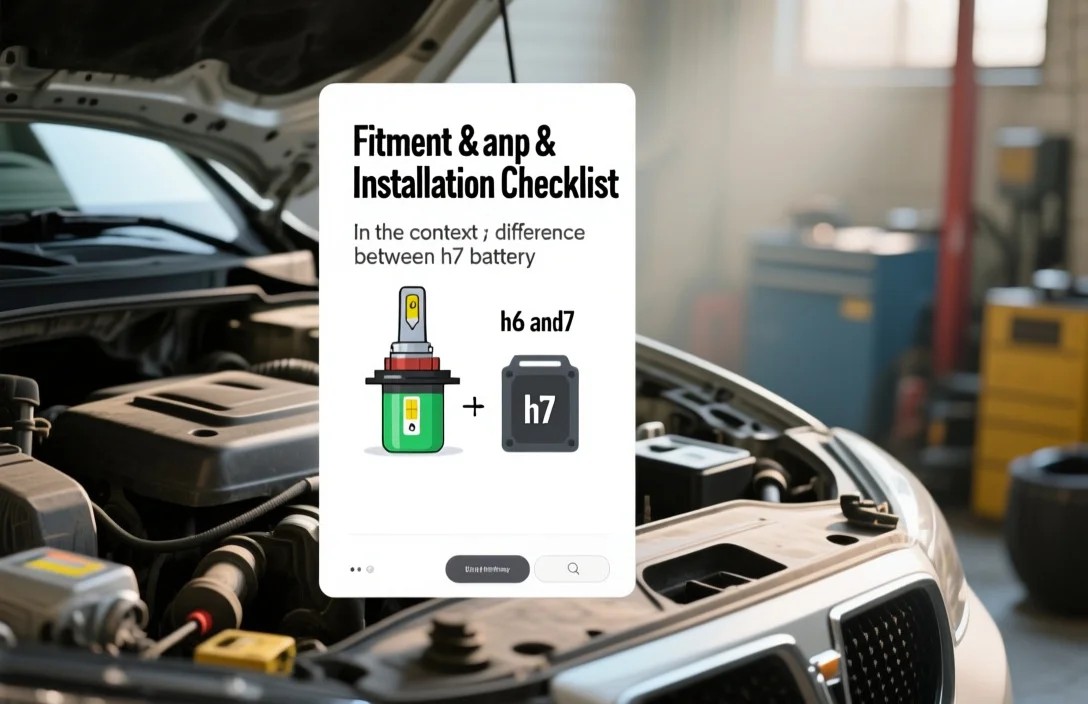
Benefit: getting the correct group size and terminal layout prevents loose fitment, stretched battery cables, and accidental shorting during installation. H6 and H7 refer to different battery group sizes that can change case dimensions, hold-down position, and terminal orientation, so fitment is a practical safety and serviceability concern. Always confirm which group size your vehicle’s tray and clamp accept before buying a replacement.
Check the battery label and your vehicle manual for the group code, terminal type, and polarity; do not assume H6 and H7 are interchangeable without measuring. Measure tray length, width, and the distance from the hold-down point to the terminals, and ensure cable ends reach comfortably without forcing them. Do not install a battery that moves in the tray, and avoid adapters or extension leads that introduce extra resistance or poor contact.
For example, if a replacement H7 has a longer case or terminals offset from where your clamps are, you may need a different hold-down or shorter battery cables to avoid strain and sparks. If you cannot confirm dimensions from the seller, ask for a photo with a ruler or compare part numbers from the vehicle manufacturer before purchase.
When to choose H6 versus H7
If both H6 and H7 are listed as possible fits for a vehicle, choose the one that fits the tray and secures without adapters, because a proper mechanical fit reduces vibration and terminal stress that cause premature failure. Consider which battery leaves enough clearance to the hood, wiring harness, and fuse boxes, and whether the terminals sit where clamp hardware can reach without bending cables. If you must swap sizes, replace hold-down hardware and clean or replace corroded terminals, and re-check torque and polarity before first start.
Takeaway: measure and match group size, terminal layout, and hold-down style before buying an H6 or H7 replacement, and do not install a battery that moves in the tray; when in doubt, consult the vehicle manual or a dealer to avoid safety and charging issues.
Compatibility & Cross-reference
Group identifiers like H6 and H7 mostly indicate case size and terminal placement, which directly affect whether a replacement will physically fit the tray and clamp. Most automotive service batteries in these group sizes are 12 volt lead-acid, so electrical voltage is often the same while dimensions, terminal type, and ratings can differ.
Always check the battery label and the vehicle owner’s manual for the original group number, cold cranking amps (CCA) range, and reserve capacity before swapping. Avoid mixing chemistries or using a battery with different polarity or inadequate CCA, and do not install a battery that forces cable strain or blocks venting. For safety, inspect the old battery for swelling, corrosion, or damaged terminals before fitting a replacement.
When to consider cross-referencing H6 versus H7
Consider an H6 only if the case dimensions, terminal positions, and hold-down points match the vehicle tray and the replacement battery meets or exceeds the original cold cranking amps and reserve capacity ratings. Use adapters or relocation kits for minor terminal misalignment with caution, because adding adapters introduces extra connection points that can loosen or corrode over time and may affect ground return or charging behavior. If in doubt, photograph the original battery label and tray, compare vendor cross-reference charts, and consult the vehicle manual or a qualified technician before buying to avoid a fitment or safety problem.
Practical takeaway: measure the tray, copy the original label, and confirm group size, terminals, and performance ratings before swapping H6 and H7 batteries; when any of those do not match exactly, prioritize safety and manufacturer guidance over convenience.
Quick Summary
H6 and H7 refer to different battery size or connector designations, so always verify physical size, voltage, and terminal compatibility before replacing.
Frequently Asked Questions
What is the main difference between H6 and H7 batteries?
The main difference is in their dimensions and capacity, with the H7 battery typically being slightly larger and having a higher cold cranking amp (CCA) rating, usually around 700 CCA compared to the H6’s 600 CCA.
Are H6 and H7 batteries interchangeable?
They are not fully interchangeable due to their differing dimensions and terminals, so you should always check your vehicle’s specifications to ensure compatibility before replacing one with the other.
How does heat affect H6 and H7 batteries?
Both battery types can be affected by heat, leading to a decrease in lifespan; typically, a temperature increase of 10 degrees Celsius can reduce a battery’s life by 50%.
When should I replace my H6 or H7 battery?
You should consider replacing your battery if it is over 3 to 5 years old, or if you notice signs like slow engine cranking or corrosion around the terminals.
What common mistakes should I avoid when buying H6 or H7 batteries?
A common mistake is not verifying the specifications required for your vehicle, such as CCA and size; always refer to your owner’s manual to avoid purchasing an incompatible battery.

- Top 10 Best Solar Battery Deals Qld Reviews 2026 - September 12, 2026
- Top 10 Best Solar Battery Deals Qld Price 2026 - September 12, 2026
- Top 10 Best Solar Battery Quality 2026 - September 12, 2026