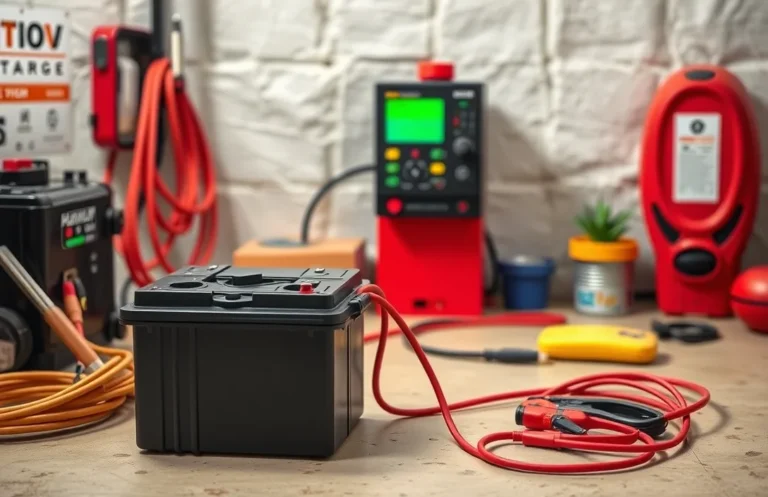
Do Rv Batteries Charge When Plugged In?
Plugging your RV into shore power does not automatically mean the batteries are charging. Charging requires a working converter or onboard charger, the correct breaker and the battery disconnect set to ON. The single spec that matters most is the charger/converter output and amp rating, so check that label or the converter switch first.

RV batteries will charge when plugged into shore power if the RV has a working converter or onboard charger and the battery disconnect is closed; standard shore power (usually 120 V AC) supplies the AC to the charger, which then provides the correct DC charging voltage and current to the battery.
Do RV batteries charge when plugged in?
Yes, often they will, but only if the RV has a working charger or converter wired to the house battery bank and the battery is connected. Simply plugging into shore power does not guarantee charging, because shore power can supply only AC loads if the charger is absent, switched off, blown, or disconnected.
Typical charging happens when the RV’s shore power feeds a converter/charger or an inverter/charger that is configured for the battery chemistry. Many modern RV systems use multi-stage charging (bulk, absorption, float) which helps restore capacity and reduce battery stress, but older or cheap converters may only provide a basic float/trickle charge.
Battery chemistry matters. Flooded lead acid, AGM, and lithium (LiFePO4) need different voltage profiles and limits, and a charger that is not set for the correct chemistry can undercharge or damage the battery. Verify the converter or inverter/charger manual and the battery manufacturer’s recommended charge profile before relying on shore charging for long term battery health.
| System | Charges from shore power? | Notes |
|---|---|---|
| Dedicated converter/charger | Yes, if working and connected | Quality varies; multi-stage chargers are better for battery life |
| Inverter/charger | Yes | Combines inverter and shore-powered charging with automatic transfer |
| Shore power to outlets only | No | AC loads work, batteries do not charge unless a charger is present |
| Vehicle alternator/DC-DC charger | N/A for shore power | Charges while driving, not from shore power |
Safety note: If the charger gets hot, the battery is swollen, or you smell burning, disconnect shore power immediately and investigate. Poor charging setups can overheat batteries, damage wiring, and create fire risks.
How RV charging works
When you plug an RV into shore power the AC from the pedestal feeds the RV’s AC panel, and a converter or inverter-charger turns that AC into the DC current the house battery needs, usually using multi-stage charging (bulk, absorption, float). Alternator and solar are separate charging paths that can top up or finish charging, but shore power plus the onboard charger is the primary DC charging route while parked and plugged in.
The electrical flow is: shore pedestal provides 120V/240V AC, the AC panel distributes loads and feeds the charger, then the charger outputs regulated DC to the battery bank and DC loads. If the RV has an inverter-charger, it also manages AC output from the battery when not on shore, and reverses to charge the battery when shore power returns.
| Source | Path to battery | Typical behavior / notes |
|---|---|---|
| Shore power | AC pedestal → AC panel → converter/charger or inverter-charger → battery | Primary shore-based charging, best for full restores when charger is multi-stage and programmable |
| Alternator | Vehicle alternator → isolator or ACR → battery (sometimes via DC-DC charger) | Fast top-up while driving, may not give full, staged charge unless DC-DC is used |
| Solar | Panels → MPPT or PWM controller → battery | Good for daytime charging and maintenance, integrates with other chargers if set up correctly |
Multi-stage charging is critical for battery life. Bulk supplies high current to bring voltage up quickly, absorption holds a higher voltage to finish charge and reduce sulfation or imbalance, and float holds a lower voltage to maintain full state of charge without overcharging.
Match the charger profile to your battery chemistry, because lead-acid, AGM, and lithium cells require different charge targets and algorithms to avoid damage.
Trade-offs: a simple converter is cheap but may only float-charge, while an inverter-charger or external multi-stage charger costs more and gives better battery health. Alternator charging is useful on the road, but for full, safe charging at camp, shore power plus a proper multi-stage charger is the reliable solution.
Shore power and chargers
Yes, when you plug an RV into shore power the onboard AC supply will usually charge the house batteries, but how fast and how well they charge depends on the pedestal amperage, the type and size of the converter or charger, and whether the charger supports the battery chemistry and BMS. A basic converter may only provide a float voltage while a smart multi-stage charger can run bulk, absorption, and float stages to restore capacity and extend battery life.
Pedestal amperage limits matter because the pedestal breaker and shore cord set the maximum AC current available to the RV, and that current is shared between the charger and any running appliances. Many campgrounds provide 15, 20, 30, or 50 amp pedestals; on a smaller feed the charger may be forced to run slower or the panel breaker will trip if you try to run high-draw AC loads while charging.
Basic converters convert AC to DC and are intended to supply DC loads and maintain a battery in float, they may not follow a multi-stage charging profile and can leave a deeply discharged battery undercharged. Smart multi-stage chargers are better for battery health because they provide controlled bulk, absorption, and temperature-compensated float stages, and some offer programmable profiles for AGM, GEL, flooded lead acid, or lithium types.
Charger compatibility is critical, check the charger label and the battery spec sheet for recommended charge voltage and maximum charge current. If you have lithium batteries, verify the charger supports a lithium profile or the battery has a battery management system that can accept a standard lead acid profile without damage.
Tradeoffs are straightforward: larger, smarter chargers cost more but preserve battery life and recover charge faster; smaller or basic converters can keep batteries topped off but will not restore deep discharge efficiently. If you rely on shore power to maintain batteries, choose a charger sized and configured for your battery chemistry and confirm your campground pedestal can support the charger and any other AC loads you run at the same time.
Battery types and charging
Yes, RV batteries will generally charge when the RV is plugged into shore power or a generator, provided the coach has a working converter/charger or inverter/charger configured for the battery chemistry. Charging outcome depends on battery type: flooded, AGM, and gel lead‑acid need different voltages and may require equalization, while LiFePO4 needs a charger and BMS behavior that match its voltage limits and charging profile.
Flooded, AGM, and gel are all lead‑acid but they accept charge differently. Lead‑acid charging is multi‑stage: a higher bulk voltage to restore charge, an absorption stage to reduce current as the battery nears full, and a lower float voltage to maintain charge. Flooded batteries can benefit from periodic equalization, AGM tolerates it poorly, and gel should avoid high equalization voltages.
LiFePO4 batteries charge faster to full and hold voltage better, but they depend on a BMS to control cell balancing and protect from overvoltage. LiFePO4 usually does not need float charging the way lead‑acid does; some inverter/chargers still provide a low float that is harmless, but always confirm the charger supports LiFePO4 and set appropriate charge voltages. A BMS can block charging if it detects imbalance, low temperature, or overcurrent.
| Battery type | Will it charge when plugged in? | Charge profile notes (typical) | Acceptance behavior | Equalization | BMS/charger interaction |
|---|---|---|---|---|---|
| Flooded lead‑acid | Yes, via converter/charger | Multi‑stage: bulk, absorb, float; higher equalize voltage sometimes used | Slows near full, accepts moderate current | Recommended periodically to correct imbalance | No internal BMS; charger must supply correct voltages |
| AGM lead‑acid | Yes, with AGM setting | Multi‑stage, lower equalize benefit; tighter float range | Similar to flooded but more sensitive to overvoltage | Generally avoid high equalize voltages | No internal BMS; use charger AGM profile |
| Gel lead‑acid | Yes, must use gel profile | Lower absorption/float voltages, slow charging preferred | Slower acceptance, damaged by overvoltage | Do not equalize at high voltage | No internal BMS; use gel‑specific charger |
| LiFePO4 | Yes, if charger supports Li and BMS allows | Fast bulk to cutoff, limited or no float required | Higher acceptance until near full; can handle higher currents | Not required; balancing handled by BMS | BMS may disconnect pack or limit charge current for safety |
Factors affecting charging
Yes, RV house batteries will usually charge when the RV is plugged into shore power if the converter/charger or inverter/charger is present and operating. How fast and how completely they charge depends on charger current relative to the bank size, wiring and connection losses, parasitic loads, battery temperature, and the current state of charge.
Converters and inverter/chargers convert shore AC to the DC voltage the battery needs, but they come in different sizes and charge profiles. A multi-stage charger that has bulk, absorption, and float stages charges batteries more fully and safely than a simple single-stage converter that only limits voltage.
| Charger size | Behavior | Best use |
|---|---|---|
| Small converter | Slow charge, may not finish with loads on | Short trips, light usage |
| Full multi-stage charger | Faster, more complete charge, safer for battery life | Extended stays, deep-cycle banks |
For practical next steps, measure resting battery voltage and charger output while plugged in, kill nonessential loads, and inspect wiring and terminals. If charging remains slow or batteries never reach float, plan a charger and wiring check before troubleshooting deeper faults.
Troubleshooting charging problems
Yes, RV batteries will normally charge when the RV is plugged into shore power, provided the RV’s converter or inverter-charger and the battery connection are working, and the battery chemistry or BMS allow charging. If the battery does not charge while plugged in, the fault is usually in the AC supply path, the charger, the DC connection, the battery itself, or an active parasitic draw.
Quick safety checks before you start:
Maintenance and safety
Yes, RV house batteries can and often do charge when the RV is plugged into shore power, but charging only happens through the onboard converter, AC battery charger, or inverter/charger that is configured for your battery type. Whether they charge correctly and safely depends on charger settings, battery chemistry, ventilation, and the condition of the battery bank.
Use a multi-stage charger rated for the battery chemistry in your system, and enable temperature compensation if your charger supports it. Cheap adapters, damaged cords, or chargers set for the wrong chemistry increase the risk of undercharge, overcharge, heat, and permanent damage; check the charger label and battery manual before leaving the RV plugged in for long periods.
Swelling, high case temperature, bubbling electrolyte, a rotten-egg smell, or persistent inability to hold charge are warning signs that charging is unsafe. If you see these, stop charging and isolate the battery bank from shore power until you can inspect or replace cells; continuous charging in that state can cause fire or irreversible battery failure.
Do not leave flooded lead-acid batteries charging unattended in an enclosed space, and never ignore swelling or excessive heat during any charge cycle.
| Symptom | Likely cause | Immediate safety action |
|---|---|---|
| Battery swelling or bulging | Overheating, overcharge, or cell failure | Stop charging, isolate battery, replace battery |
| Strong sulfur smell or bubbling | Flooded battery emitting hydrogen and hydrogen sulfide | Ventilate area, stop charge, check electrolyte levels |
| Charger runs but capacity drops quickly | High internal resistance or sulfation | Monitor with meter, plan replacement if capacity is low |
Replace batteries when they repeatedly fail to hold usable capacity, show physical damage or swelling, leak, or reach end of manufacturer cycle life. Age alone, if accompanied by reduced capacity and increased internal resistance, is grounds for replacement rather than extended repair attempts.
Useful monitoring tools include a quality battery monitor that reports state of charge and amp-hours, a temperature sensor for the bank, a hydrometer for flooded cells, and a clamp meter to confirm charger current. Regular inspection, periodic equalization for serviceable flooded batteries, and following manufacturer storage SOC recommendations will keep charging from shore power safe and extend battery life.
Quick Summary
Yes, most RV batteries will charge when the RV is plugged into shore power, provided the converter or onboard charger is working.
Frequently Asked Questions
Do RV batteries charge when plugged in?
Yes, RV batteries typically charge when the RV is plugged into a power source, such as a campground outlet. The charging process can take several hours, depending on the battery’s capacity and the charger’s output.
What type of charger do I need for my RV battery?
You can use a converter or a dedicated battery charger that matches the battery type, such as lead-acid or lithium. Make sure the charger’s voltage output is compatible with your battery, usually either 12V or 24V.
How do I prevent my RV battery from overheating while charging?
To prevent overheating, ensure proper ventilation around the battery and avoid charging at high temperatures. Regularly check the battery’s temperature; it should not exceed 125°F during charging.
When should I replace my RV battery?
You should consider replacing your RV battery every 3 to 5 years, depending on usage and maintenance. Signs of aging include difficulty holding a charge and physical swelling.
What common mistakes should I avoid when charging my RV battery?
A common mistake is using a charger that is not compatible with your battery type, which can lead to damage. Always check the charger specifications and ensure it matches the battery’s requirements.

- Top 10 Best Solar Backup Batteries Austin 2026 - July 28, 2026
- Top 10 Best Solar Battery Charger For Rv 2026 - July 28, 2026
- Top 10 Best Solar Charger For Trolling Motor Battery 2026 - July 28, 2026