Does Your Car Battery Charge While Idle?
Does your car battery charge while idle? comes down to matching the advice to your situation instead of following a generic checklist. I will focus on the main decision points, the tradeoffs that matter most, and the practical next steps you can use before spending time or money.

Short Answer
Yes, a car battery can charge while the engine is idling, but only if the charging system is working and the system voltage rises into the charging window, typically 13.8 to 14.6 volts. If the battery’s resting voltage is below about 12.2 volts, or if idle voltage stays under ~13.8 volts, idle charging is slow or ineffective and you should use a proper charger or drive at higher RPM.
Exact voltages and common state-of-charge (SoC) thresholds to remember are:
| Voltage (resting, engine off) | Approx SoC |
|---|---|
| 12.6 V | ~100% (fully charged) |
| 12.4 V | ~75% |
| 12.2 V | ~50% |
| 12.0 V | ~25% or discharged |
| 13.8 – 14.6 V | Charging range, engine running |
Quick decision rules:
If engine-off battery voltage is ≥12.4 V and you see 13.8 – 14.6 V at the battery with the engine idling, short local trips will maintain charge. If battery is ≤12.2 V or idle voltage stays below 13.8 V, idle charging will be slow; use a charger or a longer, higher-RPM drive.
Measuring and simple math: measure battery voltage with a multimeter engine off and then at idle. If you have a clamp meter and see roughly 5 to 20 amps into the battery at idle, you can estimate recharge time by dividing amp-hours needed by the measured amps (for example, 10 Ah needed / 10 A = ~1 hour).
Safety note: If the alternator does not bring voltage into the 13.8 – 14.6 V window, avoid relying on idle charging. Have belts, connections, and the charging system checked, and do not attempt crude alternator repairs without tools and training.
How Charging Works
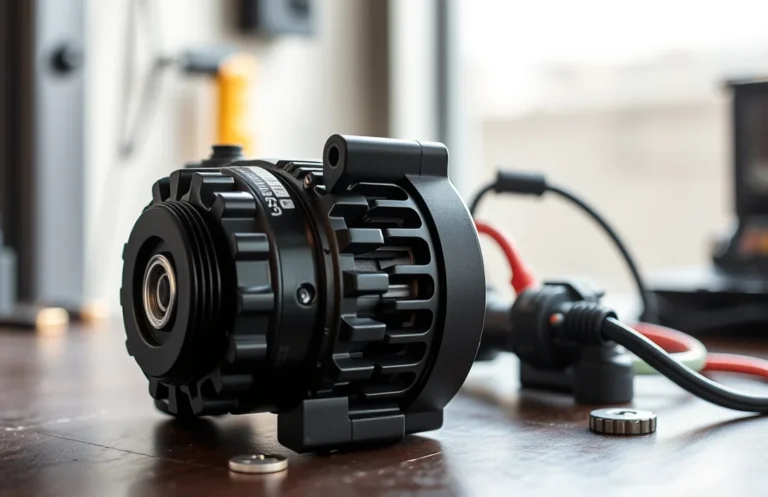
Yes, a car battery usually charges while the engine is idling, but the charge rate is lower than at higher engine speeds and can be insufficient if accessories or parasitic draws are large. The alternator produces and regulates voltage; the regulator controls field current so the battery sees a charging voltage, and the actual amps available depend on alternator capability, engine RPM, and what else is using power.
Alternator → Rectifier → Voltage regulator → Battery → Loads. The alternator turns mechanical energy into AC, a rectifier makes DC, the regulator sets target voltage, the battery accepts charge and buffers, and vehicle loads draw current from the alternator or battery as needed.
Voltage and RPM are linked because alternator output current capability depends on rotor excitation and speed; at low RPM the alternator can still reach charging voltage but its maximum current is reduced. Alternator nameplate gives a maximum rated current, but available amps at idle are typically a fraction of that rating, and the regulator may limit output to protect the system.
For example, using a simple estimate: if a battery needs 30 amp-hours and the net charging current at idle is about 10 amps, reclaiming those 30 amp-hours would take roughly three hours, plus extra time because charging current tapers as the battery fills. Check the alternator rating on the vehicle tag, account for accessory draw like lights, HVAC, infotainment, and remember heavy parasitic loads can prevent net charging at idle.
Safety note: if the battery does not accept charge, shows low voltage after driving, or the alternator label is missing, have electrical system tests done. Repeated deep discharges or relying on long idle periods to charge a weak battery will shorten battery life and can leave you stranded.
Idle Output & Measurements
Yes, a car battery charges while the engine is idling, but the efficiency varies. At idle, the voltage output from the alternator typically ranges from approximately 13.0 to 14.0 volts, which is sufficient for charging the battery, albeit at a lower current than when the engine is revved.
The resting voltage of a fully charged car battery should be between 12.4 and 12.7 volts. If the resting voltage is below this range, it indicates a partially drained battery that may require charging. When the engine is idling, the alternator produces a charging voltage that can fluctuate. This variability can be due to factors like engine load and the condition of the alternator.
Revving the engine to around 2,000 RPM can increase the charging voltage to approximately 13.8 to 14.6 volts. This increase enhances the charging current available to the battery. If you’re measuring current with a clamp meter, typical idle current can vary widely, often between 5 to 30 amps, depending on the electrical load from accessories like headlights, air conditioning, and audio systems.
Low voltage readings or low amps while idling may imply that the alternator is underperforming or that excessive electrical loads are draining the system. In such cases, consider reducing the use of accessories or take the vehicle for a longer drive to allow for proper charging.
For effective charging, consider that prolonged idling may not fully recharge a drained battery. If your battery remains undercharged after driving, using a dedicated battery charger may be necessary. If issues persist, it’s advisable to consult a professional to check the alternator and battery health.
Testing Charging At Idle
A car battery can charge while the engine is idling if the alternator is functioning properly. At idle, the voltage should be greater than 13.0 volts, indicating that the alternator is supplying power to the battery. However, the charging efficiency at idle may be limited due to lower engine RPMs and the power drawn by vehicle accessories.
In practice, if the battery does not show a proper charging voltage at idle, it may require additional driving time to recharge adequately, or you may need to consider using a dedicated battery charger. If issues persist, having the charging system tested by a professional is advisable.
Estimating Recharge Time
While a car battery can charge at idle, the charging efficiency and time required depend on several factors including the battery’s state of charge and the output of the alternator at idle. Generally, the alternator produces less current at low RPMs, making it less effective for charging compared to driving at higher speeds.
To estimate how long it takes to recharge a battery while idling, you can use a simple calculation based on the amp-hours (Ah) needed and the output of the alternator.
- Consider Charging Efficiency: Charging is not 100% efficient. Realistically, include a factor for efficiency, which can be around 70% to 90%. Thus, if you assume 85% efficiency, the time to fully recharge the battery at idle would increase. For our example: Adjusted Time = Time / Efficiency. Therefore, 2.5 hours / 0.85 = approximately 2.94 hours.
For a second example, consider a 70 Ah battery that is at 30% capacity. You would need 21 Ah to recharge it. If the alternator provides 20 amps at idle, the calculation would be:
Note that charging while idling may not fully recharge the battery, especially if electrical accessories are in use, which can draw power and reduce the net charging current. For best results, it’s often recommended to drive for a period to allow the alternator to charge the battery more effectively or to use a dedicated battery charger.
Reasons & Troubleshooting Tools
A car battery can charge while idle, but several factors influence its effectiveness. The alternator generates power to charge the battery, but if the engine is not running at optimal RPMs, or if there are issues like a bad belt or parasitic draw, charging may be insufficient. Typically, idle voltage should exceed 13.0 volts to ensure the battery receives a proper charge.
To diagnose issues effectively, use the following tools:
When deciding whether to troubleshoot or visit a shop, consider the following:
Practical Steps, Safety, Exceptions
A car battery can charge while the engine is idling, but the charging efficiency is significantly lower than when driving. The alternator produces less voltage and amperage at idle, which can impact the ability to recharge a partially drained battery effectively. For optimal charging, driving at higher RPMs is usually more effective than idling.
Modern vehicles often have stop-start systems that automatically shut off the engine when the vehicle is stationary, which can affect the ability to charge the battery while idling. These systems are designed to conserve fuel and reduce emissions, but they can limit the time the alternator runs to recharge the battery.
In hybrid vehicles, the 12V battery is used for accessories and systems but may not behave like a traditional lead-acid battery. These batteries may rely on the main hybrid battery for charging, which can impact how and when the 12V battery receives a charge. Lithium 12V batteries also have different charging characteristics and may require specific chargers to maintain their health.
In practice, if you notice your car battery frequently discharges or struggles to start, it may indicate a deeper issue. Consider visiting a professional to check the health of the battery and the alternator, as well as to ensure all connections are clean and secure.
Quick Summary
Your car battery typically does not charge effectively while the vehicle is idle for extended periods.
Frequently Asked Questions
Does my car battery charge while idle?
Your car battery does not typically charge while idle unless the engine is running. When the engine is on, the alternator generates power to recharge the battery, but idling alone without any load may not significantly increase the charge.
How long does it take for a car battery to charge while driving?
It generally takes about 30 minutes to a few hours of driving for a car battery to reach a full charge, depending on the battery’s state of discharge and the vehicle’s alternator output.
Is it safe to leave my car idle for long periods?
Leaving your car idle for long periods can lead to battery drain and potential issues with the fuel system. To avoid draining the battery, it is recommended to start the engine and run it for about 15 minutes every couple of weeks.
What are common mistakes when charging a car battery?
A common mistake is not checking the battery’s terminal connections before charging. Ensure that the connections are clean and tight to avoid poor contact, which can hinder the charging process.
When should I replace my car battery?
You should consider replacing your car battery every 3 to 5 years, as batteries can lose capacity over time, especially in extreme temperatures. Regular testing can help determine when replacement is necessary.

- Top 10 Best Solar Backup Batteries Austin 2026 - July 28, 2026
- Top 10 Best Solar Battery Charger For Rv 2026 - July 28, 2026
- Top 10 Best Solar Charger For Trolling Motor Battery 2026 - July 28, 2026