Can A Bad Alternator Kill A Battery?
An alternator charges a 12 volt battery at roughly 13.8 to 14.4 volts, and that charging voltage is the single spec that matters most for battery life. A common mistake is replacing the battery without testing the charging system. First check the battery terminals and measure the voltage at the battery with a multimeter.
A bad alternator can kill a battery by undercharging, leaving resting voltage below 12.4 volts and causing lead sulfate buildup over weeks, or by overcharging above about 15 volts and overheating cells within hours to days; normal charging is about 13.8 to 14.4 volts.
Alternator vs Battery Basics
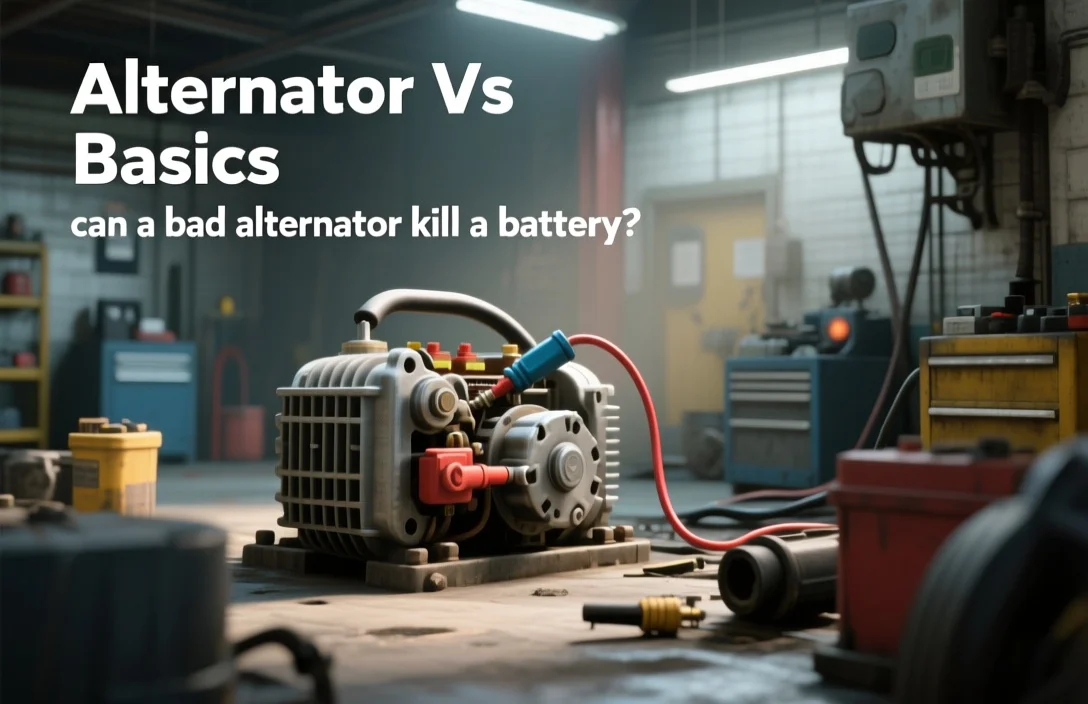
A malfunctioning alternator can indeed damage a battery. The alternator is responsible for charging the battery while the engine runs, and if it fails, the battery may not receive adequate charge, leading to depletion or over-discharge, which can shorten its lifespan.
The alternator converts mechanical energy from the engine into electrical energy, powering the vehicle’s electrical systems and recharging the battery. It consists of key components such as the rotor, stator, diodes, and voltage regulator. The rotor spins within the stator to generate alternating current (AC), which is then rectified to direct current (DC) for the vehicle’s use.
On the other hand, an automotive battery, typically a lead-acid type, stores electrical energy in chemical form. It provides the initial power needed to start the engine and supplies energy to electrical components when the engine is off. Key battery specifications to consider include:
When the alternator fails, several issues can arise that affect the battery:
To prevent battery damage, regular maintenance of the alternator is crucial. Checking the alternator’s output voltage with a multimeter can help determine if it is functioning properly. Additionally, routine inspections of the battery’s health, including checking for corrosion and the integrity of connections, can extend the life of both components.
How Charging Works
A bad alternator can significantly impact a battery’s health by failing to provide adequate charging voltage, leading to undercharging or overcharging. This can cause the battery to degrade more quickly, potentially resulting in a dead battery or permanent damage.
The charging process involves several stages, primarily bulk, absorption, and float, each serving a distinct purpose in maintaining battery health:
Voltage regulation is crucial for protecting the battery from damage. The alternator uses diodes to convert AC to DC and regulate output voltage. If these diodes fail, the battery may receive fluctuating voltages, which can lead to premature aging or complete battery failure.
The charge current is also dependent on the battery’s state of charge. A fully discharged battery draws more current initially, while a nearly full battery requires less. If the alternator is unable to provide adequate current due to a fault, the battery may not charge fully, leading to sulfation and reduced capacity over time.
Engine speed and accessory load further influence the charging system. At low engine speeds, the alternator generates less current. If additional accessories draw power, this can exacerbate the issue, causing the battery to discharge instead of charge.
For example, if the headlights and air conditioning are in use while idling, the alternator may not keep up with the demand, leading to battery drainage.
Signs of Alternator Failure
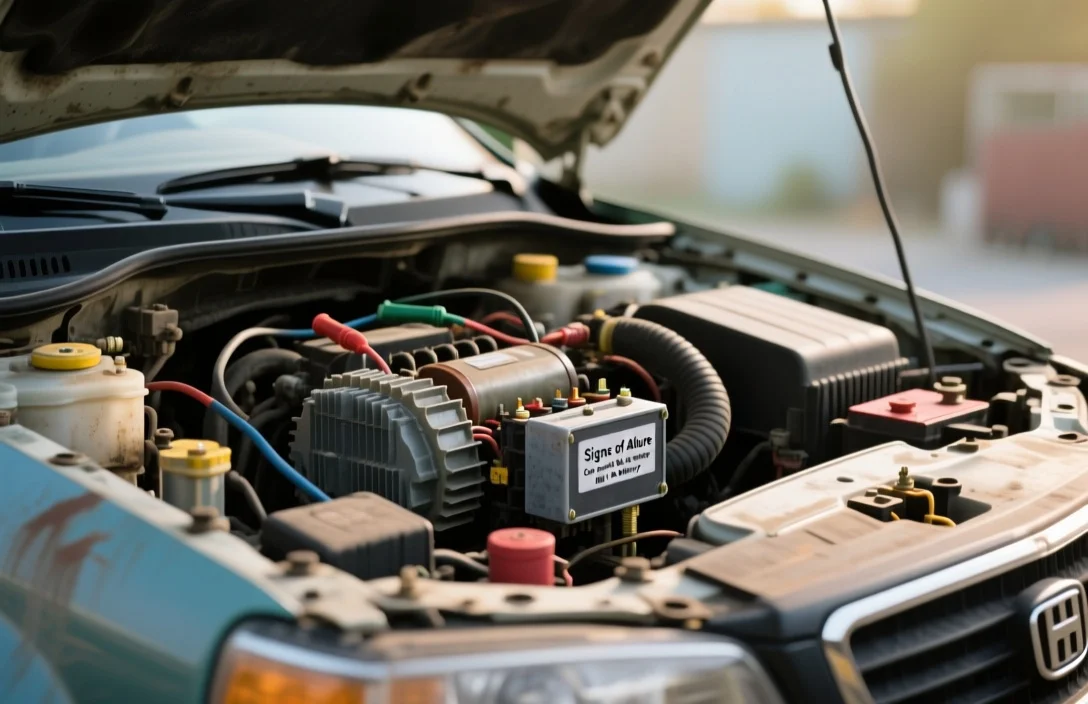
A failing alternator causes electrical systems to behave inconsistently while the engine runs, and those behaviors often mimic a weak battery. A quick voltage check with the engine off and then running will usually separate a bad alternator from a tired battery.
Watch the dashboard for the battery or ALT light that glows steadily or comes on only when the engine is running, and notice headlamp brightness and dash gauge behavior. Flickering needles, lights that dim at idle and brighten with higher RPM, or instruments resetting while driving point toward charging system trouble rather than a permanently dead battery.
For example, a car that struggles to restart only after long drives but shows normal resting voltage may have a charging fault that permits slow, cumulative battery discharge. Conversely, immediate dead-starts with low resting voltage point more toward a failing battery than the alternator.
Safety note: if you see smoke, smell burning, or the battery is swollen or extremely hot, stop testing and disconnect the negative terminal, then seek professional help. Always verify expected voltage ranges from the vehicle manual before drawing conclusions from meter readings.
How Bad Alternator Kills Battery
A malfunctioning alternator can significantly damage a battery through chronic undercharging, overcharging, intermittent charging, and faults in diodes or regulators. Each of these failure modes leads to reduced battery lifespan and performance, ultimately resulting in a dead battery.
Chronic Undercharging
When an alternator fails to provide adequate voltage to the battery, it leads to chronic undercharging. This condition prevents the battery from reaching a full charge, resulting in sulfation buildup on the lead plates, which degrades battery capacity. Over time, the battery becomes less capable of holding a charge, leading to premature failure.
Overcharging
Conversely, a faulty alternator can also cause overcharging, where excessive voltage is sent to the battery. This can lead to overheating, electrolyte loss, and even swelling or damaging the battery casing. Lithium batteries are particularly sensitive to overcharging, as it can trigger internal safety mechanisms or lead to thermal runaway.
Intermittent Charging
An alternator that provides intermittent charging can put the battery through repeated deep discharge cycles. This erratic performance can stress the battery, diminishing its overall cycle life and efficiency. Frequent deep discharges can lead to irreversible damage, especially in lead-acid batteries.
Consistently deep discharging a battery can significantly shorten its lifespan.
Diode/Regulator Failures
Diode or voltage regulator failures in the alternator can create a parasitic drain on the battery. Even when the vehicle is off, a faulty regulator can allow current to leak, slowly draining the battery over time. This can lead to a situation where the battery is unable to start the vehicle, especially after sitting idle for extended periods.
Alternator Output vs Battery Specs
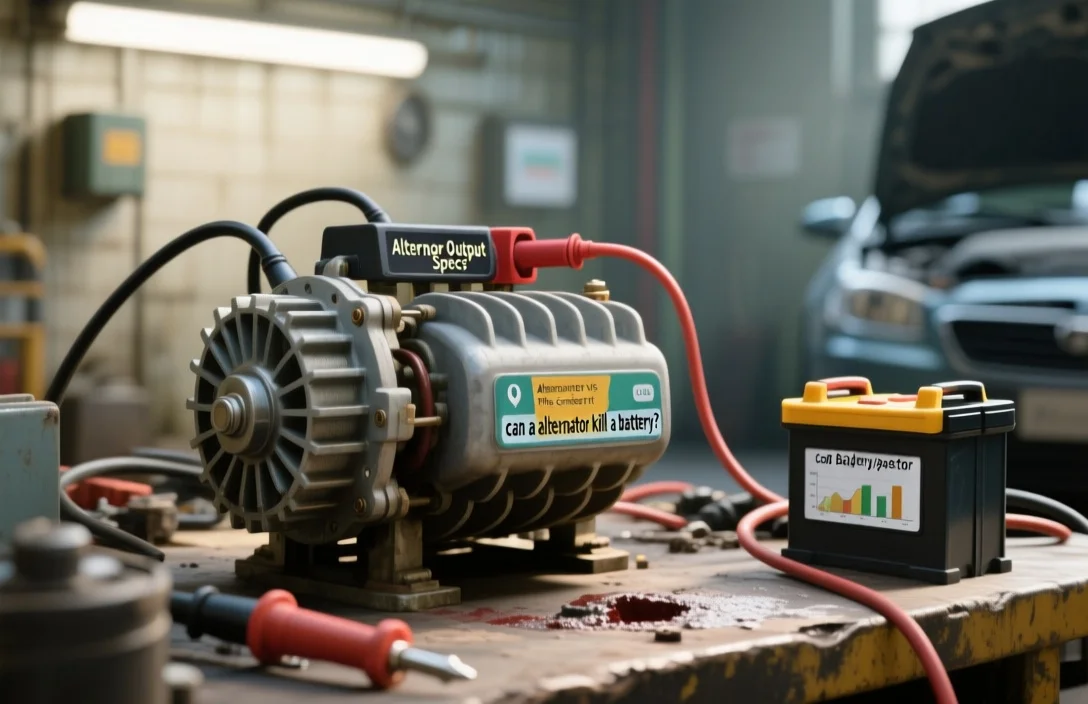
Yes, a bad or mismatched alternator can shorten or destroy a battery if its voltage regulation or available charging current does not match the battery’s required charging profile and load. Check the alternator’s regulated voltage, its rated current at idle and at higher RPM, and the battery’s chemistry, amp-hour rating, and CCA to confirm they are compatible.
Read the alternator label and vehicle/service manual for two numbers: the regulated output voltage range and the maximum current the alternator can supply at typical engine speeds. For batteries, find the amp-hours (Ah), recommended bulk/float charging voltages, and cold cranking amps (CCA) or reserve capacity on the battery label or datasheet.
Why AH and CCA matter for charging: amp-hours tell you how much charge the battery stores and how long it will accept current before reaching full state of charge, while CCA is mainly a measure of starting performance and plate construction, not charging rate. More Ah means the battery will draw charge longer, and some chemistries require specific float voltages, so the alternator’s regulator must reach and hold that voltage.
High-output alternators change the equation because they can deliver large charge currents quickly, which is fine for healthy lead-acid batteries but can overstress older batteries, thin cables, or lithium batteries without a DC-DC charger. For lithium, verify the alternator and regulator allow the battery’s required charge profile, and use a proper battery management interface when required.
Real-World Failure Examples
A malfunctioning alternator can kill a battery either by pulling it down when the alternator allows current to bleed back, or by overcharging and physically damaging the plates and electrolyte. In real cars I have seen both slow capacity loss from chronic undercharge and sudden permanent failure after regulator or diode faults produced excessive voltage or heat.
Quick diagnostic clues to map symptom to cause:
Safety note: If an on-dash voltmeter shows charging voltage significantly above normal, or you detect heat, bulging, or boiling smells from the battery, stop driving and get the charging system checked. Continued operation can permanently damage the battery and create safety hazards.
Troubleshooting and Repair Steps
Yes, a bad alternator can kill a battery by failing to keep it charged or by overcharging and overheating its cells, and by putting AC ripple or voltage spikes into the battery that accelerate damage. Do basic checks first, because a weak battery can mimic alternator failure and vice versa.
Required tools and safety gear: a digital multimeter, insulated gloves, safety glasses, battery terminal brush, wrench set, and optionally a clamp ammeter and a battery load tester. Always work in a well ventilated area, remove jewelry, and disconnect the negative battery terminal before major work to avoid shorts.
After repairs, fully charge the replacement or recovered battery, recheck charging voltages under load, and monitor for repeat drains for several days. If repeated failures occur, have the charging system bench-tested by a shop to confirm alternator output and regulator stability.
Quick Summary
A bad alternator can indeed kill a battery by failing to charge it properly over time.
Frequently Asked Questions
Can a bad alternator cause my car battery to die prematurely?
Yes, a bad alternator can lead to a dead battery. If the alternator is not charging the battery properly, it can result in a battery that discharges faster than it can recharge, potentially shortening its lifespan significantly.
How can I tell if my alternator is affecting my battery life?
You can check for signs like dimming lights or a battery warning light on the dashboard. If these occur while driving, it may indicate that the alternator is not providing adequate power to keep the battery charged.
What are the safety concerns if my alternator is failing?
A failing alternator can lead to electrical system failures, which may cause unexpected vehicle behavior or even a complete breakdown. This is especially dangerous if it occurs in traffic, so addressing alternator issues promptly is crucial.
Can I replace a battery without fixing the alternator first?
Yes, you can replace the battery, but if the alternator is not fixed, the new battery will likely experience similar issues. It is best to ensure the alternator is functioning properly to prevent repeated battery failures.
What common mistakes should I avoid when dealing with a faulty alternator and battery?
A common mistake is ignoring warning signs from the vehicle’s electrical system. Additionally, replacing the battery without diagnosing the alternator can lead to unnecessary expenses, as the same problem may occur with the new battery.