Is Your Car Battery Too Dead To Jump-start? Key Signs And Solutions
Voltage decides whether a jump will work, a concrete and measurable fact: a healthy 12 volt car battery reads about 12.6 volts at rest. The common mistake is clamping cables and cranking immediately without checking voltage. First check the battery’s resting voltage with a multimeter, or at least read the date stamp on the battery label.
Car battery can be too dead to jump start: if resting voltage is under about 10.5 volts, internal damage often prevents a successful jump; between 11.8 and 12.4 volts a jump may work after 10-15 minutes of donor charging, so measure voltage or use a smart charger first.
What Does ‘Too Dead’ Mean?
A car battery is considered “too dead” to jump start when its voltage has dropped significantly, typically below 10.5 volts, preventing it from generating enough electrical current to start the vehicle. At this level, the battery may have suffered internal damage, making it unresponsive even when connected to a functioning power source.
Several factors can contribute to a battery being too dead:
In cases where a battery is too dead, attempting a jump start may not be effective. If the battery does not respond after connecting jumper cables, it may indicate deeper issues. Here are some signs that a battery might be too dead:
For example, a battery that drops below 9 volts may not even accept a jump start due to sulfation, which occurs when lead sulfate crystals build up on the battery plates. This condition can permanently reduce the battery’s ability to hold a charge.
If your battery is too dead to jump start, consider these steps:
Understanding the limits of your car battery can help prevent situations where it is too dead to jump start, allowing for better maintenance and timely replacements when needed.
Symptoms of a Dead Battery
A car battery can be so depleted or internally damaged that a jump start will not bring it back to life, and the common symptoms are immediate clues. Rapid clicking when you turn the key, headlights that stay very dim or go out, and multiple electrical systems failing at once usually point to a battery that may be too far gone for a simple jump.
Those symptoms do not always mean the battery is irreparable, but they do tell you where to focus your checks before attempting a jump. Visual and audible signs often separate a serviceable discharged battery from one with internal shorting, severe sulfation, or physical damage that prevents accepting charge.
For example, if the car only produces a single loud click and the battery case is swollen or leaking acid odor, that combination usually signals internal damage that a jumper pack will not fix. Conversely, if lights brighten with a booster connected and clicking stops, the battery is likely just discharged and a jump may succeed.
How Does Jump Starting Work?
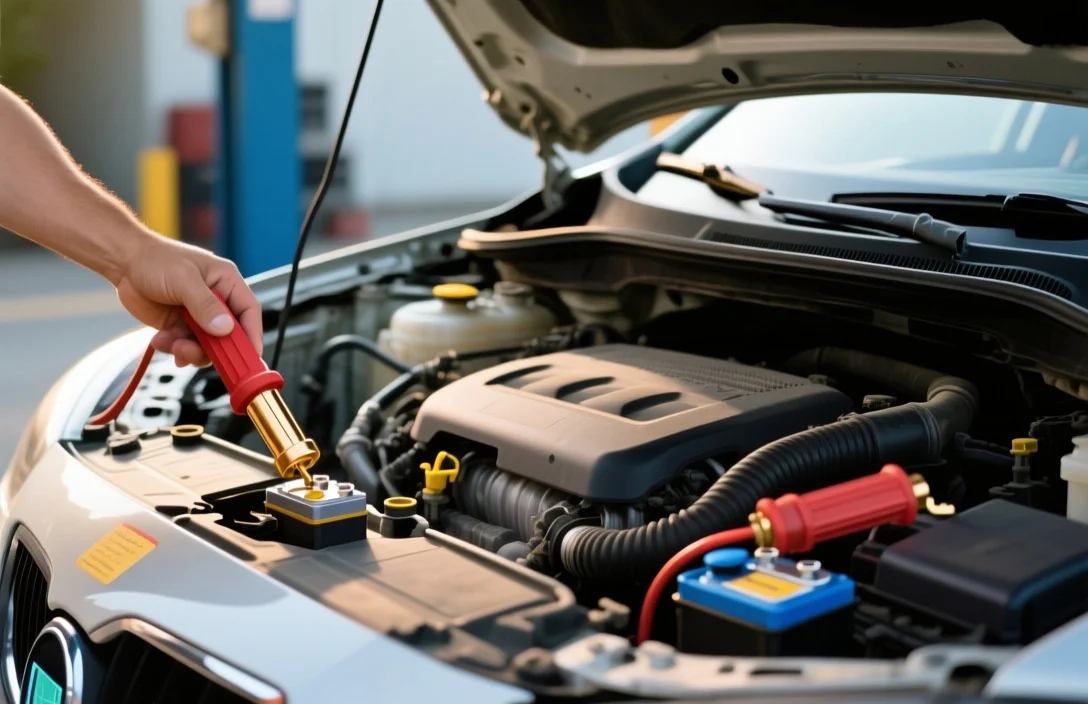
A car battery can indeed be too dead to jump start if its voltage drops below a certain threshold, typically around 10.5 volts. When the voltage is too low, the battery may not have enough energy to start the vehicle, even with assistance from another battery.
Jump starting works by creating a flow of electricity from a charged battery to a depleted one. This process relies on a few key factors:
For example, if the voltmeter reads 10 volts or lower, it indicates that the battery is severely discharged. In such cases, even a successful jump start may not occur, as the battery may need a thorough recharge or replacement.
Here are some steps to consider if a jump start is unsuccessful:
It’s crucial to remember that repeatedly trying to jump start a dead battery can lead to further damage, not only to the battery itself but also to the vehicle’s electrical system.
Factors Affecting Jump Start Success
Yes, a car battery can be too dead to jump start: if internal cells are damaged, heavily sulfated, or the terminal voltage is extremely low, a boost from another battery or a starter pack may not produce enough current to crank the engine. Short tests – visual inspection, a multimeter reading, or whether accessories power on – quickly separate recoverable discharges from permanent failures.
Battery age strongly affects how well a jump will work. Older batteries lose capacity and internal conductivity, so they accept and deliver less current than new ones; a battery near the end of its service life can behave like an open circuit when under load.
Signs that age, not the recent drain, is the real problem include repeated failures after charging, visible corrosion or a bloated case, and a battery health reading on diagnostics that shows low cold cranking amps or low capacity. For safety and predictability, treat a battery with those signs as a candidate for replacement rather than repeated jump attempts.
Temperature effects
Cold reduces a battery’s chemical reaction rates and the engine oil viscosity, so starting requires more current while the battery can supply less. In freezing conditions, batteries that would jump-start at room temperature may fail to deliver enough amps, making temperature a common reason a jump does not work.
For example, a battery that behaves acceptably in summer can fail on a cold morning; warming the battery slightly or moving it to a warmer location before attempting a charge can change the outcome. However, do not heat a battery directly or use open flame; that is dangerous.
Jumper cable quality and connections are often the simplest fix for “failed” jump attempts. Thin, high-resistance cables, loose or corroded clamps, or long runs reduce current flow and may make a good donor battery look ineffective.
| Approximate resting voltage | What it usually means |
|---|---|
| Above ~12.4 V | Healthy or recoverable with a jump |
| About 11.8 – 12.4 V | Partially discharged, likely recoverable but weaker cranking |
| Below ~11.8 V | Deep discharge, jump may fail; charger or replace recommended |
| Very low, near 6 V or less | Severe internal damage likely, replacement usually required |
Voltage ranges above are approximate guidelines only. When in doubt, verify with the vehicle manual, a multimeter, or professional testing before repeated jump attempts.
Step-by-Step Jump Starting Guide
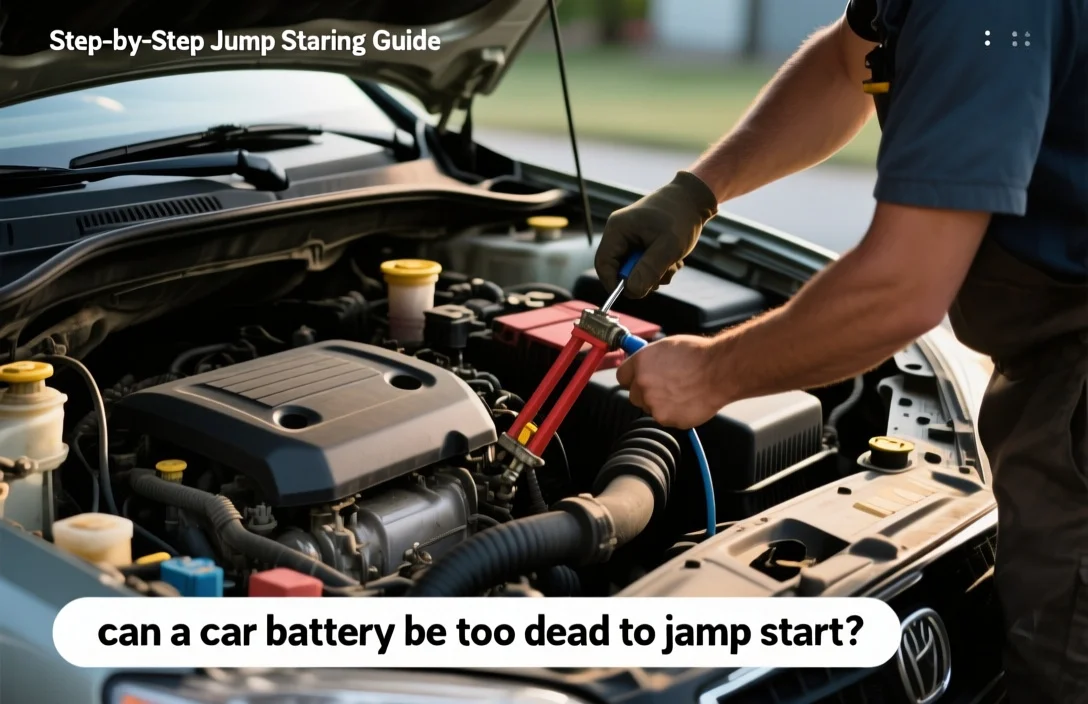
Yes, a car battery can be too depleted or internally damaged to accept a jump; visible damage, severe corrosion, a swollen case, or a battery that gives no voltage reading are common signs that jumping will fail or be unsafe. If a jump fails after correct procedure, stop and diagnose, because repeated attempts can damage electronics or create sparks.
Gathering equipment and safety checks before you start. Have heavy-gauge jumper cables or a rated portable jump starter, safety glasses, and insulated gloves. Check the battery for swelling, cracks, leaking electrolyte, or heavy corrosion; if you see any of those, do not jump and arrange a replacement.
For example, if the car does not crank after attempts and the battery shows no voltage on a multimeter, the cell may be internally shorted or sulfated and will need replacement. If you are unsure, have the battery tested at a shop rather than repeatedly attempting risky jumps.
Safety note: Never attempt to jump a frozen battery, a leaking battery, or one with a broken case. If in doubt about damage or test readings, replace the battery or call a professional.
When to Use Alternative Methods?
Yes, a car battery can be too dead to jump start. If the battery has a near zero resting voltage, a hard internal short, visible damage, or is leaking, a jumper or boost pack may not deliver enough current and attempting a jump can be unsafe.
Using a Battery Charger
A smart charger that provides controlled current and multi-stage charging is the correct next step when a jump fails or the battery is deeply discharged. Slow, controlled charge at a low amp rate gives the best chance to recover capacity and clear mild sulfation, while rapid high-current charging can heat a failing battery and make problems worse. Always check the battery label for chemistry and nominal voltage, set the charger to the matching chemistry, and connect in a well ventilated area away from sparks. If the case is swollen, cracked, or the battery is leaking, do not charge it and call professional help.
| Option | Best when | Pros | Cons |
|---|---|---|---|
| Jump start | Battery has some voltage and good terminals | Fast, mobile | Fails if battery is internally shorted or at near zero volts |
| Battery charger | Deeply discharged but structurally sound battery | Can recover capacity, safe monitoring | Slow, may not fix damaged cells |
| Professional service | Leaking, swollen, 0 V, or repeat failures | Accurate testing and safe replacement | Cost and possible towing |
If the battery shows swelling, leaks, or a reading close to zero volts, do not attempt a jump start; charging or replacement by a professional is safer.
Professional Help
Call a professional when the battery case is damaged, the battery reads essentially zero volts after any charging attempts, there is acid leakage, or vehicle electronics behave unpredictably. A shop can perform a proper load test, check for parasitic drains, and determine whether the battery is recoverable or must be replaced, and they have the tools to handle hazardous batteries safely. If you drive a hybrid or electric vehicle, or if the battery is near complex onboard electronics, towing to a qualified technician is the safe choice. Replacement triggers include visible damage, persistent inability to hold charge, or a confirmed internal short.
Bottom line, try a controlled charge on a sound-looking battery; if charging fails, or the battery is physically damaged or reads near zero volts, stop and get professional testing and replacement. That sequence minimizes risk and avoids wasting time on unsafe, ineffective jump attempts.
Battery Maintenance Tips
Yes, a car battery can be too dead to jump start. If the battery has an internal short, severe sulfation, or has lost the ability to accept current, a booster pack or another vehicle may not force it back to life and attempting to jump can create sparks or damage electronics.
Regular Inspections
Inspect the battery visually at least once a month and after long storage periods, looking for cracked plastic, bulging, venting, or acid residue on the case. Check the terminals and cable clamps for white, green, or blue corrosion and confirm the hold-down bracket keeps the battery secure, because vibration accelerates failure.
Record the battery’s install date or manufacture code from the label so you can judge age and trend capacity loss. If you have a multimeter, measure resting voltage and log it, or take the car to a shop for a load test when performance drops, because trend data helps decide if a battery is failing before it becomes “too dead” to jump.
Cleaning Terminals
Corrosion and loose connections raise contact resistance, which can make a perfectly usable battery act dead during a jump start because the clamp cannot deliver the required current. Cleaning terminals often restores reliable contact and makes a jump successful, but cleaning must be done safely to avoid shorting or inhaling fumes.
Always disconnect the negative terminal first and reconnect it last, wear eye protection and gloves, and avoid sparks or smoking near the battery. If the battery shows swelling, leaks, or a strong sulfur smell, do not clean or attempt a jump; replace it.
| Terminal Condition | Likely Problem | Recommended Action |
|---|---|---|
| Clean and shiny | Good contact | Re-tighten and monitor |
| Light powdery corrosion | Increased resistance | Clean and re-test |
| Heavy crusted corrosion or green deposits | Poor clamp contact | Clean, replace clamps if needed |
| Loose clamp or frayed cable | Intermittent connection | Replace clamp/cable promptly |
| Cracked case, bulge, or leaking | Internal failure | Replace battery immediately |
Safety warning: If the battery is swollen, hot, leaking, or you smell a strong rotten-egg odor, do not attempt to jump-start or clean it; stop and arrange safe replacement or disposal.
Signs It’s Time for Replacement
Yes, a car battery can be too dead to jump start when internal damage, heavy sulfation, or partial cell shorts prevent it from accepting current, or when the case is physically compromised. If a jump start either fails or the vehicle stalls soon after, that is a strong signal the battery is near end of life and should be replaced rather than repeatedly jumped.
Frequent need for jump starts is not normal. If you must jump the car more than once in a short period, the battery is likely losing capacity, even if the alternator and starter are fine.
For example, you may successfully start the car after a jump, then the engine dies minutes later or the battery reads low again; that pattern shows the battery cannot hold charge even if charging system output is correct. Replacing the battery is the practical fix when this repeats.
| Sign | What it likely means | Immediate action |
|---|---|---|
| Repeated jump starts | Loss of capacity or high internal resistance | Test battery, replace if tests fail |
| Swollen or leaking case | Internal damage, unsafe to use | Replace immediately, avoid contact with electrolyte |
| Won’t accept charge | Internal shorting or sulfation | Load test, then replace |
Safety warning: do not attempt to jump or charge a visibly swollen or leaking battery. Acid can burn skin and metal fragments can ignite; replace the battery and dispose of it at a proper recycling facility.
Quick Summary
Yes, a car battery can be too dead to jump start, in which case charging or replacement is required.
Frequently Asked Questions
Can a car battery be too dead to jump start if its resting voltage is very low?
Yes, a battery with a resting voltage well under safe operating levels often will not accept a jump; check with a multimeter and if the battery reads below about 10.5 volts it is commonly considered deeply discharged and may need a charger or replacement rather than a jump start.
Can a car battery be too dead to jump start after prolonged exposure to high heat?
Yes, heat speeds internal degradation so a battery that has been stored in high temperatures can fail to take a jump; prolonged exposure above 40°C (104°F) commonly accelerates capacity loss, so inspect for bulging, leaks, or low voltage before attempting a jump.
Can a car battery be too dead to jump start yet still power lights or accessories for a short time?
Yes, a weak battery can run low-current accessories but still fail to crank the starter because cranking requires much higher current; for example a battery around 11.8 volts may light dash lamps but still drop too low under starter load, so test voltage while cranking to confirm.
Can a car battery be too dead to jump start and is it unsafe to try to jump it?
Yes, attempting to jump a physically damaged or severely sulfated battery can be unsafe because it can vent or spark; if the battery is swollen, cracked, or leaking, and you notice strong odors, you should avoid jump starting and keep at least 1 meter distance while getting professional help.
Can a car battery be too dead to jump start and how do I avoid buying the wrong jumper pack or replacement?
You can avoid mistakes by matching specs: check your owner manual or the battery label for the required CCA and choose a replacement or jumper pack with equal or higher ratings; many passenger vehicles need between 400 and 800 CCA, so verify the exact number before you buy.