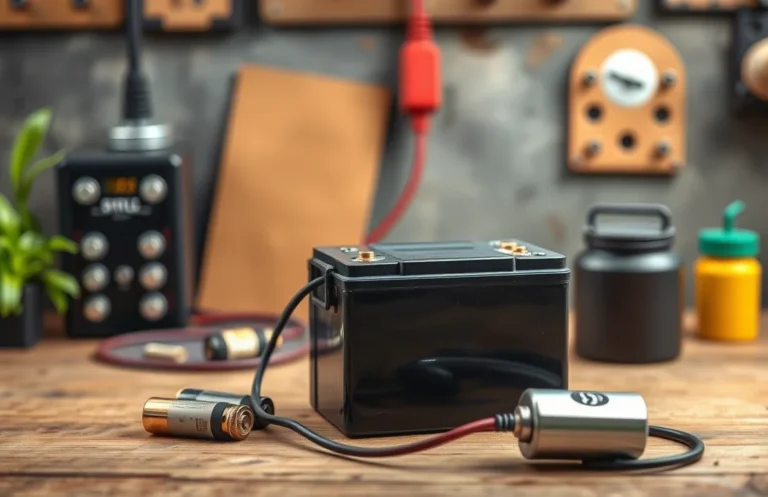
Can You Charge Lithium Battery With Regular Charger?
You can permanently damage a lithium battery with the wrong charger, and the single most important spec is voltage. A common mistake is plugging in any charger that fits the connector while ignoring chemistry and charge method. First check the battery label or manual for pack voltage, per-cell charge voltage (for example 4.2 V for many Li-ion cells), and BMS requirements.

Can you charge lithium battery with regular charger? Only when the charger matches the pack voltage and uses the proper CC-CV lithium charge profile, typically 4.2 V per Li-ion cell and a safe current no greater than about 1C; otherwise use a manufacturer-recommended charger or a charger with a proper battery management system.
Can regular charger work?
Sometimes a regular charger can charge a lithium battery, but only when the charger and the battery have matching charging requirements and proper safety controls. A mismatch in charging profile, pack voltage, or lack of a battery management system can cause overheating, swelling, or permanent damage.
Safe: when the charger provides the correct charge profile, matches the pack voltage, either the pack has a BMS or the charger has proper CC/CV termination, and the setup is monitored for heat. Unsafe: using chargers designed for other chemistries, chargers with float modes, unregulated power supplies, or any adapter that does not state compatibility with the battery pack.
For example, using the original laptop charger on its OEM lithium pack is normally safe because the charger and pack were designed to work together. Using a lead-acid battery charger or an unknown “universal” adapter on that same pack is unsafe, because those chargers may apply a float voltage or lack correct termination.
| Factor | What to check | Quick verdict |
|---|---|---|
| Chemistry | Label or datasheet shows Li-ion, LiPo, LiFePO4, etc. | Must match |
| Charge method | Charger supports CC/CV and proper cutoff for lithium | Required |
| Protection | Pack has BMS or charger enforces limits | Strongly recommended |
| Physical fit | Connector, polarity, and wiring match | Verify before connecting |
Safety warning: Never assume a charger is safe because it fits physically. Mismatched voltage, missing CC/CV control, or no BMS can cause fire, chemical leakage, or permanent battery failure.
Voltage and current checks
You can only use a regular charger on a lithium battery if the charger provides the correct charge voltage and a safe maximum charge current, and if the battery accepts a CC-CV charge profile. Mismatched voltage or excessive current will either prevent proper charging or create a fire and damage risk, so check the numbers on both the battery and the charger before connecting them.
Nominal voltage is the battery’s working voltage rating, while charge voltage is the voltage the charger must reach to fully charge the pack. For single lithium-ion cells nominal is usually about 3.6 to 3.7 volts and full charge is 4.2 volts; for lithium iron phosphate cells nominal is about 3.2 to 3.3 volts and full charge is roughly 3.6 to 3.65 volts.
For packs, multiply the per-cell voltages by the number of cells in series to get pack nominal and pack charge voltages. If the charger output voltage does not match the pack charge voltage within a small margin, do not connect them.
Charger compatibility and ports
You can only safely charge a lithium battery with a “regular” charger when the connector and charging protocol match and the battery or pack has the right charging electronics. A physical fit alone does not guarantee safe charging, because protocol negotiation, polarity, and built-in battery management must align.
USB-C with Power Delivery is a negotiated system, the charger and device talk before higher voltages appear, so USB-C PD can safely present multiple voltages when both sides support it. Many dedicated lithium battery chargers and pack-specific chargers do not use USB negotiation, they expect a fixed connector and specific wiring, so a simple cable swap will not replicate the required control.
Charge profiles and electronics
You can charge a lithium battery with a “regular charger” only if the charger enforces the correct CC‑CV profile, matches the pack voltage, and either the pack has a proper BMS or the charger can balance cells. Using a charger meant for lead acid, NiMH, or an unregulated supply is unsafe because it will not provide the precise voltage cutoff, current limiting, or temperature protection lithium cells need.
CC‑CV, balance charging, and temperature control
CC‑CV means the charger first supplies a constant current (CC) until the pack reaches the target voltage, then holds that target voltage (CV) while current tapers down. Proper termination happens when charge current falls to a small percentage of the CC value or when the BMS cuts the input; without a CV stage or a reliable voltage limit, cells will overcharge and degrade.
Most common lithium‑ion chemistries top near 4.2 volts per cell, while LiFePO4 tops near 3.6 to 3.65 volts per cell, so pack voltage must match the charger. Always check the battery or pack specification for exact charge voltage before matching a charger, because a small voltage mismatch can stress cells or trigger the BMS repeatedly.
Multi-cell packs need balancing so individual cells do not diverge in state of charge. The BMS is the safety layer that monitors cell voltages, applies balancing (passive or active), cuts charge or discharge on faults, and often reads a temperature sensor. If a pack has no BMS, you must use a balance charger or external balancer for series cells, not a single‑voltage “regular” charger.
| Question | Why it matters | Acceptable answer |
|---|---|---|
| Charger voltage | Overvoltage overcharges cells | Exact pack charge voltage, e.g., 4.2V/cell or specified pack V |
| Charge profile | CC then CV prevents plating and overheating | Charger lists CC‑CV behavior or BMS controls CV |
| Balancing | Prevents cell imbalance and early failure | Onboard BMS balancing or external balance charger for series cells |
Warning: If you cannot confirm voltage, CC‑CV behavior, or a working BMS, do not use a generic or lead‑acid charger on lithium packs. Risk includes heat, swelling, rapid capacity loss, and protective cutoff.
Safety risks and signs
Charging a lithium battery with a regular, non‑lithium‑specific charger can be unsafe because the charger may not provide the correct voltage, current limits, or end‑of‑charge cutoffs, which leads to excess heat, swelling, and fire. Using a mismatched or cheap charger increases the chance of permanent capacity loss, battery damage, or thermal runaway.
For example, charging a power bank with a generic high‑current adapter that supplies too high a voltage or no termination can cause gradual swelling over several cycles, then rupture when stressed. Repeated overheats often start as a mild warmth and progress to visible deformation and venting.
Buying checks and replacement rules
You cannot safely charge a lithium battery with a regular charger unless it matches the battery’s specifications. Using an incompatible charger can cause overheating, reduce battery life, or even lead to dangerous situations such as fires or explosions.
When considering a charger for a lithium battery, check the following:
In practice, using a charger that is too powerful can lead to overheating and damage the battery. Conversely, using one with insufficient power may result in prolonged charging times without fully charging the battery. Always refer to the manufacturer’s guidelines for your specific battery model.
When to replace a charger or battery includes:
Always prioritize safety by using the correct charger designed for your specific lithium battery type.
Troubleshooting common issues
You can only charge a lithium battery with a “regular” charger when the charger provides the correct voltage profile and the battery or its BMS accepts that profile. Using a charger for lead-acid, NiMH, or an unknown adapter that does not match the lithium cell voltage, termination method, and current limit can cause no charge, slow charge, overheating, or permanent damage.
No charge – step checks. Work top to bottom so you do not miss a simple mismatch that could be dangerous.
Slow charge or cutouts, common causes and quick fixes. Slow charging can be a symptom of compatibility, temperature, or high internal resistance.
Dealing with swelling or heat. These are safety-critical signs, treat them as hazards and stop charging immediately.
If you are unsure at any point, stop testing and use a verified lithium charger or contact the device maker. Safer choices cost more up front but avoid the risks of fire, permanent capacity loss, and hazardous disposal.
Quick Summary
You should not charge a lithium battery with a regular charger unless it matches the battery’s specifications and safety guidelines.
Frequently Asked Questions
Can you charge a lithium battery with a regular charger meant for other chemistries?
You generally should not, because lithium batteries require a CC-CV charge profile and precise cutoff; check the battery label and use a charger that supplies the correct per-cell cutoff, typically 4.20 V per Li-ion cell.
Will charging a lithium battery with a regular charger make it overheat?
It can if the charger has no current limiting or temperature cutoff; avoid charging above 1C charge current and stop charging if the cell feels hot or the ambient temperature is above 45 degrees C.
How long will a lithium battery run if I charge it with a regular charger?
Charging method does not increase stored energy, runtime depends on capacity in watt-hours; for example a 3.7 V 10 Ah cell is 37 Wh, which will run a 10 W device for about 3.7 hours.
When should I replace a lithium battery after using a regular charger?
You should replace the battery if capacity and safety degrade, typically when capacity falls noticeably or safety signs appear; many cells reach reduced performance after about 300 to 500 full cycles, and you must replace immediately if you see swelling, leakage, or persistent overheating.
What common mistakes should I avoid when trying to charge lithium batteries with regular chargers?
Common mistakes are using the wrong voltage, ignoring the need for a BMS, and using chargers without current limiting; always verify charger voltage/current and that the pack has protection, and do not exceed 4.20 V per cell and the manufacturer recommended C-rate.

- Top 10 Best Solar Backup Batteries Austin 2026 - July 28, 2026
- Top 10 Best Solar Battery Charger For Rv 2026 - July 28, 2026
- Top 10 Best Solar Charger For Trolling Motor Battery 2026 - July 28, 2026