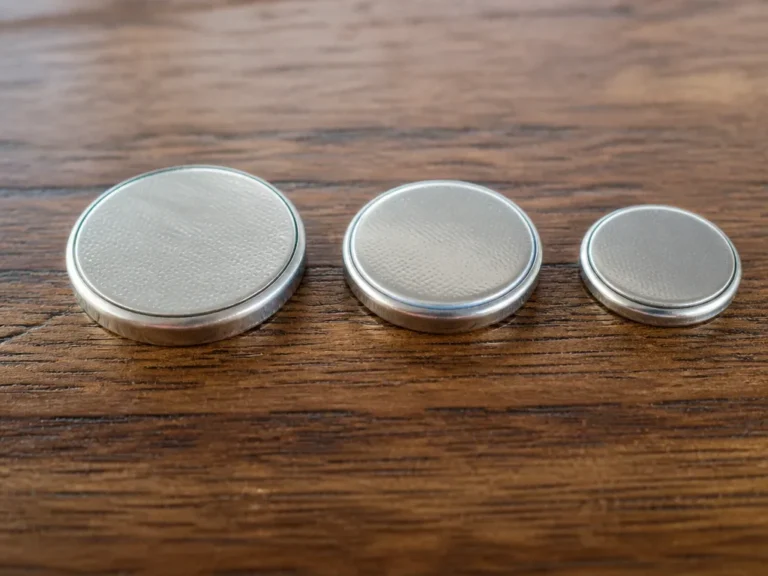
Difference Between Aa And Aaa Battery
AA and AAA batteries deliver the same nominal voltage in common chemistries, but AA cells usually store two to three times more energy than AAA. That gap changes runtime and allowable device size. Before swapping cells, check the battery size marking in the device compartment and the charger slot to avoid a dangerous fit or poor performance.
Difference between AA and AAA battery is mainly size and capacity: both commonly supply about 1.5 volts in alkaline form, but AA cells typically hold about 2 to 3 times the milliamp-hours of AAA, so AA runs longer while AAA fits smaller housings.
Size and chemistry basics
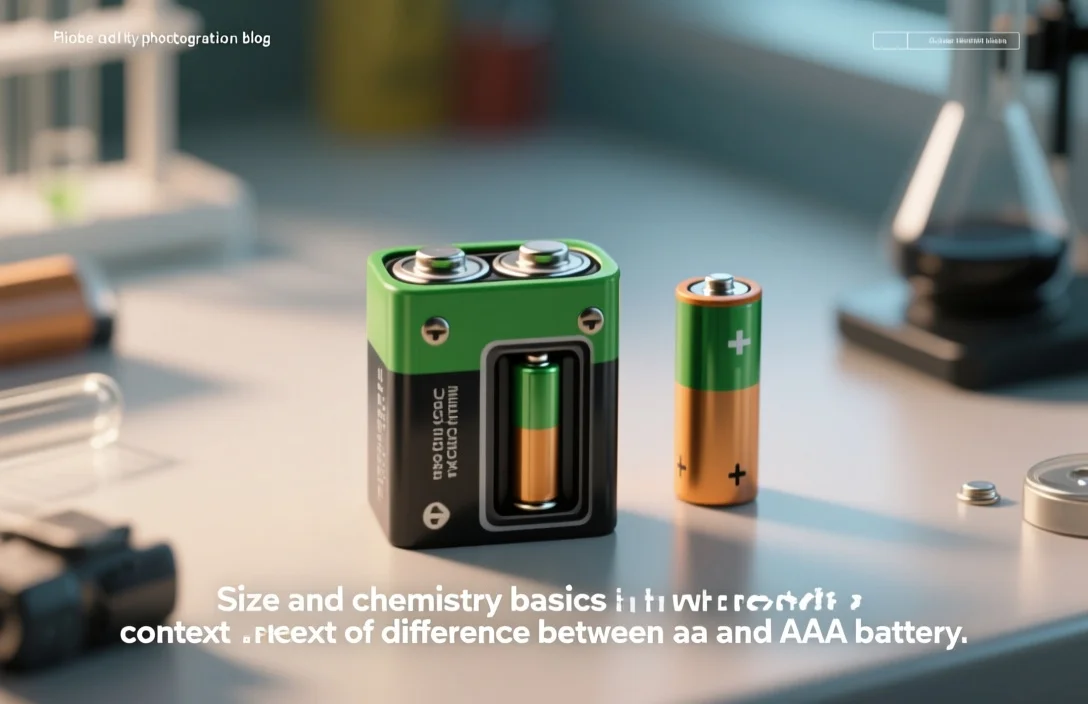
AA and AAA batteries differ primarily by physical size, and that size difference is why they are not interchangeable in the same holder. They share the same common chemistries, so a given chemistry (for example, alkaline or NiMH) usually has the same nominal voltage whether packaged as AA or AAA.
Physically, AA cells are thicker and a bit longer than AAA cells, so AA will not fit into a device designed for AAA and vice versa. Device battery compartments, spring contacts, and polarity markings are made for one size; forcing the wrong size can damage the device or cause poor contact and heating.
Common chemistries you will see in both AA and AAA form factors are alkaline (primary, non-rechargeable), nickel-metal hydride or NiMH (rechargeable), and several lithium-based variants. Expect nominal voltages to differ by chemistry: alkaline and many primary lithium cells are labeled as 1.5 volts, while NiMH rechargeables are typically labeled around 1.2 volts. Some lithium cell types that are not standard AA/AAA form factors have higher voltages, so always check the label.
| Attribute | AA | AAA |
|---|---|---|
| Physical size | Larger diameter and slightly longer | Smaller diameter and slightly shorter |
| Common chemistries | Alkaline, NiMH rechargeable, lithium variants | Alkaline, NiMH rechargeable, lithium variants |
| Typical nominal voltage | Depends on chemistry (alkaline ~1.5V, NiMH ~1.2V) | Depends on chemistry (alkaline ~1.5V, NiMH ~1.2V) |
| Typical markings to check | AA, chemistry, voltage, +/- | AAA, chemistry, voltage, +/- |
Safety: Never substitute AA for AAA or vice versa in a device, and do not mix different chemistries or old and new cells in the same pack; mismatched cells increase the risk of leakage, overheating, and shortened life.
Capacity and energy differences
AA cells generally hold more charge than AAA cells, because they contain more active material and internal volume. Capacity is rated in milliampere-hours, mAh, and that number is the primary predictor of how long a cell will run a device under the same load.
mAh is a measure of electric charge, it describes how many milliamps a cell can supply for one hour before it is exhausted. A higher mAh means more stored charge, but usable energy depends on chemistry and how hard the device draws current.
When comparing AA and AAA, expect AA to deliver significantly higher mAh, often multiple times what a AAA cell can provide in the same chemistry. That difference is why tools, toys, and devices that need longer runtime usually accept AA; AAA is chosen where space and weight matter more than longevity.
Chemistry changes usable energy for a given mAh rating. Alkaline cells show a falling voltage under load, so their usable energy at high current can be much less than the printed mAh suggests. Rechargeable NiMH has lower internal resistance and holds usable capacity better under higher loads, so a NiMH AAA might outperform an alkaline AA in a high-drain toy despite the label numbers.
For example, a small LED flashlight with a steady, moderate current draw will get more runtime from an AA of the same chemistry than a AAA, but if you swap chemistries the result can shift. A NiMH AAA in a low-voltage, low-current device may be perfectly acceptable, while a high-current device benefits more from AA NiMH or other high-drain chemistries.
Voltage, wattage, runtime
AA and AAA cells of the same chemistry have the same nominal voltage, but different usable energy and current capability, so the same device will generally run longer on an AA than on a AAA. Converting capacity to watt-hours and comparing that to the device power draw gives a practical runtime estimate you can use before you buy or test cells.
Nominal voltage basics are simple: common primary alkaline cells are labeled 1.5 volts, while common rechargeable NiMH cells are labeled 1.2 volts. That voltage value is the same for AA and AAA of the same chemistry, so voltage alone does not tell you which will last longer.
From mAh to watt-hours you use the formula Wh = (mAh / 1000) × V, where V is the nominal cell voltage stamped on the battery. Watt-hours tell you how much energy the cell contains in units that match device power ratings.
For example, if a cell is 2000 mAh at 1.5 V, its energy is (2000 / 1000) × 1.5 = 3.0 Wh, which you can compare directly to a device rated in watts. Use the same calculation for AAA cells and then compare Wh values to see expected runtime differences.
Why high-drain devices behave differently: AA cells usually have lower internal resistance and larger electrode area, so they sustain higher currents with less voltage sag than AAA cells. Under heavy loads the effective capacity of a cell can drop, and voltage will fall faster, so a AAA will often deliver proportionally less useful energy to a motor, flash, or high-power transmitter than an AA.
Device compatibility and fit
AA batteries are physically larger and generally store more capacity than AAA cells, so devices that need longer run time or higher current typically specify AA. AAA batteries are slimmer and used where space and weight are limited, such as small remotes, LED penlights, and some clocks.
Common device assignments follow a practical pattern rather than a strict rule: toys, handheld game controllers, and some flashlights often take AA, while TV remotes, wireless mice, and small LED lights favor AAA. Always check the battery compartment or the device label for the size the manufacturer specifies before buying replacements.
For example, a TV remote uses low, intermittent current so a AAA alkaline or rechargeable AAA will last long enough and fit correctly. In contrast, a handheld gaming controller that vibrates and powers LEDs needs the extra capacity and lower internal resistance of AA cells to keep performance steady.
Replacing AA with AAA or vice versa is acceptable only when the device and power demands align with the smaller cell’s limits, and when fit, contact, and chemistry are correct. If you are uncertain, choose the size the device specifies and replace all cells together to keep operation safe and predictable.
Charger compatibility and tips
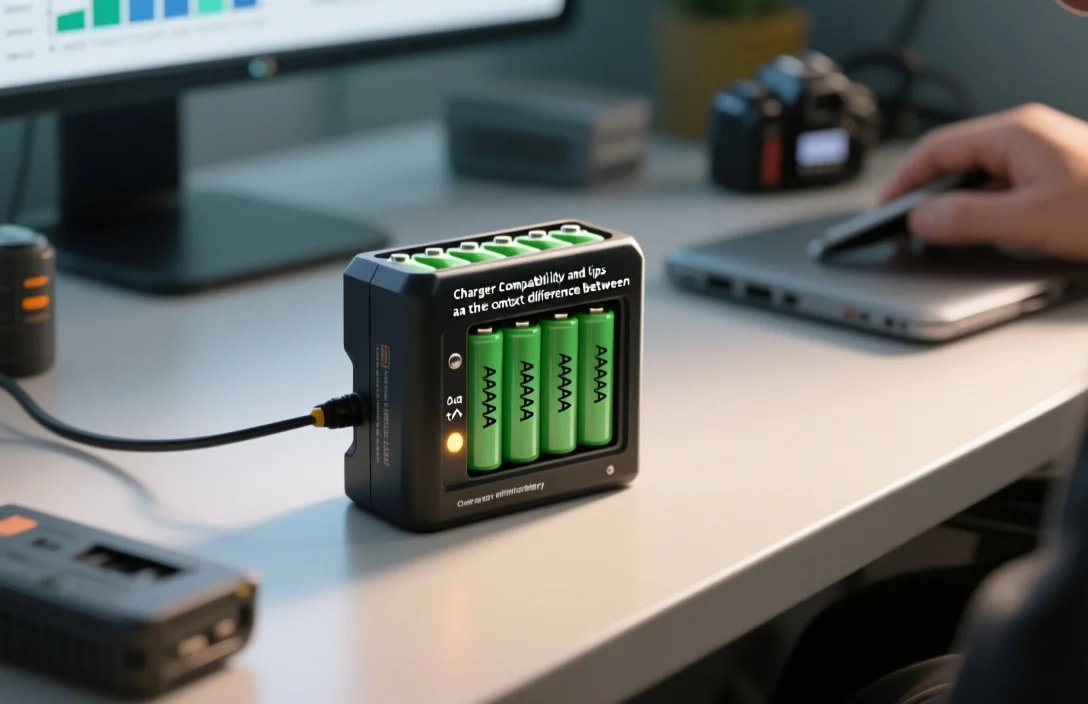
AA and AAA rechargeable cells have the same nominal voltage, but AAA cells are shorter and hold less capacity than AA, so chargers that accept both must handle the smaller length and lower mAh of AAA. Many modern smart chargers accept both sizes in the same bays, but physical contact spacing, spring reach, and per-channel current limits are the factors that determine safe compatibility.
Smart chargers are worth the premium when you rely on rechargeables, because they detect each cell and stop or taper charge based on voltage, temperature, or time. Basic chargers apply a fixed current and risk overcharging NiMH cells if left indefinitely, so they are best for occasional topping where you monitor the process.
For example, if you own a mixed fleet of AA and AAA NiMH cells, pick a smart charger that lists per-slot mA and independent sensing, and avoid packing older, low-capacity AAA cells with new high-capacity AA cells in the same cycle to prevent premature overcharge of the weaker cells.
Safety, heat, storage
AA and AAA cells of the same chemistry share the same nominal voltage, but AA cells have more capacity and greater thermal mass while AAA cells are physically smaller and heat up and fail faster under stress. That difference changes how quickly problems like overheating, leakage, and swelling appear and how you should store each size.
Smaller cells mean less stored energy but also less metal and electrolyte to absorb heat, so AAA can get hot and show failure signs sooner; AA will run longer but can release more total energy if it fails. Treat both sizes the same on rules you can control: avoid heat, avoid short circuits, and follow disposal guidance.
Buying checks and troubleshooting
AA is larger and normally holds more capacity than AAA, while both sizes have the same nominal voltage for a given chemistry. Choose AA when you need longer run time and AAA when size and weight are limiting factors.
| Characteristic | AA | AAA |
|---|---|---|
| Size | Physically larger | Smaller |
| Capacity | Higher, better for longer runtimes | Lower, used where space is tight |
| Common devices | Remotes, toys, flashlights | Small remotes, clocks, compact electronics |
Poor contact
Symptom: device does not power on or intermittently cuts out even with fresh AA or AAA installed. Cause: dirty terminals, weak battery spring, wrong size cell slipping in the compartment, or corrosion on the battery contacts. Fix: clean both battery and device contacts with isopropyl alcohol and a cotton swab, gently reform a weak spring contact so it holds the cell firmly, and if an AAA is loose in an AA slot use a proper spacer or the device recommended adapter rather than forcing the cell.
Weak cells or short runtime
Symptom: batteries show near-normal open-circuit voltage but devices die quickly or voltage drops sharply under load. Cause: aged or low-capacity cells, mixing old and new cells, or buying AAA when the device needs the higher capacity of AA. Fix: test individual cells with a multimeter under load, replace matched sets together, choose AA for higher capacity where possible, and buy higher-mAh rechargeables if you need longer runtime rather than stacking multiple cells.
Charger issues
Symptom: charger LED fails to indicate charge, charges too slowly, or cells overheat during charging. Cause: wrong charger type for the cell chemistry, bad contacts in the charger, or a faulty charger circuit. Fix: verify the charger’s chemistry and cell-size support, clean charger contacts, measure charger output with a meter if you can, try charging one known-good cell, and stop using any charger that causes excessive heat or fails repeated basic checks.
When to return or replace cells
Symptom: brand-new cells are dead on arrival, show wildly different voltages, leak, or are physically damaged. Cause: manufacturing defects, shipping damage, or expired stock. Fix: return packs that arrive defective under the seller warranty, safely dispose of leaking or swollen cells following local rules, and replace with cells from a reputable source; if a device repeatedly rejects a size, verify the device manual before forcing different sizes.
Quick Summary
AA batteries are larger and usually hold more capacity than AAA cells, while both share the same nominal voltage and differ by size.
Frequently Asked Questions
What is the main difference in size between AA and AAA batteries?
The primary difference is that AA batteries have a diameter of 14.5 mm and a length of 50.5 mm, while AAA batteries are smaller, measuring 10.5 mm in diameter and 44.5 mm in length.
Can I use AAA batteries in a device designed for AA batteries?
No, you cannot use AAA batteries in a device designed for AA batteries because the size difference will prevent a proper connection. Always use the battery size specified by the manufacturer for optimal performance.
Do AA batteries last longer than AAA batteries?
Generally, yes, AA batteries last longer than AAA batteries because they have a larger capacity, often rated around 2000-3000 mAh compared to AAA batteries, which are usually rated at 900-1200 mAh.
Are AA and AAA batteries interchangeable in terms of voltage?
Yes, both AA and AAA batteries typically provide a voltage of 1.5 volts, but their capacities are different. However, they are not interchangeable due to their size and fit in devices.
What are common mistakes when buying AA or AAA batteries?
A common mistake is buying batteries without checking the expiration date, which can affect performance. Always look for batteries with later expiration dates to ensure longer shelf life and reliability.

- Top 10 Best Solar Battery Installers Qld 2026 - September 12, 2026
- Top 10 Best Solar Battery Deals Qld Reviews 2026 - September 12, 2026
- Top 10 Best Solar Battery Deals Qld Price 2026 - September 12, 2026