
Understanding The Key Differences Between Aa And Aaa Batteries
AA and AAA batteries deliver the same nominal voltage, 1.5 volts for single-use alkalines, yet they are not interchangeable by size. AA cells are physically larger and usually hold more energy, so they run high-drain devices longer; AAA fits compact remotes, wireless sensors, and many slim controllers. Always check size markings before swapping cells.
Difference between AA and AAA batteries is mainly physical size and capacity: AA is larger and typically stores more energy, while both share the same nominal voltage, 1.5 V for alkaline and about 1.2 V for NiMH rechargeables; match the size stamped in the device and your charger setting.
AA vs AAA: Size & Voltage
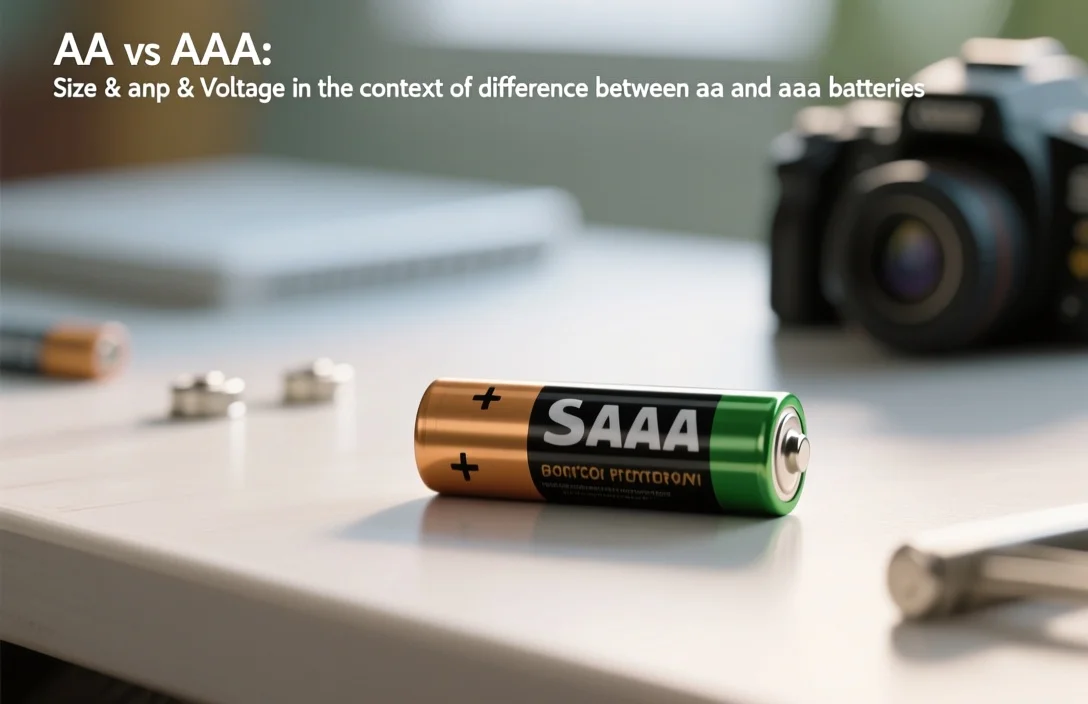
AA cells are physically larger than AAA cells, with AA having a bigger diameter and slightly greater length; both sizes usually deliver the same nominal voltage when they use the same chemistry. The physical difference determines which battery will fit and whether contact springs or holders will compress correctly, while voltage comes from chemistry, not size.
Measure fit by checking diameter and length, and by seeing how the positive button and negative flat end contact the device terminals. If a cell rattles, sits recessed, or requires excessive force to install, the holder or spring tension is wrong and you will get intermittent contact or poor performance.
Nominal voltages are set by chemistry: alkaline primary cells are typically 1.5 volts, nickel-metal-hydride rechargeables are about 1.2 volts, and single-cell lithium-ion rechargeables are about 3.6 to 3.7 volts. Size does not automatically change voltage, so a AA-sized lithium-ion cell with 3.6 volts is not interchangeable with a 1.5 volt alkaline without checking the device requirements.
| Type | Typical diameter | Typical length | Common nominal voltages |
|---|---|---|---|
| AA (LR6) | ≈14.5 mm | ≈50.5 mm | Alkaline 1.5 V, NiMH 1.2 V, Li-ion (14500 type) 3.6 – 3.7 V |
| AAA (LR03) | ≈10.5 mm | ≈44.5 mm | Alkaline 1.5 V, NiMH 1.2 V |
For example, putting two AAA cells in an AA slot with a plastic sleeve can work in a TV remote but will often fail in high-drain flashlights because the sleeve reduces spring compression and increases contact resistance. Test new replacements briefly and watch for heat, odd behavior, or rapid voltage drop.
Always confirm both size and chemistry before replacing batteries. If a cell is swollen, hot, or leaking, stop and dispose of it safely at a battery recycling point.
AA vs AAA: Capacity & Runtime
AA cells typically store noticeably more charge than AAA cells, so a device will run longer on an AA than on a AAA of the same chemistry and voltage. Capacity is given in milliamp-hours, mAh, while energy in watt-hours, Wh, combines that capacity with voltage and is the best number to compare actual usable energy.
Check battery labels for three things: mAh, nominal voltage, and chemistry (alkaline, NiMH, lithium). Some manufacturers print Wh directly on the pack, which removes a step when comparing energy between sizes or chemistries.
| Example cell | Typical mAh (example) | Nominal V | Energy (Wh) calculation |
|---|---|---|---|
| AA (example) | 2000 mAh | 1.5 V | (2000/1000) 1.5 = 3.0 Wh |
| AAA (example) | 1000 mAh | 1.5 V | (1000/1000) 1.5 = 1.5 Wh |
For instance, the AA example above has about twice the energy of the AAA example, so under identical load and conditions the AA will run roughly twice as long. Real-world difference depends on chemistry, age, and the device’s drain.
Load Performance Differences
AA cells typically have lower internal resistance and show less voltage sag than AAA cells, so they hold voltage better under moderate and high current draw. Under light steady loads the practical voltage difference is small, making AAA acceptable for low-drain toys and remotes.
Internal resistance is the main electrical difference that affects load performance. A cell with higher internal resistance loses more voltage inside the battery when current flows, so the terminal voltage under load falls faster and usable power drops earlier.
For high-drain devices, lower internal resistance matters because the device demands significant current continuously or for long bursts. Examples include digital cameras with long autofocus and flash cycles, portable radios with powerful audio stages, handheld game controllers in some models, and motor-driven devices like motorized toys or cordless screwdrivers.
Pulse loads, such as camera flashes, wireless transmit bursts, or motor start currents, stress batteries differently than steady loads. Chemistry interacts here: rechargeable NiMH cells usually have lower internal resistance and recover voltage faster after pulses than alkaline primaries, so an AAA NiMH can sometimes outperform an alkaline AA under pulsed conditions.
In practice, that means size alone does not guarantee performance; chemistry and cell condition matter. Old or partially depleted cells show higher internal resistance and worse sag, so always check age and charge state when comparing performance.
Charging Compatibility Rules
AA and AAA rechargeables differ mainly in physical size and typical capacity, so the charger must accept the cell diameter and the stated rechargeable chemistry on the battery label. You must match charger chemistry settings (for example NiMH vs lithium) and slot fit, because a charger that accepts the size does not automatically use the correct charge method.
Most AA and AAA rechargeables are NiMH and will say “NiMH” or “rechargeable” on the cell; some manufacturers sell lithium rechargeable AA/AAA or proprietary lithium cells, and those always require a charger specified for lithium chemistry. Always check the cell marking for chemistry and nominal voltage before charging.
Do not charge alkaline or other primary cells. Charging primary cells can leak, rupture, or cause fire because they are not built for recharge cycles and lack proper internal structures. If you see “alkaline” or no chemistry marking other than a brand name, assume it is a primary cell and do not insert it in a charger.
Common mistakes include using a low-cost timer-only charger for NiMH, forcing loose-fitting AAA cells into AA-only springs, and charging mixed chemistries in the same slot. Spend a little more on a quality charger with per-cell monitoring and temperature sensing, it improves lifespan and safety for both AA and AAA rechargeable batteries.
Safety, Heat, Storage
AA cells are larger and usually store more energy than AAA cells, which changes how they heat, fail, and age in use and storage. Because AAA cells have less thermal mass and lower capacity, they can show overheating, voltage drop, and failure signs sooner under heavy drain or wrong chargers than AA cells.
For example, a pair of AAA cells in a high-drain flashlight may heat and lose voltage faster than an AA pair in the same holder, so check for warmth and shortened run times sooner when you see those signs.
Replacement triggers to act on include persistent capacity loss, any visible damage, leakage, swelling, repeated overheating, or when cells are several years old; replace both cells in a device rather than mixing sizes or ages to avoid imbalance and additional stress.
Buying Checks and Troubleshooting
AA are physically larger and normally deliver higher capacity and longer runtime than AAA, while AAA save space and weight at the cost of shorter runtime. Both sizes come as single‑use alkaline and rechargeable NiMH types, so pick the size by the device space and the runtime you need, and pick chemistry by whether you want rechargeability.
For example, a high-drain flashlight that suddenly runs far shorter may simply have AAA substituted where AA is required, or a batch of rechargeable AAAs may have lower mAh than advertised; swapping in a known-brand AA will quickly show whether the size or the specific cell is the problem. If replacing cells fixes the runtime, buy higher-capacity AA cells; if problems persist across fresh cells, inspect the charger or device contacts.
Device Fit Guide
AA cells are physically larger and normally provide higher capacity and higher allowed discharge current than AAA cells, while AAA cells are smaller and used where space and weight matter. Both sizes can come in alkaline, NiMH rechargeable, and other chemistries, so voltage and behavior depend on chemistry as well as size.
Typical devices that take AA include medium and high-drain items such as larger flashlights, portable radios, many toys, some wireless game controllers, and battery packs inside small appliances. These devices expect higher capacity or more current, which AA cells can supply for longer run times under load.
Typical devices that take AAA include TV remotes, small LED penlights, some wireless mice, remote temperature sensors, and compact electronic gadgets. Manufacturers pick AAA when the device needs less energy and the design favors a slimmer form factor.
For example, a compact TV remote usually runs fine on AAA alkaline, but a high-brightness handheld flashlight should use AA cells or specified rechargeables to avoid low output and rapid voltage sag. When in doubt, follow the device markings or manual and prioritize safety over makeshift substitutions.
Quick Summary
AA batteries are larger and usually have higher capacity than AAA batteries, while both commonly have the same nominal cell voltage.
Frequently Asked Questions
What is the physical difference between AA and AAA batteries?
You can tell them apart by size: AA is 50.5 mm long and 14.5 mm in diameter, AAA is 44.5 mm long and 10.5 mm in diameter.
Can I use AA batteries in a device that accepts AAA, or vice versa?
You cannot interchange them because of size and holder fit; AA will not fit in an AAA holder and AAA will be loose in an AA holder. You can use a proper adapter or the correct size battery, and avoid mixing sizes or chemistries since nominal voltages like alkaline ~1.5 V and NiMH ~1.2 V differ by chemistry.
How does runtime compare between AA and AAA batteries?
You can expect AA to run longer because it holds more charge; AA cells typically have roughly 2 to 3 times the mAh capacity of AAA cells, so AA lasts longer in the same device under the same load.
Do AA and AAA batteries get hotter or present different safety risks when used or charged?
You can expect heat and safety behavior to depend on chemistry and current draw rather than size, because both share similar nominal voltages, for example alkaline ~1.5 V and NiMH ~1.2 V. If a cell becomes too hot to hold, stop using it and remove it from the device.
What are common buying mistakes to avoid when choosing between AA and AAA batteries?
You can avoid mistakes by checking the device label for size and recommended chemistry; always match the required size (AA or AAA) and the chemistry, and for rechargeables look for low self-discharge NiMH with the capacity printed, for example AA around 2000 mAh and AAA around 800 mAh.

- Top 10 Best Solar Battery Deals Qld Reviews 2026 - September 12, 2026
- Top 10 Best Solar Battery Deals Qld Price 2026 - September 12, 2026
- Top 10 Best Solar Battery Quality 2026 - September 12, 2026