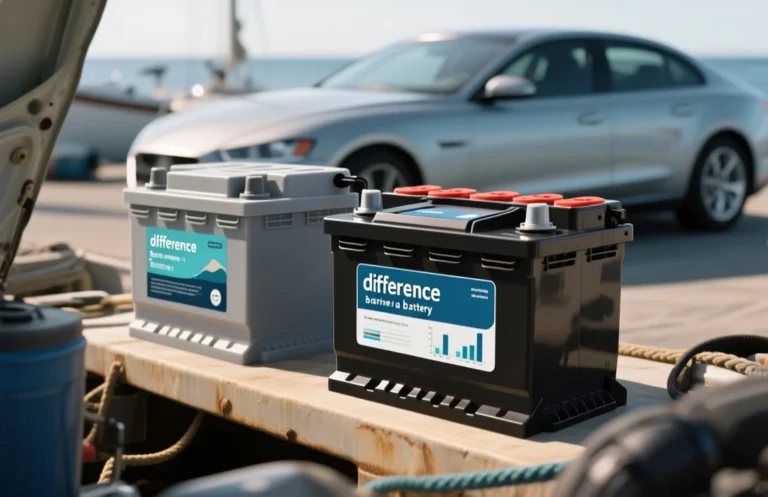
Difference Between Group 24 And 27 Batteries
A two inch length difference can ruin a battery swap, causing terminals to miss connectors or the pack to not fit the tray. The single spec that matters most is the battery group size, because it defines case dimensions and terminal placement. A common mistake is assuming group 24 and 27 are interchangeable. Check the group number, voltage, Ah rating, and terminal polarity on the battery label first.

Difference between group 24 and 27 batteries: Group 27 is generally larger, about 2 inches longer, and usually provides higher amp-hour capacity; both are typically 12 volts. Check physical dimensions, Ah rating, and terminal layout before replacing or charging a different group size.
Physical Dimensions Comparison
Physical size difference directly affects whether a battery will fit the tray, clamp, and reach the vehicle or equipment cables, so dimension differences matter more than chemistry when swapping group sizes. Group 24 is typically the smaller of the two, while group 27 is larger and heavier, which changes how it sits in trays and how hold-downs fit. Terminal location and top clearance also vary, and those differences can block covers or contact nearby metal if you force a bigger battery into a smaller space.
Measure the battery compartment and compare the manufacturer group number on the old battery before buying a replacement to avoid fit issues. If you cannot find exact dimensions on the battery label or spec sheet, measure length, width, and height directly and confirm terminal type and spacing with the device manual.
When to choose one over the other
Choose a group 24 when you have a compact tray, limited vertical clearance, or lighter weight requirements, because it will more likely fit small cars, motorcycles with accessory batteries, and compact marine compartments without modification. Opt for a group 27 when the tray and clamp can accept a larger case and you need the space for a physically larger battery that commonly has higher capacity options in many product lines, but always confirm terminal position and cable length before installing. Never force a larger battery into a smaller tray; doing so risks crushed cases, bent terminals, or cables that are too short to reach, any of which create safety and charging problems.
Takeaway: always measure the compartment, check the printed group number and terminal layout, and confirm hold-down and cable length before swapping between group 24 and 27 to avoid fitment and safety issues.
Weight Differences and Impact
Group 27 batteries are commonly 5 to 15 pounds heavier than Group 24 batteries, depending on capacity and chemistry. That weight gap matters for mounting, handling, and the load distribution in vehicles, boats, and RV compartments.
Heavier Group 27 units often have larger plates or more active material, which can mean higher amp-hour capacity but you must verify the Ah rating on the label rather than assume it. Measure the battery tray, check terminal spacing, and confirm the hold-down capacity before swapping sizes. Use proper lifting technique and anti-vibration mounts for the heavier units to reduce the risk of dropped batteries or terminal damage.
When to prefer the heavier option
Choose a Group 27 when you need longer runtime between charges and the installation area can support extra mass and a slightly larger footprint. The additional weight often reflects more active material or thicker plates that increase reserve capacity, but actual performance depends on the chemistry and Ah rating printed on the battery. If access, weight limits, or serviceability are constrained, stick with Group 24 or consider a different chemistry with higher energy density, and always follow manufacturer mounting and ventilation guidelines to keep charging safe.
Takeaway: check the weight and Ah on the spec label, measure the tray and terminal layout, and plan for stronger mounts and two-person handling if you move up to a Group 27.
Capacity Amp-Hour Ranges
Group 24 and Group 27 batteries differ notably in their capacity amp-hour ratings, which directly impacts their suitability for various applications. Typically, Group 24 batteries have a capacity range of 70 to 85 amp-hours, while Group 27 batteries generally offer a higher capacity, ranging from 90 to 120 amp-hours. This distinction is crucial for users who need to match battery performance to specific power demands.
For instance, Group 24 batteries are often sufficient for smaller recreational vehicles or marine applications, where space and weight are considerations. In contrast, Group 27 batteries are ideal for larger boats, RVs, or applications requiring longer run times. Here are some specifics regarding their dimensions and performance:
When selecting between these battery types, consider not only the amp-hour rating but also how the physical size and weight will fit into your intended application. Higher capacity batteries like Group 27 can be beneficial in situations where extra power is needed without frequent recharging.
When to Use It
Choosing between Group 24 and Group 27 batteries often comes down to the specific energy needs of your devices or vehicles. If you are using a battery for a smaller boat or light-duty RV, a Group 24 battery may suffice. However, for larger applications that demand more energy over extended periods, such as heavy-duty RVs or high-consumption marine electronics, a Group 27 battery is recommended. Additionally, always ensure that the battery’s amp-hour rating aligns with the expected load to maintain optimal functioning and longevity.
Understanding the differences in amp-hour capacity can significantly influence performance and efficiency. Always check the specifications on the battery label to ensure compatibility with your requirements.
Cold Cranking Amps Differences
The difference in cold cranking amps (CCA) between group 24 and group 27 batteries is significant for users who need reliable power in cold conditions. Group 24 batteries typically provide around 600 CCA, while group 27 batteries can offer about 700 CCA. This higher rating in group 27 batteries means they are better suited for starting larger engines or supporting high-demand applications in low temperatures. When considering these batteries, it is essential to match the CCA rating with your vehicle or equipment needs. Group 27 batteries tend to be larger and heavier, measuring approximately 12.1 x 6.8 x 8.9 inches, compared to group 24’s dimensions of about 10.3 x 6.8 x 8.9 inches. The increase in size allows for more active materials inside the battery, which contributes to the higher CCA. Prices for group 24 batteries generally range from $100 to $150, while group 27 batteries can range from $120 to $200, reflecting their enhanced performance capabilities.
When to use it
Selecting between group 24 and group 27 batteries depends on your specific power needs. If you are operating a vehicle with a high-displacement engine or using equipment that requires more power to start, a group 27 battery is advisable due to its higher CCA. However, if you have a smaller vehicle or less demanding electrical requirements, a group 24 battery may suffice. Always check the manufacturer’s specifications to ensure compatibility with your system. Investing in the correct battery type can lead to better performance and reliability. Assess your power needs carefully, especially when considering the potential for cold weather use.
Reserve Capacity Ratings Explained
Understanding the reserve capacity ratings is crucial when comparing group 24 and group 27 batteries, as these ratings indicate how long a battery can sustain a specific load. Group 24 batteries typically have a reserve capacity of 70 to 85 minutes, while group 27 batteries usually offer 90 to 120 minutes. This difference can significantly impact your choice for applications such as RVs, marine use, or backup power systems.
Group 24 batteries are often smaller, measuring approximately 10.25 x 6.75 x 9 inches and weighing around 40 pounds. In contrast, group 27 batteries are larger at about 12 x 6.8 x 9.5 inches and can weigh up to 60 pounds. The superior reserve capacity of group 27 batteries makes them a better choice for devices that demand a longer runtime. Additionally, these batteries may come with different amp-hour ratings, which can further affect performance.
When to Use It
Choosing between group 24 and group 27 batteries largely depends on the specific application. If you require extended power for longer camping trips or need a reliable source for your boat, a group 27 battery is generally more suitable due to its enhanced capacity. Conversely, if the application is lighter, such as in smaller vehicles or short-duration tasks, a group 24 battery may suffice. Always consider the size and weight limitations of your setup, as well as the power needs of your devices.
Ultimately, selecting the right battery group is about matching the battery’s specifications with your power needs. Always check the manufacturer’s specifications for both battery types to ensure compatibility with your devices and systems.
Terminal Type and Layout
The terminal type and layout are crucial when comparing group 24 and 27 batteries, as these differences can impact installation and compatibility. Group 24 batteries typically come with top-post terminals, while group 27 batteries may feature either top-post or side-post terminals. This variability can affect the ease of connection depending on your vehicle or device setup. Group 24 batteries generally measure 10.25 inches in length, 6.75 inches in width, and 9 inches in height, while group 27 batteries are slightly larger, measuring 12 inches in length, 6.75 inches in width, and 9 inches in height. The terminal layout can also differ, which may necessitate different connector types in certain applications. When selecting between the two, consider the following:
When to Use Each Battery
Choosing between group 24 and 27 batteries should be based on your specific energy needs and space constraints. For instance, if you have a smaller boat or lawn equipment, a group 24 battery might suffice, as it provides adequate power without taking up too much space. Conversely, if you are powering larger machinery or need extended run times, a group 27 battery is likely the better option due to its higher capacity. Always check the manufacturer’s specifications to ensure you’re selecting the right battery for your application. When making your final decision, evaluate not only the physical dimensions but also the terminal configuration. These factors will ensure a secure connection and reliable performance for your power needs.
Battery Case Style Variations
The distinction between Group 24 and Group 27 batteries is essential for users needing to match battery capacity and size to specific applications. Group 24 batteries typically have a capacity of around 70 to 85 amp-hours, while Group 27 batteries usually range from 90 to 115 amp-hours, making the latter a better choice for higher energy demands. Group 24 and Group 27 batteries differ not only in capacity but also in physical dimensions. A Group 24 battery generally measures approximately 10.25 inches in length, 6.75 inches in width, and 8.75 inches in height. In contrast, a Group 27 battery is slightly larger, measuring about 12 inches long, 6.75 inches wide, and 9 inches high. Here are some practical points to consider:
When to Use Each Type
Choosing between Group 24 and Group 27 batteries largely depends on your specific power requirements. For example, if you’re using a standard boat or RV with moderate electrical needs, a Group 24 battery may suffice. However, for applications like larger RVs or boats with more demanding electrical systems, a Group 27 battery is often the better choice due to its higher capacity. Additionally, consider your space constraints. If the battery compartment is limited, a Group 24 might fit better, but if you have the room, a Group 27 can provide more power. In summary, understanding the differences between Group 24 and Group 27 batteries can help you make a more informed choice based on your power requirements and space limitations. Always verify the specifications and dimensions before making a purchase to ensure compatibility with your devices or vehicles.
Group Fitment and Hold-Downs
Group 27 is typically larger than Group 24, which means length and top profile differences often cause fitment and hold-down mismatches when swapping batteries. That size gap directly affects tray width, clamp reach, and how terminals line up with cables, so it is a practical reason to check fitment before buying a replacement. Verify the battery group number on the case and compare to the vehicle or equipment manual.
Hold-down styles vary by application, common types include J-bolt clamps, top-bar clamps, and molded trays with integrated clips, and the hardware that secures a Group 24 may not reach across a wider Group 27. Terminal placement can shift enough that positive and negative terminals end up under a clamp or too close to metalwork. Check that the hold-down allows a firm clamp without bending terminals or stressing cable lugs.
When to worry about incorrect hold-downs
If a battery is not secured properly it can move under vibration, causing terminal stress, short circuits, or case damage that leads to leaks or internal shorts; those are safety concerns that should be avoided. If swapping a Group 24 for a Group 27 leaves any part of the clamp riding over the terminal or allows more than a few millimeters of movement, replace the tray or use a manufacturer-approved adapter kit. Always recheck torque on hold-down bolts after the first few drives and use insulated terminal covers when clearance is tight to reduce short risk.
Takeaway: before upgrading capacity or changing battery group, measure the tray, confirm terminal alignment, and ensure the hold-down hardware will clamp the new battery firmly without contacting terminals; if in doubt, fit an adapter tray or consult the vehicle/equipment manual.
Vehicle Compatibility Checks
Understanding the difference between group 24 and 27 batteries is crucial for optimal vehicle performance. Group 24 batteries typically have a capacity of around 70-85 amp-hours, while group 27 batteries usually offer 85-105 amp-hours. This variance in capacity can significantly impact your vehicle’s electrical system, especially for those using high-demand accessories.
When selecting a battery, consider the physical dimensions and terminal configurations. Group 24 batteries measure approximately 10.25 x 6.75 x 8.75 inches, whereas group 27 batteries are larger, at around 12 x 6.75 x 9 inches. It’s also essential to pay attention to the battery’s cold cranking amps (CCA), as this affects starting performance in cold conditions.
For example, a group 24 battery may have CCA ratings around 600, while a group 27 can exceed 700.
When to Use It
Choosing between group 24 and group 27 batteries depends on your vehicle’s specific requirements. If your vehicle has high electrical demands, such as running multiple accessories or heavy systems, a group 27 battery can provide the needed capacity. In contrast, if your vehicle is lighter or used for less demanding applications, such as a compact car or small RV, a group 24 battery may suffice. Always check your vehicle’s manual or consult with a professional to ensure compatibility.
Ultimately, selecting the correct battery group can enhance your vehicle’s reliability and efficiency. Ensuring that you match the battery type with your vehicle’s specifications is key to avoiding performance issues and unnecessary costs down the line.
Starting vs Deep-Cycle Use
Understanding the difference between group 24 and 27 batteries is essential for selecting the right battery for your needs, especially when considering starting versus deep-cycle applications. Group 24 batteries typically have a capacity of around 70-85 amp-hours (Ah), while group 27 batteries can offer around 90-120 Ah. This capacity difference is significant when determining how long a battery can supply power for various applications.
Group 24 batteries are commonly used in starting applications, such as automotive and marine engines, where a quick burst of power is needed to start the vehicle. In contrast, group 27 batteries are often employed in deep-cycle applications like RVs, solar systems, and backup power supplies, where sustained power over a longer period is more important. Here are some key specifications to consider:
Choosing the right battery also involves considering the dimensions, as group 27 batteries are larger and may not fit in all battery compartments designed for group 24 batteries. Additionally, while both battery types can be used in various applications, mismatching them can lead to issues such as insufficient power supply or damage.
When to use it
When deciding between group 24 and 27 batteries, it’s crucial to assess your specific power needs. If you require a battery for starting engines, a group 24 battery may suffice. However, for applications demanding longer power delivery without frequent recharging, such as in RVs or off-grid setups, a group 27 battery is advisable. Additionally, consider the charging options available since larger batteries may require more robust charging systems to ensure they reach full capacity efficiently.
Selecting the correct battery type can significantly impact your power system’s efficiency and reliability, making it essential to evaluate your specific energy needs and application requirements carefully.
AGM Versus Flooded Options
Both Group 24 and Group 27 are 12V battery sizes, and the larger Group 27 usually gives more amp-hour capacity and physical space, which changes whether an AGM or flooded cell will fit and meet runtime needs. That size and capacity gap means an AGM Group 27 can provide longer maintenance-free service in tight spaces, while a flooded Group 24 often costs less per amp-hour but needs a vented location. Picking chemistry depends on tray dimensions, venting, and how often you can service the battery.
AGM batteries are sealed, have lower self-discharge, and tolerate vibration and odd mounting angles better; flooded lead-acid needs upright mounting, periodic watering, and a vent to avoid hydrogen buildup. Always check the battery label for voltage, amp-hour rating, terminal type, and recommended charge profile, and verify your charger has an AGM mode if you choose sealed cells. Do not mix AGM and flooded batteries in parallel, and replace swollen or overheated batteries immediately.
When to choose AGM or flooded
Choose AGM if you need a sealed, low-maintenance pack for confined, vibration-prone locations like small boats, scooters, or shelf-mounted UPS systems; AGM is useful when you cannot run a vent line. Choose flooded when you have a ventilated battery compartment, want the lowest initial cost per amp-hour, and can perform regular electrolyte checks and topping-up. Always match the battery’s amp-hour rating and terminal layout to the Group 24 or 27 tray and confirm the charger uses the correct voltage and charging curve for the chemistry.
For example, if your RV battery tray only accepts a Group 24, a flooded Group 24 will fit but may need a vented enclosure, while an AGM Group 24 gives maintenance-free use at slightly higher cost. Measure the tray and read the spec sheet before buying.
Takeaway: size dictates fit and expected capacity, chemistry dictates maintenance and mounting, so measure the tray, confirm charger settings, and choose AGM for sealed convenience or flooded for lower cost if you can provide venting and routine maintenance.
Charging Requirements and Rates
The difference in charging requirements and rates between group 24 and group 27 batteries is significant due to their capacity and size. Group 24 batteries typically have a capacity of around 70-85 amp-hours (Ah), while group 27 batteries offer a higher capacity, generally ranging from 85-105 Ah. This higher capacity in group 27 batteries means they can store more energy, which impacts how they are charged and the time taken to reach full charge.
When charging these batteries, it is essential to use a compatible charger that meets their specific requirements. Group 24 batteries usually require a charging current of up to 10-15 amps, whereas group 27 batteries may need 15-20 amps for optimal charging. Charging times can vary based on battery state and charger specifications but generally take around 6-8 hours for group 24 and 8-12 hours for group 27 batteries. Consider the following when selecting a charger:
When to use it
Choosing between group 24 and group 27 batteries depends on your energy needs and application. If you require a battery that can support high energy demands over extended periods, such as in recreational vehicles or marine applications, group 27 is often the better choice due to its larger capacity. However, for smaller applications or where space is limited, group 24 batteries may be sufficient. Always consider the physical size and weight constraints of your setup when making a decision.
Understanding the charging requirements and rates for these battery groups is crucial for maintaining optimal performance and safety. Always ensure you are using the correct charger and following manufacturer guidelines for charging times and currents.
Charger Compatibility Best Practices
Understanding the difference between group 24 and 27 batteries is crucial, especially when selecting the appropriate charger. Group 24 batteries typically have a capacity of around 70-85 amp-hours, while group 27 batteries offer a higher capacity, often ranging from 85-115 amp-hours. This difference impacts not only the battery’s runtime but also its charging requirements and compatibility with various chargers.
When charging these batteries, it’s essential to use a charger that matches the battery type and size. Group 24 and 27 batteries may require different charging voltages and currents.
For instance, a charger designed for a group 27 battery may not be suitable for a group 24 battery, and vice versa. Always check the charger’s specifications to ensure it can provide the necessary output without overloading the battery. Here are some practical considerations:
When to Use Each Battery Group
Choosing between group 24 and 27 batteries often depends on the power requirements of your equipment. Group 24 batteries are commonly used in smaller boats and light-duty applications where space is limited. On the other hand, group 27 batteries are ideal for larger vessels, RVs, or applications requiring more power and longer runtime. It is critical to assess your energy needs thoroughly before making a selection, as using the wrong battery group can lead to inadequate performance and potential safety issues.
Always prioritize compatibility between the battery and charger to ensure safe and efficient charging. This will help extend the life of both the battery and the charger, reducing the risk of overheating and other safety hazards.
Mounting and Clearance Tips
When considering the difference between Group 24 and Group 27 batteries, understanding their physical dimensions is crucial for proper installation. Group 24 batteries typically measure 10.25 x 6.75 x 9 inches, while Group 27 batteries are slightly larger at 12 x 6.75 x 9 inches. This variation affects how they fit in your battery compartment, influencing clearance and mounting options. Proper clearance is essential to prevent overheating and ensure safe operation. When mounting a battery, check the following specifications and considerations: In practice, if you own a vehicle or a boat, the choice between Group 24 and 27 could impact your setup significantly. For instance, a larger Group 27 battery may provide more capacity, beneficial for high-demand applications. However, if space is limited, a Group 24 battery could be a more practical choice.
When to Use It
Using the correct battery group is essential for optimal performance. Group 24 batteries are often chosen for smaller vehicles or applications with lower power needs, while Group 27 batteries are favored in larger vehicles or systems requiring higher energy output. If you frequently use accessories that draw significant power, such as winches or inverters, opting for a Group 27 may provide the necessary capacity for longer runtimes. Ensure you consider both your power requirements and physical space when making your choice. Always double-check the fit and clearance for your battery type to avoid installation issues, which could lead to safety hazards or equipment failure.
Heat and Ventilation Needs
Group 27 batteries are physically larger and generally have higher amp-hour capacity than Group 24, so they store more energy and can retain and generate more heat during charging and heavy discharge. That extra stored energy means a Group 27 will often run warmer for longer periods after a full charge or a deep cycle. Because heat speeds up wear and can cause electrolyte loss in flooded batteries, ventilation decisions should reflect the battery size you choose.
Charge current, ambient temperature, and enclosure size all affect how hot either battery will get, so always check the battery label for recommended charge rates and temperature ranges before installation. If a battery becomes hot to the touch, emits a strong odor, or shows swelling, stop charging and remove it to a well-ventilated area while you inspect or replace it. In marine, RV, and garage installations the larger Group 27 frequently needs more clearance or active ventilation than a Group 24.
When to prioritize extra ventilation
Prioritize extra ventilation when batteries are charged at higher currents, located near engines or heat sources, or used in hot climates where ambient temperatures approach or exceed the battery manufacturer’s rated limits. Group 27’s larger mass and surface area can mean it stores more heat and cools more slowly than a Group 24 in the same enclosure, so passive ventilation that worked for a smaller battery may be insufficient. If you plan frequent fast charging, long discharge periods, or installation in an enclosed compartment, add venting, a temperature sensor, or a dedicated fan and follow the battery maker’s temperature guidance.
Takeaway: if you choose Group 27 for greater capacity, plan for better ventilation and temperature monitoring than you would for a Group 24; check charge rate labels, leave clearance, and stop charging immediately if the battery overheats or swells.
Swelling and Failure Indicators
Swelling in batteries often indicates an internal failure, which can be particularly relevant when comparing group 24 and group 27 batteries. Both groups are commonly used in marine and automotive applications, but their physical size and capacity differences can affect how they respond to stress and failure modes such as swelling. Group 24 batteries typically measure about 10.25 inches in length, 6.75 inches in width, and 8.75 inches in height, while group 27 batteries are larger, measuring approximately 12 inches in length and 6.75 inches in width. This size difference can lead to variations in heat dissipation and internal pressure management. If a battery shows signs of swelling, it is crucial to handle it with care and consider the following indicators:
When to Replace
Recognizing when to replace a swollen battery can prevent further issues. It is advised to take immediate action if swelling is detected, regardless of whether it is a group 24 or group 27 battery. Swollen batteries can leak harmful chemicals or even pose a fire hazard. Replacement should be done with a battery that matches the specifications of the original to ensure safe operation. Always dispose of swollen batteries properly and consult a professional if uncertain about handling them. Proper awareness of swelling and failure indicators in batteries is essential for safety and longevity. Regularly inspecting batteries and understanding their specifications can help prevent incidents and ensure reliable performance.
Expected Cycle Life Estimates
The expected cycle life of Group 24 and Group 27 batteries can vary significantly, impacting their suitability for different applications. Typically, Group 24 batteries offer around 200 to 300 cycles, while Group 27 batteries often provide approximately 300 to 500 cycles. This variance is crucial for users who depend on battery longevity for their devices, such as RVs, boats, or renewable energy systems. Group 24 batteries generally have a capacity ranging from 70 to 85 amp-hours (Ah), while Group 27 batteries typically range from 90 to 120 Ah. The larger capacity of Group 27 batteries allows them to sustain longer usage periods, making them more favorable for heavy-duty applications. Here are some specifics to consider: For instance, if you’re powering a trolling motor or an RV, opting for a Group 27 battery may ensure longer trips without needing to recharge. However, if space and weight are constraints, a Group 24 battery might suffice while still offering decent performance.
When to Use Each Type
Choosing between Group 24 and Group 27 batteries depends largely on your specific needs. If you require a lightweight solution for infrequent use, Group 24 batteries can be adequate and more convenient. However, for continuous or heavy-duty applications, the enhanced capacity and cycle life of Group 27 batteries often justify their larger size and weight. Always consider your power demands and runtime requirements when making your selection, as this will directly influence your overall satisfaction with the battery’s performance. Ultimately, understanding the expected cycle life and capacity differences can help you make an informed decision, ensuring you select the right battery for your needs without compromising on performance or safety.
Warranty and Replacement Triggers
Group 27 batteries are generally larger than Group 24, which often means higher amp-hour capacity and different warranty or replacement expectations from manufacturers and dealers. That size and capacity difference can change how long a battery is covered, whether replacements are full or pro-rated, and what conditions trigger a warranty claim. Warranties that tie coverage to rated capacity or cycle life will treat a failing Group 27 differently than a failing Group 24 because replacement cost and expected service vary.
For example, manufacturers commonly split warranty coverage into an initial full-replacement window followed by a pro-rated period for the remainder of the term, and that structure is applied to both group sizes. Check the fine print for exclusions such as improper installation, evidence of overcharging, or use in a different tray size than specified. Replacement triggers you should look for include capacity test failures, persistent inability to hold charge, swelling or leakage, and physical damage from impact or corrosion.
When size differences affect a claim
Because Group 27 typically costs more and is used where higher capacity matters, manufacturers sometimes apply different pro-rating formulas for larger batteries, and dealers may have different return or exchange practices for them. If you swap sizes or use an adapter to fit a Group 27 in a Group 24 space, that can complicate warranty eligibility unless the installer documents compatibility and follows the maker’s approved procedures. Always record installation details and get any fitment exceptions in writing from the seller to avoid disputes if a replacement is needed.
Takeaway: verify the warranty period and replacement terms before buying, save the receipt and record the battery code, and treat visible damage, swelling, or failed capacity tests as immediate reasons to contact the seller or manufacturer for replacement guidance.
Shipping and Transport Rules
Group 27 batteries are typically larger and heavier than group 24 batteries, which raises shipping weight and handling requirements. That size and mass difference often pushes a group 27 into different pallet or freight categories compared with a group 24, and can change carrier selection and packaging method. Because carriers price and accept shipments based on weight, volume, and hazard class, the physical gap matters for practical logistics.
Check whether the battery is sealed (AGM, gel) or flooded lead-acid, since flooded cells usually have stricter transport limits and may need absorbent packing and extra paperwork. Inspect labels carefully for amp-hour rating, weight, and any transport classification or hazard class text the manufacturer provides. Do not ship swollen, leaking, or overheated batteries; contact the carrier or a recycling facility instead if the case is damaged.
For example, shipping a taller group 27 to a boatyard frequently requires palletization and a hazardous goods declaration, while a sealed group 24 for a retail replacement may move as a smaller boxed parcel but still needs terminal protection and correct labeling. Always verify with the carrier which documents they require and whether special handling fees apply.
When to declare hazardous materials
Declare hazardous materials whenever the battery label indicates electrolyte, acid, or a hazard class, or if the carrier’s rules trigger a declaration based on weight or amp-hour rating. If the battery is flooded lead-acid, the Safety Data Sheet should accompany the package and the shipper should document terminal protection and packaging methods; improper or missing declarations can lead to refusal, returns, or penalties. Contact the carrier before shipping to confirm required paperwork, acceptable packaging, and any pallet or pickup requirements to avoid delays and ensure safe handling.
Takeaway: before shipping either group 24 or 27, confirm chemistry, weight, and sealed versus flooded status, cap the terminals, and talk to the carrier about hazardous-materials paperwork so you avoid refusals and unsafe transport.
Price and Value Considerations
Group 27 batteries are physically larger and typically have higher amp-hour capacity than Group 24, which is the main driver of their higher retail price. Because they contain more active material and larger cases, Group 27 batteries usually cost more up front, but the extra capacity can change life-cycle cost calculations. Comparing cost per amp-hour or per watt-hour gives a clearer measure of value than a simple sticker price.
For example, if you need longer run time for lights, a small inverter, or house loads in an RV, a single Group 27 may replace two smaller Group 24s and simplify wiring and maintenance. Check the battery label for amp-hour (Ah) or reserve capacity numbers, and confirm the chemistry – flooded, AGM, or gel – because charger profiles and cycle life differ. Do not mix different group sizes, ages, or chemistries in the same bank, and inspect for swelling, corrosion, and correct terminal orientation before purchase.
When the extra cost pays off
Choosing Group 27 can be worthwhile when space is limited, and you would otherwise need multiple Group 24 batteries in parallel, because fewer units reduce interconnects, installation time, and points of failure. The higher upfront price can be offset over months or years if the larger battery reduces cycling frequency, lowers total charger wear, and simplifies maintenance tasks like equalizing or water top-ups for flooded cells. Always calculate expected usable capacity under your load profile and verify manufacturer cycle life or warranty terms rather than assuming larger equals better endurance.
Takeaway: use cost per amp-hour and fit checks to decide, prefer Group 27 when single-battery capacity and fewer connections matter, and always verify chemistry and charger compatibility to protect value and safety.
Measuring Battery State-of-Charge
Group 24 and 27 batteries are both nominal 12 volt sizes, and because group 27 units usually have greater amp-hour capacity, knowing exact state-of-charge helps predict how long a device or system will run before recharge. A wrong SOC estimate can make a seemingly small swap leave you underpowered or overworked during critical use. Accurate SOC matters when you compare runtimes, charging time, and when sizing a charger or inverter for each group.
Open-circuit voltage, amp-hour counting, and specific gravity are the practical methods people use to measure SOC, though each has limits depending on chemistry and battery age. Use a shunt-based battery monitor to track amp-hours in and out for reliable SOC over long periods, and use a hydrometer only on flooded cells. Always match charger voltage profiles to the battery chemistry rather than relying on group size alone.
When to check state-of-charge
Measure SOC after charging and again after a few hours of rest because immediate post-charge voltage can be misleading; waiting allows surface charge to settle and gives a more accurate open-circuit reading. Check before long trips, after heavy-discharge events, and during seasonal storage checks, especially if you have mixed group sizes in the same vehicle or boat. If you expect long runtimes from a group 27 swap, validate those expectations with a monitored discharge test rather than a single voltage snapshot, and use proper protective gear when performing load tests.
Takeaway: treat SOC measurement as a practical check when comparing group 24 versus 27 – rely on amp-hour counting or a rested voltage curve from the manufacturer rather than a quick guess. If you lack a monitor, at minimum let the battery rest and confirm chemistry-specific charger settings. Warning: do not mix batteries of different capacity or age in the same bank, and stop using any battery that is swollen, hot, or leaking.
Terminal Adapter and Jumper Options
Terminal spacing and post height usually differ between Group 24 and Group 27 batteries, so terminal adapters and jumper cables matter when swapping sizes to avoid strained leads and poor contact. Group numbers refer to case footprint and terminal placement, so even if voltage and capacity match, the posts can sit in a different position. Adapters let you retain existing cable terminations or bridge the gap when the tray or clamp does not match the larger or taller Group 27 case.
For example, a larger Group 27 may push the positive post farther from the factory cable routing, requiring an extended-clamp adapter or a short jumper to reach without bending the cable. Common practical options include universal top-post clamp adapters, stainless steel bolt kits for post extensions, and short insulated jumper leads with the correct crimped lugs. Avoid cheap adapters that cut corners on plating or insulation; a poor adapter increases resistance and heat, and can accelerate corrosion. Always check for tight, clean connections and replace any corroded terminals before installing an adapter.
Takeaway: before swapping Group 24 and 27 batteries, measure terminal height and cable reach, choose a well made adapter or short jumper that matches stud size and material, and prioritize secure, corrosion-free connections over convenience so the installation stays safe and reliable.
Buying Checklist for Fitment
Group 27 batteries are commonly chosen when extra capacity is needed, because they typically have higher amp-hour ratings than Group 24. Fitment matters since group numbers refer to standardized physical dimensions, and a larger Group 27 may not seat in a tray designed for Group 24. Always confirm both case dimensions and terminal layout before purchase to avoid clearance and cable issues.
Measure the battery well for length, width, and height, and note terminal type and position (top post, side post, or L-terminals). Check the hold-down method and vent tube routing so a larger case will not contact heat sources or block the hood. Verify connector reach, because longer cables or new terminals are a safety concern when swapping groups.
When to swap sizes
Consider moving from Group 24 to Group 27 only when the equipment manual permits a larger physical battery and you need the extra amp-hour reserve for accessories or longer run times. Measure the compartment, check clearance for hold-downs and hood contact, and ensure cables and terminal types will work without risky extensions. If the charging system or cable gauge is marginal, a larger battery can increase heat in weak connections, so get confirmation from a parts specialist or technician before changing group size.
Practical takeaway: measure twice, compare AH and CCA on the label, confirm terminal layout and hold-down clearance, and prioritize safety over forcing a bigger battery into a smaller tray. When unsure, consult the vehicle or equipment manual or a qualified installer before buying.
Troubleshooting Fitment Issues
12 V is the nominal voltage for both group 24 and group 27 batteries, so electrical compatibility is common while physical fit often causes trouble. Group 24 is typically smaller in overall footprint and height than group 27, and differences in terminal location, post height, and hold-down brackets are the usual reasons a replacement will not seat correctly. When a replacement battery will not clamp, or the posts do not line up with battery cables, you have a fitment problem rather than an electrical one.
Start by checking the battery group number printed on the label and measure the tray length, width, and clearances for terminal posts and vent tubes. Verify terminal type (top post versus side post), post height, and polarity orientation before buying. Safety note: do not force a battery into place, and avoid using ill-fitting hold-downs that allow movement during vibration.
When to consider an adapter, tray change, or alternate group
If the group 27 is larger but the tray and clamp can accept the extra size without bending terminals or stressing cables, some installers move to the larger group to gain capacity, however every installation must be verified. Changing trays, using a properly sized adapter plate, or modifying hold-downs are practical options when the battery box allows room, but they must maintain secure clamping, correct polarity, and proper venting. In all cases consult the device manual or a professional installer rather than improvising, because an unsecured battery creates risk of short circuits, acid leaks, or cable damage during operation and transport.
Takeaway: always verify the 12 V rating, group number, terminal type, and physical dimensions against the vehicle tray and cable layout before buying; if fit is unclear, get the exact group or ask a technician to avoid safety and performance problems.
Quick Summary
Group 24 and 27 batteries differ primarily in size, capacity, and specific applications, requiring careful selection for compatibility.
Frequently Asked Questions
What is the main difference in size between group 24 and 27 batteries?
The primary difference is that group 27 batteries are typically larger, measuring 12 inches in length compared to the 10.25 inches of group 24 batteries. This size difference can affect compatibility with various battery compartments.
How do the capacities of group 24 and 27 batteries compare?
Group 27 batteries usually have a higher capacity, often rated around 75-100 Ah, while group 24 batteries typically range from 60-85 Ah. This means group 27 can provide more runtime for your devices.
Are there any safety concerns when using group 24 and 27 batteries interchangeably?
Using these batteries interchangeably can lead to safety issues, especially if the battery compartment cannot accommodate the larger dimensions of a group 27 battery. Always check the manufacturer’s specifications before making a switch.
What is the typical lifespan difference between group 24 and 27 batteries?
While lifespan can vary based on usage, group 27 batteries often have a longer cycle life due to their larger capacity, potentially lasting 2-3 years longer than group 24 batteries under similar conditions.
What common mistakes should I avoid when buying group 24 or 27 batteries?
A common mistake is not checking your vehicle’s specifications for compatibility, which can lead to purchasing a battery that does not fit properly. Always verify the size and capacity requirements before making a purchase.

- Home Solar Battery Backup Systems: Cost-focused Guide And Top Picks - July 29, 2026
- Rechargeable 9v Batteries With Usb-c Charging For Smoke Detectors And Tools - July 29, 2026
- Top 10 Best Solar Backup Batteries Austin 2026 - July 28, 2026