Does A Boat Motor Charge The Battery?
Check the battery switch first, set it to BOTH or the engine start position before testing. The single spec that matters most is the voltage at the battery terminals while the engine is running. A common mistake is assuming idle charge equals cruising charge, so measure voltage and amps at idle and at higher RPM to see real charging performance.

Boat motor charging: A boat motor will charge the battery if the charging system is working, typically producing about 13.6 – 14.8 volts at the battery during bulk/absorption and anywhere from 10 – 200 amps depending on stator/alternator size; idle often gives little charge, full output usually needs >1500 – 2000 RPM.
Definitive Answer
A boat motor can charge the battery if its charging system is functioning properly, with charging output dependent on the type of alternator or stator and the engine’s RPM. Idling typically provides insufficient charge, so for full battery restoration, a dedicated charger is often necessary.
To assess your charging system, perform these immediate checks:
For example, a typical outboard motor with a 10-amp alternator might take several hours to fully charge a 100Ah lead-acid battery from a low state. If the battery voltage remains low despite running the engine, potential issues could include:
Regular maintenance and timely troubleshooting are essential for ensuring your boat’s battery charging system operates efficiently, preventing potential failures while out on the water.
Alternator vs Stator
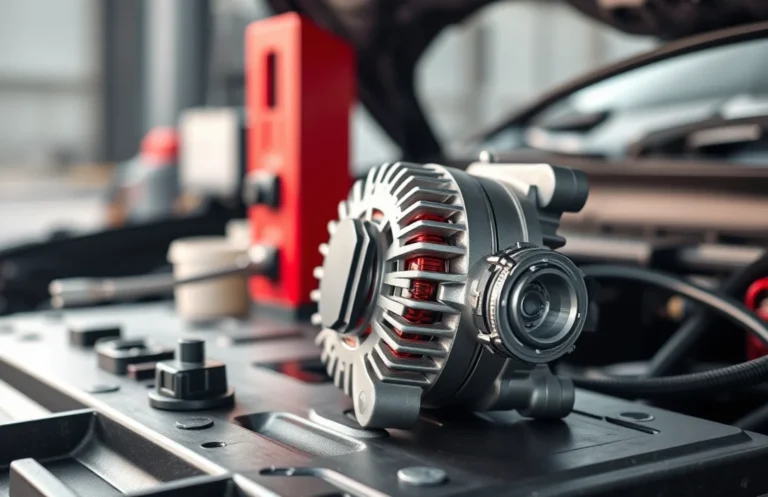
Yes, a boat motor can charge the battery if it has a working charging system: either an alternator assembly or an AC stator plus a rectifier/regulator. Many inboard and larger outboard engines use a rotor and stator that generate AC, and a rectifier/regulator turns that into controlled DC to replenish the battery; small outboards often rely on a simpler AC stator and external rectifier-regulator which produces usable DC only when the engine is at sufficient RPM.
An alternator is built from three key parts: a rotating field coil called the rotor, stationary windings called the stator, and a diode pack to convert AC to DC. The rotor is excited with DC to make a magnetic field, the rotating field induces alternating current in the stator, and the rectifier diodes convert that AC into DC, while the regulator controls field current so battery voltage stays in a useful range.
Small outboards usually have an AC stator that was originally designed to run ignition and accessories, not to be a high-output battery charger. These stators are simple, often single-phase, and produce little output at idle; older two-stroke designs in particular can appear to charge very poorly because their stator output and engine idle RPM are low.
Safety note: isolate battery negative before working on charging hardware, avoid shorting the alternator output, and do not rely on the engine as the sole charger for a deeply discharged or damaged battery. If basic measurements are unclear, or the rectifier needs replacement, hire a pro to avoid electrical damage or voiding warranties.
Charging Voltages & Amps
Yes, a running boat motor will charge the battery when its charging system is working; expect charging voltages in the 13.6 – 14.8 volt window during bulk/absorption and about 13.2 – 13.6 volts at float. Typical current outputs range roughly from 10 amps on small, older outboard stators up to 200 amps for high-output inboard alternators.
For 12 volt lead acid batteries a healthy bulk/absorption charge is usually between 13.6 and 14.8 volts, which allows the alternator or regulator to replace charge efficiently without excessive gassing. Float charging after full is normally around 13.2 to 13.6 volts to keep the battery topped up with minimal water loss on flooded cells or reduced stress on AGM cells.
For lithium batteries follow the battery maker, because many lithium packs require a specific maximum charge voltage and a Battery Management System, BMS, to prevent overvoltage. Some lithium installs use a DC‑DC charger or smart regulator so the alternator provides energy while the DC‑DC enforces the exact lithium charge profile.
| Charge Stage | Typical 12V Lead‑Acid Voltage | Notes |
|---|---|---|
| Bulk / Absorption | 13.6 – 14.8V | Higher end used for rapid charging; follow battery spec to avoid overheat |
| Float | 13.2 – 13.6V | Maintains state of charge without heavy gassing |
| Lithium | Follow manufacturer | Use BMS or DC‑DC to meet exact voltage and current limits |
Formula: hours to add = amp‑hours needed / charging amps. Example: to add 40 Ah at 40 A takes about 1 hour (allow longer for charge taper).
Safety: do not rely on an alternator alone to fully condition a deeply discharged or sulfated battery and never exceed the battery maker’s voltage limits. If test results are unclear, or if the alternator or regulator needs replacement, hire a marine electrician to avoid damage and protect warranties.
RPM Effects and Time
Yes, a running boat motor can charge the battery, but only if the engine is at sufficient RPM to produce alternator output; at idle many engines produce little or no net charging because field current and alternator speed are too low. Charging amps rise with RPM (and with regulator field allowance), so time to recover capacity depends on the amps the alternator is actually delivering while underway.
Alternator output is roughly proportional to drive speed and the regulator’s commanded field current, so slow idle RPM often means the alternator is below the useful charging range. Corroded wiring, blown fusible links, or a failed regulator will make RPM effects worse, but even a healthy alternator will produce minimal amps if the motor is barely turning.
Charging time formula: hours ≈ (Ah to recover) / (charging amps × efficiency factor). Use an efficiency factor of 0.80 to 0.85 to account for heat, internal resistance, and tapering as the battery fills.
For example, if a 50 Ah battery is at 50 percent state of charge you need to replace about 25 Ah. At a sustained 20 A net charging rate the math gives about 25 / (20 × 0.8) ≈ 1.6 hours; at 60 A it is roughly 25 / (60 × 0.8) ≈ 0.5 to 0.6 hours, before tapering reduces current near full.
| Battery | Ah to recover | Charging amps (net) | Calc (hours) | Practical note |
|---|---|---|---|---|
| 50 Ah (50%→100%) | 25 Ah | 20 A | ≈1.6 h | Alternator tapers, so expect slightly longer run |
| 50 Ah (50%→100%) | 25 Ah | 60 A | ≈0.5 – 0.6 h | High current shortens time but watch heat |
| 100 Ah (50%→100%) | 50 Ah | 20 A | ≈3.1 h | Good for topping, slow for deep recovery |
| 100 Ah (50%→100%) | 50 Ah | 60 A | ≈1.0 – 1.2 h | Taper near full can add minutes |
Bottom line, engine charging is excellent for topping and maintaining charge during cruising, but idle rarely restores significant capacity and alternators taper as the battery approaches full. For deep recovery or warranty-friendly charging use a proper multi-stage charger or DC-DC solution designed for your battery chemistry.
Charging System Diagnostics
Yes, a running boat motor normally charges the battery through an alternator or a stator plus regulator and rectifier, but correct charging requires healthy wiring, a working regulator/rectifier, and a battery that can accept charge. You should see a resting voltage around 12.6 to 12.8 volts, a charging voltage roughly 13.6 to 14.8 volts while running, and measurable charge current consistent with the alternator rating.
Interpretation: if charging voltage at cruising RPM stays below about 13.0 volts, suspect regulator, stator, or wiring problems. If the clamp meter shows near zero amps while voltage is in range, look for open fuses, corroded connections, or a broken cable; if voltage spikes above about 15 volts, the regulator is likely failing and can overcharge and damage the battery.
For example, to estimate charge time, divide the amp-hours needed by alternator amps and add a charging loss factor. A 100 Ah battery at 50 percent state of charge needs 50 Ah; a 40 A alternator would need about 1.25 hours ideal, and with losses and absorption phases multiply by about 1.2 to 1.4, so plan roughly 1.5 to 1.8 hours.
Battery Chemistry Needs
Yes, a running boat motor can charge a battery, but correct charging depends on the battery chemistry and the regulator between the alternator and the battery. Alternators provide the high current and voltage needed for bulk charging, however lead acid and lithium batteries require different voltage profiles and management to charge safely and fully.
Lead acid batteries, including flooded, AGM, and gel, need a multistage charge: a higher voltage bulk stage to restore state of charge, an absorb stage to finish charging without overgassing, and a lower float voltage for long term standby. Typical nominal ranges for 12 V lead acid charging sit around 13.6 to 14.6 volts during bulk and absorb, with float often around 13.2 to 13.6 volts, but you must follow the battery manufacturer label for exact setpoints.
AGM and gel cells often accept slightly higher bulk voltage for shorter periods and can recharge faster than flooded lead acid, however long high-voltage exposure can shorten life. Follow manufacturer limits, many AGM datasheets allow brief charging near 14.6 to 14.8 volts, but continual high voltage is risky.
Lithium chemistries, for example LiFePO4, require a strict charge voltage window and a BMS for cell balance and protection, and they accept current quickly until they reach their charge voltage. An alternator alone can raise voltage and push high current, but it usually does not perform the controlled constant voltage taper or soft-start that lithium needs, so connect lithium only through a lithium-compatible regulator or a DC-DC charger that respects BMS and alternator limits.
Upgrades, Sizing & Safety
Yes, a running boat motor can charge batteries through its alternator or stator/rectifier, but effective charging depends on alternator size, engine RPM, regulator type, wiring and battery chemistry. Typical target voltages for lead-acid and AGM are around 13.5 – 14.2 V during bulk/absorb; lithium chemistries often require a higher or specific charge voltage per manufacturer, so verify the battery spec.
Choose a management method to match your use. An isolator (diode or solid-state) simply keeps banks separate while allowing charge flow, an ACR or VSR automatically connects banks when charging voltage is present, and a DC-DC charger provides controlled multi-stage charging and is required for many lithium installs and for vehicles with smart alternators.
Shore and inverter chargers should be multi-stage (bulk, absorb, float) to fully restore and maintain batteries during storage. For house banks, a dedicated multi-stage shore charger or inverter/charger is a convenience and a battery saver because alternators rarely give correct long-term float or absorption stages.
| House Bank Size (Ah) | Typical Alternator Support |
|---|---|
| Up to 50 Ah | Small alternator or isolator, 20 – 50 A |
| 50 – 200 Ah | 50 – 150 A alternator recommended, or DC-DC + modest alternator |
| 200+ Ah | Consider multiple alternators, high‑output alternator, or shore charging |
To test charging with basic tools use the steps below.
Safety: always install an inline fuse or ANL at the alternator output, size cables to the alternator amperage, secure battery switches, and route cables away from abrasion and heat. Replace visibly corroded terminals and never mix chemistries on the same charging circuit without appropriate DC‑DC or BMS isolation.
Call a pro if you cannot reach ~13.5 – 14.2 V at cruise, clamp meter amps are well below alternator spec, or you detect high voltage ripple or spiking; those are signs of regulator, stator, wiring, or alternator failure.
Common Failures & Fixes
Yes, a running boat motor normally charges the battery through an alternator or magneto/stator plus a regulator and rectifier, but proper charging requires correct voltage, good connections, and sufficient RPM. If you see no voltage, low amps, overvoltage, or a drain with the engine off, follow the checks below to isolate the cause and decide whether you can fix it yourself or call a pro.
For example, a typical charging target is roughly 13.8 to 14.6 volts at the battery while the engine runs, and small outboards often have 20-60 amp alternators while larger inboards can be 50-200 amps, but always verify the label on your alternator. If tests show the alternator is out of spec, replace stator, rectifier, or regulator as needed, and replace batteries that are badly sulfated or internally damaged.
Quick Summary
Yes, a running boat motor will usually charge its battery via the alternator, but charge quality depends on alternator, regulator, and wiring.
Frequently Asked Questions
Does a boat motor charge the battery while running?
Yes, many boat motors have an alternator that can charge the battery while the engine is running, typically providing around 12 to 14 volts. This helps ensure your battery remains charged during use.
How long does it take for a boat motor to charge the battery?
The time it takes to charge a battery can vary, but generally, it can take several hours of engine run time to fully charge a depleted battery. Factors such as battery size and the motor’s output can influence this duration.
Is it safe to charge a battery with a boat motor?
Charging a battery with a boat motor is usually safe, but you should ensure that the battery is compatible and in good condition. Overcharging can happen if the voltage regulator fails, potentially causing heat buildup and damage.
What is the common mistake when using a boat motor to charge a battery?
A common mistake is not checking the battery’s state before charging; if the battery is too old or damaged, it may not hold a charge properly. Always inspect your battery’s voltage and condition before relying on the motor for charging.
When should I replace the battery if using a boat motor for charging?
You should consider replacing the battery if it shows signs of diminished capacity or if it fails to hold a charge after several uses. Regular testing can help determine if it’s time for a replacement.

- Top 10 Best Solar Backup Batteries Austin 2026 - July 28, 2026
- Top 10 Best Solar Battery Charger For Rv 2026 - July 28, 2026
- Top 10 Best Solar Charger For Trolling Motor Battery 2026 - July 28, 2026