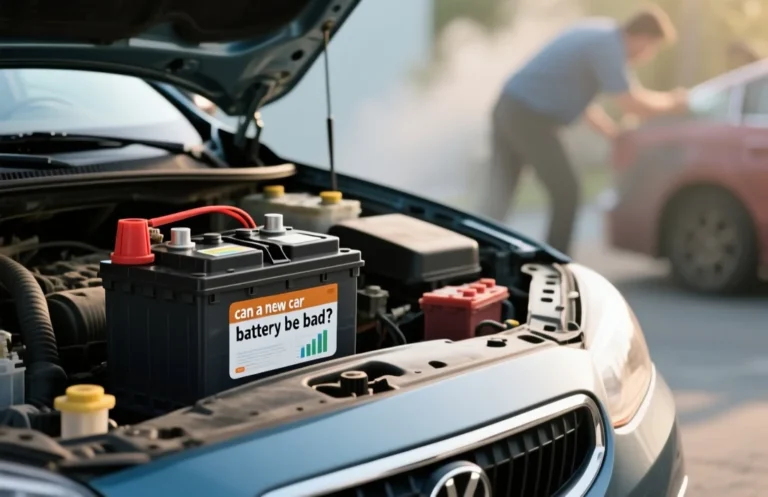
Does Jump Starting A Car Damage The Battery?
Most car batteries are 12 volt units, and that voltage spec is the single most important thing to check before you hook anything up. The common mistake is reversed polarity, which can cook electronics in seconds. First look at the battery label for 12V and the + and – terminal markings, then confirm clamp orientation.
Jump starting a car rarely damages a healthy 12 volt battery when done correctly; improper connections, reversed polarity, or prolonged cranking over 10 to 15 seconds can cause immediate damage, overheating, or electrical faults, so follow the clamp order and use a proper 12V donor or rated jump pack.
How Jump Starting Works
Jump starting is primarily an electrical act of voltage equalization: connecting a higher-voltage source to a depleted battery raises the depleted battery’s voltage so the starter can draw cranking current. When done correctly a donor battery and the car’s alternator do the heavy lifting, and simple, short jumps usually do not harm a healthy battery; the damage risk comes from incorrect connections, high-resistance clamps, or an already failing battery or charging system.
When you clamp two batteries together, current flows from the higher-potential battery into the lower one until their voltages move toward equilibrium, but the starter motor draws most of the current that momentarily leaves the donor. The magnitude of current depends on each battery’s internal resistance, the state of charge, and the conductance of the cable and clamps.
Donor and dead batteries have distinct roles during the event: the donor is a short-term current source that needs enough capacity to supply cranking amps, the dead battery is a sink that accepts current and may simultaneously deliver current to the starter through its own internal path. The alternator takes over charging duties after the engine runs, providing regulated voltage so the battery can recharge at the correct rate.
| Component | Role During Jump | What to Check |
|---|---|---|
| Donor battery | Supplies high short-term current to crank engine | Healthy voltage, good clamps, matching system voltage |
| Dead battery | Receives current and helps supply starter if not fully failed | Terminal cleanliness, no visible damage, secure mount |
| Alternator | Provides charging voltage after start, maintains electrical system | Regulator output, belt condition, charging voltage under load |
Common failure modes during a jump are reverse polarity, which forces current into the wrong nodes and can blow fuses or damage electronics, and loose or corroded connections, which create high resistance, heat, and sparking. Both increase the chance of injury or component failure and are the main practical threats to batteries and systems during a jump start.
If you see sparks at the clamp or the donor’s voltage drops dramatically before the car turns over, stop, disconnect, and recheck polarity and clamp quality before trying again.
Possible Battery Damage
Jump starting a car can potentially damage the battery through various failure modes, including sulfation, overheating, plate corrosion, and internal shorts. Each of these issues can lead to reduced battery life and performance.
Sulfation occurs when a lead-acid battery is deeply discharged, causing lead sulfate crystals to form on the plates. If a battery is jump started after prolonged disuse, this sulfation can become permanent, decreasing the battery’s capacity and lifespan.
For instance, if a battery is jump started when significantly discharged, the rapid influx of current may generate heat that causes the electrolyte to boil. This can result in both loss of fluid and potential damage to the battery plates.
Additionally, the risk of plate shedding increases with age and repeated jump starts, as the mechanical stress can dislodge the active material. Over time, this contributes to a shorter battery life and diminished performance.
| Failure Mode | Effects | Prevention |
|---|---|---|
| Sulfation | Reduced capacity and lifespan | Avoid deep discharges |
| Overheating | Electrolyte loss and plate damage | Monitor temperatures during jump starts |
| Plate Shedding | Capacity loss | Limit jump starts on older batteries |
| Internal Shorts | Immediate battery failure | Use compatible jump starters |
To minimize potential damage when jump starting, consider using a jump starter pack rather than another vehicle, as this provides a controlled current that reduces stress on the battery. Additionally, regularly check the battery’s health and avoid jump starting if the battery shows signs of swelling or leakage.
Traditional vs Maintenance-Free
Jump starting a car can affect battery health, but the impact varies between traditional flooded lead-acid batteries and maintenance-free types like AGM and GEL. Flooded batteries are more tolerant of jump starting due to their venting capabilities, while sealed batteries can be more sensitive to the stress of sudden high currents.
Flooded (serviceable) lead-acid batteries are designed to handle the chemical processes involved in jump starting without significant damage. These batteries have removable caps that allow for venting of gases produced during charging and discharging, thus minimizing pressure build-up. Their construction allows for some electrolyte loss, which can be replenished, making them more forgiving than their sealed counterparts.
AGM (Absorbent Glass Mat) and GEL batteries, on the other hand, have distinct characteristics that make them less tolerant of jump starting. Both types are sealed, which means they cannot vent gases like flooded batteries. The absence of venting can lead to pressure build-up and potential damage if the jump starting process is not performed correctly. AGM batteries can experience permanent capacity loss if overcharged, while GEL batteries are particularly sensitive to high voltage spikes.
Overall, while jump starting a car can potentially damage any battery, flooded lead-acid batteries are inherently more robust against such stress. In contrast, AGM and GEL batteries require careful handling to prevent lasting damage, making it crucial to follow best practices during the jump starting process.
When Jump Starting Is Safe
Jump starting a car can damage the battery if certain conditions are not met. Ensuring the battery’s state-of-charge and age, checking for visible damage, matching cold cranking amps (CCA) and system voltage, and using the correct cable gauge are essential steps to minimize risks.
First, assess the battery’s state-of-charge and age. A fully charged battery typically has a voltage of around 12.6 volts or higher. If the battery is older than three to five years, it may be less reliable and more prone to damage when jump-started.
Next, inspect the battery for any visible damage or leakage. A swollen, cracked, or leaking battery poses immediate safety risks and should never be jump-started. Instead, consider replacing it.
“A damaged battery can leak acid or explode, causing injury and further vehicle damage.”
Matching the CCA is also crucial. The CCA rating indicates how well a battery can start an engine in cold conditions. Ensure that the donor battery has an equal or higher CCA rating compared to the vehicle’s requirements to avoid overloading the weaker battery.
Using the correct gauge cables impacts the efficiency and safety of the jump start. Thicker cables (lower gauge numbers) can handle higher currents without overheating. Ensure the connections are secure to prevent sparks and poor connections, which can lead to battery damage.
| Cable Gauge | Max Current (Amps) | Recommended Use |
|---|---|---|
| 4 AWG | 150 | Heavy-duty vehicles |
| 6 AWG | 100 | Standard vehicles |
| 8 AWG | 55 | Light vehicles |
Finally, consider the electrical load on both vehicles. If devices like headlights, radios, or heaters are running during the jump start, they can strain the battery and electrical system, leading to potential damage. Turn off all non-essential systems before connecting the jump leads.
Best Jump Starting Practices
Jump starting a car can potentially harm the battery and electrical system if not performed correctly. Following proper procedures minimizes risks, such as damaging electronic components or weakening the battery’s lifespan. Adhering to specific steps for connecting cables and ensuring safe operation is essential.
Following these practices can significantly reduce the risk of damaging either battery and ensure a safer, more effective jump start. If you notice signs of battery swelling or leakage, avoid jump starting and consider professional assistance.
Alternative Starting Methods
Jump-starting a car rarely damages a healthy battery when done correctly, but repeated jumps or incorrect technique can stress plates, heat cells, or trigger protection circuits and shorten service life. Safer alternatives reduce those risks, and choosing the right one depends on transmission type, battery condition, and available equipment.
Push or roll starts (manual transmission limits)
Push or roll starting only works with manual transmissions and a working clutch, starter, and ignition system. It does not place a large current draw on the battery during cranking, so it avoids the high-current stress that a bad jump or repeated starts can cause to a weak battery.
For example, roll starting can fail or harm drivetrain parts if the clutch or transmission is damaged, and many modern cars have electronic immobilizers or fuel systems that prevent this method from working. Treat roll starts as a last-resort convenience, not a battery-recovery technique when the battery shows swelling, leakage, or repeated failure.
Portable jump starters versus booster packs
Portable lithium jump starters are compact batteries with built-in clamp leads and often include safety features like reverse-polarity protection and peak current limits, while traditional booster packs use larger lead-acid banks and can deliver longer cranking bursts. Choose lithium starters for portability and lower weight, booster packs for ruggedness and repeated heavy use.
| Type | Pros | Cons | Best use |
|---|---|---|---|
| Li-ion portable starter | Light, fast, safety features | Can fail if over-discharged, sensitive to heat | Single jump, roadside |
| Lead-acid booster pack | High reserve, durable | Heavy, needs maintenance | Frequent use, shop environments |
Check for polarity protection, peak cranking amps rated for your engine, and manufacturer guidance for cold-weather use.
Smart chargers and battery tenders
Smart chargers and battery tenders supply controlled, multi-stage charging that repairs some sulfation and returns batteries to useful voltage without overcharging. They are not a quick-start tool, they restore charge over hours to days, and they reduce long-term damage compared with repeated improper jumps.
When to call a professional
Call roadside assistance or a technician if the battery is swollen, leaking, emits a strong acid smell, or if repeated failures occur after a jump or charge. Professionals have load testers, safe handling for damaged batteries, and the right equipment for modern vehicle electronics that can be harmed by incorrect jump procedures.
Safety warning: Reversed clamps, damaged cables, or low-quality lithium starters can cause sparks, fires, or permanent battery damage, so stop and get professional help if you are unsure.
Post-Jump Battery Care
A correctly performed jump start rarely causes immediate permanent damage to a healthy battery, but it can expose or accelerate existing weaknesses and place short-term stress on the plates and cells. After a jump you should inspect, charge, and test the battery to prevent partial sulfation, plate bending, or failure under load.
Immediate inspection checklist, do these before you drive far:
Follow these ordered steps to stabilize the battery after a jump:
How to test battery health, simple workflow:
| Battery Type | Can top up electrolyte? | Post-jump action |
|---|---|---|
| Flooded (serviceable) | Yes, distilled water only | Top up if low, then slow charge and test |
| Sealed/AGM/GEL | No | Do not open, slow charge and perform conductance test |
Safety rule: If the case is swollen, cracked, hot to the touch, or leaking, stop and replace the battery, do not charge or continue using it.
When to replace or claim warranty: if the battery fails a load or conductance test, shows persistent low voltage after a full charge, or shows physical damage, replacement is justified. Check the manufacture date code and your receipt, contact the vendor or manufacturer about warranty coverage before disposal.
Practical trade-off: slow, complete charging and a proper load test are cheap ways to preserve a marginal battery, but if the unit is old or repeatedly fails tests, replacement is the safer, longer term choice.
Quick Summary
Jump-starting a car rarely damages the battery if done correctly, but incorrect connections or a failing battery can cause harm.
Frequently Asked Questions
Does jump starting a car damage the battery?
You can usually jump start without damage if the battery is healthy and you follow proper procedure; a short jump start does not typically harm the battery. Most cars use a 12 V battery.
Can using the wrong booster or incompatible equipment when jump starting damage the battery?
You should match the booster to the vehicle, because using the wrong voltage or an incompatible unit can harm the battery and electronics. Use a 12 V booster for a 12 V system.
Can jump starting make the battery overheat or swell?
You can cause overheating or swelling if you connect cables incorrectly or the battery is already defective, so stop immediately if it gets hot or smells; visible bulging means do not continue. If the battery is hot to the touch or above about 50 degrees C, disconnect and avoid further charging.
How long should I run the engine after jump starting to avoid damaging the battery?
You should run the engine or drive the car to let the alternator recharge the battery, since the alternator restores charge more slowly than a charger. Run for about 15 to 30 minutes as a general rule to recover some charge.
Will jump starting a car shorten the battery life or mean I need to replace it sooner?
You can expect occasional jump starts to be harmless to a healthy battery, but repeated deep discharges will shorten life, so monitor age and capacity. Many automotive batteries are commonly replaced around 3 to 5 years or when capacity falls below 50%.