How Long Do Lawn Mower Batteries Last?
A lawn mower battery that used to crank strong can go weak in as little as a couple seasons, then you start guessing. The spec that matters most is battery chemistry plus capacity (Ah) and the charger type that matches it, because charging discipline drives lifespan. This article breaks down how long lead-acid (AGM or flooded) and lithium-ion batteries last, how to spot failure early, and what to check on your charger and settings first.
Lawn mower batteries last about 2 to 4 years for lead-acid (AGM or flooded) and 4 to 8+ years for lithium-ion, assuming normal use and correct charging. Lifespan drops fast with frequent deep discharges (near empty), hot storage, and overcharging. Typical signs include poor hold-time and fast voltage sag under load.
How Long Do Lawn Mower Batteries Last?
Recommended Products



Most lawn mower batteries last about 2 to 5 years before capacity drops enough to hurt runtime, especially under hot weather and frequent mowing. Battery life is governed more by cycle stress and calendar aging than by voltage “numbers” alone. Chemistry helps set expectations, but real use patterns decide the outcome.
Battery life is usually quoted as either cycle life (how many charge-discharge cycles it can tolerate) or calendar life (how long it ages while sitting). Lead-acid chemistry tends to show wear through plate corrosion and sulfation, while lithium chemistries mainly lose usable capacity from repeated cycling and heat. Even if the pack still starts the mower, reduced capacity means the mower runs shorter and the motor control electronics may reach low-voltage cutoff sooner.
| Chemistry | Typical lifespan range (practical) | What you’ll notice first |
|---|---|---|
| Flooded lead-acid (where used) | 1 to 4 years | Sluggish starts, lower runtime, and battery “weak under load” |
| Sealed lead-acid / AGM (common in some mowers) | 2 to 5 years | Gradual capacity loss, reduced runtime, voltage sag during cutting |
| Lithium-ion (tool packs) | 3 to 7 years | Capacity drop with use, faster cutoff than before |
| Lithium iron phosphate (LiFePO4, increasingly common) | 4 to 10 years | Steady runtime decline, often better tolerance of partial charge storage |
Cycle stress and calendar aging combine in a “use plus time” way, so two packs with the same cycles can diverge if one spent months hot in a garage. Heat accelerates both electrolyte and internal chemical changes, and high current during hard cutting increases heat. Storing a full or empty pack for long periods can also shorten life, especially for some lithium packs, so storage state matters.
Why “Years” And “Runtime” Don’t Match 1:1
Runtime drops when the battery hits low-voltage cutoff, even if the pack still measures voltage normally at rest. Under load, internal resistance rises with aging, so the voltage sags faster during motor start and mowing. That is why a battery can “seem fine” while resting on the charger, then feel weak only when the blade engages.
For example, a mower that used to cut for 45 minutes on a single charge might start cutting for 25 minutes after the same summer season, even though the battery is still usable. Failure mode timing also varies by design: some mowers reduce motor output to protect the battery, so you experience slower cutting or earlier shutdown.
Practical rule: treat the first big runtime loss as the “service life” marker, even if the battery still passes basic start tests.
Cycle life numbers on spec sheets are often measured under controlled conditions and may not match your mower’s motor load profile. Calendar life is more predictable for storage habits, while cycle life is more predictable when you track how often you charge and how hard you mow.
In practice, you should plan replacement around the time runtime becomes noticeably inconvenient, not around the last possible charge.
What Shortens Battery Lifespan
Recommended Products


Heat, deep discharges, and charging errors are the fastest ways to wear out lawn mower batteries, regardless of whether the pack is lead-acid or lithium-ion. The biggest pattern is repeated operation when the pack is nearly empty, then charging when it is still warm or hot from mowing. Over time, that combination drives permanent capacity loss and increases failure risk.
Heat And Repeated Hot Storage
Battery aging accelerates with temperature because chemical reactions speed up and internal resistance rises. A common lawn practice, mowing, then leaving a battery in a hot garage or on a charger base in warm conditions, adds more stress every cycle. If the battery feels hot after use, charging it immediately can push it further into a high-stress temperature range.
For example, a lithium-ion pack that sits above room temperature for hours after mowing tends to lose capacity sooner than one that is stored cool and dry. Swelling is a red flag. Stop using a swollen or misshapen battery and do not charge it.
Deep Discharges And “Near-empty” Starts
Running a mower battery down toward its cutoff most often shortens life. Deep discharge forces higher current through weaker cells, increases stress during recharge, and can trigger protective circuits more frequently. For lawn equipment, the practical mistake is trying to finish the job after power visibly fades.
Near-empty starts also cause voltage sag, which makes the mower draw harder current, then heat the pack. That heat plus repeated deep cycles is a double hit to cycle life.
Overcharge, Wrong Charger, And Charging Too Fast
Overcharge increases heat and damages electrode materials, especially in lead-acid packs. Wrong chargers are worse because voltage or charge profiles can be incorrect, leading to excessive current, poor charge termination, or unsafe venting. Charging too fast, when the pack is not designed for it, can create heat and uneven cell balancing (a common lithium-ion problem).
| Problem | What typically goes wrong | What to check |
|---|---|---|
| Overcharge | Gas buildup and plate damage (lead-acid) or increased thermal stress (lithium) | Charger uses the correct charge stages and cut-off |
| Wrong charger | Incorrect voltage or current, poor termination, unsafe charging | Pack voltage and charger output specs match the label |
| Too-fast charging | Extra heat and stress, reduced usable capacity over time | Charger rate matches what the pack manual allows |
Safety warning: If the charger gets unusually hot, produces a sharp smell, or the battery casing gets warm quickly during charging, stop and inspect. Do not “try again” with a questionable charger.
Mechanical Stress, Vibration, And Terminal Issues
Vibration from mowing can loosen internal connections over time, especially when the pack is not securely seated in its housing. Rough handling can also damage battery leads or the welds inside the pack, which raises resistance and reduces runtime before the pack “looks fine.”
Terminal corrosion adds another failure path. Corrosion increases resistance, causing more heat at the terminals during high current draws, which accelerates both corrosion and pack aging.
Age-related Swelling And Leaving It Dormant At Low State Of Charge
Swelling is a physical sign that can appear with lithium-ion failure modes, usually tied to gas generation from heat and aging. Swollen packs should be treated as unsafe. Do not tape over a swollen case, do not compress it, and do not continue using it.
Leaving a battery dormant while near empty is also damaging for many chemistries because self-discharge and low-voltage stress accumulate. A long offseason works better when the pack is stored at a moderate state of charge rather than fully drained.
Maintenance By Battery Type
Recommended Products


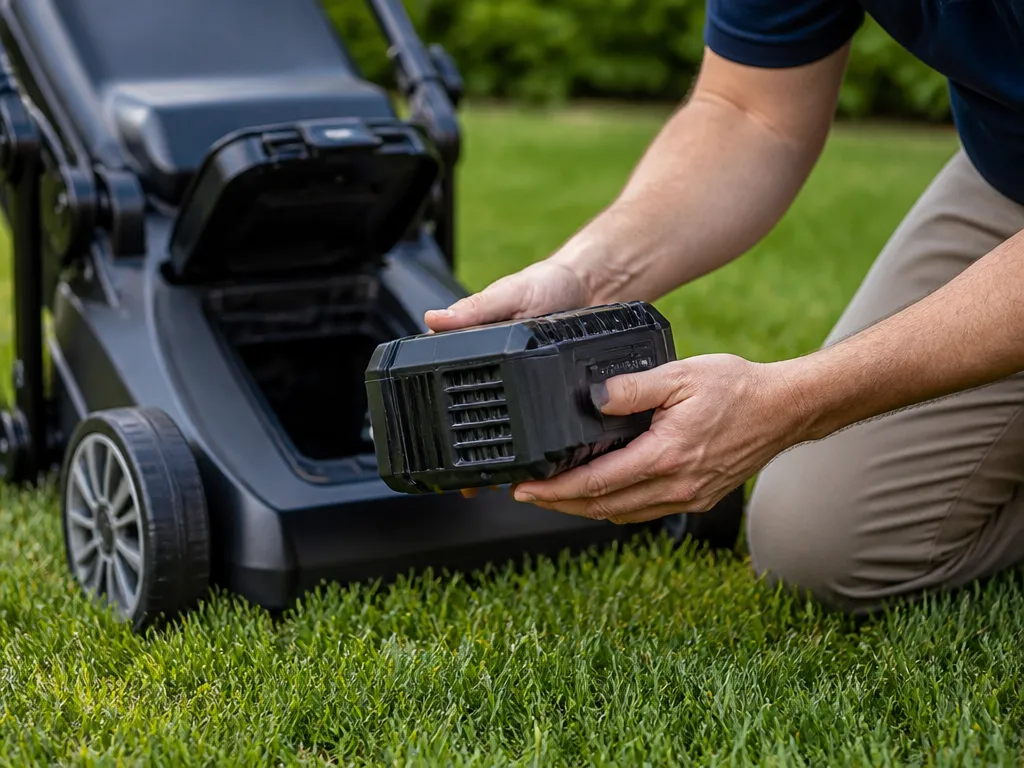
Battery chemistry drives how you maintain it, especially how you charge and store it. Flooded lead-acid and AGM mower batteries tolerate frequent use if you prevent corrosion and keep them at the right charge level. Lithium-ion packs last longer when you store them around a mid state of charge and avoid heat.
Flooded Lead-acid And Agm Mower Batteries
Flooded lead-acid batteries can lose water from normal charging, so fluid level maintenance is the biggest life extender. AGM batteries are sealed, so they avoid topping water, but they still suffer from corrosion, vibration damage, and chronic undercharging.
Lithium-ion Mower Batteries (Packs With Bms)
Lithium-ion packs usually include a Battery Management System (BMS) that limits current and balances cells, so there is no “conditioning” routine like older lead-acid myths. The maintenance move that matters is storage charge state and temperature control, since lithium chemistry ages faster when it sits too full or too empty for long periods.
Avoid Cross-compatibility Mistakes (Charger, Leads, And Packs)
Many premature failures come from charging the wrong chemistry, using the wrong voltage mode, or mismatching connectors. Before you plug anything in, verify the battery label and the charger label agree on voltage, chemistry type, and whether the charger is designed for that specific pack.
Cleaning And Inspection Checklist (Quick Routine)
Spend five minutes every time you service the mower, since corrosion and mechanical looseness start small and escalate quickly. Cleaning is safe when you disconnect power, keep water out of sealed areas, and dry everything before reconnecting.
| Battery type | Maintenance focus | Watch-outs |
|---|---|---|
| Flooded lead-acid | Terminal cleanliness, water level, tight connections | Low water, heavy corrosion, hot charging |
| AGM | Terminal cleanliness, vibration control, correct charger | Undervoltage storage, cracked case, heat |
| Lithium-ion (with BMS) | Mid-range storage charge, cool storage, intact housing | Swelling, repeated BMS cutoffs, heat exposure |
Charge Settings That Matter
Recommended Products


Matching charger chemistry and charge profile is one of the biggest lifespan levers for lawn mower batteries, because the wrong voltage, current, or termination method can age cells fast even if the mower still starts. Use the numbers on the battery and charger label first, then treat “faster” as a trade-off that can shorten service life.
Correct Charger Type: Lead-acid Versus Lithium
Lead-acid (flooded or AGM) batteries want a controlled multi-stage process with a specific bulk/absorption/float behavior. Lithium mower batteries use a charger with built-in battery management (BMS) communication or a lithium-specific charge profile, and they should not be charged like lead-acid.
Use chemistry cues from the labels before plugging in anything. For example, many “12V” lawn mower setups are lead-acid, while many cordless mower packs are lithium and may list a pack voltage (like 18V, 36V, or a nominal voltage) plus a charging requirement.
Target Voltage And Charge Current
Charger output voltage must match the battery’s required charging voltage, and charger current should be within the recommended range. Over-voltage heats cells, increases plate corrosion (lead-acid), or forces lithium cells outside their safe charging window.
Charger current is a balance: too low can cause incomplete charging, too high can raise temperature and accelerate wear. If your charger is adjustable, start at the recommended setting from the battery label or mower manual, then only move if the documentation explicitly allows it.
| Battery chemistry | What to verify on labels | What to avoid |
|---|---|---|
| Lead-acid (flooded/AGM) | Battery type (flooded or AGM), charger’s lead-acid mode, and correct system voltage (example: 12V) | Charging with a lithium charger, or using an uncontrolled “bench supply” |
| Li-ion mower pack | Pack nominal voltage, charger model compatibility, lithium charge profile wording | Using a lead-acid style charger or a charger with the wrong output voltage |
Charge completion behavior matters. A proper charger should stop or drop to a safe maintenance state when charging is complete. For lead-acid, many chargers use a float/trickle mode, but leaving a lead-acid battery on a high-heat “bulk” setting for hours can shorten life by excessive gassing and corrosion.
Tip: A charger that is labeled “smart” (multi-stage) is usually safer for longevity than a plain fixed-voltage adapter, but you still need the correct chemistry and voltage range.
How To Tell If Your Charger Is Finishing Correctly
Look for termination indicators like “charged,” “full,” or a transition to a low-current maintenance phase. If your charger keeps running at high output continuously, the battery may never reach a safe full state, or the charger may be mismatched.
Charging Discipline For Maximum Longevity
Frequent partial charges can be fine, but long sessions with the battery sitting at high state-of-charge accelerate aging for many lithium chemistries. Lead-acid tends to tolerate maintenance better when the charger truly floats correctly, yet repeated overcharge still shortens life.
How To Test Battery Health
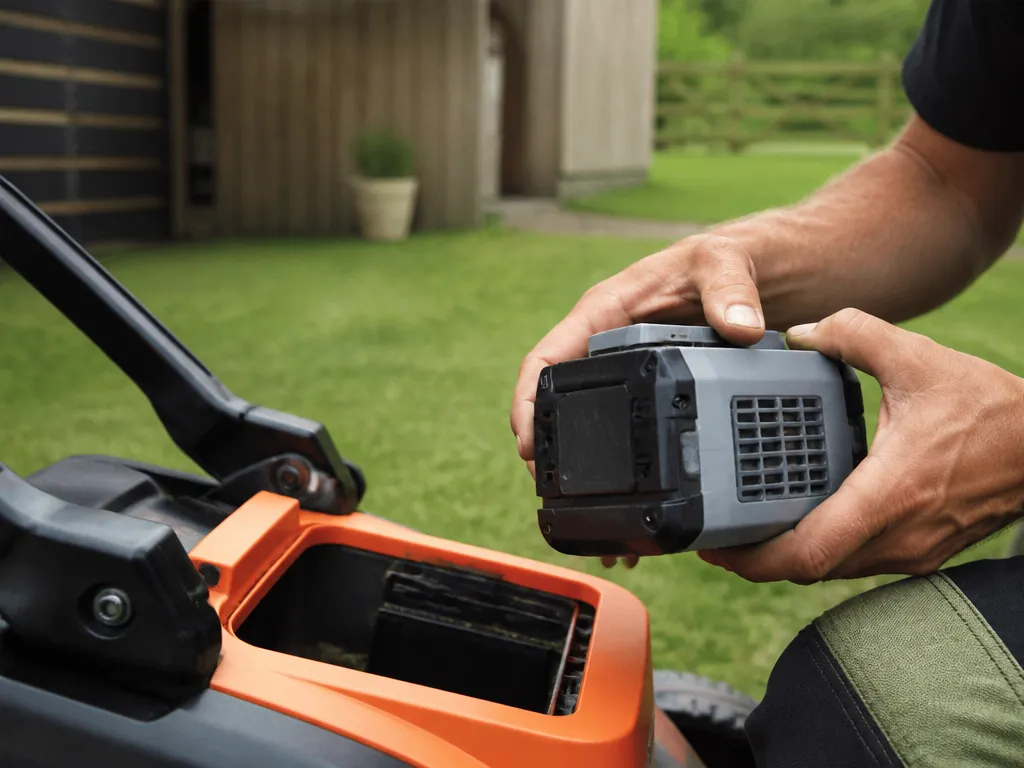
Battery health checks tell you whether the mower battery is weak, the charger is misbehaving, or the real issue is poor connections. Start with simple resting voltage and terminal inspection, then add a controlled load test. Stop immediately if you see swelling, leaking, or strong heat.
Resting Voltage Checks (Quick Screen)
Resting voltage is the fastest non-tool check, but it only works if the battery has sat idle long enough to “recover” from recent use. Use a basic multimeter set to DC volts, and compare your reading to the battery label or the charger’s expected range for that chemistry.
For common lawn equipment batteries, the rule of thumb is simple: a reading that is far below the label is a bad sign, and a big gap between two measurements taken hours apart is worse. A “near-normal” resting voltage can still hide weak cells, so a load test is the next step.
Load/voltage Drop Test (Find Weak Cells)
A load test spots weak internal resistance and cell imbalance that resting voltage misses. With the mower off, connect a voltmeter across the battery terminals, then apply the heaviest load you can safely create (many mowers draw high current briefly at start). Watch how far the voltage sags during the attempt.
Voltage drop that is excessive for the battery type suggests worn cells, failing connections, or a battery management issue. If the sag is small but the mower still won’t run, suspect the switch, harness, or charger output.
Battery Analyzer Or Impedance-style Testers (When They Help)
Impedance testers and “battery health” analyzers can estimate internal resistance without fully cycling the battery. These tools are most helpful for batteries that show symptoms but still read “okay” at rest, because rising internal resistance is often the early failure mode.
Analyzer results can be misleading if the battery is cold, freshly charged, or connected through dirty terminals. Use these tests after a rest period, and repeat the measurement after cleaning contacts to confirm the reading is real.
False Indicators That Look Like A Bad Battery
Corrosion and bad contacts can create the same symptoms as failing cells: low effective voltage, voltage sag, slow or stalled starts. Dirt, oxidation, and loose fasteners increase resistance, which heats up and drops voltage under current draw.
Charger faults can also mimic battery failure. A charger that is underpowered, the wrong voltage, or not reaching a full charge stage will leave the battery “apparently weak,” so verify charger output before concluding the battery is dead.
Replace Vs Revive Decision Aid
Recommended Products


Battery rehab is worth trying when the pack is healthy but undercharged, corroded at the terminals, or failing from a reversible charger or connection issue. Battery replacement is the safer call when you see swelling, strong odor, heavy heat, or a chemistry-related capacity drop that reconditioning cannot restore.
Lead-acid mower batteries sometimes recover if the failure is mainly from sulfation due to storage. Revival is appropriate when the battery is cool, shows no swelling, and responds to a proper, correctly matched charger (within the battery’s voltage and intended charge method).
Compatibility checks prevent the most common “revive failed” situation: charging the wrong kind of battery with the wrong profile. Before buying a replacement or charger, match voltage, capacity, chemistry, and connector style from the label on the battery and the mower manual.
Battery replacement is typically the better decision when symptoms persist after correct charging and contact cleanup, or when physical safety signs appear. For a quick buy checklist, copy the battery label specs (voltage, Ah, chemistry, and any model/part number) and then verify the charger compatibility against those exact label values.
Storage And Winterization Tips
Battery life drops fastest when batteries sit discharged, or when they heat up repeatedly in storage. Cool, dry storage slows self-discharge and corrosion so your lawn mower starts reliably when spring returns.
For long-term storage, use “cool and dry” as your default. Aim for a temperature range that stays roughly room-cool (avoid hot garages, direct sun, and freezing conditions that crack cases). Treat “long-term” as anything beyond a few weeks, especially if the mower sits through winter.
Lead-acid And Agm: Charge Discipline Without Overdoing It
Lead-acid (including many flooded and AGM mower batteries) is harmed most by deep discharge and by sitting fully charged at high heat. Store after charging, then check periodically because self-discharge slowly returns the battery toward a lower state.
Use these practical rules during winterization:
| Battery chemistry | Storage target | Best accessory |
|---|---|---|
| Lead-acid (flooded/AGM) | Near full charge, then periodic checks | Correct-voltage smart maintainer for the battery type |
| Lithium-ion (if your mower uses Li-ion) | Stored at an appropriate mid-charge level | Battery pack charger with storage or balance mode (if offered) |
Lithium-ion: Storage Charge Discipline And Periodic Checks
Lithium-ion packs age faster when stored at very high charge or when they sit near empty. Storage discipline is the difference between a pack that still spins the mower reliably next season and one that fails suddenly because its protection circuit or capacity has degraded.
Safety warning: if a lithium pack is swollen, smells “hot,” shows cracked casing, or the enclosure feels unusually warm, stop using it and do not charge it.
Reactivation matters because the battery has likely rested for months. For lead-acid, charge with the correct charger type, then let it settle before reinstalling. For lithium-ion, charge using the pack’s specified charger (or storage/balance mode if available), then confirm the mower starts normally before you store it again.
Restart steps also prevent “false failure.” For example, a sulfated lead-acid battery can look dead after winter, but it may recover if the chemistry has not been driven too far into deep discharge, while a lithium pack that lost capacity often needs replacement rather than repeated top-offs.
Quick Summary
Lawn mower batteries often do not fail suddenly, a strong cranker can go weak after just a couple seasons, then you start guessing. Battery chemistry and capacity in Ah affect expectations, while charging discipline, heat, and discharge depth strongly influence lifespan. Under normal use, lead-acid batteries, including AGM or flooded types, last about 2 to 4 years, while lithium-ion packs last about 4 to 8+ years. Frequent deep discharges near empty, hot storage, and overcharging shorten life quickly.
You can catch problems early by watching for poor hold-time and fast voltage sag under load, even if the battery still seems okay at rest. Aging raises internal resistance and the mower can hit low-voltage cutoff sooner. Check resting voltage first, then do a load test or use a battery analyzer before buying. Store batteries cool and dry, and use a mid state of charge for lithium packs.
Frequently Asked Questions
How Long Do Lawn Mower Batteries Last Before They Need Replacement?
Most cordless mower batteries last longest when you follow the charge cycles and storage guidance in the manual, because battery life drops faster with heat and repeated full depletion. If you notice slower cutting or the mower shutting off during normal use, that is a practical sign the pack is aging, usually after a few seasons of typical yard work. Check your model’s warranty terms for an expected service window, since exact years vary by battery chemistry and how often you charge.
Can I Use Any Charger For My Lawn Mower Battery, Or Do I Need The Exact Model?
Use only a charger rated for the battery’s voltage and chemistry and compatible with the pack type your mower uses. Look for the exact voltage (for example, 40V or 60V) and any connector or “for use with” guidance on the charger label or your mower manual. A mismatch can cause overcharging or unsafe heat.
Does Charging A Lawn Mower Battery While It Is Warm Shorten Its Runtime?
Yes, heat is one of the fastest ways to reduce battery life, so many chargers will delay charging if the pack is outside a safe temperature range. If the battery feels hot after mowing, let it cool to room temperature before charging, and avoid charging in direct sun or a sealed garage.
Is It Safe To Leave A Lawn Mower Battery On The Charger Overnight?
Generally you can follow the manufacturer’s intended charging routine, but if your charger and battery are designed for long-term topping, the manual will say so. If the manual does not clearly allow it, unplug after the charging indicator shows full, because consistently keeping a lithium pack at high state of charge can increase aging and heat generation.
What Is The Most Common Mistake People Make When Buying A Replacement Lawn Mower Battery?
The biggest mistake is buying by physical size alone, instead of matching the correct voltage and battery platform, sometimes also the connector and capacity. Verify the replacement battery is explicitly compatible with your mower model number (or at least the same voltage system), and avoid “universal” packs that do not state mower-specific compatibility, since mismatches can lead to poor runtime or unsafe charging behavior.

- 10 Best Battery For Generator Battery Safety Option 2026 - October 12, 2026
- 10 Best Battery For Generator Battery Safety 2026 - October 12, 2026
- 10 Best Battery For Generator Battery Rv Upgrade 2026 - October 12, 2026