How Much Does A Hybrid Battery Cost?
When that hybrid battery warning light flashes on, the first thing on everyone’s mind is the price tag. Do you need a full high-voltage traction pack replacement, or is it just the small 12V battery that keeps your infotainment and computers alive?
Maybe it’s something as simple as internal bus bars costing a few dollars? Each scenario lands in a completely different price range, so knowing exactly what failed can save you thousands.
This guide walks through the real costs for each component and highlights specific products that match various budgets and vehicle needs.
Why Hybrid Battery Costs Vary So Much
Recommended Products


Before you budget for repairs, it helps to understand what you’re dealing with. The difference between a 12V auxiliary battery and the main hybrid drive pack isn’t just about size; it’s about complexity, cost, and who can replace it.
The 12V Auxiliary Battery
Most hybrids still run a conventional 12V battery for lights, computers, and accessories. These tend to fail before the big hybrid pack does, partly because they’re cycled more often. Replacement usually runs somewhere between $100 and $300, and you can pick them up at most auto parts stores or online.
No special certification needed. A surprising number of owners assume this small failure means something much bigger went wrong.
The High-Voltage Traction Pack
The high-voltage traction pack that actually powers the electric motor is a different animal entirely. Costs can climb anywhere from $2,000 to $8,000 depending on the model, age, and whether you go OEM or refurbished. Dealerships rarely surprise with low prices here.
Independent shops sometimes offer rebuilt packs at a fraction of the cost, especially for older models. Some experienced owners even swap out individual bad cells instead of replacing the whole unit.
Estimated Cost Ranges by Component Type
| Component Type | DIY Part Cost | Professional Install Cost |
|---|---|---|
| 12V AGM Battery | $150 – $300 | $200 – $400 |
| Refurbished HV Pack | $1,500 – $2,500 | $2,000 – $3,500 |
| New OEM HV Pack | $3,000 – $6,000 | $4,000 – $8,000 |
| Internal Bus Bars | $50 – $100 | $300 – $600 |
Solutions for Every Hybrid Budget
Recommended Products

These picks cover everything from budget-friendly 12V replacements to high-output inverters and niche repair kits. Whether you’re replacing a dead auxiliary battery or planning a garage upgrade, there’s something here worth considering.
|
1
|
UPLUS BCI Group 24F AGM Car Battery, 12V 70Ah 710CCA 120RC Start-Stop | Maintenance Free P |
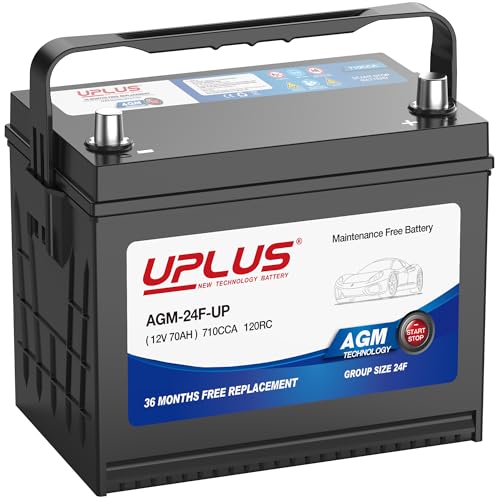
AGM batteries are becoming the go-to upgrade for start-stop hybrids, offering better cycle life than traditional flooded units.
The UPLUS BCI Group 24F AGM battery puts out 710CCA, which gives it enough punch for hybrids with extra electrical gear like heated seats or navigation systems. It’s built for stop-and-go driving and claims four times the cycle life of standard batteries.
The leak-proof design and vibration resistance are solid perks for daily commuters.
It fits a lot of Toyota and Lexus models that call for Group 24F, though you’ll want to double-check your terminal layout beforehand. Getting that left-minus/right-plus configuration wrong means it won’t slot in properly. If your setup matches, it’s a dependable middle-ground option between price and performance.
|
2
|
Weize Platinum AGM Battery BCI Group 49-12v 95ah H8 Size 49 Automotive Battery, 160RC, 900 |

Larger engines and hybrids with hefty electronics suites need serious cranking amps, which this Group 49 battery aims to deliver.
Weize’s Group 49 AGM battery puts down 900CCA and 95Ah capacity, making it a strong contender for bigger hybrids and SUVs. The 160RC rating backs up its cycling durability, and it handles extreme temps well, from -22°F to 158°F.
Comes with a 36-month warranty, which suggests the manufacturer stands behind it.
Size-wise, it’s a big unit, so make sure your compartment can swallow it before ordering. That tapered terminal design helps with fitment across several European and domestic models, but mismatched spacing could mean an awkward install. Worth the check if you’re chasing high-output reliability.
|
3
|
ACDelco Silver Automotive Battery B24RAGM | PN 88866186 | 12V Hybrid AGM Group 24 Battery |

ACDelco has been quietly making reliable replacement batteries for years, and this one targets Toyota hybrid owners specifically.
The ACDelco Silver B24RAGM is tailored for Toyota and Lexus hybrids like the Prius and CT200h. Its pressurized valve system and high-density plates help fend off leaks and corrosion. At 12V, it keeps the car’s electronics ticking over while the main pack handles propulsion.
Backed by a 24-month warranty, it feels like a safe OEM+ choice.
Owners report it drops right into place without fuss, assuming you verify your year and engine code beforehand. There’s no magic here, just tried-and-true AGM chemistry tuned for hybrid charging quirks. Skip the unbranded clones if reliability matters to you.
|
4
|
POWLAND 12000W Hybrid Solar Inverter with WiFi | Battery-Free Design | 48V DC to 120V/240V |

Rather than storing energy in bulky battery banks, this inverter feeds excess solar power straight into your home or the grid.
POWLAND’s 12,000W inverter skips the battery bank altogether with its battery-free design, cutting storage costs by up to 40%. With dual 200A MPPT controllers and 99. 9% efficiency, it wrings every last watt from your panels, even on cloudy days.
Native 120/240V split-phase output means it can handle heavy-duty appliances without breaking a sweat.
Great for folks tying their home and hybrid charging into one smart load plan. Just remember, no batteries included means you’ll need storage if you’re aiming for full off-grid independence. And yeah, the high-voltage side needs a licensed pro to hook up properly.
|
5
|
Hybrid Battery, Polished Copper Bus Bars & SS Wide Flange Hex Nuts set (for 28 modules) |

Sometimes the fix is simple: replace worn-out bus bars instead of coughing up for a whole new battery pack.
This kit ships with 26 copper bus bars and 56 stainless steel nuts designed for 28-module Prius packs. Rated for 20% less internal resistance than OEM, they help cut heat buildup and improve conductivity.
If you’re rebuilding a Gen II or III Prius pack, these are the connective tissue you probably need.
Perfect for DIYers willing to crack open the casing, but let’s be honest: handling high-voltage internals isn’t casual work. You’ll need safety gear and some electrical know-how. Still, for a few hundred bucks in parts, it beats shelling out $3,000+ for a replacement pack.
|
6
|
HumsiENK 5.12kWh Home Backup, 48V 100Ah Wall-Mount LiFePO₄ Battery Active Balancing + 8000 |

Want backup power without rewiring your whole house? This combo battery-inverter setup tries to make that painless.
HumsiENK’s 5. 12kWh LiFePO4 battery pairs with an 8kW hybrid inverter, giving you a wall-mounted solution that outputs true 120/240V split-phase power. Rated for over 6,000 cycles at 80% depth of discharge, it should last close to a decade under normal use.
Grade A prismatic cells and active balancing keep everything stable.
Ideal for folks who want to run essentials during outages or supplement home usage during peak rate hours. Scaling up is straightforward; stack another battery in parallel if you’re consistently pushing past 5.5kW. Installer-friendly design saves time, which matters since labor costs add up fast.
|
7
|
Weize Platinum AGM Battery BCI Group 48-12v 70ah H6 Size 48 Automotive Battery, 120RC, 760 |

Not every hybrid owner needs massive power , sometimes you just want a reliable 12V AGM that fits tight European engine bays.
Rated at 760CCA and 70Ah, the Weize Group 48 AGM battery balances output and footprint for compact hybrids. Its 120RC cycle life and wide temp tolerance (-22°F to 158°F) make it versatile in varied conditions. The 36-month warranty adds peace of mind for what boils down to a core commodity.
Designed primarily for smaller European hybrids and crossovers, it fits most applications where space gets tight around the battery tray. Double-check your terminal angle pre-purchase, though, since returns aren’t fun when you realize you guessed wrong. Otherwise, it charges quickly enough to keep up with regenerative braking cycles.
|
8
|
Hybrid Vehicle Maintenance & Ownership Log Book: System-Based Record Book for Hybrid Vehic |

Tracking down recurring issues becomes easier with paper records , especially when dealing with multi-year warranties and service plans.
This maintenance logbook gives structure to the chaos of hybrid ownership, from repair timestamps to fuel costs. Dedicated pages for charge cycles and component lifespans help flag patterns before they become problems. While digital apps exist, nothing crashes or locks you out quite like paper in your glovebox.
Sellers love seeing organized records at resale time, and mechanics appreciate knowing the exact service history. The binding lies flat even after heavy use, and entries don’t smudge if you’re scribbling with grease-stained fingers. Simple tool, but surprisingly effective for staying ahead of costly surprises.
|
9
|
UPLUS BCI Group 140R Car Battery, AGM-L50-UP 12V 50Ah 570CCA 80RC AGM H4 | LN1 Maintenance |

For owners of smaller European hybrids, finding the right fit often comes down to obscure group sizes like this one.
UPLUS’ Group 140R AGM battery measures under nine inches long, making it a lifeline for tight H4 LN1 engine compartments. Despite its compact frame, it still puts down 570CCA and touts four times the cycle life of standard units. Silver-calcium grids boost conductivity, which pays off during cold starts.
Small hybrids and micro-cars benefit most from this battery’s blend of size and specs. Be aware that bracket compatibility can be finicky; slight variances in mounting points mean you should measure twice. If it fits, though, you’ve got yourself a bulletproof little workhorse.
|
10
|
Ansmann AA 2850 Hybrid High Capacity, Low Discharge Rechargeable Batteries 8-Pack |

Reusable AAs might seem unrelated to hybrid batteries, but cutting recurring battery costs starts at home.
Ansmann’s AA 2850 hybrid rechargeables offer high capacity and low self-discharge, keeping devices like remotes and flashlights ready to go. These aren’t meant for high-drain gear, but for everyday gadgets they hold their charge longer than typical NiMH cells.
With hundreds of recharge cycles, they pay for themselves fast compared to buying disposables.
Households spending $20+ a month on batteries should seriously consider the swap. They work well in clocks, garage openers, and kids’ toys, and charge up quickly using any standard NiMH-compatible charger. Minor caveat: avoid using them in smoke detectors or medical devices where reliability is mission-critical.
From quick-swapping 12V replacements to full-scale energy independence setups, these choices span the gamut of hybrid battery concerns. Pick based on urgency, budget, and how hands-on you want to get.
Avoiding Common Costly Mistakes
Misdiagnosing the failing battery type leads to wasted money and headaches. Here’s what to watch out for before placing any orders.
- Always verify the BCI group size before purchasing any replacement battery unit.
- Check terminal polarity to ensure positive and negative posts match your cables.
- Avoid cheap generic high-voltage packs lacking proper safety certifications or warranties.
- Measure your battery tray dimensions physically rather than relying solely on online charts.
- Consider refurbished options from reputable rebuilders instead of paying dealer prices.
Many owners rush to buy a new high-voltage pack when their 12V auxiliary battery is actually the culprit. A weak 12V battery causes confusing error codes that mimic major hybrid system failures. Always test the small 12V unit first before assuming the worst about your expensive traction pack.
Professional diagnostics can save you thousands by identifying the true source of the problem accurately. Ignoring this step often leads to unnecessary spending on components that were never faulty in the first place.
Extending Battery Life to Save Money
Taking care of your hybrid batteries doesn’t require much, but consistency pays off in longevity and avoided costs.
Drive your hybrid regularly to keep the high-voltage pack charged and balanced properly.
Clean battery terminals annually to prevent corrosion that increases electrical resistance significantly.
Park in shaded areas or garages to reduce heat stress on sensitive battery cells inside.
Use a smart maintainer on the 12V battery if the car sits unused for weeks at a time.
Monitor dashboard warnings closely and address minor issues before they become major failures.
Heat remains the biggest enemy of all battery chemistries used in hybrid vehicles today. Parking under direct sunlight for hours daily accelerates degradation of internal cell structures rapidly. Using sunshades or finding covered parking spots helps maintain cooler operating temperatures consistently.
Regular driving patterns also matter because long periods of inactivity allow cells to drift out of balance. Keeping the vehicle plugged in or driven frequently ensures the management system can correct these imbalances automatically.
Hybrid battery costs range from about $150 for a basic 12V unit to $8,000 for a full OEM traction pack. Before pulling the trigger on any replacement, take time to identify which component truly needs attention.
Measuring your current battery and checking your owner’s manual goes a long way toward avoiding buyer’s remorse.

- 10 Best Battery For Generator Ev Battery Bank Marine 2026 - October 27, 2026
- 10 Best Battery For Generator Ev Battery Bank Lto 2026 - October 27, 2026
- 10 Best Battery For Generator Ev Battery Bank Low Voltage 2026 - October 27, 2026