What Is The Difference Between Lithium And Alkaline Batteries?
The choice between lithium and alkaline batteries mostly comes down to what you’re powering and how long you need it to run. If you’re running a digital camera, a smart doorbell, or anything that sips current continuously, alkaline batteries tend to fade halfway through their useful life.
For gear that matters , the stuff you can’t afford to die mid-use , lithium tends to hold steady until it’s simply done. This guide breaks down the chemistry, the real-world tradeoffs, and which models consistently show up when people need reliable power.
Why Voltage Stability Matters for Your Devices
Recommended Products


The real difference shows up in how voltage behaves over time, and that’s what makes or breaks certain devices.
The Alkaline Discharge Curve
Alkaline batteries start strong but lose voltage steadily as they drain, which is fine for low-draw gadgets but noticeable in anything hungry for power. Your flashlight gets dimmer, your toy car slows down, and high-drain devices start acting sluggish long before the battery is actually dead.
That trailing-off behavior is just how the chemistry works, and it’s why alkalines struggle in gear that needs consistent power delivery.
The Lithium Flat Line
Lithium batteries stay remarkably flat on voltage for most of their life, then drop off sharply when they’re near the end. Your camera flash still snaps at full strength on day thirty, and smart home sensors keep reporting with strong signal strength without interruption.
That steady curve is what keeps critical electronics running normally right up until the battery gives out, which is often preferable to the slow fade alkalines offer.
Core Chemical Differences
| Feature | Alkaline Battery | Lithium Battery |
|---|---|---|
| Chemistry | Zinc and Manganese Dioxide | Iron Disulfide |
| Weight | Heavier due to liquid electrolyte | Lighter, up to 30% less weight |
| Temperature Range | Struggles below freezing | Operates from -40°F to 140°F |
| Leak Risk | Higher risk over time | Leak-proof construction standard |
Cost Versus Longevity Trade-offs
Recommended Products


The upfront price difference is hard to miss, but it doesn’t always tell the full story once you factor in how often you’re replacing batteries.
You might pay three times more for a single lithium battery compared to an alkaline one. This upfront cost feels steep when buying multipacks for low-drain devices. Yet lithium cells often last five to ten times longer in high-drain gadgets. Replacing alkalines constantly in a gaming controller becomes expensive quickly.
Lithium options reduce the frequency of purchases and trash generation. Storage life also favors lithium, which lasts up to twenty-five years unused. Alkaline batteries degrade faster on the shelf, losing capacity before use. Consider your specific usage patterns before defaulting to the cheaper option every time.
- Pick alkaline for low-drain items like wall clocks and TV remotes.
- Choose lithium for high-drain devices like digital cameras and flashes.
- Select lithium for outdoor gear exposed to extreme cold or heat.
- Use alkaline for children’s toys that drain power moderately fast.
- Opt for lithium in safety devices like smoke detectors for reliability.
Top Picks to Power Your Devices Correctly
Recommended Products


Picking the right battery chemistry is one of those small choices that quietly keeps your gear running smoothly, so we’ve pulled together options that consistently come up as reliable in their respective categories.
Whether you need something that laughs at extreme cold or just a budget-friendly cell for everyday remotes, these picks cover the spectrum based on real usage patterns rather than marketing claims.
|
1
|
Energizer Ultimate Lithium AA Batteries (24 Pack), AA Lithium Batteries | Double A Batteri |

This 24-pack delivers long-lasting lithium power that’s well-suited for high-drain smart home devices and cameras.
Energizer Ultimate Lithium AA batteries are built for electronics that can’t afford to fade, and they deliver. Leak-proof construction helps protect pricier devices from corrosive damage, and the cells hold up across a wide temperature range from -40°F to 140°F without flinching.
Whether it’s a flashlight, digital camera, or handheld game, these batteries tend to run strong for the duration. At 25 years of shelf life, they’re also a solid option for emergency backup power.
The 24-pack makes sense for households with multiple high-tech gadgets pulling power regularly, especially outdoor surveillance systems dealing with temperature swings. The trade-off is the higher upfront cost compared to alkaline multipacks, but the runtime typically justifies it for gear you actually rely on.
They’re surprisingly lightweight despite packing serious energy density.
|
2
|
Energizer Ultimate Lithium AA Batteries (8 Pack), 1.5V Lithium Double A Batteries |

This 8-pack offers leak-proof lithium performance designed for reliable use across seasonal extremes.
This smaller pack of Energizer Ultimate Lithium AA batteries brings the same premium reliability without committing to a bulk purchase. Leak-proof operation gives peace of mind in devices where corrosion would be costly, and the temperature tolerance holds steady whether you’re dealing with winter cold or summer heat.
With 25 years of shelf life, they’re a smart bet for emergency kits or seasonal gear that sits unused for months.
It’s a good fit if you want reliable power without managing a large inventory of batteries. They work well in emergency flashlights or outdoor gear stored in trunks and garages. Per-unit pricing is higher than bigger packs, but the flexibility is worth it for occasional-use scenarios.
|
3
|
BEVIGOR 1.5V Long-Lasting Lithium Batteries AA 24 Pack, 20-Year Shelf Life | Reliable Powe |

BEVIGOR lithium cells provide steady 1.5V output and long shelf life suited for security systems.
BEVIGOR’s lithium AA batteries keep a remarkably steady 1. 5V output for longer than alkalines typically manage, which matters in wireless security cameras and microphone setups that need consistent signal strength.
The 20-year shelf life with extremely low self-discharge means they’re usually ready when you need them, and three-layer protection adds leak and explosion safeguards. They’re rated for the same wide temperature range you’d want for outdoor security gear.
These are a practical pick for homeowners running multiple Blink cameras or similar low-maintenance security setups. The steady voltage translates to fewer motion-detection hiccups and clearer video. They’re a more budget-conscious alternative to premium brands, though brand recognition isn’t quite there yet.
Their targeted design leans toward electronics rather than general toy use.
|
4
|
Energizer 123 Lithium Batteries (6 Pack), 3V Photo Batteries | Ready for smart home device |

Energizer 123 lithium photo batteries deliver reliable power for professional cameras and flashes.
Energizer 123 lithium batteries are purpose-built for photography gear and devices that need sustained current delivery. They’re commonly used as replacements for CR123A cells and similar photo batteries, putting out a clean 3V that professional flashes and cameras tend to demand.
With a 10-year storage life, they’re ready for spontaneous shoots without worrying about shelf degradation. They’re also a frequent choice for smart home devices and tactical flashlights that value consistent output.
Photographers notice the difference in sustained power delivery during back-to-back shots, especially with studio lighting setups that pull heavily on batteries. They’re not compatible with standard AA or AAA devices purely due to size, so they’re niche but effective.
The pricing reflects their professional application, and for gear where a missed shot isn’t an option, reliability pays off.
|
5
|
Energizer Ultimate Lithium AAA Batteries (8 Pack), Lithium Triple A Batteries |
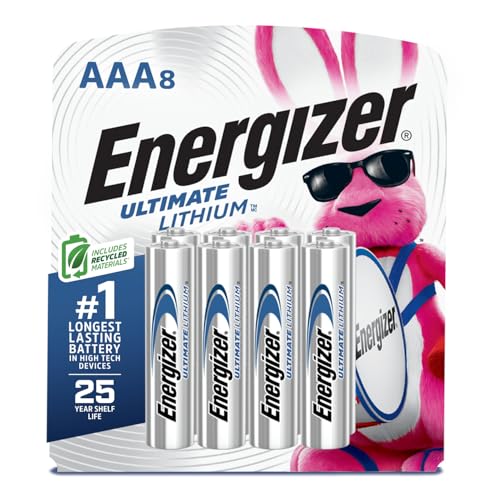
Energizer Ultimate Lithium AAA batteries deliver reliable performance across extreme temperatures.
Energizer Ultimate Lithium AAA batteries are consistently among the longest-lasting in compact electronics, and they back that up with solid temperature tolerance from -40°F to 140°F.
The eight-pack includes leak-proof cells that hold up well in demanding environments, and with 25 years of shelf life, they’re a dependable choice for backup power. Their lightweight build also helps reduce overall weight in portable devices.
They’re ideal for small but power-hungry gadgets like headlamps, laser pointers, and winter camping gear where alkaline performance tends to drop in the cold. The smaller form factor limits total capacity compared to AA cells, and pricing stays premium relative to standard alkaline AAA packs.
For critical small devices that need maximum reliability, they’re hard to beat.
|
6
|
Energizer Ultimate Lithium AA Batteries (4 Pack), 1.5V Lithium Double A Batteries |

This compact 4-pack of leak-proof lithium AA batteries balances seasonal reliability with manageable quantity.
Energizer Ultimate Lithium AA batteries in this 4-pack maintain steady voltage across extreme temperatures and are built with leak-proof construction that holds up under standard use. With up to 25 years of shelf life, they’re a reasonable option for emergency kits and seasonal gear.
They’re also notably lightweight, which helps in handheld devices where weight matters.
This pack works well if you want to try lithium performance without buying into a large bulk order. They’re great for occasional-use gear like emergency radios or GPS units that sit idle between trips.
Per-unit cost is higher than buying larger quantities, and they might be overkill for low-draw items like wall clocks. Still, the durability makes them a sensible choice for varied storage conditions.
|
7
|
Duracell CR123A 3V Lithium Battery, 2 Count, 10-Year Storage, Long-lasting | Reliable lith |

Duracell CR123A lithium batteries provide 10-year storage life and high energy density for security cameras.
Duracell CR123A lithium batteries are a common sight in tactical flashlights and home security cameras where consistent voltage really matters. With a 10-year storage guarantee, they stay viable for emergency readiness, and their high-energy chemistry delivers more density than standard alkaline cells.
They’re rated for reliable performance from freezing to hot outdoor conditions, which makes them dependable in unpredictable environments. Professionals tend to reach for them when battery failure isn’t an option.
For Ring or Nest Cam installations outdoors, these batteries deliver the steady voltage needed for night vision and motion detection. The 2-count pack is limited for whole-home setups, but the professional-grade reliability often justifies the per-unit cost.
They keep security systems functioning during extreme weather events when you need them most.
|
8
|
Energizer AA Batteries, MAX Double AA Battery Alkaline, 4 Count |

Energizer MAX alkaline batteries offer enhanced energy and longer-than-average runtime for everyday devices.
Energizer MAX AA alkaline batteries are a solid everyday option for toys, remotes, and flashlights where lithium performance isn’t critical. They tend to last longer than standard alkaline minimums, and the enhanced cell design delivers more efficient energy output overall.
With up to 15 years of storage life, they hold their charge reasonably well, making them practical for household staples.
They’re best suited for low-to-moderate drain devices found around most homes, and they’re budget-friendly for high-volume use. Performance drops off pretty quickly in high-drain devices compared to lithium, so they’re not ideal for outdoor gear or extreme temperatures. Their value really shows in everyday, frequent-consumption scenarios rather than critical applications.
|
9
|
Energizer AA Batteries, Ultimate Double A Battery Lithium, 12 Count | Double A Batteries, |

This 12-pack of leak-proof lithium AA batteries is sized for smart home and surveillance use.
The 12-pack of Energizer Ultimate Lithium AA batteries offers long-lasting power with leak-proof construction that helps protect connected devices. They’re commonly found powering smart home hubs, wireless doorbells, and surveillance systems where downtime isn’t welcome.
With up to 20 years of storage life, they’re reliable for backup power, and they’re generally considered the longest-lasting AA option for demanding electronics.
This mid-size pack balances cost efficiency with enough quantity for households managing multiple smart locks and cameras. They might be overkill for low-power devices like clocks, but their temperature performance far exceeds standard alkalines. The reliability also reduces maintenance for hard-to-reach installed devices.
|
10
|
Energizer Ultimate Lithium AA Batteries (2 Pack), 1.5V Lithium Double A Batteries |

This trial-sized 2-pack of lithium AA batteries is tailored for seasonal and emergency use cases.
Energizer Ultimate Lithium AA batteries in this 2-pack offer the same world-class longevity and leak-proof construction in a smaller, convenient format. They perform reliably across extreme temperatures and hold power for up to 25 years in storage.
At just two cells, they’re a practical way to sample lithium performance without a larger commitment.
They’re perfect for stashing a spare pair in a glovebox or emergency kit, especially in gear that needs to work after sitting unused for years. The smaller pack size does increase per-battery cost, and they’re not economical for continuously high-consumption devices.
The compact packaging makes them easy to store in multiple locations.
Between these selections, you’ve got reliable lithium options for high-drain and critical-use scenarios, along with cost-effective alkaline choices for everyday gadgets. Matching the chemistry to your actual device demands typically means fewer replacements, less frustration, and electronics that keep running when you need them to.
Proper selection here quietly extends device life and helps avoid the kind of battery-related failures that are easy to overlook until they happen.
Maximizing Battery Life Through Proper Storage
Where and how you store batteries usually determines whether they’re still good when you need them, especially for gear you only use occasionally.
Store batteries in a cool, dry place away from direct sunlight exposure.
Keep original packaging intact to prevent terminal contact and short circuits.
Avoid storing batteries in refrigerators due to moisture and condensation risks.
Separate old and new batteries to prevent accidental mixing during use.
Check expiration dates annually and rotate stock to use oldest first.
Heat accelerates chemical reactions inside batteries leading to faster self-discharge rates. Humidity can cause corrosion on metal terminals rendering batteries useless eventually. Room temperature around 68°F offers the ideal environment for long-term storage. Never toss loose batteries into a drawer where keys might bridge the contacts.
Organizing them by chemistry type prevents grabbing the wrong one for a device. Taking these simple precautions ensures your backup power remains viable for years.
Safety Risks of Mixing Battery Types
Mixing different battery chemistries or ages in one device is a common shortcut that often leads to problems worth avoiding.
- Never mix lithium and alkaline batteries in the same device compartment.
- Replace all batteries in a device at the same time to ensure balance.
- Do not combine old used batteries with fresh new ones in any gadget.
- Remove batteries immediately if a device will not be used for months.
- Inspect battery compartments regularly for signs of corrosion or leakage.
Different chemistries discharge at varying rates causing voltage imbalances within the circuit. The stronger battery forces current through the weaker one potentially causing reverse charging. This process generates excessive heat and increases the likelihood of catastrophic leakage. Alkaline leaks contain potassium hydroxide which corrodes metal contacts rapidly.
Lithium leaks are less common but still damaging to sensitive internal electronics. Always treat your battery compartments with care to maintain device integrity.
Lithium batteries generally offer better voltage stability and temperature resistance, while alkalines keep costs down for low-drain tasks. For anything you depend on regularly, I’d lean toward lithium , the longer lifespan usually offsets the higher price.
Before swapping chemistries, check your device manual to confirm compatibility, since mismatched batteries can cause issues even in otherwise simple gadgets. Making that small adjustment often prevents a lot of unexpected failures.

- 10 Best Battery For Generator Ev Battery Bank Marine 2026 - October 27, 2026
- 10 Best Battery For Generator Ev Battery Bank Lto 2026 - October 27, 2026
- 10 Best Battery For Generator Ev Battery Bank Low Voltage 2026 - October 27, 2026