How Long To Charge Car Battery At 10 Amps?
If your car won’t start, you’re likely wondering how long a 10-amp charger actually takes to do the job. The short answer is: it depends on your battery’s capacity. A smaller 50Ah unit might be ready in about five hours, while larger deep-cycle batteries need significantly more time.
Smart 10-amp chargers are a sweet spot for most drivers, fast enough to get you moving but safe enough to leave connected with peace of mind. I’ve broken down the variables that affect charging speed and highlighted nine chargers that handle the math for you.
Charging Time For Car Battery At 10 Amps
Recommended Products

Before plugging in, it helps to know what drives the clock. Here’s what actually influences your charging time at 10 amps.
Battery size is the biggest variable. Think of it like filling a bucket: a standard 50Ah car battery will take roughly five hours at a steady 10 amps, assuming it’s not completely flat. Larger truck or marine batteries can take twice that.
Your battery’s current state matters too, a deeply discharged unit takes longer to recover than one that just needs a top-up. Temperature plays a role as well; cold weather slows chemical reactions, extending charge times, while smart chargers with temperature compensation adjust voltage to keep things efficient.
Always check your battery’s label first to match voltage and chemistry.
| Battery Capacity | Charging Time At 10 Amps | Best For |
|---|---|---|
| Small 20-50Ah | 2-5 hours | Daily drivers |
| Medium 50-100Ah | 5-10 hours | Sedan owners |
| Large 100Ah+ | 10-20 hours | Trucks and SUVs |
Battery Type Influences Charging Duration
Recommended Products


Not all batteries drink power the same way. Here’s how chemistry changes the charging game.
Most cars use lead-acid batteries, which are forgiving but need careful voltage monitoring. AGM (Absorbent Glass Mat) batteries charge faster and handle higher currents better than traditional flooded types. Gel batteries are more sensitive and require specific profiles to avoid damage.
If you’re running lithium (LiFePO4), make sure your charger explicitly supports it, as the charging curve is totally different. Many modern 10-amp chargers include pulse repair modes to break down sulfation on older lead-acid units, effectively restoring some lost capacity.
Knowing your battery type isn’t just technical, it’s essential for safety and speed.
- Measure battery capacity using a hydrometer or multimeter
- Select the matching mode on the smart charger
- Monitor temperature and adjust if needed
- Allow full charge before removing from charger
- Store battery at proper voltage for long periods
- Test battery health after charging cycle
Picks For Faster Car Battery Charging Times
Recommended Products

I’ve shortlisted these chargers because they balance 10-amp speed with smart safeguards. Each one adapts to your battery’s needs, so you’re not just guessing when it’s done.
|
1
|
10Amp Battery Charger Smart Car Trickle Charger 12V 24V Battery Maintainer | 7-Stage Safet |
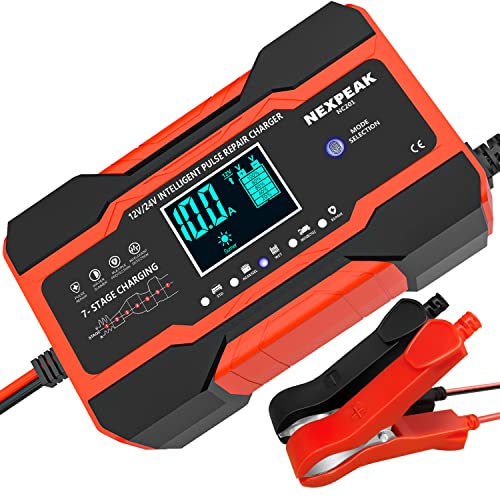
This smart trickle charger hits a full charge in about 4 hours for standard lead-acid batteries using its quick-charge mode.
The 10Amp Smart Trickle Charger stands out for its 7-stage charging process, which includes a pulse repair function to help revive sluggish batteries. I appreciate the clear display that shows voltage and status in real time, taking the guesswork out of the process.
It handles both 12V and 24V systems, covering everything from cars to boats. Safety features like reverse polarity protection and overcharge prevention mean you can plug it in and walk away. It’s particularly useful for winter maintenance, helping to prevent those dreaded cold-weather no-starts.
This is a solid pick for anyone who wants a “set it and forget it” solution for overnight charging. It works well for trucks and motorcycles too. One caveat: it won’t wake up a completely dead battery (0V), so you’ll need a jump start first if you’re totally flat.
Users often keep these connected during holidays to maintain health. The temperature compensation is a nice touch for garages that aren’t climate-controlled. Just remember, the pulse repair is best for mildly sulfated batteries, not ones that are physically damaged.
|
2
|
Schumacher Electric 10A Car Battery Charger & 200A Engine Start – SC1446 | Wheels – Manual |

Schumacher’s unit combines a 200-amp engine start with a controlled 10-amp charge, typically finishing standard batteries in around 6 hours.
The Schumacher SC1446 is less of a simple charger and more of a recovery tool. It delivers a massive 200-amp engine start and a 40-amp boost, which is great for emergencies. For routine charging, the 10-amp mode is controlled via a 135-minute manual timer, giving you precise oversight.
It supports 6V and 12V batteries, including AGM and gel types. The wheeled design makes it easy to move around the garage, and it’s built tough enough for professional shop use. It’s versatile enough for automotive, marine, and powersport applications.
If you’re a DIY mechanic or need backup starting power, this is the one to grab. It’s ideal for powersports and marine users who need versatility.
The manual timer means you need to pay attention, it’s not fully automatic in the same way as some competitors, so beginners might find it slightly less intuitive. However, the ability to boost a dead battery instantly is a huge plus.
Just follow the manual closely to get the most out of the precision controls. It’s a powerhouse for reducing downtime when you’re in a hurry.
|
3
|
Car Battery Charger 12V 10A Smart Trickle Charger Fully Automatic | Battery Maintainer Tem |

This automatic smart charger wraps up a full charge in about 5 hours, backed by 8-layer safety protections for mixed fleets.
This 12V 10A Smart Trickle Charger simplifies the process with fully automatic operation. The LCD screen is a highlight, showing voltage, current, and even ambient temperature, which helps you understand what’s happening under the hood. It supports multiple chemistries, including LiFePO4, making it future-proof.
The eight-layer protection system covers everything from reverse polarity to overheat, so safety is baked in. Seasonal modes adjust for summer or winter conditions, ensuring optimal charging regardless of the weather. It’s plug-and-play, so there’s minimal setup required.
Motorcycle and lawn mower owners will love the compact size and ease of use. It’s also great for boats. The key here is selecting the right mode for your battery type, getting it wrong can slow things down.
Drivers appreciate the fast charging option for trucks, while the maintenance mode keeps things topped off during storage. Automatic detection saves time, and the protections prevent common user errors. For best results, double-check your battery type before hitting start. It handles LiFePO4 well, which is a bonus for newer vehicles.
|
4
|
Car Battery Charger 12V 10Amp Fully Automatic Smart Trickle Charger |

With a 9-stage smart program, this fully automatic charger completes a typical charge in 6 hours while actively desulfating lead-acid units.
This all-in-one charger handles LiFePO4, AGM, GEL, and flooded batteries with a 9-stage smart program that claims to be 30% faster than standard chargers. The automatic temperature compensation adjusts voltage based on the environment, which is crucial for extreme climates.
The LED display is bright and easy to read, showing real-time stats. It covers a wide capacity range (2Ah-150Ah), making it suitable for everything from small motorcycles to large trucks. The desulfation mode is a standout feature for extending the life of older batteries.
Vintage car owners will find this useful for seasonal storage, as the trickle mode maintains charge without overdoing it. It’s also compatible with marine and motorcycle batteries. Note that it requires a minimum voltage of 0. 3V to activate, so it won’t work on completely dead lithium units.
Desulfation helps bring old batteries back to life, but you should avoid letting them drop to zero. The smart program reduces the need for constant monitoring, building trust through consistent performance. It’s a reliable choice for keeping idle vehicles ready to go.
|
5
|
TowerTop 2/10/25 Amp 12V Smart Car Battery Charger, Fully Automatic Battery Maintainer wit |

TowerTop’s adjustable charger can hit 10 amps to finish a charge in under 4 hours, with higher settings available for deep-cycle needs.
The TowerTop charger offers flexibility with four current settings, including a robust 10-amp mode. It claims 85% charging efficiency, which translates to faster charge times and less energy waste. The auto-desulfator helps repair aged batteries, and the HD LCD screen clearly displays each charging stage.
It starts automatically within 30 seconds of connection, which is a nice convenience feature. With support for AGM, STD, Gel, and deep-cycle batteries, it’s versatile enough for RVs and boats. The winter mode is particularly effective at combating cold-weather charging issues.
RV and powersport owners will benefit from the adjustable current and engine start capabilities. It’s also suitable for marine use. One limitation is that it won’t repair 0-volt batteries, so keep an eye on your voltage levels. The independent buttons allow for manual desulfation, giving you more control.
Users report noticeable improvements in battery health over time. The 85% efficiency claim stands out, potentially saving time on long charging sessions. Overall, it’s a strong contender for those who need speed and versatility in one package.
|
6
|
NOONE 10A/15A Smart Battery Charger – 6V/12V Fully Automatic Maintainer | with 50A Engine |

NOONE’s smart charger handles low-voltage starts (from 1V) and includes a 50-amp boost, with 10-amp charging typically taking 5-6 hours.
The NOONE 10A/15A Smart Battery Charger is designed with safety and versatility in mind. It features five distinct modes, including a winter mode that adds extra voltage to combat freezing temps. The 50-amp engine start is a lifesaver for emergencies.
ETL certification and nine-layer protection give peace of mind, while the smart heat control prevents sudden shutdowns by gradually reducing current if things get too hot. It supports lead-acid, AGM, and lithium batteries, making it a true all-rounder.
The flame-retardant shell adds an extra layer of safety for home garage use.
This is a great fit for daily drivers who want an emergency boost option. It’s also excellent for summer boat use. Keep in mind it needs an AC outlet to provide the start aid, so you can’t use it completely cordless. Polarity matters here, so double-check your clamps.
The overheat protection is reliable, and the desulfation mode helps revive sluggish starters. Lithium users will appreciate the dedicated Li-Iron mode. Overall, the safety features and seasonal adaptability make it a confident choice for varied conditions.
|
7
|
Schumacher Electric 15A Car Battery Charger & Maintainer, 6V/12V – SC1280 | 3A Trickle Cha |

This 15-amp Schumacher model uses microprocessor control to optimize charging, typically restoring automotive batteries in about 6 hours.
The Schumacher 15A Charger is a 4-in-1 device that charges, maintains, tests, and restores batteries. Its microprocessor control ensures optimal voltage delivery for both 6V and 12V systems. The desulfation mode is effective for recovering stored batteries, while the trickle charge keeps them ready for action.
It’s designed for seamless operation, with advanced algorithms that detect battery condition automatically. Marine and powersport users will find the robust design helpful. The included manual is thorough, guiding you through the multi-function capabilities.
ATV and truck owners will appreciate the reliability and maintenance mode. It’s also suitable for motorcycles. Beginners might need to spend time with the manual to understand the microprocessor settings, but the learning curve pays off.
The desulfation feature quickly revives performance, and the trickle charge prevents overcharging during long storage periods. It’s a solid investment for preventing common battery issues. The multi-function value is hard to beat, especially for those with multiple vehicle types. Consistent results make it a trusted tool in many garages.
|
8
|
E-FAST Battery Charger 0-20A 12/24V Lifepo4 Lead Acid Automatic Smart Car Battery Charger, |

E-FAST’s 10-amp charger uses a 7-stage process with pulse repair, typically completing a charge in 5 hours for lead-acid and LiFePO4 units.
The E-FAST Battery Charger offers a universal solution for lead-acid and LiFePO4 batteries. Its 7-stage automatic process adjusts modes dynamically, and the visualization screen shows voltage, current, and temperature clearly. Protections against overheating and overcooling ensure safe operation. The desulfator helps eliminate vulcanization, extending battery life.
It supports 100-240V input, making it versatile for different regions. The all-in-one design functions as a maintainer, so you can leave it connected for long periods. The intuitive display makes monitoring effortless.
This charger works well for cars, trucks, and motorcycles, as well as lawn mowers. Note that it cannot repair physically damaged batteries, and it may display a dE5 error if it needs time to adjust. Wait for the display to clear before proceeding.
The compact size is great for outdoor equipment. Desulfation helps prolong the life of older batteries, and the trickle mode maintains charge during storage. Overall, it’s a reliable option for automotive and recreational use, offering peace of mind through its comprehensive protection suite.
|
9
|
10A Smart Battery Charger, 12V/24V Car Battery Charger (Black) | 12V/24V Automatic Detecti |

This smart charger delivers 10 amps with temp compensation and pulse repair, typically finishing a full charge in 5 hours for 12V/24V systems.
This 10A Smart Battery Charger features automatic detection and a 10-stage quick charging process. The pulse repair and desulfation functions help restore sluggish performance, while winter and summer modes adjust for environmental conditions. The large LCD screen displays all parameters clearly, so you can check status at a glance.
Float mode gently maintains stored batteries, and temperature compensation ensures safety in extreme heat or cold. Plug-and-play setup means no expertise is required. It’s designed to extend cycle life and ensure stronger starts.
SUV owners will find this handy for weekend road trips, and motorcycle riders can use it for daily maintenance. Keep in mind it requires a minimum of 0. 3V to start, so it won’t charge totally dead batteries.
The LCD display makes progress easy to monitor, and the trickle mode can maintain charge for months. It’s ideal for vehicles that sit in storage. Multiple protections ensure safety, and the desulfation feature helps revive older units. Overall, it answers the charging question with simplicity and reliability.
Choosing the right charger comes down to matching the tool to your battery’s chemistry and your usage pattern. If you need speed, look for high-efficiency models like the TowerTop. For versatility and emergency starts, the Schumacher and NOONE options stand out.
If you’re maintaining a seasonal vehicle, the automatic trickle features in the E-FAST or generic smart chargers are invaluable. LCD screens add transparency, letting you see exactly what’s happening. My advice: verify your battery type first, then pick a charger that automates the rest.
Calculating Your Specific Charging Duration
Here’s how to estimate your specific charging time at 10 amps.
Determine your battery capacity in amp hours
Divide capacity by 10 to get hours
Add ten percent for safety margin
Check battery type for mode selection
Monitor display during entire process
Record time when charging completes
Monitoring Charging Progress Closely
Keep an eye on these indicators to ensure a safe, complete charge.
Watch the LCD screen for stable voltage and current readings. If you see fluctuations, check your connections. Temperature affects speed, so adjust modes if your garage is unusually hot or cold. Never leave a charger unattended for extended periods beyond the manufacturer’s recommendation.
Listen for unusual sounds like buzzing or clicking. When the screen indicates “Full” or switches to float mode, you’re done. Record your baseline data to track battery health over time. These habits prevent issues and extend battery life.
Maintaining Battery Health After Charging
Simple tips to keep your battery ready for action.
- Charge to full percentage before disconnecting
- Store at 12.6 volts or higher
- Check connections for corrosion monthly
- Use smart charger for long term maintenance
- Replace if sulfation persists after repair
- Test voltage weekly during storage periods
Charging time at 10 amps isn’t a fixed number, it’s a range shaped by battery size, age, and temperature. Most of the chargers reviewed here will get a standard car battery ready in 4 to 6 hours.
The key is choosing a unit with smart features like temperature compensation and automatic shutoff, so you don’t have to babysit the process. Pick one that matches your battery type, connect it, and let the electronics do the heavy lifting.
Always check your battery’s condition first, and consult the manual for specific safety guidelines. With the right charger, you’ll never be stuck waiting on a dead battery again.

- 10 Best Battery For Generator Ev Battery Bank Marine 2026 - October 27, 2026
- 10 Best Battery For Generator Ev Battery Bank Lto 2026 - October 27, 2026
- 10 Best Battery For Generator Ev Battery Bank Low Voltage 2026 - October 27, 2026