How Many Amps Should A Car Battery Have?
A battery that starts fine in August can feel sluggish in January, simply because engines need more current when oil thickens and temperatures drop. That is why “amps” matters more than the label on the case.
The right number depends on engine size, climate, and whether the battery starts the car or only feeds accessories. Below, I explain cold cranking amps, reserve capacity, and amp-hours in plain terms, then show battery, charger, jump-starter, and tester options that help keep the correct amperage available.
Why Car Battery Amps Decide Cold Starts
Recommended Products

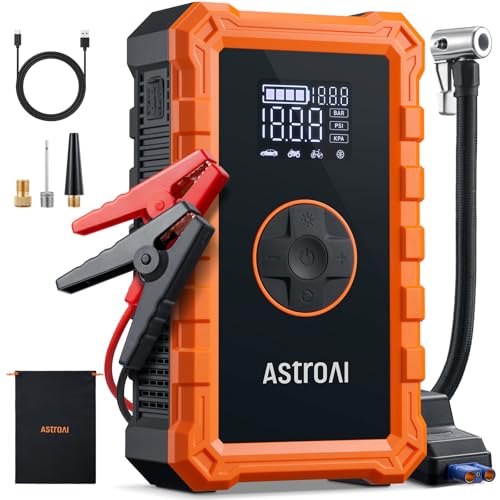
The question sounds simple, but “amps” can mean several different ratings. A starter motor wants a burst of current for a few seconds, while lights and pumps draw steadier power over minutes. Understanding those jobs prevents buying a battery that looks strong yet still struggles on cold mornings.
Most passenger vehicles use a 12-volt battery, but voltage is only half the story. The number that matters at ignition is cold cranking amps, or CCA, measured at zero degrees Fahrenheit. It estimates how many amps the battery can deliver for thirty seconds while staying above a useful voltage.
A compact four-cylinder may start reliably near 400 CCA, while a large V8 can want 600 CCA or more. Diesel engines often need more because compression is higher. Reserve capacity is different: it tells how many minutes the battery can run modest loads if the alternator fails.
Amp-hours describe stored energy over time. A high CCA battery can still have modest reserve, so the correct choice balances burst strength with endurance.
Three Amp Ratings People Confuse
| Rating | What it measures | When it matters most |
|---|---|---|
| Cold cranking amps | Starting burst in cold weather | Winter starts and large engines |
| Cranking amps | Starting burst at milder temperature | Warm-climate comparisons |
| Reserve capacity | Minutes of backup power | Alternator failure or accessory load |
| Amp-hours | Stored capacity over time | Audio systems and deep cycling |
Matching Amps To Your Engine And Climate
Recommended Products


Once the ratings are clear, the next decision is fitment. The right amp target follows the engine, the local weather, and the electrical load added by accessories. The goal is dependable starts without paying for capacity the vehicle cannot use.
- Check the owner manual first, because engineers specify a minimum CCA for each engine.
- Choose higher CCA for freezing mornings, short trips, and engines with thick oil.
- Match the battery group size so terminals, hold-down, and cables fit correctly.
- Add reserve capacity when running lights, winches, inverters, or audio gear parked.
- Do not downgrade from the factory spec to save money on a modern vehicle.
- Replace weak batteries before winter instead of waiting for the first no-start.
Find the current battery label and note CCA, reserve capacity, and group size.
Look up the factory minimum in the manual or dealership service chart.
Add margin if temperatures regularly fall below freezing where you live.
Count accessory load, especially amplifiers, heated gear, and portable refrigerators.
Test the old battery before replacing it, because a bad alternator can mimic weakness.
Confirm cable polarity and terminal style before ordering any higher-amp upgrade.
Gear For Getting Battery Amps Right
Recommended Products


The products below are not all replacements for the starting battery. Some supply burst amps, some maintain proper charge, and some reveal whether the battery still meets its rated output. That mix makes sense because the real question includes choosing, protecting, and verifying enough amps.
|
1
|
XS Power PS1200L 2600A Amp 12V Power Cell AGM Car Audio Battery 1500W / 3000W |

Its 2600-amp AGM burst rating shows how much instantaneous current an audio power cell can dump into heavy amplifiers.
The XS Power PS1200L is a 12V AGM power cell built for car audio current spikes, with a claimed 2600A discharge capacity and support for 1500W to 3000W systems. Its ultra-thin lead plates increase surface area, which helps deliver sharp bursts when bass hits hard.
The I-BAR design adds flexible terminal mounting, while the sealed case can be positioned in tight custom installs. That makes it evidence of how burst amperage differs from ordinary starter specs.
It fits show builds and high-output systems where voltage sag causes dimming or amplifier shutdown. The vibration-resistant AGM construction also suits trunks and hatch areas. However, it is overkill for a stock daily driver, and price was not listed at review time.
Confirm physical size, terminal reach, and charging needs before pairing it with a factory alternator.
|
2
|
XS Power XP600 600 Amp AGM Secondary Battery with M5 Terminal Hardware – 12 Volt 20Ah Deep |
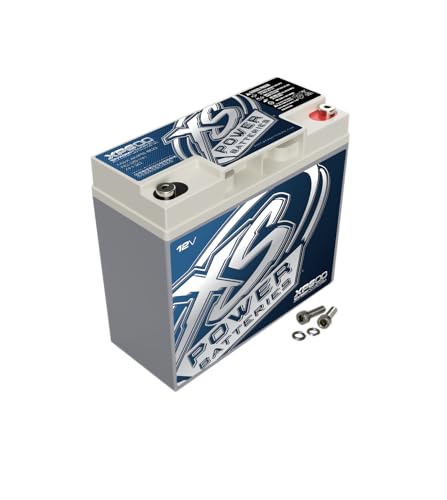
The XP600 shows the role of a secondary battery, adding 600 max amps and 20Ah without replacing the starter battery.
The XS Power XP600 is a compact 12V AGM secondary battery rated for 600 max amps and 20Ah, aimed at stabilizing aftermarket electronics. It includes M5 terminal hardware and measures about 7. 13 by 3. 03 by 6. 57 inches, so it fits where a full-size battery cannot.
Its 25-minute reserve capacity supports loads when the engine is off, making it relevant to the amp conversation beyond cranking.
This unit suits campers, demo vehicles, and riders who need clean accessory power without draining the main battery. At 14. 5 pounds, it is easier to tuck under a seat than larger cells. The limitation is scope: it is supplemental power, not a high-CCA starting battery for cold-morning engines.
Use an isolator or proper wiring to protect the charging system.
|
3
|
Mighty Max Battery Viper by Mighty Max Battery VP-600-12 Volt 18 AH, 600 Watt Car Audio Hi |
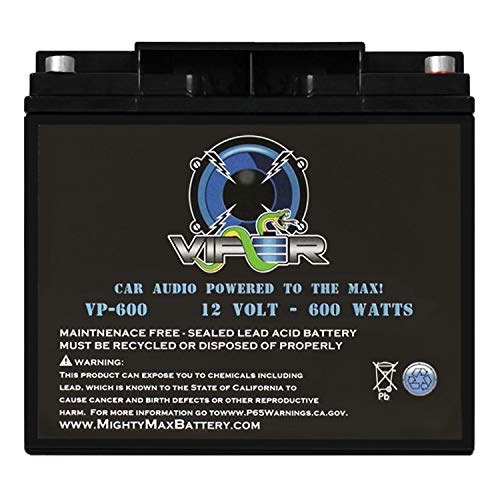
The VP-600 pairs 600-watt output with 18Ah, illustrating how audio cells trade cranking focus for compact burst reserve.
Mighty Max’s Viper VP-600 is a 12V 18Ah AGM high-current power cell rated around 600 watts, built for amplifiers or lightweight starting duty. The sealed non-spillable design can be mounted in positions where a conventional flooded battery would risk leaks.
AGM construction also improves efficiency and vibration tolerance, which matters when current demand arrives in pulses.
It works well as reinforcement for a modest stereo or where weight savings matter more than maximum CCA. The brand claims better heat and vibration tolerance than leading names, though independent verification varies by setup. Its limitation is modest capacity, so sustained high-draw systems may still need a larger bank.
Check terminal layout and charging voltage before installation.
|
4
|
TowerTop 2/10/25 Amp 12V Smart Car Battery Charger, Fully Automatic Battery Maintainer wit |

TowerTop’s 2A, 10A, and 25A settings show how controlled amperage keeps a battery near its proper charge without guesswork.
The TowerTop smart charger is not a battery, but it protects the amps a battery can deliver by restoring charge correctly. It offers 2A, 10A, 25A, and automatic modes, with enough current to refill a 100Ah battery in under about 3. 5 hours.
An eight-stage process covers desulfation, bulk, absorption, float, and pulse maintenance, while the LCD shows stage and voltage.
It suits garages that maintain cars, boats, RVs, AGM, gel, flooded, and deep-cycle batteries through seasonal storage. The repair button may help mildly sulfated batteries recover. One honest limitation is that it cannot revive a completely drained battery, and 25A still requires sensible cable and ventilation habits.
It answers the amp question by preserving usable capacity.
|
5
|
OXILAM Jump Starter 6000A for All Gas/12L Diesel, Car Battery Jumper Starter Portable, 12V |

OXILAM’s 6000A peak rating demonstrates emergency burst current for reviving a weak starting battery without another vehicle.
The OXILAM jump starter delivers 6000A peak current, intended for all gas engines and up to 12L diesel engines. A full charge claims up to 60 jumpstarts, and the unit adds USB outputs, Type-C input, and an 800-lumen light.
Ten protections address reverse polarity, sparks, short circuits, and overheating, which matters when amperage is high and mistakes are costly.
It belongs in a glove box for commuters, rideshare drivers, and winter travelers who cannot wait for roadside help. The LED display shows battery status, and the compact body stores easily.
The limitation is that peak amps are marketing shorthand, not CCA, so treat the number as emergency capability rather than battery replacement. Recharge it after use.
|
6
|
TREKURE Car Battery Jump Starter 8000A 26800mAh, Portable Car Jump Starter for All Gas and |

TREKURE pushes peak current to 8000A, showing the upper end of portable jump boxes for large gas and diesel engines.
The TREKURE jump starter pairs an 8000A peak rating with 26800mAh capacity and a force-start function for deeply drained situations. It claims starts within seconds from -4°F to 140°F and includes 8AWG cables for better conductivity.
The unit also functions as an 18W power bank and emergency light with steady, strobe, and SOS modes.
This is aimed at trucks, SUVs, RVs, and cold climates where a small pack may hesitate. Ten protections and V-0 flame-retardant materials add confidence for beginners. The tradeoff is bulkier stored energy and the need to respect cable heat during repeated attempts.
It answers amp needs by supplying a controlled burst, not by changing the vehicle battery.
|
7
|
E-FAST 25A Smart Car Battery Charger, 12V/24V Automatic Automotive Battery Maintainer & De |

E-FAST adds 12V and 24V charging with selectable 2A to 25A, proving amperage should match battery size and chemistry.
The E-FAST charger brings 25A output for 12V batteries and 15A for 24V systems, with manual settings at 2A, 8A, 20A, 25A, and auto. It handles lead-acid AGM, gel, flooded, EFB, and LiFePO4, while temperature sensors shift behavior in cold or heat.
A 200-second booster mode can help a depleted 12V battery before a start attempt.
It fits trucks, SUVs, boats, RVs, and shops that service mixed battery chemistries. The aluminum housing and cooling fan support sustained high-amp work better than plastic enclosures.
Its limitation is complexity: auto mode is helpful, but users must still enter correct chemistry and avoid confusing charger booster mode with a true jump starter.
|
8
|
Car Battery Charger Battery Maintainer for Automatic Trickle Charger | Trickle Charger for |

This 6A maintainer proves small steady amperage can preserve a car battery through storage better than occasional fast charging.
This compact 12V 6A unit works as both charger and maintainer for lead-acid, AGM, and LiFePO4 batteries, with a digital display showing voltage and charging status. Pulse repair targets mild sulfation, while protections cover reverse connection, short circuit, overheating, and overcurrent.
It is plug-in only, so it functions from wall power rather than internal stored energy.
It suits motorcycles, lawn equipment, seasonal cars, and weekend vehicles that sit long enough to self-discharge. The display makes it easy to see when a battery is merely resting near full charge. The limitation is low current: it maintains properly but will not rescue a large deeply discharged battery quickly.
Do not expect jump-start ability.
|
9
|
ANCEL BA101 Car Battery Tester, 12V Digital Automotive Alternator Meter Diagnostic Tool,10 |

The BA101 reads 100 to 2000 CCA and health data, turning the amp question into a measurable test instead of a guess.
The ANCEL BA101 is a 12V diagnostic tester for flooded, AGM, gel, and EFB batteries, covering 100 to 2000 CCA under standards including SAE, EN, DIN, and JIS. It reports state of health, state of charge, voltage, current, CCA, cranking, and charging results.
Power comes from the vehicle battery, so there is no internal battery to keep charged.
It is ideal before winter, before a road trip, or when a battery fails earlier than expected. Four-in-one protection helps when clamps slip in tight engine bays. The limitation is chemistry and voltage: it does not test lithium, 6V, 8V, or 24V batteries.
Accurate results require entering the rating exactly as printed on the battery label.
|
10
|
Mighty Max Battery Viper VP-800-12 Volt 35 AH, Internal (INT) Terminal, 800 Watt Car Audio |

The VP-800 adds 35Ah and 800-watt output, showing how extra reserve supports bigger stereos and steadier accessory voltage.
Mighty Max’s Viper VP-800 is a 12V 35Ah AGM power cell rated for 800 watts, using internal terminals and a sealed non-spillable case. AGM design improves power efficiency, vibration resistance, and mounting flexibility compared with flooded designs.
For the amp question, it highlights reserve energy rather than a starter-focused CCA label.
It fits medium audio builds, auxiliary power drawers, and owners who want more reserve than an 18Ah cell without moving to a full trunk bank. The limitation is that internal terminals can complicate some cable layouts, and higher reserve needs proper charging to avoid chronic undercharge.
Match it with realistic amplifier draw.
The shortlist circles one idea from several directions. Power cells show burst and reserve behavior, chargers preserve the amps a battery can release, jump starters cover emergencies, and the tester verifies whether ratings remain true. None replaces the factory specification, but each helps avoid guessing.
The practical pattern is simple: know the required CCA, protect capacity during storage, and test before failure becomes roadside trouble.
How To Read Amps When Testing A Battery
Recommended Products


After choosing a target, the next skill is interpreting test results without panic. A reading can look bad because the battery is cold, undercharged, or simply mismarked in the tester menu. Accurate input leads to better decisions.
A battery tester should be treated like a scale: results depend on calibration and setup. Enter the chemistry, rating standard, CCA value, and temperature exactly as printed on the label. State of charge below about twelve point four volts can distort health readings, so charge first when safe.
Cranking tests show whether voltage collapses during start, while charging tests show if the alternator restores the battery after the engine runs. Interpret trends too, because one borderline result matters less than steady decline across months.
Cold batteries naturally deliver fewer amps, yet a healthy battery should still start within normal voltage limits. Replace when capacity falls near the fail line and symptoms match.
Park safely, turn off loads, and let the surface charge settle after driving.
Clean terminals so clamps contact metal rather than corrosion.
Enter the printed CCA and chemistry before pressing test.
Run cranking and charging checks only with secure connections.
Record the date, voltage, health, and CCA result for comparison.
Retest after a full charge before deciding the battery is finished.
Keeping Proper Amps With Chargers And Storage
Amperage fades quietly when a vehicle sits, electronics draw small parasitic loads, or short trips never replace used energy. Good charging habits keep reserve capacity available and reduce winter surprise failures.
A maintainer is usually better than occasional high-amp charging because it replaces self-discharge gradually and limits heat. Use lower settings for small batteries and higher settings only when the battery size and manual allow it.
Flooded, AGM, gel, EFB, and lithium chemistries need different voltage behavior, so the charger profile matters as much as amp count. Temperature also changes the target: cold batteries need adjusted charging, while hot batteries risk overcharge.
For storage, disconnect or control parasitic drain, keep the battery near full, and inspect terminals monthly. Quick jump starts solve the moment, but repeated deep discharge shortens life. The correct amp strategy protects tomorrow’s start today.
- Store near full charge, because low charge accelerates sulfation.
- Use a maintainer for vehicles parked more than two weeks.
- Select chemistry correctly, especially AGM, gel, EFB, and LiFePO4.
- Avoid repeated jump starts without diagnosing the underlying drain.
- Keep terminals clean, tight, dry, and protected from vibration.
- Recharge after deep discharge instead of letting it sit weak.
Common Amp Mistakes That Drain Reliability
Many no-start problems come from avoidable assumptions rather than bad luck. Confusing peak jump amps with CCA, ignoring group size, or chasing reserve without charging support can leave a vehicle less reliable after an upgrade.
Chasing big numbers blindly
A larger CCA number is not automatically better if the vehicle, cables, and charging system are not designed for it. Extra capacity can help cold climates, but excessive reserve may fit poorly and cost more. The safest target remains the manual specification plus reasonable climate margin.
Verify tray size, terminal location, and hold-down hardware before paying for capacity that cannot be installed cleanly. Also remember that jump-starter peak amps are emergency claims, not a substitute for proper battery CCA ratings during normal starts.
Ignoring charging and parasitic load
A stronger battery can mask weak charging for a while, then fail dramatically. Short trips, phone chargers, alarms, trackers, and aftermarket audio all reduce net charge. If voltage drops overnight, test for parasitic draw before installing a bigger battery.
Pair upgrades with a healthy alternator, correct cable gauge, and a maintainer during storage. This keeps the available amps closer to the rated number instead of letting capacity quietly disappear between drives.
The most reliable owners treat amps as a system value. Battery rating, alternator output, cable condition, temperature, and charging habits all shape the final result. A mid-priced battery maintained well often outlasts a premium battery abused by deep discharge.
Test annually, charge before storage, and replace on evidence rather than age alone. That approach keeps starts crisp without overspending on numbers that never matter in real driving.
A typical passenger car needs roughly 400 to 600 cold cranking amps, while large gas engines, diesels, and freezing climates need more. Start by checking the owner manual and the battery label, then add margin for weather and accessory load.
Today, open the hood, note the CCA and group size, and test the battery before the next cold morning turns a small weakness into a no-start.

- 10 Best Battery For Generator Ev Battery Bank Marine 2026 - October 27, 2026
- 10 Best Battery For Generator Ev Battery Bank Lto 2026 - October 27, 2026
- 10 Best Battery For Generator Ev Battery Bank Low Voltage 2026 - October 27, 2026