How Many Batteries In A Golf Cart?
A dead golf cart on the back nine usually means someone guessed wrong about battery count. The number of batteries inside your cart depends entirely on its voltage system and the chemistry you choose.
A 36-volt cart might need six heavy lead-acid blocks, while a modern lithium upgrade replaces all of them with one unit. Figuring out how many batteries in a golf cart you actually need requires knowing your motor’s voltage and your preferred maintenance level.
This breakdown explains the math behind every common setup and lists ten specific packs that solve the problem.
Why Your Golf Cart Voltage Dictates Battery Count
Recommended Products


The total number of batteries a golf cart holds is never random. It is simple math based on your cart’s operating voltage. Multiply individual battery voltages to reach your target system voltage.
Here is how that math plays out across the three most common golf cart platforms on the market today.
Voltage Math For Common Golf Carts
| Cart System Voltage | Individual Battery Voltage | Total Batteries Needed | Common Chemistry |
|---|---|---|---|
| 36V | 6V | 6 | Lead-Acid AGM or Flooded |
| 36V | 12V | 3 | Lead-Acid or Lithium |
| 48V | 8V | 6 | Lead-Acid AGM or Flooded |
| 48V | 12V | 4 | Lead-Acid or Lithium |
| 48V | 48V (single pack) | 1 | Lithium LiFePO4 |
Older golf carts rely on flooded lead-acid batteries wired together in series. Each battery adds its voltage to the next until the system reaches 36 or 48 volts. A standard 48-volt Club Car typically uses six 8-volt batteries arranged under the seat.
Alternatively, it might use four 12-volt batteries if the tray was modified for larger units. You must match the exact voltage sum your motor controller expects. Wiring too few batteries starves the motor and burns out the solenoid over time. Wiring too many fries the controller instantly.
Lead-acid setups also require you to replace all batteries at once. Mixing old and new cells causes the older ones to drag down the fresh replacements. That makes the total count a permanent fixture of your maintenance schedule.
You cannot just swap one bad cell in a series bank without risking the entire pack.
Single-Pack Lithium Upgrades To Simplify Your Golf Cart
Recommended Products


Replacing six heavy lead-acid blocks with one lithium unit changes the battery count math completely. Modern 36-volt and 48-volt lithium packs deliver the full system voltage from a single box. These ten options show exactly how one battery now does the work of an entire traditional bank.
They eliminate series wiring headaches and drastically cut the weight sitting under your seat.
|
1
|
OGRPHY 48V Lithium Golf Cart Battery, 200A BMS(1000A Peak Current), with Touch Monitor & M |

Replaces eight 12V lead-acid batteries with one 48V 105Ah lithium unit for simpler cart wiring.
The OGRPHY 48V 105Ah lithium battery answers the battery count question by replacing multiple lead-acid units with one pack. It delivers over 5kWh of capacity using premium grade A prismatic LiFePO4 cells. The built-in 200A BMS handles peak currents up to 1000A for short bursts.
This allows a 3kW golf motor to run for more than 50 miles on a single charge. It includes an 18A charger and a touch monitor so you can track voltage easily. The compact 19. 7-inch length fits into trays designed for multi-battery banks.
This single pack fits any major 48V golf cart brand without complex series wiring. Owners who want zero maintenance will appreciate the sealed design and app monitoring. The 4000-plus deep cycles mean this one battery outlasts several sets of traditional lead-acid replacements.
One limitation is the 99-pound weight, which still requires two people to lift safely into the cart tray. Verify your battery compartment dimensions before ordering to ensure the 11. 6-inch width clears your existing hold-down brackets.
|
2
|
48V 100Ah Metal Case Lithium Golf Cart Battery Kit Wih 20A Charger, Display |
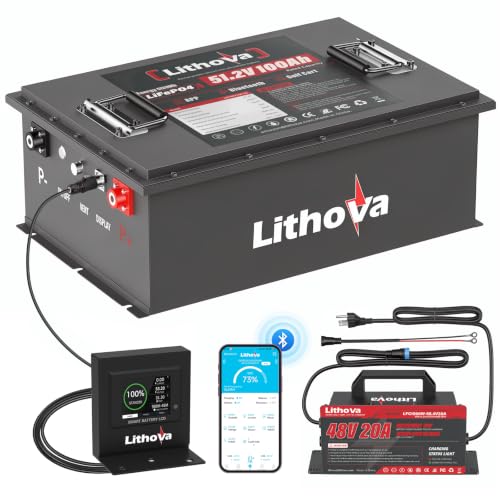
Eliminates six to eight heavy lead-acid batteries using one semi-solid 48V 100Ah metal-cased pack.
Lithova’s 48V 100Ah conversion kit directly replaces six to eight 100Ah lead-acid batteries in one installation. It uses semi-solid LiFePO4 technology inside an IP67-rated metal case. This construction prevents fire risks even if the casing suffers a severe impact. The 200A BMS provides 10.
24kW continuous power for steep hills and quick acceleration. It comes with a 20A charger and supports both LCD and Bluetooth app monitoring. The 74 percent weight reduction compared to lead-acid transforms how the cart handles on turf.
Buyers needing maximum physical protection should look closely at this metal-cased design. The locking bracket secures the internal cells against swelling, extending lifespan significantly. It works perfectly with Yamaha, EZGO, and Club Car 48V systems.
However, varying battery compartment designs mean some carts might require minor DIY modifications for a flush fit. Always measure your tray depth before purchasing. The included display lets you check remaining mileage wirelessly, removing the guesswork from your daily rounds.
|
3
|
Crown CR-GC150 12V 150Ah Deep-Cycle Batteries for Golf Carts, RVs, Marine & Solar – Premiu |
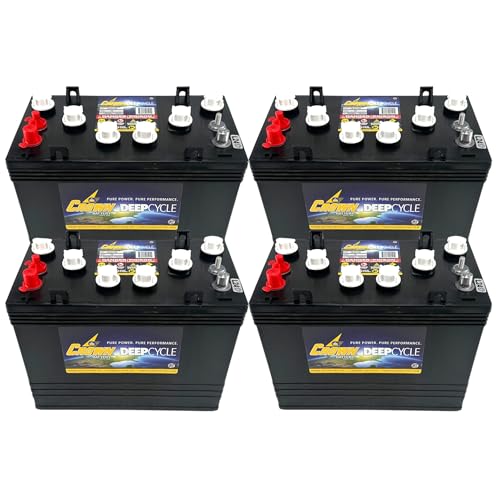
Provides a traditional four-pack of 12V 150Ah flooded batteries for standard 48V series wiring.
The Crown CR-GC150 set answers the question for those keeping a traditional 48-volt lead-acid system. This package contains exactly four 12V 150Ah deep-cycle flooded batteries. Wired in series, they produce the 48 volts required by standard golf cart motors. U. S. -engineered construction ensures heavy-duty reliability for daily fleet use.
The high reserve capacity supports all-day operation without premature voltage sag. Service caps remain accessible so owners can check water levels and maintain the cells properly over their lifespan.
This four-battery setup suits course fleets or owners who prefer familiar flooded lead-acid maintenance. The GC12 replacement sizing drops directly into older carts originally spec’d for Crown batteries. You will need to check electrolyte levels regularly to maximize cycle life.
One honest limitation is the weight; four 150Ah flooded batteries add significant mass to the chassis. They also require proper ventilation during charging to safely disperse hydrogen gas. Keep distilled water nearby for routine top-offs.
|
4
|
Mighty Max Battery ML-U1 12V 200CCA Battery Replacement for Golf Cart |
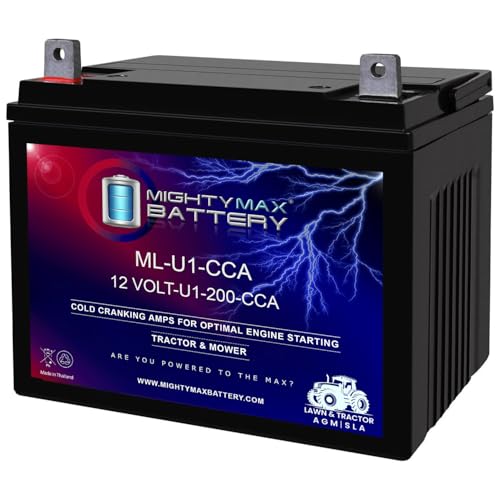
Acts as a single 12V 200CCA sealed replacement for smaller utility carts or accessory power needs.
The Mighty Max ML-U1 is a 12V 200CCA sealed lead acid battery designed for compact applications. While not a primary traction battery for large 48V carts, it answers the count question for smaller rigs. Some lightweight utility vehicles run on a single 12V system for basic transport.
Its AGM spill-proof design allows mounting in any position without leaking acid. Measuring 7. 62 by 5 inches, it fits tight compartments where larger deep-cycle batteries cannot go. It resists shocks and vibrations exceptionally well.
Use this single battery for 12-volt push carts, small yard haulers, or auxiliary accessory power. The sealed AGM chemistry means no watering or venting is required during operation. It performs reliably across wide temperature ranges, making it useful for outdoor storage sheds.
A key limitation is its low amp-hour rating compared to true deep-cycle golf cart batteries. It cannot sustain a heavy motor through eighteen holes. Rely on it only for light-duty starting or low-draw electronics in your setup.
|
5
|
LOSSIGY 36V Lithium Golf Cart Battery Conversion Kit Built-in 12V Step-Down Converter, 200 |

Converts a six-battery 36V lead-acid bank into one 36V 102Ah lithium pack with built-in converter.
LOSSIGY’s 36V 102Ah lithium conversion kit reduces a traditional six-battery bank down to a single unit. It features a built-in 12V step-down converter, eliminating the need for a separate voltage reducer. This powers lights, horns, and stereos directly from the main pack.
The 200A BMS protects automotive-grade LiFePO4 cells against overcharge and short circuits. An included LCD display, Bluetooth app, charger, and retention straps make installation straightforward. The IP65 weather-resistant casing protects the internals from dust and moisture on the course.
This kit is ideal for 36-volt carts where owners want accessories powered without draining the drive system. The built-in DC-DC converter saves space and simplifies the wiring harness significantly. Installation takes less time because you remove six old batteries and bolt in one.
One limitation is the strict 36V compatibility; it will not work in newer 48V models. Ensure your cart’s controller matches the voltage before ordering. The included straps secure the lighter lithium box firmly in the original tray.
|
6
|
Metal Case 48V Lithium Golf Cart Battery, LiFePO4 Battery with 200A BMS, Peak Current 1000 |

Swaps out multiple 48V lead-acid batteries for one 105Ah metal-cased lithium block with fast charging.
This LOSSIGY 48V 105Ah lithium battery replaces an entire bank of lead-acid cells with one metal-cased unit. It features class A LiFePO4 chips and a 200A BMS capable of 1000A peak current. The included 58. 4V 18A smart charger completes a full zero-to-hundred charge in roughly six hours. Weighing 99.
2 pounds, it cuts the total battery weight in half compared to equivalent lead-acid setups. Bluetooth connectivity and a touch screen monitor provide real-time data on voltage and cell status. The IP65 waterproof rating handles wet grass easily.
Owners who leave their carts outside will benefit from the rugged metal casing and weather resistance. The rapid 18A charger minimizes downtime between morning and afternoon rounds. You can parallel up to four of these units if you need extended range beyond the base 105Ah.
A notable limitation is that these batteries cannot be wired in series to increase voltage. They strictly support parallel connections for added capacity. Measure your tray to confirm the 19. 7-inch length fits your specific cart model.
|
7
|
Weize GC2 6V Golf Cart Battery, 240ah Deep Cycle AGM Battery for Golf Cart, Scissor Lift, |

Supplies a single 6V 240Ah AGM battery to build a traditional six-pack 36V or eight-pack 48V bank.
The Weize GC2 is a 6V 240Ah deep-cycle AGM battery used to build traditional series banks. To answer the count question: a 36-volt cart requires six of these wired together. A 48-volt cart would need eight. True deep-cycle AGM-gel technology uses virgin lead and carbon active material for longer life.
The double separator configuration increases energy density while resisting vibration on rough terrain. SAE posts make cable connections standard and straightforward. It measures 10. 24 inches long and weighs 67 pounds per unit.
This is the right choice for purists who prefer replacing individual 6V blocks rather than converting to lithium. The maintenance-free AGM design eliminates the need to check water levels like flooded batteries. Low self-discharge rates allow the cart to sit during winter without losing significant charge.
However, buying six or eight of these individually adds up quickly in total cost and weight. Six units alone weigh over 400 pounds. Ensure your cart tray accommodates the 9. 92-inch height before purchasing.
|
8
|
OGRPHY 36V Lithium Battery, 3.84KWh Golf Cart Batteries with 200A BMS, 25A Lifepo4 Battery |

Replaces a six-battery 36V lead-acid setup with one 36V 100Ah lithium pack rated for 30 miles.
OGRPHY’s 36V 100Ah lithium battery condenses a six-cell lead-acid bank into a single 3. 84kWh pack. Built with grade A LiFePO4 cells, it supports over 5000 deep cycles across a ten-year lifespan. The upgraded 200A BMS delivers 1000A peak current for three to five seconds when climbing hills.
Under testing, it pushes a 3kW golf motor for 30 miles on a single charge. Both a Bluetooth app and an included LCD monitor let you track parameters in real time. The 25A charger refills the pack efficiently.
This single unit fits 36-volt systems perfectly, removing the hassle of balancing six separate batteries. The smart BMS protects against low voltage, overcurrent, and extreme temperatures automatically. It sits safely under the seat with no risk of acid leakage or explosion.
One limitation is the 30-mile range, which falls short of higher-capacity 48V models. If you frequently play 36 holes in a day or tow heavy loads, you may deplete it quickly. Verify your controller accepts 36V input before swapping.
|
9
|
Weize GC8 8V Golf Cart Battery, 182AH High Capacity & Maintenance Free Deep Cycle AGM Batt |

Provides a single 8V 182Ah AGM block for assembling a traditional six-battery 48V golf cart bank.
The Weize GC8 is an 8V 182Ah deep-cycle AGM battery designed for 48-volt golf cart systems. Answering the battery count question: a standard 48V cart requires exactly six of these 8V batteries wired in series. Powered by AGM-gel technology and virgin lead grid plates, it delivers consistent deep-cycle performance.
The valve-regulated design prevents spills and requires zero water maintenance. Dual separators enhance cycle life and energy density. It weighs 70. 8 pounds and uses standard SAE and M8 terminal posts for easy cable attachment.
Six of these batteries form a robust, maintenance-free 48V bank for heavy-duty course use. The anti-vibration design keeps internal plates stable when driving over cart path bumps. Because they are AGM, they do not off-gas heavily during charging like flooded alternatives.
A practical limitation is the total footprint; fitting six 10. 2-inch long batteries requires a large tray. They also carry substantial combined weight. Plan your cable routing carefully, as series-wiring six blocks demands clean connections to prevent voltage drops.
|
10
|
48V Lithium Golf Cart Battery, with 18A Charger, Touch LCD Monitor, 200A BMS, 1000A(3-5) P |

Consolidates a multi-battery 48V lead-acid system into one 105Ah lithium pack with a 10-year lifespan.
This OGRPHY 48V 105Ah lithium battery replaces an entire series-wired lead-acid bank with a single 51. 2V unit. Grade A UL-certified LiFePO4 cells provide stable performance and a 10-year expected lifespan. The high-performance 200A BMS sustains 10. 24kW output and hits 51. 2kW peaks for steep terrain.
Testing shows it runs a 3kW motor for 50 miles on one charge. It arrives with an 18A charger and a touch LCD monitor for immediate dashboard tracking. The self-contained design installs much faster than wiring multiple blocks together.
Anyone tired of checking water levels or replacing dead cells in a series bank will value this drop-in. It fits 48V systems natively, requiring no external voltage reducers for standard operation. The included five-year warranty and round-the-clock customer service add peace of mind.
One limitation involves parallel expansion; while you can add more capacity, you must follow specific pairing rules. Do not mix this with older lead-acid batteries in the same circuit. Remove the old bank entirely before installing.
These ten options prove the answer to how many batteries belong in a golf cart is no longer fixed. Traditional setups demand four, six, or eight blocks wired in series. Modern lithium conversions shrink that number down to one self-contained pack.
Your choice depends on whether you prefer familiar maintenance or simplified installation.
Wiring Mistakes That Ruin Golf Cart Battery Banks
Recommended Products


Knowing how many batteries your golf cart needs is only half the equation. Wiring them incorrectly destroys expensive packs in weeks. Series and parallel configurations behave differently, and mixing them up causes dangerous imbalances. Understanding these common mistakes protects your investment and keeps the cart running smoothly across the course.
- Always replace all lead-acid batteries in a series bank simultaneously to prevent voltage dragging.
- Never wire lithium and lead-acid batteries together in the same golf cart circuit under any circumstances.
- Use identical cable lengths between each battery connection to ensure balanced current flow throughout the bank.
- Clean terminal posts with a wire brush before attaching cables to reduce electrical resistance and heat buildup.
- Check torque specifications for terminal nuts, as loose connections cause arcing and melt battery posts.
- Install a main fuse near the positive terminal of the first battery in your series chain.
The most frequent mistake occurs when owners replace only one dead battery in a six-pack series bank. The new battery operates at full capacity while the older ones resist the current flow. This forces the new battery to overwork, rapidly degrading its internal plates.
Within a few months, the replacement fails just like the original. Another common issue involves mixing different amp-hour ratings within the same tray. A 150Ah battery wired next to a 200Ah battery creates a bottleneck.
The smaller battery drains faster and drags the larger one down to its lower voltage threshold. Proper installation requires matching the exact voltage, chemistry, and capacity across every unit.
Taking the time to verify these specs before bolting down cables prevents costly replacements and ensures your cart maintains consistent speed through the final holes of your round.
Maintaining Your Chosen Golf Cart Battery Setup
Recommended Products


Once you determine how many batteries your golf cart requires and install them, maintenance dictates their actual lifespan. Different chemistries demand entirely different care routines. Ignoring these requirements turns a three-year battery into a one-year paperweight.
Follow the specific protocols below based on the type of pack sitting under your seat.
Flooded Lead-Acid Maintenance
Flooded batteries require monthly water checks. Only add distilled water after a full charge cycle. Adding water before charging causes overflow and acid spills. Keep the tops of the batteries clean and dry to prevent slow discharge across dirty surfaces.
Apply a thin layer of dielectric grease to terminal posts to stop corrosion from forming. Equalize the charge every thirty days using a compatible charger setting to balance the cells.
AGM And Sealed Lead-Acid Care
AGM batteries eliminate the watering requirement but introduce new sensitivities. Never use a charger designed for flooded batteries on an AGM pack. The higher voltage profiles damage the sealed valves and dry out the internal mats. Store AGM batteries fully charged during the off-season.
Their low self-discharge rate helps, but leaving them drained for months sulfates the plates permanently. Wipe down the casing periodically to remove dust that could bridge the terminals.
Lithium LiFePO4 Management
Lithium batteries require almost no physical maintenance. The built-in BMS handles cell balancing and temperature cutoffs automatically. Avoid storing the cart with the battery completely empty for extended periods. Charge the pack to roughly fifty percent if the cart will sit unused for several months.
Monitor the BMS app occasionally to verify all cells report similar voltages. If one cell drifts significantly from the others, contact the manufacturer immediately for diagnostic support.
When To Recalculate Your Golf Cart Battery Count
Upgrading accessories or changing how you use your cart often shifts your power requirements. A battery count that worked perfectly last year might fall short today. Recognizing these triggers early prevents getting stranded halfway through a round. Evaluate your electrical load whenever you make significant changes to the vehicle.
Adding high-draw accessories like lifted suspension kits, larger tires, or powerful stereo systems increases amperage demand. The motor works harder to turn oversized wheels, pulling more current from the battery bank continuously.
If you recently installed a light bar or a cooler, your original battery count might lack sufficient reserve capacity. Voltage sag under heavy loads indicates the bank is undersized for the new reality. Switching from a flat municipal course to a hilly private club also changes the math.
Steep inclines demand peak amperage that drains batteries exponentially faster than flat ground. When these variables change, recalculate your total watt-hours needed per round. You may need to switch from four 12V batteries to six, or abandon lead-acid entirely for a higher-output lithium pack.
Monitoring your post-round voltage with a multimeter reveals whether your current setup handles the new stress.
List every electrical accessory added to the cart since the original battery purchase and note its wattage draw.
Measure the resting voltage of your battery bank after a full charge and before driving the cart.
Drive your typical route and measure the voltage again immediately upon returning to the garage.
Calculate the voltage drop percentage to determine if your current battery count provides adequate reserve capacity.
Consult a lithium conversion chart if your voltage drop exceeds twenty percent during normal daily use.
The number of batteries in a golf cart depends entirely on your system voltage and chosen chemistry. A 48-volt cart needs four 12-volt, six 8-volt, or eight 6-volt lead-acid batteries wired in series. Alternatively, one modern 48-volt lithium pack replaces that entire bank.
Check your cart’s voltage plate under the seat today to confirm your system type. Then measure your battery tray dimensions before buying replacements. Matching the correct count and size keeps your cart moving reliably through every hole.

- Marine Chargers and Backup Batteries: 9 Options Compared (2026) - October 27, 2026
- LTO Cells vs. SLA Generator Batteries: 5 Options Compared (2026) - October 27, 2026
- 12V/24V Backup Batteries and the EcoFlow DELTA Pro 3 (2026) - October 27, 2026