What Is A Battery Control Module?
Imagine typing ‘what is a battery control module?’ into a search bar, perhaps because your dashboard light just illuminated. Maybe your car struggled to start this morning, or a scan tool spat out a code you don’t recognize.
A battery control module is the small electronic brain that watches your battery’s voltage, current, and temperature, then tells the rest of the car what to do about it. This article explains what the part does, why it fails, and which replacement modules actually fit specific vehicles.
What A Battery Control Module Actually Does
Before you buy any replacement, it’s helpful to understand the job this part performs. A battery control module is not a battery, and it is not a fuse. It is a small computer or sensor board that manages how your car’s charging system treats the battery.
Here is the background you need.
A battery control module monitors the state of charge, state of health, and temperature of your vehicle’s battery. It sits between the battery and the alternator, often mounted directly on the negative battery terminal or inside the engine compartment fuse box.
When it senses the battery is low, it tells the alternator to raise charging voltage. When the battery is full or hot, it lowers voltage to prevent overcharging. On stop-start vehicles, it also decides whether the engine can safely shut off at a red light.
Some modules handle dual-battery setups, isolating the starter battery from accessories. When the module fails, the car may crank slowly, throw a battery warning light, or refuse to restart after an auto stop. That is why diagnosing the module matters before you replace the battery itself.
On The Battery Terminal
Many modern vehicles place the module directly on the negative battery post. It looks like a small black box with a connector and a current sensor ring. Mercedes-Benz, BMW, and several GM models use this layout. Because it sits on the battery, heat and vibration shorten its life.
A loose terminal can also cause false readings, so I would check the connection before condemning the module.
Inside The Fuse Box
Some cars integrate the module into the engine compartment fuse block. Chevrolet Malibu models from 2014 to 2016 use this design, where the battery distribution fuse block also handles control logic. If you see codes like P305F or a dual battery fault, the fuse block module is often the culprit.
Replacing it restores normal charging and start-stop operation.
Common Module Types By Function
| Module Type | Primary Job | Typical Symptom When It Fails |
|---|---|---|
| Battery monitoring sensor | Tracks voltage, current, temperature | Battery light, slow crank |
| Battery distribution fuse block | Routes power and controls charging | P305F code, no start-stop |
| Battery stabilization module | Smooths voltage spikes for electronics | Electrical glitches, capacitor fault |
| Charge controller board | Manages charging for auxiliary batteries | Overcharge or no charge |
Replacement Modules That Answer The Question
Knowing what a battery control module does is step one. Step two is finding the right replacement when yours fails. The modules below cover common failure points on Chevrolet Malibu, Mercedes-Benz, and auxiliary battery systems.
Each listing targets a specific part number and vehicle fitment, so match yours carefully before ordering.
|
1
|
BUSIDN Battery Distribution Engine Compartment Fuse Block #23223079 |

It replaces the exact fuse block module that handles battery distribution on 2014-2016 Malibu models.
This BUSIDN unit is a battery distribution engine compartment fuse block that replaces part number 23223079. It fits Chevrolet Malibu 2014-2015 and Malibu Limited 2016. The listing specifically calls out fixes for P305F code, engine light, auto start/stop failure, and dual battery fault.
It is built from durable plastic and stainless steel. If your Malibu shows those symptoms, this module addresses the control logic inside the fuse block rather than just the fuses themselves.
This is a direct-fit replacement for a known failure point, so installation is straightforward for someone comfortable working in the engine bay. It suits DIYers who already pulled the P305F code and confirmed the module is at fault.
The main limitation is that it only fits the listed Malibu years and trims. If you drive a different GM model, this part will not work. Always verify your existing part number before ordering.
|
2
|
Promrmr Battery Distribution Engine Compartment Fuse Block 23223079 Compatible with Chevro |

It is a direct 23223079 replacement that restores battery control on 2014-2016 Malibu vehicles.
Promrmr’s battery distribution engine compartment fuse block carries the same 23223079 replacement number. It fits Chevrolet Malibu 2014, 2015, and Malibu Limited 2016. The listing emphasizes perfect fit and long-lasting durability from high-quality materials. It includes one fuse block module per package.
The 12-month return and exchange service adds some peace of mind. If you need the same function as the OEM module but want a clear warranty, this is a solid option to compare against the original.
This module works best for owners who want a straightforward swap with a warranty behind it. It fits the same vehicles as the OEM part, so no wiring changes are needed.
The limitation is that the listing provides no rating data, so you are relying on the seller’s service commitment rather than buyer feedback. Confirm your model and compare the connector layout with the picture before purchase. That step prevents the most common return reason.
|
3
|
Promrmr Fuse Block Module Compatible with Chevrolet Malibu 2014 2015 & Malibu Limited 2016 |

It replaces the 23223079 fuse block module that controls battery distribution on Malibu models.
This Promrmr fuse block module is another direct replacement for part number 23223079. It fits Chevrolet Malibu 2014-2015 and Malibu Limited 2016. The listing describes it as a black fuse block battery control module. It includes one module per package and comes with a 12-month return and exchange service.
The emphasis is on perfect fit and long-lasting durability. If your original fuse block module failed and you need the same form factor, this is a direct alternative to the OEM part.
This option suits owners who prefer a simple plug-and-play replacement without programming. It addresses the same failure modes as the OEM module, including charging faults and start-stop issues. The honest limitation is that it shares the same fitment restrictions as the other 23223079 replacements.
It will not fit other GM platforms. Also, no rating data is available, so verify the part number against your old module before ordering to avoid a return.
|
4
|
A 230 540 1045 Fits Compatible with for Mercedes R230 SL550 SL500 SL55 Battery Stabilizati |

It is a Mercedes battery stabilization module that smooths voltage for R230 SL-class electronics.
This module carries Mercedes part number A 230 540 1045 and fits R230 SL550, SL500, and SL55 models. It is a battery stabilization control load module, which means it manages voltage spikes and stabilizes power to sensitive electronics. The OEM part number A2305401045 is stamped for identification.
If your SL-class shows electrical glitches or a battery stabilization warning, this module addresses the control side of the charging system rather than the battery itself.
This part fits a narrow range of Mercedes R230 chassis vehicles, so it is best for owners of those specific SL models. It restores the voltage stabilization function that protects control units and comfort electronics. The limitation is that the listing offers no rating data and no installation guide.
It also requires some mechanical confidence because the module sits in a less accessible location. Confirm your VIN and existing part number before ordering to ensure a match.
|
5
|
Battery Distribution Engine Compatible with Chevrolet Chevy Malibu Limited |

It is a battery distribution module built for 2014-2016 Chevrolet Malibu and Malibu Limited.
This battery distribution engine compartment module fits 2014-2015 Chevrolet Malibu and 2016 Malibu Limited. It replaces part number 23223079. The listing highlights OEM-equivalent quality, durable construction, and resistance to wear and corrosion. A 180-day warranty backs the part, and the seller offers customer service for product questions.
If you want a module that matches the original manufacturer’s strength and service life, this listing positions itself as an OEM-equivalent alternative to the factory fuse block.
This module suits Malibu owners who want OEM-equivalent quality without paying dealer prices. It fits the same vehicles as the factory part, so installation follows the same procedure. The 180-day warranty is shorter than some competitors, which is the main trade-off.
It also requires you to enter your vehicle trim in the garage tool before purchase. That step confirms fitment and prevents ordering the wrong module for your specific Malibu build.
|
6
|
Battery Monitoring Control Module Replace A0009822023 0009822023 | Compatible with 2015-20 |
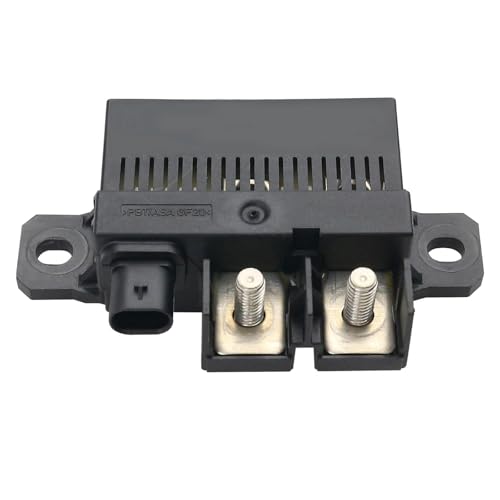
It is a battery monitoring module for many Mercedes classes, replacing A0009822023.
This battery monitoring control module replaces Mercedes part numbers A0009822023 and 0009822023. It fits a wide range of Mercedes-Benz models from 2005 to 2020, including A, B, C, CLA, E, S, GLA, GLE, and more. The listing covers dozens of chassis codes like W176, W246, W204, W212, and W222.
It includes one module per package. If your Mercedes throws a battery monitoring fault, this module addresses the sensor that tracks battery state and reports to the vehicle network.
This is a broad-fitment option for Mercedes owners across many classes and years. It suits someone who needs to replace a failed battery monitoring sensor without visiting a dealer. The limitation is that broad fitment can sometimes lead to ordering errors, so you must match your chassis code carefully.
The listing provides no rating data, and installation may require coding on some models. Confirm your part number and chassis before purchase to avoid a return.
|
7
|
Dorman 601-531 Motor Battery Pack Control Module Compatible with Select Mercedes-Benz Mode |

It is a Dorman battery pack control module that restores current stabilization on select Mercedes models.
Dorman 601-531 is a motor battery pack control module that fits select Mercedes-Benz models. It is designed as a direct replacement for the original capacitor on specified vehicles. The module restores proper current stabilization to electrical systems and components.
Dorman backs it with a team of product experts in the United States and more than a century of automotive experience. If your Mercedes has a battery capacitor fault or unstable voltage, this module addresses the stabilization function directly.
This module suits Mercedes owners who want a brand-name replacement with domestic support. Dorman’s reputation and fitment tool make it easier to confirm the part matches your exact vehicle.
The limitation is that it only fits select Mercedes models, so you must input your make, model, and trim into the garage tool. It is also a capacitor-style module, so it will not solve every battery control fault. Verify the function of your original part before ordering.
|
8
|
Alinan 2pcs XH-M604 Charge Control Module Battery Charger Protection Board DC 6-60V Storag |

It is a charge control board that manages battery charging for solar and auxiliary setups.
The Alinan XH-M604 is a two-piece charge control module for DC 6-60V battery charging. It works with lithium, storage, and solar batteries. The board lets you set charging start and stop voltages, and a 30A relay handles large-capacity batteries. A three-digit red LED displays parameters.
When voltage exceeds the stop value, the relay cuts off charging automatically. This is a battery control module in the auxiliary sense, managing charge cycles rather than vehicle starting systems.
This board is best for DIY solar, wind, or electric vehicle battery projects. It suits hobbyists who want automatic overcharge protection without manually pulling a charger. The limitation is that it is not a vehicle-specific module and requires wiring knowledge.
It also supports batteries up to 48V, so higher-voltage systems need a different controller. If you are building a home energy setup, this board handles the charge control logic affordably.
|
9
|
DCS 212332 BATTERY IGN MODULE 9V ELTEC 2 |

It is a 9V battery ignition module for Eltec 2 emergency locator systems.
The DCS 212332 is a battery ignition module rated at 9V for Eltec 2 systems. It is a specialized part, not a general-purpose automotive battery control module. This module likely serves an emergency locator transmitter or similar device that relies on a dedicated 9V battery ignition circuit.
If you are maintaining an Eltec 2 unit and need the correct ignition module, this part matches the DCS 212332 designation. It is a niche replacement rather than a mass-market vehicle component.
This module fits a very specific application, so it is best for technicians or owners servicing Eltec 2 equipment. It is not a substitute for a car‘s battery control module, and it will not fit automotive charging systems. The limitation is the narrow use case and lack of rating data.
Before ordering, confirm your device uses the DCS 212332 module and a 9V ignition circuit. That check prevents buying a part that does not match your system.
|
10
|
5PCS Solar Charge Controller Auto Light Control Circuit Switch Lithium Battery Charging Bo |

It is a solar charge controller board with auto light control for lithium battery charging.
This five-pack of solar charge controller boards includes auto light control and a circuit switch for lithium battery charging. Each board manages charging from a solar panel and can switch based on light levels.
The auto light control function makes it useful for solar lighting projects that need to turn on at dusk. If you are building a small solar setup and need multiple charge control modules, this five-pack gives you spares or lets you run several panels.
It is a battery control module in the charging-management sense.
These boards suit makers and hobbyists building solar garden lights, small chargers, or off-grid sensors. The five-pack is convenient when you have multiple projects or want backups. The limitation is that the listing provides minimal technical detail, so you may need to test voltage thresholds yourself.
It is also not a vehicle module and will not replace an automotive battery control unit. If your project is low-voltage solar, this pack covers the charge control basics affordably.
Those ten modules cover the main categories: vehicle fuse block replacements for Malibu, Mercedes monitoring and stabilization sensors, and auxiliary charge controllers for solar or specialty equipment. The right one depends entirely on which function failed in your system.
Match the part number and fitment first, then choose based on warranty and brand support. The next section covers how to avoid the most common mistakes after you install a new module.
Mistakes That Kill A New Battery Control Module
Replacing the module is only half the job. A few installation and maintenance errors can make a new module fail early or throw false codes. These guidelines help you protect the part you just bought and confirm the repair actually solved the problem.
- Disconnect the negative battery cable before touching any module connector.
- Clean the battery terminal and module ground to bare metal before reassembly.
- Verify the replacement part number matches the old module exactly.
- Clear fault codes with a scan tool after installation and recheck.
- Avoid overtightening terminal bolts, which can crack the module housing.
- Do not assume a new battery fixes a module fault; test both separately.
Reconnect the battery and start the vehicle, watching for warning lights.
Let the engine idle and check charging voltage at the battery with a multimeter.
Drive a short loop that includes a stop, so start-stop can cycle if equipped.
Re-scan for codes after the drive and confirm the original fault has not returned.
If codes persist, inspect wiring and grounds before replacing the module again.
One often-overlooked mistake is replacing the module without addressing the root cause. A failing alternator, a corroded ground strap, or a battery that is already weak can stress a new module and cause it to fail again.
If your old module showed heat damage, I would check the charging system output before installing the replacement. Similarly, a loose battery terminal can mimic module failure by causing erratic voltage readings. Tighten and clean all connections first.
On stop-start vehicles, the module also depends on a healthy battery to make decisions. If the battery is below spec, the new module may still refuse to enable auto stop. Diagnose the whole circuit, not just the box.
When To Replace The Module Versus The Battery
A battery warning light does not automatically mean the module is bad. The battery, alternator, and module all interact, and misdiagnosis wastes money. This section helps you decide which component actually needs replacing before you order parts.
Symptom To Likely Cause
| Symptom | Likely Cause | First Check |
|---|---|---|
| Slow crank, dim lights | Weak battery | Battery voltage and load test |
| Battery light while driving | Alternator or module | Charging voltage at idle |
| P305F code on Malibu | Fuse block module | Module part number 23223079 |
| Start-stop never engages | Module or battery health | Battery registration and module codes |
| Voltage spikes, electronic glitches | Stabilization module | Module capacitor and grounds |
Battery First
Load-test the battery before blaming the module. A battery that fails a load test can cause the same symptoms as a bad module, including slow cranking and warning lights. If the battery is more than four years old and tests weak, replace it first.
Then clear codes and see if the module behaves. Many supposed module failures disappear after a fresh battery and a registration reset on vehicles that require it.
Module Second
If the battery passes and charging voltage is wrong, the module or alternator is suspect. On vehicles with a module on the negative terminal, check for corrosion and tightness. On fuse block modules, look for melted terminals or burnt smells.
A scan tool that reads module-specific codes will confirm whether the module is reporting faults. Replace the module only after these checks point to it directly.
Cost also matters when deciding. A battery is usually cheaper than a module, and it is a wear item you will replace eventually anyway. If both are original and the car is older, replacing the battery first is a reasonable gamble.
However, if you already replaced the battery and the fault returns, the module becomes the prime suspect. On Malibu models with the 23223079 fuse block, the P305F code is a strong indicator that the module itself has failed. In that case, replacing the battery alone will not clear the code.
Use the code and the symptom pattern together to make the call.
A battery control module is the electronic part that monitors and manages your battery’s charging, and it fails in specific, diagnosable ways. The direct answer is that it is not a battery or a fuse, but a small computer or sensor that keeps voltage in range.
Your next step today is to scan your vehicle for codes and check your battery’s age and voltage. If the battery is healthy and a module code appears, match your part number to one of the replacements above. That order of operations saves time and money.

- 10 Best Battery For Generator Ev Battery Bank Marine 2026 - October 27, 2026
- 10 Best Battery For Generator Ev Battery Bank Lto 2026 - October 27, 2026
- 10 Best Battery For Generator Ev Battery Bank Low Voltage 2026 - October 27, 2026