How Many Amps Is A 9v Battery?
There’s no single ‘amp rating’ for a 9V battery, what it can deliver depends on the device, the battery’s chemistry, and how long you expect it to last.
A smoke detector might draw just a few milliamps over years, while a brief short circuit could demand far more than the battery can safely handle. The key is understanding the difference between voltage (9V), current (amps), capacity (mAh), and how they interact.
This guide breaks down what a 9V battery *actually* provides, how to estimate real-world current for your device, and which products here can help with calculations or replacements, without oversimplifying the science.
Why A 9V Battery Has No Single Amp Answer
Recommended Products


You’re probably expecting a straightforward answer, but the truth is, a 9V battery doesn’t work like a fixed power supply. This section cuts through the confusion by separating what the battery *is* (voltage, capacity) from what your device *needs* (current, runtime).
The numbers you see on a battery label tell only part of the story, what matters most is how your specific device behaves when connected.
A 9V battery is defined by its *voltage*, not its current output. Amps measure how much electricity flows *through* a circuit, and that’s entirely up to the device connected to it.
Capacity, usually listed in milliamp-hours (mAh), gives a rough idea of how long the battery can sustain a given current, but it’s not a guarantee of continuous output. A fresh alkaline 9V might deliver steady milliamps for hours, but short bursts can spike into the hundreds. A direct short?
That’s a whole different story, expect high current, heat, and potential damage. Rechargeable 9Vs add another layer: their chemistry and internal resistance change over time, so their ‘amp capacity’ isn’t fixed either.
To get a useful answer, start with your device’s power needs, the battery type, and how long you need it to last. Then match those to the battery’s specs, not the other way around.
The Measurements Behind A 9V Battery
| Measurement | What It Tells You | Why It Matters |
|---|---|---|
| Voltage | Electrical pressure | Must match device requirements |
| Current | Flow at a moment | Depends on circuit demand |
| Capacity | Stored charge | Helps estimate runtime |
| Internal resistance | Output limitation | Causes voltage sag |
| Wattage | Power consumed | Combines voltage and current |
Tools And Batteries For Finding The Answer
Recommended Products


The products below tackle different parts of the 9V battery puzzle. Some are tools to crunch the numbers behind current, power, or runtime, while others provide real-world alkaline replacements.
None of them will give you a single ‘amp rating’ for every 9V battery, that’s because the answer depends on your specific setup. Whether you’re debugging a device, planning replacements, or just curious about the math, the right choice here depends on what you’re trying to solve.
|
1
|
Staples 8-Digit Battery & Solar Basic Calculator, Black |
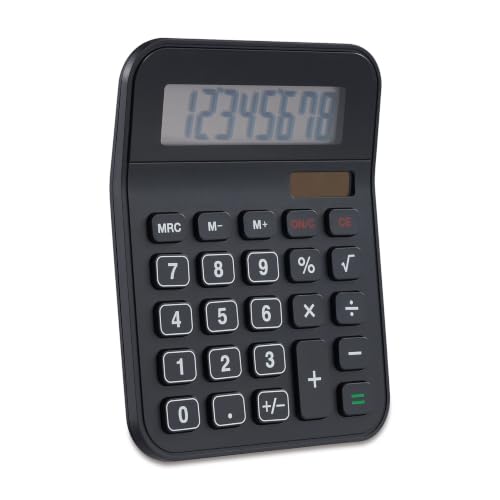
Its specialized functions make it easier to work through the math of 9V battery current, runtime, and power relationships, without needing a separate calculator.
The Staples 8-Digit Battery & Solar Basic Calculator isn’t a battery itself, but its angled display and dedicated keys (percent, square root, memory functions) let you calculate things like *current = power ÷ voltage* or *runtime = capacity ÷ load current*.
The dual solar/LR54 battery power means you’re not draining a 9V just to run the calculator. It’s a desk-friendly tool for anyone who needs to estimate how long a battery will last or what current a device might draw.
This is a good fit if you’re doing calculations at a desk, maybe comparing battery options for a project or checking rough estimates for household electronics. The 8-digit display handles everyday numbers well, but it might struggle with very large engineering values. And remember: it can’t *measure* current directly.
For that, you’ll still need a multimeter to get real-world data, then plug those numbers into the calculator for context.
|
2
|
Tenergy 6LR61 9V Alkaline Battery, Non-Rechargeable Battery for Smoke Alarms, Guitar Picku |

This pack gives you practical, off-the-shelf alkaline 9Vs while reminding you that ‘9V’ alone doesn’t tell you how much current you’ll get.
The Tenergy 6LR61 12-pack delivers standard alkaline 9V batteries for smoke alarms, guitar pedals, cameras, and other low-to-moderate-drain devices. The listing highlights their temperature range (-4°F to 129°F) and long shelf life, which are useful for storage and reliability, but they don’t specify a fixed amp output.
That’s because the actual current depends on what you’re powering and how the battery’s internal resistance changes over time.
This pack is ideal for households, musicians, or anyone who needs multiple 9V replacements on hand. Alkaline batteries handle steady loads well but aren’t built for high-current spikes. The listing doesn’t provide capacity or max-current specs, so treat these as general-purpose spares rather than precision power sources.
And a reminder: these are *non-rechargeable*, attempting to recharge them can be dangerous.
|
3
|
YOUHO 5-Piece Solar & Battery Powered Standard Function Electronic Calculator with Large L |

The extra-large 12-digit display makes it easier to enter and review complex 9V battery calculations without typos or rounding errors.
The YOUHO KK-837B is a desktop calculator with a spacious 12-digit LCD, solar/battery power, and a non-slip base for stability. Its durable buttons and auto-shutdown help with repeated calculations involving 9V batteries, like comparing runtime estimates or adjusting for different load currents. The listing mentions five 1.
5V backup batteries, so this is purely a calculation aid, not a power source.
This is a strong pick for students, technicians, or anyone comparing multiple battery scenarios at once. The larger display reduces errors when dealing with decimals or multi-step equations. Just don’t expect it to measure current, you’ll still need a multimeter for that.
Also, the five-cell backup arrangement might require careful battery matching if replacements are needed.
|
4
|
EASTAR BTS 9V Batteries – Alkaline 9 Volt Battery (10 Pack) for Smoke Detectors, Long-Last |

The ten-pack offers standard alkaline replacements with claims of longer shelf life and leak resistance, making it a practical choice for planned battery changes.
The EASTAR BTS 9V alkaline pack includes ten 6LR61 batteries designed for smoke detectors, radios, toys, and other household devices. The listing boasts up to 3x the endurance of carbon batteries, leak-proof construction, and a 10-year shelf life under ideal conditions.
These are helpful for planning ahead, but they don’t come with a single ‘amp rating’, device load still dictates the current. Think of them as reliable spares for low-to-moderate-drain equipment.
This pack is well-suited for homes or offices that want a stock of replacements for alarms, remotes, or small electronics. The compatibility list is broad, but always double-check that the device accepts alkaline 9Vs. The ‘longer life’ and ‘leak-proof’ claims are marketing language, not guaranteed specs.
And as always, avoid mixing old and new batteries or creating short circuits.
|
5
|
Staples 8-Digit Battery & Solar Pocket Calculator, Basic, Black | Compact dual-powered cal |

Its pocket-sized design and dual power let you calculate 9V battery current or runtime anywhere, without relying on a 9V battery itself.
The Staples 8-Digit Battery & Solar Pocket Calculator is a compact, portable tool for quick calculations on the go. With keys for percent, square root, memory functions, and more, it covers the basics of battery math, like estimating current from power or runtime from capacity.
The solar/battery hybrid power means you’re not burning through a 9V just to use it.
This is a great option for students, field technicians, or anyone who needs to check battery specs away from a desk. The flat LCD and auto-shutdown make it easy to carry, while the 8-digit display handles most everyday numbers. Just remember: it can’t measure current.
For live circuits, use a multimeter with the proper settings, this calculator is for crunching numbers you’ve already gathered.
|
6
|
Energizer 357/303 Batteries (1 Pack), 1.5V Silver Oxide Button Batteries |

This 1.5V button cell highlights why battery voltage matters, it’s not just about the number, but the *type* of device it powers.
The Energizer 357/303 is a single 1. 5V silver oxide button battery for calculators, watches, and small medical devices. Its long storage life (up to 5 years) and mercury-free design are notable, but it doesn’t answer the 9V amp question directly, it’s a different voltage class entirely.
Including it here serves as a reminder that not all ‘batteries’ are interchangeable, even if they’re both power sources.
This cell is best for replacing the original battery in compatible devices, like the ones listed (calculators, watches, hearing aids). The cross-reference support covers multiple part numbers, but compatibility must match exactly. The single-pack format isn’t ideal for bulk needs, and it’s *not* a drop-in replacement for a 9V battery.
Always check the device’s manual before substituting.
The calculators here turn battery specs into actionable numbers, whether you’re estimating current, runtime, or power draw. The Tenergy and EASTAR packs provide standard alkaline 9V replacements, but they don’t come with a universal amp rating; that depends on your device.
The Energizer button cell is a red herring for this discussion, but it’s a good reminder that voltage and form factor matter just as much as amps. For hard numbers, pair these tools with a multimeter, but always prioritize safety when testing live circuits.
How To Estimate Current From 9V Battery Data
Recommended Products


Once you accept that current isn’t fixed, a few simple formulas become your best friend. These let you estimate behavior *before* plugging anything in.
Use Power To Find Current
If your device lists power in *watts*, divide that by the battery’s voltage (9V) to estimate current. For example, a 0. 9-watt load would draw about 0. 1 amp (100 mA) if it’s running directly off the battery.
But many devices list current instead, so you might not need to calculate at all. Motors, radios, and audio gear can draw wildly different currents during startup or peak loads, so treat this as a *rough estimate*.
And if your circuit includes a converter (like in a toy or remote), the math changes entirely. A calculator can handle the numbers, but only a meter can tell you what’s *actually* happening in your circuit.
Read the device label for amperes, milliamps, watts, or a stated battery capacity requirement.
Convert milliamps to amps by dividing the number by 1,000 before using power formulas.
Divide watts by approximately 9 volts when the device connects directly to a 9V source.
Compare the estimate with battery capacity, allowing extra margin for voltage sag and changing load.
Measure current with a properly connected multimeter when the device operates under real conditions.
Avoiding Bad 9V Battery Current Tests
Recommended Products


Testing a battery’s current by shorting it is a fast way to break something, or get misleading results. These rules keep you safe while still giving you useful data.
- Never connect a 9V battery directly across a multimeter’s current terminals without a load.
- Place the meter in series with the circuit, using the correct jack and highest suitable current range.
- Check polarity before connecting the battery, especially with devices containing sensitive electronics.
- Expect alkaline voltage to decline during use, which can change current and device performance.
- Replace batteries when alarms, instruments, or microphones show unreliable operation rather than waiting for complete failure.
- Keep unused alkaline batteries separated from metal objects, heat, and incompatible battery types.
A battery’s short-circuit current isn’t a real-world rating, it’s a spike that can damage the battery or your meter. Connecting the terminals directly bypasses the load, letting current surge to levels the battery wasn’t designed to handle. The result? Heat, leaks, or even fire.
Even a current meter has low resistance, so placing it directly across the battery terminals creates the same hazard. To measure a device safely: **1)** Disconnect one battery lead. **2)** Insert the meter *in series* (not parallel). **3)** Start on the highest current range.
**4)** Check your meter’s fuse and polarity first. For sensitive electronics, measuring voltage across a known resistor is often safer. If the battery warms up, the voltage drops suddenly, or the meter acts strangely, *stop immediately*.
A 9V battery doesn’t have a single ‘amp rating’ because what it delivers depends entirely on your device, the battery’s condition, and how you’re using it. Start by checking your device’s label for current or wattage, then use the formulas here to estimate.
If the numbers matter, verify them with a multimeter, *safely*. The calculators listed can handle the math, and the alkaline packs provide reliable replacements, but always match the battery to the device’s needs. And whatever you do, don’t treat a 9V like a short-circuit test subject.
That’s a one-way ticket to trouble.

- 10 Best Battery For Generator Ev Battery Bank Marine 2026 - October 27, 2026
- 10 Best Battery For Generator Ev Battery Bank Lto 2026 - October 27, 2026
- 10 Best Battery For Generator Ev Battery Bank Low Voltage 2026 - October 27, 2026