What Volt Are Aa Batteries?
You’re holding a standard cylindrical cell, wondering whether it can actually power your device. Most people figure all AA batteries are pretty much alike. They aren’t.
The voltage of an AA battery varies by chemistry, and that detail can mean the difference between smooth operation and a device that won’t start. Below, I break down the 1. 5-volt baseline you expect and why it’s not the full story.
I also walk through the options that reliably hit the right voltage for the gadgets you depend on.
The Standard Voltage Explained
Recommended Products


An alkaline AA battery sits at roughly 1. 5 volts when new, but that number is really more of an average than a guarantee. Fresh off the shelf, you’ll often see around 1. 6 volts before the cell starts to work.
Voltage tapers gradually as it drains, bottoming out somewhere near 0. 9 volts. That slow decline matters for low-drain devices like remotes and wall clocks.
Voltage Comparison By Chemistry
| Chemistry Type | Nominal Voltage | Fresh Start Voltage |
|---|---|---|
| Alkaline (Standard) | 1.5 V | ~1.6 V |
| Zinc-Carbon (Heavy Duty) | 1.5 V | ~1.5 V |
| NiMH Rechargeable | 1.2 V | ~1.4 V |
Device compatibility hinges on these voltage levels staying within a narrow window. Many gadgets tolerate the drop from 1. 5V down to 1. 2V without a hiccup. Digital clocks and remotes run fine on rechargeables even though they output less from the start.
High-drain gear like gaming controllers or cameras might stutter if voltage dips too fast. Alkaline cells hold their peak voltage longer than older zinc-carbon options. That consistency is why they’re preferred when devices need steady power throughout their lifespan.
Reliable 1.5V Power Sources
Recommended Products


Picking the right AA battery means matching the chemistry to how you actually use it. The options below all deliver that familiar 1. 5-volt output, but each handles different situations better than others. Some favor long shelf life, others bulk pricing, and a few lean into temperature resilience.
Whether you’re stocking an emergency kit or powering everyday devices, here’s how the choices stack up against real-world voltage needs.
|
1
|
Duracell Alkaline Powerboost AA4 Battery, 4 Count |
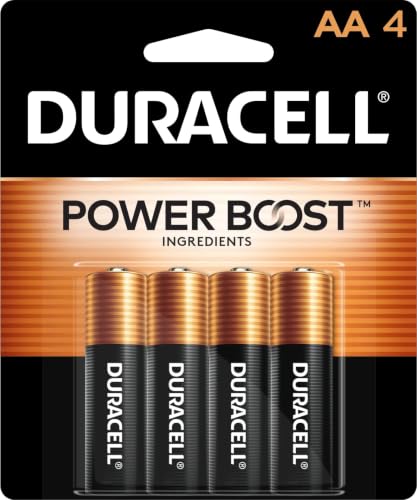
Duracell CopperTop keeps voltage steady across a wide temperature range, which matters when you need reliable power regardless of environment.
Duracell’s Powerboost AA4 pack delivers four alkaline cells built for sustained 1. 5-volt output. The CopperTop design leans into consistent power delivery across extreme temperatures, which makes it a practical pick for business environments or seasonal use. Each battery starts near 1.
6 volts and maintains performance without dramatic drops as it discharges.
Users gravitate toward these for devices that need reliability, like wireless presenters or outdoor sensors. The four-count bundle works well for testing compatibility before scaling up. Pricing per unit skews higher than bulk options, so households burning through batteries regularly may want to look elsewhere for volume deals.
|
2
|
ACDelco 40-Count Double AA Batteries, Maximum Power Super Alkaline Battery for Home and Of |

ACDelco’s 40-pack provides consistent 1.5V output across a large batch, reducing the chances of voltage variation between cells.
If you go through batteries quickly, the ACDelco 40-count pack earns its keep. Each Double A cell maintains the standard 1. 5-volt baseline, with a super alkaline formulation aimed at high-drain devices. The stainless steel casing adds durability, and the reclosable packaging keeps unused cells organized.
Voltage stays stable during heavy use.
This one’s ideal for households with multiple remote controls, toys, or wireless mice that never seem to stay stocked. The sheer volume means fewer reorder points. Some users note that runtime in ultra-high-drain gear like DSLR cameras could be better compared to premium brands, but everyday devices run without issue.
|
3
|
Energizer AA Batteries Alkaline Power, 32 Count Alkaline Double A Battery Pack |

Energizer’s 32-count pack balances recycled materials with steady 1.5V output, appealing to those who want reliability and a smaller environmental footprint.
Energizer’s 32-pack strikes a middle ground between bulk convenience and manageable quantities. Each cell runs at the standard 1. 5 volts, holding voltage well through the discharge cycle. These are built for daily use but also hold well in storage, lasting up to ten years before performance degrades.
Recycled steel content adds a layer of sustainability without sacrificing performance.
Preparedness-minded buyers like this pack for emergency kits and backup devices like portable radios. Cost per battery lands in the mid-range, so you‘re not paying premium prices for brand recognition alone. It won’t outperform the highest-tier alkalines in demanding setups, but it covers most household needs reliably.
|
4
|
EBL AA Batteries 20 Pack Non-Rechargeable 1.5V Alkaline Double A Batteries | Upgraded 2X P |
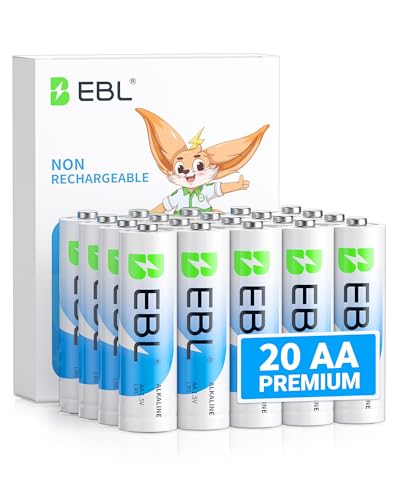
EBL’s 20-pack offers non-rechargeable 1.5V cells with an extended shelf life, making it a practical budget option for infrequent or emergency use.
EBL puts 20 alkaline AA batteries in a straightforward package, each rated at 1. 5 volts. Marketed as a step above basic formulas, they’re aimed at matching premium performance without the premium cost. Shelf life stretches to twelve years, which helps if you’re buying in bulk for storage.
No added mercury or cadmium keeps them safe for home use.
These work well for low-drain devices like wall clocks, remote controls, and smoke detectors. Budget-conscious buyers appreciate the per-unit savings. High-drain use cases like gaming controllers may drain them faster than premium brands. Still, they hold up adequately for occasional tasks and emergency backups.
|
5
|
Amazon Basics 20-Pack AA Alkaline Batteries, 1.5 Volt, 10-Year Leak-Free Shelf Life, for E |

Amazon Basics’ 20-pack delivers a no-frills 1.5V solution suitable for a wide range of standard AA-powered devices.
Amazon Basics keeps things simple with a 20-pack of 1.5-volt alkaline AA batteries. These are single-use cells designed for broad compatibility, from flashlights to toys. Voltage holds consistently under normal loads, and the ten-year leak-free shelf life offers peace of mind. Frustration-free packaging makes storage and access easy.
For everyday users, this pack covers more ground than expected at a competitive price point. The voltage delivery is dependable across most common devices. What it lacks in advanced features like extreme-temperature tolerance, it makes up for in sheer utility.
If you just need steady power without extras, this does the job.
|
6
|
Amazon Basics 36-Pack AA Alkaline Batteries, 1.5 Volt, 10-Year Shelf Life, for Everyday an |

The 36-count Amazon Basics variant scales up the 1.5V offering for households or small offices that use AA batteries frequently.
Doubled the count, same story: Amazon Basics 36-pack delivers 1. 5-volt alkaline power in bulk. Designed for regular or heavier usage, these cells maintain voltage reliably across mixed-device households. The ten-year shelf life matches smaller packs, so stocking up isn’t an afterthought.
Ideal for families or small offices that cycle through remotes, clocks, and toys constantly.
Fewer reorder cycles alone make this worth considering if you’re tired of running out at the worst time. Performance is consistent with the 20-pack variant. Users running high-drain devices continuously might find runtime a bit shorter than premium or industrial-grade options.
For mixed usage, though, it’s a practical compromise between cost and convenience.
|
7
|
Amazon Basics 8-Pack AA Alkaline High-Performance Batteries, 1.5 Volt, 10-Year Shelf Life, |

Amazon Basics’ 8-pack serves as a low-commitment trial run before committing to larger quantities based on real-world voltage needs.
At eight batteries, Amazon Basics’ high-performance pack is more of a starter kit than a bulk buy. Each cell runs at the standard 1. 5 volts, aiming for long-lasting power in everyday devices.
The ten-year shelf life means stored cells stay viable, whether they’re sitting in a drawer or deployed in emergency gear. Compact enough for testing with newer or pickier devices.
Cautious buyers like this option for verifying compatibility with gadgets that warn against non-branded batteries. Per-unit cost jumps significantly compared to larger packs, so this isn’t meant for regular users. Still, for households wanting to vet performance before scaling up, it removes some of the guesswork and waste.
|
8
|
Rechargeable AA Batteries with Charger, High Capacity 2800mAh Ni-MH Double A Battery, 4 Co |

Rechargeable NiMH cells bring sustainability to the table with a lower 1.2V nominal output that holds steady over far more cycles.
NiMH rechargeable AA batteries operate at a nominal 1. 2 volts, which is lower than alkaline 1. 5V cells from the start. However, they hold usable voltage much longer in many applications. This four-pack includes high-capacity 2500mAh cells and a smart charger with built-in protection against overcharging and discharge issues.
Voltage remains stable through hundreds of cycles.
Environmentally conscious users find long-term savings here, even with the higher upfront cost. The ability to recharge means fewer replacements and less waste. Devices calibrated strictly for 1.5V might not accept the lower starting voltage, so checking specs before switching is important. For general use, though, they’re plenty dependable.
|
9
|
Amazon Basics 200-Pack AA Industrial Alkaline Batteries, 1.5 Volt, 5-Year Storage Shelf Li |

Industrial-grade alkalines from Amazon Basics prioritize consistent voltage across large batches with longer shelf life for infrequent users.
Amazon Basics 200-pack targets bulk users who go through AA batteries in serious quantities. Each cell meets tight 1. 5-volt tolerances, aiming for uniformity across the entire set. Designed for large-scale deployment, these are built for warehouses, schools, or event teams that need predictable power without frequent restocking.
Shelf life is shorter than consumer variants at five years, reflecting the focus on near-term use.
Facilities managers love the per-unit cost drop when ordering in bulk. Uniform voltage across hundreds of cells matters when devices are deployed simultaneously in different locations. Minimalist packaging works if you’re distributing in storage areas.
However, smaller households would waste a lot of batteries before finishing a pack, making this a niche option for heavy users only.
|
10
|
4pc Panasonic AA Batteries Super Heavy Duty Power Carbon Zinc Double A Battery 1.5v |

Panasonic zinc-carbon cells offer the lowest-cost entry point at 1.5V, with predictable performance in light-duty applications.
Panasonic’s Super Heavy Duty AA batteries take the budget route with basic carbon-zinc chemistry. They operate at the standard 1. 5 volts but don’t aim for long runtimes or high-drain performance. The four-pack works in low-current devices like wall clocks or TV remotes where voltage precision matters less.
Each cell is tested to perform up to its expiration date.
Frugal buyers reach for these when equipping multiple low-use devices without breaking the bank. They work in emergencies or guest remotes where performance demands are low. Expect more voltage sag under load compared to alkaline options, and leakage is a concern if left in devices too long after dying.
Best kept for stationary, occasional-use devices.
No single AA battery type serves every use case perfectly. Alkaline cells dominate for high-drain gadgets, zinc-carbon works in low-draw situations, and rechargeables win on long-term value. Voltage differences, even between 1. 5V and 1. 2V, can affect device compatibility, so match chemistry to the application.
These picks cover the spectrum from daily essentials to storage-heavy emergency setups.
Avoiding Voltage Mismatch Errors
Recommended Products


Incorrect batteries or mixing old and new cells can cause uneven voltage distribution and damage devices. Swapping an entire set at once keeps electrical pressure balanced across the device. Always check for manufacturer-recommended chemistry types before installing.
- Never mix alkaline, lithium, or rechargeable batteries in one device.
- Replace all cells at once to prevent reverse charging effects.
- Remove dead batteries immediately to avoid corrosive leaks damaging contacts.
- Check polarity markings carefully before inserting new 1.5V cells.
- Store unused batteries away from metal objects to prevent short circuits.
Installing a battery backward interrupts the circuit immediately and can damage sensitive components. Many modern devices include protection against this, but older gear often doesn’t. Current flows in the wrong direction, generating heat and potentially frying internal chips.
Checking the spring contact and positive terminal alignment takes seconds but saves costly repairs. Proper orientation is usually marked inside the compartment or on the device housing.
Maximizing Shelf Life And Storage
Recommended Products


Cool, dry storage prevents premature voltage loss and corrosion. Temperature swings and humidity accelerate self-discharge, which drains batteries even when they’re not in use. Keeping cells in original packaging until use adds another layer of protection.
Keep batteries in their original factory-sealed wrappers whenever possible.
Store containers in a cupboard away from direct sunlight or heaters.
Ensure ambient temperature stays between 50°F and 70°F for optimal preservation.
Separate loose batteries using plastic organizers to prevent terminal contact.
Label opened packages with dates to track aging inventory efficiently.
Heat Acceleration Effects
Warm storage conditions speed up chemical reactions inside batteries, pushing self-discharge rates up sharply. A cell kept at room temperature will lose capacity faster than one stored in cooler conditions. Over months of unopened storage, voltage can drop enough to affect performance.
Following manufacturer guidelines for temperature-controlled environments makes a measurable difference in long-term readiness.
Cold Weather Considerations
Cold storage temporarily slows chemical activity, preserving voltage, but introduces moisture risks. When batteries transition from a cold space to warmer air, condensation can form on terminals. That moisture creates a conductive path between contacts, leading to gradual leakage. Letting sealed packaging reach ambient temperature before opening prevents this.
Doing so protects both the batteries and the devices they power.
AA batteries typically run at 1. 5 volts, with rechargeables usually sitting closer to 1. 2 volts. Alkaline is your go-to for high-drain devices, while zinc-carbon handles basic needs affordably. Rechargeable NiMH pays off over time if you use batteries frequently.
Always swap out full sets together, check expiration dates, and store in a cool dry place. A quick sweep of your device compartments for corrosion or mismatched cells can catch problems before they damage your gear.

- 10 Best Battery For Generator Ev Battery Bank Marine 2026 - October 27, 2026
- 10 Best Battery For Generator Ev Battery Bank Lto 2026 - October 27, 2026
- 10 Best Battery For Generator Ev Battery Bank Low Voltage 2026 - October 27, 2026