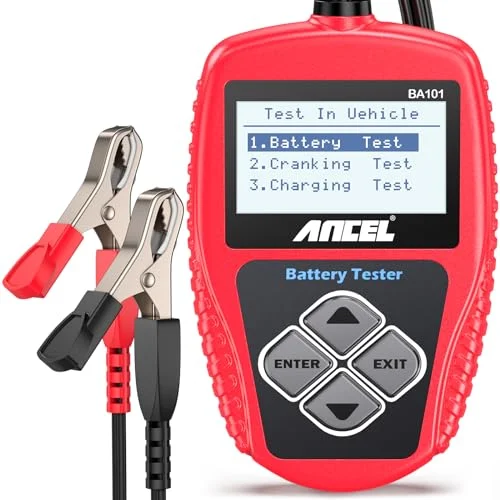
How Long To Leave Battery Disconnected To Reset Car Computer?
You’ve pulled the negative cable, the terminals are off, and now you’re standing in the driveway wondering if ten minutes is enough or if you need to leave it overnight. The honest answer depends on what you’re resetting and how the car’s modules hold memory. Most drivers overthink this.
A short disconnect clears some things; a long one clears more. This guide explains what actually happens when the battery is disconnected, how long each type of reset takes, and which disconnect tools make the job cleaner.
What Actually Resets When You Pull The Battery Cable
Disconnecting the battery doesn’t wipe everything at once. Different computers inside your car store data in different ways, and some forget instantly while others cling to memory for hours.
Your car runs on several computers, not one. The engine control module, transmission module, body control module, and infotainment unit each keep their own memory. Some of that memory lives in volatile RAM, which erases the moment power drops. Other data sits in non-volatile storage that survives a disconnect.
That’s why pulling the cable for five minutes might clear a check engine light but leave your radio presets untouched. The computers that relearn driving habits, fuel trim, and idle speed are the ones that reset when power is cut.
The ones holding VIN data, security codes, and emissions history usually don’t. Understanding this split is the key to knowing how long to leave the battery disconnected.
What Clears And What Stays After A Disconnect
| System | Clears On Disconnect | Typical Time Needed |
|---|---|---|
| Engine adaptive memory | Yes | 10-30 minutes |
| Transmission shift logic | Yes | 10-30 minutes |
| Check engine light codes | Sometimes | 15-30 minutes |
| Radio presets and clock | Yes | Immediate |
| Security and immobilizer codes | No | Never via disconnect |
| Emissions readiness monitors | Yes | 30+ minutes |
The table above explains why mechanics sometimes tell you to leave the cable off for half an hour and other times say overnight. It depends entirely on which module you’re trying to reset.
If you’re chasing a stubborn idle problem, the engine computer needs enough time for its capacitors to fully drain. If you’re just clearing a warning light, a few minutes often does it.
The capacitors inside these modules hold a residual charge even after the battery cable is removed, and that charge is what keeps volatile memory alive for a short window. Once the capacitors bleed down, the memory goes with it.
How Long Is Long Enough For A Full Computer Reset
There’s no single number that fits every car, but there is a practical range most technicians rely on. Here’s how to pick the right duration for your situation.
- 5 to 10 minutes: clears radio presets, clock, and some basic fault codes.
- 15 to 30 minutes: resets engine adaptive memory and transmission shift logic.
- 30 to 60 minutes: fully drains module capacitors for a clean relearn cycle.
- Overnight (8+ hours): the safest bet when you want every volatile memory gone.
- Two or more hours: unnecessary for most resets but harmless if you’re patient.
If you want a single answer that works on almost any car, leave the negative cable off for at least 30 minutes. That window covers capacitor drain on the vast majority of engine and transmission computers built in the last two decades.
Overnight is overkill for a simple code clear but smart when you’re dealing with a persistent drivability issue. The extra hours cost you nothing except convenience.
What matters more than the exact duration is doing the disconnect correctly: negative terminal first, and make sure the cable can’t spring back and touch the post while you wait.
Turn the ignition off and remove the key or fob from the vehicle.
Loosen the negative terminal nut with a wrench and lift the cable clear.
Tuck the cable aside so it cannot contact the battery post while disconnected.
Wait the full duration you’ve chosen before reconnecting anything.
Reconnect the negative cable, tighten it snugly, and start the engine.
Let the car idle for 10 minutes so the computer can relearn baseline values.
Tools That Make A Battery Disconnect Clean And Repeatable
If you reset your car’s computer more than once, wrestling a wrench onto the negative post gets old fast. A disconnect switch or remote kill switch lets you cut power in seconds without tools.
These are the options worth considering for anyone who wants a repeatable, safe way to disconnect the battery for a reset.
|
1
|
12V/24V 240A Remote Battery Disconnect Switch, Upgrade Smart Voltage Car Kill Switch Anti- |

The remote fobs let you cut power instantly for a reset, then restore it without touching the terminal.
This 12V/24V remote disconnect switch handles 240A continuous and 500A instant current, which covers most cars, trucks, and RVs. Two wireless fobs let you kill the battery from outside the vehicle, so you can start a reset timer without popping the hood.
It also watches voltage and cuts power automatically below 11. 8V, protecting the battery during long storage. The flame-retardant casing and 3mA standby draw make it practical to leave installed permanently.
For reset purposes, the remote makes the waiting period painless because you’re not leaving a loose cable dangling near the post. The main limitation is that the automatic low-voltage cutoff can surprise you if the battery is already weak.
It fits 12V and 24V systems, so it suits daily drivers and weekend RVs alike. Installation goes on the negative terminal, which is the correct side for a reset.
|
2
|
12V/24V Car Battery Disconnect Switch,Battery Cut Off Switch |

A twist of the top knob isolates the battery in seconds, making timed resets easy to repeat.
This manual disconnect switch uses a top-mounted rotary knob to break the circuit with a quarter turn. It handles 120A continuous and 1000A peak, which is plenty for starting most engines after you reconnect.
The built-in LED voltmeter shows battery voltage the moment it’s connected, so you can confirm the battery is healthy before you begin a reset. Copper internals resist corrosion and keep current flow stable over years of use.
The rotary design is simpler than a remote system and has no fobs to lose or batteries to replace. It fits 12V to 24V systems and mounts compactly, which helps in tight engine bays.
The tradeoff is that you still have to open the hood to use it, so it’s less convenient than a remote if your battery sits under a seat. For a straightforward timed reset, though, the knob is hard to beat.
|
3
|
BURMONG Battery Disconnect Switch 12V-48V 275A – Universal Battery Kill Switch/Cut Off for |
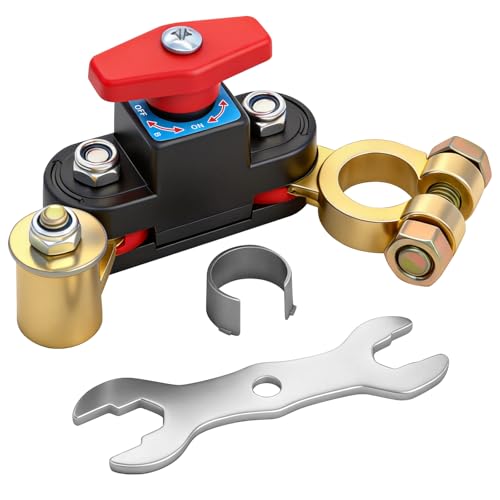
The 275A bolt-on switch isolates power cleanly for resets on cars, RVs, and boats alike.
BURMONG’s disconnect switch covers 12V through 48V systems and carries 275A continuous, so it works well beyond just cars. The bolt-on clamp installs on the negative terminal in minutes with basic tools, and the 90-degree ON/OFF rotation gives you a clear visual confirmation of the switch state.
A brass or copper clamp paired with an ABS housing resists corrosion, which matters if you’re using it in a marine or damp environment.
The wide voltage range makes this a good pick if you own multiple vehicles or a battery bank you want to isolate. For a car computer reset, the 90-degree throw is quick and leaves no ambiguity about whether power is cut.
The limitation is that it’s a manual switch, so you’ll still need to open the hood for each reset. The corrosion-resistant build means it holds up if you leave it installed year-round.
|
4
|
Top Post Battery Master Disconnect Switch |
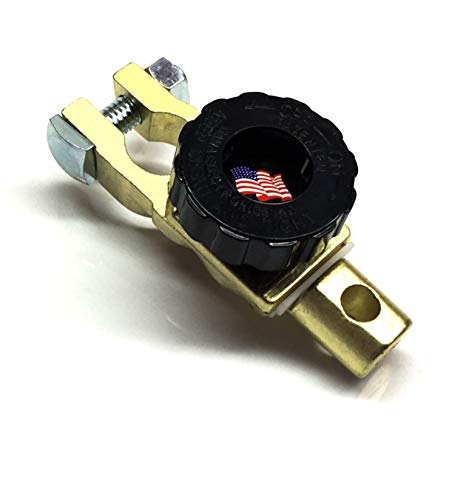
A brass knob switch that cuts power with a twist, ideal for quick repeated resets.
This top-post master disconnect switch is built for car, truck, boat, and RV batteries. The knob-type design means you loosen or twist the knob to cut power, then tighten it to restore the circuit. Solid brass construction resists rust and corrosion, so it stays reliable through repeated use.
Its purpose is straightforward: isolate the electrical system and eliminate any power draw when the vehicle isn’t in use.
For computer resets, the knob gives you a fast, tool-free way to start and end the disconnect window. It’s a good fit if you want something durable and simple without remotes or electronics.
The honest limitation is that it’s manual and offers no voltage readout, so you can’t monitor battery health through the switch itself. If your battery is easy to reach, that tradeoff is minor.
|
5
|
Spurtar Car Battery Disconnect Switch 6V 12V 24V Top Post, Green Knob, 2PCS | Quick Discon |

Two green-knob switches in one pack let you isolate power on two vehicles for resets.
Spurtar’s two-pack of disconnect switches fits top-post terminals with a 15-17mm cone, covering most standard negative posts. Each switch handles 125A continuous and 500A momentary current at 12V, enough for starting a car or truck after reconnection.
The green knob engages and disengages power by hand, so you can start a reset without any tools. Solid brass construction resists rust and corrosion for long-term use.
The two-pack is the standout feature here: you can install one on your daily driver and one on a second vehicle or mower. For reset purposes, hand-tightening the knob is quick and leaves no loose cable to worry about.
The 125A continuous rating is lower than some competitors, so it’s not the best choice for heavy-duty trucks or winch use. For standard passenger cars and light trucks, it’s more than adequate.
|
6
|
Battery Disconnect Switch, Malictele On/Off Side Post Battery Switch 275A 12-48V Power Cut |

The side-post design installs directly on the battery without extra cables, simplifying resets.
Malictele’s side-post disconnect switch is rated 275A across 12V to 48V systems. The side-post design with removable bolts connects directly to the battery, so you don’t need additional cables or connectors. That makes installation cleaner and keeps the engine bay tidy.
Removable bolts also make maintenance and replacement easier if the switch ever needs service. The secure connection reduces the risk of poor electrical contact and improves system stability.
Side-post batteries are common on GM vehicles, and this switch is tailored to that layout. For a computer reset, the direct connection means fewer points of failure and a cleaner isolation. The removable-bolt design is a genuine convenience for maintenance.
The limitation is that it won’t fit top-post batteries without adapters, so check your terminal type before buying. It’s also a manual switch, so no remote convenience.
|
7
|
TAINECTC 12/24V Universal Car Battery Disconnect Switch Leak Protector | Battery Cut Off S |

The 180-degree rotatable head fits tight engine bays where resets are otherwise awkward.
TAINECTC’s universal disconnect switch supports 12V and 24V systems with a 120A rated current and 1000A peak starting current. The 180-degree rotatable design lets you mount it at different angles, which helps in narrow engine bays where a fixed switch won’t fit.
Thickened pure copper provides strong conductivity, and the flame-retardant ABS housing resists corrosion. The tapered post ensures a firm fit on standard SAE and JIS battery terminals.
For resets, the rotatable head means you can position the switch so it’s reachable without contorting your hand. It works on both positive and negative terminals, though negative is the safer choice for a reset.
The honest limitation is that it’s not compatible with lithium or valve-regulated batteries, so it’s for lead-acid setups only. For cars, mowers, RVs, and yachts with standard batteries, it’s a flexible option.
|
8
|
Remote Battery Disconnect Switch 12v, Kill Switch for Car Truck, Anti-Theft | Remote Batte |
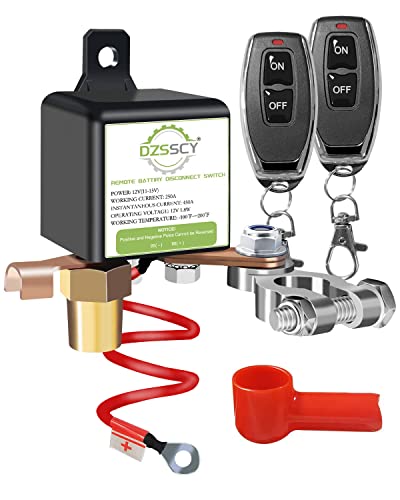
The remote cuts the negative terminal from inside the cab, so resets don’t require opening the hood.
This remote disconnect switch handles 250A rated and 450A instantaneous current, enough for cars, trucks, and RVs. It connects to the negative terminal and uses a remote to cut power, which means you can start a reset without leaving the driver’s seat.
The design eliminates one power cord compared to some competitors, simplifying installation. Pure copper wiring and larger module receivers improve remote reception range.
The convenience angle is real: if your battery is buried under a seat or in the trunk, a remote reset saves real effort. The manufacturer claims it can extend battery life by three to four times, which is optimistic but reflects the drain-prevention benefit.
The limitation is that you must disconnect the negative terminal specifically; doing the positive side can damage the battery and vehicle circuit. For 12V applications, it’s a solid remote option.
|
9
|
Remote Battery Disconnect Switch 12V, 240A, Kill Switch for Car Prevent Battery Drain, Ant |

A remote kill switch with a protective cover and magnetic latching for reliable, low-draw resets.
This 12V remote disconnect switch carries 240A and handles up to 1000A instant current with just 3mA standby draw. The magnetic latching mechanism is the standout feature: it uses magnetic principles to control the circuit, which keeps standby consumption extremely low.
An LED voltage display shows real-time battery voltage, and the unit automatically cuts power after 120 seconds if voltage drops below 11. 8V. A protective cover shields the switch from debris.
For reset work, the remote plus the automatic cutoff gives you two layers of battery protection. The voltage display lets you confirm the battery is healthy before and after a reset.
The limitation is that the automatic cutoff can trigger during a long reset if the battery is already weak, which may confuse the process. It’s designed for 12V systems only, so 24V trucks need a different model. The protective cover is a nice durability touch.
Any of these switches turns a battery disconnect from a wrench job into a few seconds of work, which makes timed computer resets far easier to repeat. Manual knobs suit simple setups, while remote switches shine when the battery is hard to reach.
Pick based on your terminal type and how often you plan to reset.
What To Do After You Reconnect The Battery
Reconnecting power is only half the job. The car’s computers need to relearn their baseline values, and skipping that step can leave you with a rough idle or odd shifting.
Start the engine and let it idle for 10 minutes without touching the throttle.
Drive normally for 10 to 15 minutes, mixing city and highway speeds.
Avoid aggressive acceleration during the first few drive cycles.
Expect the idle to settle within a day or two of normal driving.
Rescan for codes after a full drive cycle to confirm the reset worked.
Modern engine computers use adaptive learning to fine-tune fuel delivery and idle speed. When you disconnect the battery, those learned values vanish, and the computer falls back to factory defaults. The relearn process is how it rebuilds that map.
If you skip it, you may notice a slightly rough idle, delayed shifts, or a brief hesitation when accelerating. None of that means the reset failed. It means the computer is still writing its new baseline.
Give it a few drive cycles and the behavior usually smooths out on its own.
Mistakes That Make A Battery Reset Go Wrong
A reset is simple, but a few common errors can turn a five-minute job into a tow-truck call. Here’s what to avoid.
- Don’t disconnect the positive terminal first; always start with negative.
- Don’t leave the cable loose where it can touch the post mid-reset.
- Don’t disconnect while the engine is running or the key is on.
- Don’t assume every fault code clears; some require a scan tool.
- Don’t skip the idle relearn or you’ll chase phantom drivability issues.
- Don’t disconnect the battery to clear an emissions test failure; readiness monitors reset too.
The emissions readiness point catches a lot of people. Disconnecting the battery clears the monitors that an emissions test checks, and those monitors need a specific drive cycle to become ready again. You can pass a code scan and still fail an emissions test because the monitors aren’t set.
If you have an inspection coming up, reset the computer well in advance and drive enough to complete the cycle. Similarly, some manufacturer-specific codes live in non-volatile memory and won’t clear with a disconnect at all, no matter how long you wait.
For most cars, leaving the negative cable off for 30 minutes is long enough to reset the engine and transmission computers, and overnight is a safe bet if you want every volatile memory gone.
The next step is simple: pick a disconnect method that matches your terminal type, whether that’s a manual knob or a remote switch, so the next reset takes seconds instead of a wrench and a prayer.
Once you’ve reconnected, let the car idle and drive normally for a few cycles so the computers can relearn. That’s the whole job.

- Marine Chargers and Backup Batteries: 9 Options Compared (2026) - October 27, 2026
- LTO Cells vs. SLA Generator Batteries: 5 Options Compared (2026) - October 27, 2026
- 12V/24V Backup Batteries and the EcoFlow DELTA Pro 3 (2026) - October 27, 2026