Car Battery Reconditioning: Sulfation, Maintenance and Restoration Tools
A dead car battery often signals sulfation, not total failure. Lead sulfate crystals build up on plates over time, reducing capacity and preventing starts. My read is that many drivers replace batteries prematurely when restoration is actually possible. Reconditioning involves breaking down these deposits to restore electrical flow.
This process saves money and reduces waste if the battery structure remains intact. You need specific tools or additives to dissolve sulfur buildup safely. Not every battery can be saved, but many respond well to treatment. I’ve outlined the science behind recovery below and highlighted effective kits for DIY restoration.
Why Batteries Lose Power Overnight
Recommended Products


Understanding sulfation helps you decide if reconditioning is viable. This section covers the chemical changes inside lead-acid cells.
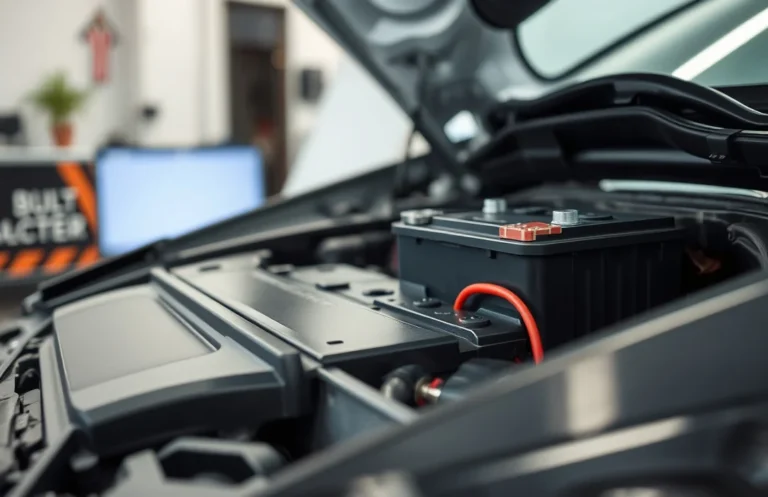
Lead-acid batteries generate power through a chemical reaction between lead plates and sulfuric acid electrolyte. Over time, lead sulfate crystals form on the plates during discharge cycles. Normally, charging reverses this process. However, incomplete charging leaves hard sulfate deposits behind. These crystals act as insulators, blocking current flow.
The battery holds less charge and struggles to start engines. Temperature extremes accelerate this degradation. Heat increases water loss, while cold thickens the electrolyte. Both conditions promote permanent sulfation. If caught early, pulse technology or chemical additives can dissolve these crystals. Older batteries with physical plate damage cannot be fixed.
I would recommend testing voltage to determine viability before starting any restoration effort.
- Slow engine cranking indicates reduced cold cranking amps.
- Dim headlights suggest insufficient power storage capacity.
- Corrosion on terminals blocks efficient electrical transfer.
- Battery age over three years increases sulfation risk.
- Voltage below 12.4 volts signals partial discharge state.
Safety Steps Before Starting Work
Recommended Products


Working with batteries involves hazardous acids and explosive gases. Follow these rules to stay safe during maintenance.
Wear rubber gloves and safety goggles to protect skin and eyes from acid splashes.
Work in a ventilated area to avoid inhaling hydrogen gas released during charging.
Disconnect the negative terminal first to prevent accidental short circuits.
Neutralize spilled acid with baking soda and water immediately after contact.
Keep open flames away from the battery to prevent hydrogen gas ignition.
Lead-acid batteries contain sulfuric acid, which causes severe burns on contact. Hydrogen gas builds up during charging and can explode if ignited. Always remove jewelry to avoid accidental shorting against terminals. Use insulated tools to minimize shock risk. Check for cracks in the casing before applying any treatment.
A damaged case leaks acid and cannot be repaired safely. If the battery feels hot, let it cool before handling. Never mix different chemical additives unless specified by the manufacturer. Proper disposal of old electrolytes follows local hazardous waste regulations. Wearing safety gear ensures you complete the job without injury.
Tools To Restore Battery Health
Recommended Products


Selecting the right kit depends on your battery type and damage level. Chemical additives work for internal sulfation, while cleaning kits address external corrosion. Electronic desulfators offer long-term maintenance for multiple vehicles. I would choose a solution that matches your technical comfort level.
These picks provide evidence-based methods for extending battery life effectively.
|
1
|
BATTERY GUYZ Battery Restorer and Reconditioning Solution for Golf Carts, Cars, Trucks, Bo |

This additive dissolves internal sulfate deposits to restore capacity in lead-acid cells.
Battery Guyz Restorer uses industrial strength electrolytes to break up harmful sulfates on battery plates. It works for 6V, 8V, and 12V lead-acid batteries in cars and golf carts. The formula penetrates deep into cells to clean deposits that reduce performance.
One gallon treats multiple small auto batteries or one deep cycle unit. It includes gloves and a funnel for safe application. Users add two to three ounces per cell depending on voltage. This liquid solution targets internal chemical imbalance rather than external connections.
Best results occur in batteries aged one to four years with mild sulfation. It does not work on gel batteries or completely dry cells. Frozen batteries must be replaced instead of treated. The product has no expiration date, allowing long-term storage. Regular annual use helps maintain peak performance.
It is not suitable for batteries below specific voltage thresholds. I would check voltage before application to ensure viability. This kit offers a cost-effective alternative to premature replacement.
|
2
|
Patravious 2026 NEW Tools 8PCS Battery Service Kit, CR-V Battery Maintenance Kit, Battery |

This eight-piece tool set removes terminal corrosion to improve electrical contact.
Patravious Battery Service Kit includes pliers, wrenches, and brushes for thorough cleaning. The terminal cleaner removes contaminants that cause poor contact and rust. Fish mouth pliers grip terminals securely for safe removal without damage. Wrenches fit standard bolt sizes found in most vehicle engine compartments.
The kit comes with a storage bag for organized transport. Tools feature anti-slip handles to reduce shock risk during use. This manual approach addresses external connection issues directly.
Ideal for DIYers needing basic maintenance tools for lead-acid batteries. It helps tighten loose bolts to ensure circuit stability. The puller assists in separating wire and terminal connections safely. Not suitable for internal cell repair or desulfation. Users must combine this with a charger for full reconditioning.
The steel construction ensures durability for repeated use. It fits standard automotive battery configurations well.
|
3
|
NOCO NCP2 M401 Battery Terminal Cleaner and Protector Kit with Brush | Clean and protect c |

NOCO kit neutralizes corrosion and seals posts to prevent future buildup.
NOCO NCP2 M401 Kit dissolves corrosion instantly with a spray-on formula. It cleans posts and seals them against acid fumes. The brush scrubs away stubborn deposits from terminals and clamps. This all-in-one solution stops corrosion for the life of the battery.
Made in the USA, it has been used professionally since 1914. The protector creates an impenetrable barrier on metal surfaces. Improved electrical flow enhances cranking ability significantly.
Best for users dealing with heavy white or green crust on terminals. It prevents recurrent corrosion better than plain water cleaning. The spray design reaches tight spaces around cable clamps. Does not fix internal sulfation or low voltage issues. Use it after tightening connections for maximum benefit.
Safe for car, truck, boat, and RV batteries. Easy rinsing makes cleanup quick and mess-free.
|
4
|
Dual Battery Isolator Kit 12V – 140 Amp Multi-voltage 12v or 24v Kit (VSR) for Dual Batter |

This isolator manages dual battery systems to prevent drain and ensure charging.
Dual Battery Isolator Kit uses a voltage sensitive relay for automatic switching. It connects primary and auxiliary batteries without voltage drops. The system engages at 13. 4V and cuts out at 12. 8V to protect start power. Includes red and black cables plus brass terminals for easy installation.
IP65 rating ensures resistance to water and dust in harsh conditions. Compact size fits under hoods or in marine compartments. Solid-state design offers durability for off-road use.
Suitable for RVs, trucks, and boats with secondary power needs. Prevents accessory drain from killing the starting battery. Requires basic wiring knowledge for proper setup. Not a reconditioning tool for single dead batteries. Best for maintaining health in multi-battery setups. Backed by a twelve-month warranty for peace of mind.
Ensures reliable power distribution during long trips.
|
5
|
EZRED BMK1914 5-Piece Battery Maintenance Kit |

EZRED kit provides professional grade tools for safe terminal service.
EZRED BMK1914 Kit includes a four-in-one terminal cleaner and ratchets. The battery plier grips posts firmly for safe removal. A spreader tool opens clamps without bending metal. Ten millimeter and five-sixteenths inch ratchets fit common bolt sizes. Tools come in a roll-up case for portable storage.
Ergonomic designs reduce hand fatigue during tough jobs. Professional grade steel ensures long-term reliability.
Perfect for mechanics and serious DIYers needing durable hand tools. Handles stubborn terminals better than cheap plastic alternatives. Does not include chemical cleaners or electronic desulfators. Use it alongside a charger for complete maintenance. The compact case fits easily in glove boxes. Ideal for quick roadside repairs or garage work.
Quality construction justifies the investment for frequent users.
|
6
|
7pcs Battery Service Kit, Steel Terminal Pliers Wrench Brush Spreader Puller, Battery Main |
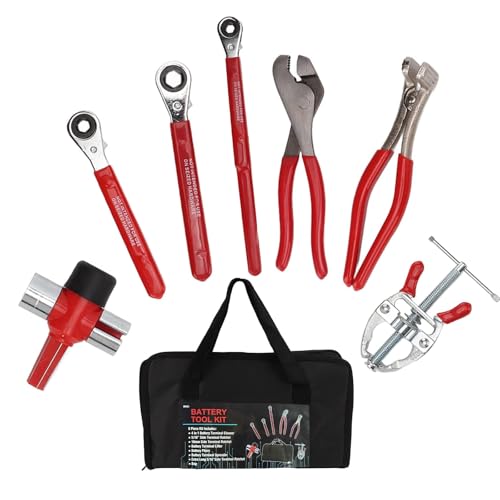
Seven-piece set offers versatile tools for removing and cleaning terminals.
This Battery Service Kit features a puller with hardened jaws. Jaws open from one-quarter to one-and-one-eighth inches for fit. Center screw pushes down on posts to lift terminals safely. Cross terminal brush cleans both clamps and binding posts. Nut pliers with serrated jaws grip nuts in narrow spaces.
Wrenches match standard five-sixteenths and ten millimeter sizes. Storage bag keeps components organized for travel.
Good for removing stuck terminals without damaging posts. The puller prevents leverage damage common with screwdrivers. Brush bristles withstand heavy corrosion scraping. Not suitable for internal battery repair tasks. Works well for routine maintenance on older vehicles. Steel construction resists bending under high torque. Affordable option for basic cleaning needs.
|
7
|
Battery Desulfator Reconditioner for 12V-72V Lead-Acid Batteries, Pulse Repair to Restore |

Electronic desulfator uses pulses to dissolve sulfate crystals internally.
Battery Desulfator Reconditioner sends high-frequency low-current pulses into cells. It works on 12V to 72V lead-acid systems including AGM and Gel. The device rejuvenates batteries by breaking down lead sulfate buildup. Restoration takes two to four weeks depending on condition. Thirty intelligent cycles ensure thorough recovery of lost capacity.
Aluminum shell dissipates heat for safe long-term operation. Smart cutoffs prevent overcharging or reverse polarity damage.
Ideal for solar, marine, and golf cart battery maintenance. Extends lifespan significantly compared to passive storage. Requires patience as results are gradual, not instant. Must be paired with a charging cycle for best effect. Not a jump starter or rapid charger. Protects against future sulfation during standby periods.
Compatible with various battery chemistries within lead-acid family.
|
8
|
Car Battery Charger 12V Smart Automotive Battery Trickle Charger Maintainer | 7-Stage Safe |

Smart charger combines quick charging with pulse repair for sulfation.
Car Battery Charger delivers six amps for quick replenishment of power. Seven-stage safety control prevents overcharge and short circuits. Pulse repair function detects and breaks down sulfate layers automatically. LCD screen displays voltage, current, and temperature status clearly. Winter mode compensates for cold weather charging needs.
Works on AGM, Gel, SLA, and flooded batteries. Plug-and-play design simplifies operation for beginners.
Cannot activate totally dead batteries with zero voltage. Best for maintaining health during winter storage months. Visual feedback helps monitor progress without guesswork. Compact size stores easily in garages or trunks. Multi-protection system ensures safe unattended operation. Good for regular maintenance rather than emergency jumps.
Extends cycle life through intelligent charging algorithms.
|
9
|
CTEK (40-255) CT5 Time to Go-12 Volt Battery Charger and Maintainer with Accessories (Char |

CTEK charger offers specialized reconditioning mode for deeply discharged units.
CTEK CT5 Time to Go Charger features countdown timer technology. LED indicators show remaining time until full charge completion. Start readiness indicator confirms enough power for engine ignition. Multiple programs include normal, AGM, and reconditioning modes. Temperature compensation adjusts output for ambient conditions. Fully automatic operation requires no user intervention.
Connect and forget design ensures hassle-free maintenance.
Premium choice for users wanting precise control over charging stages. Reconditioning mode revives deeply sulfated batteries effectively. Higher price point reflects advanced engineering and reliability. Suitable for luxury cars and sensitive electronics. Compact form factor fits in small storage spaces. Trusted brand reputation ensures consistent performance.
Ideal for those prioritizing battery longevity over speed.
|
10
|
Ampper Battery Terminal Cleaning & Repair Kit, Battery Terminal Cleaning Kit with 5 Shims, |

Ampper kit repairs worn posts with shims for secure electrical connection.
Ampper Cleaning and Repair Kit includes five lead shims for posts. Shims trim to fit nineteen millimeter positive and seventeen millimeter negative cones. Stainless steel brushes clean dirt and corrosion from surfaces. Twelve fiber washers prevent future corrosion around terminals. Package provides all parts needed for post repair.
Flexible lead material conforms to irregular shapes easily. Restores tight fit for loose or undersized posts.
Best for batteries with worn posts that slip clamps. Shims provide steady conductive connection without welding. Requires trimming to match specific post dimensions. Does not fix internal cell failures or sulfation. Use with cleaning brushes for comprehensive terminal care. Affordable solution for extending usable life of old units.
Prevents intermittent starting issues caused by poor contact.
These tools address different aspects of battery health, from internal chemistry to external connections. Additives and electronic desulfators target sulfation, while cleaning kits improve contact. I would choose based on whether your issue is internal capacity loss or terminal corrosion. Proper selection ensures effective restoration without unnecessary expense.
How To Maintain Battery Health Long Term
Recommended Products


Preventing sulfation is easier than fixing it. Adopt these habits to extend battery life significantly.
Maintenance Schedule
| Action | Frequency | Benefit |
|---|---|---|
| Clean terminals | Every 6 months | Prevents corrosion buildup |
| Check voltage | Monthly | Detects early discharge |
| Top up water | Quarterly | Maintains electrolyte levels |
| Use trickle charger | Winter storage | Prevents deep discharge |
Regular maintenance prevents the conditions that lead to premature failure. Keep terminals clean and tight to ensure efficient charging. Avoid short trips that do not allow the alternator to fully recharge the battery. Park in shaded areas to reduce heat stress on the casing.
Use a smart maintainer during long periods of inactivity. Monitor electrolyte levels in flooded batteries and add distilled water as needed. These simple steps reduce sulfation risk and extend service life.
When To Replace Instead Of Repair
Not every battery can be saved. Recognize the signs of irreversible damage to avoid wasted effort.
- The casing is cracked or leaking acid fluid.
- Voltage remains below threshold after full charge.
- One cell shows significantly lower specific gravity.
- The battery is older than five years of service.
- Physical plate damage is visible upon inspection.
Attempting to recondition a physically damaged battery is dangerous and ineffective. Cracks allow acid to escape, posing environmental and safety hazards. Internal short circuits caused by shed plate material cannot be reversed. If a battery fails to hold a charge after multiple conditioning cycles, it is time for replacement.
Recycling old batteries ensures proper handling of lead and acid. New batteries offer reliable performance and warranty protection. Know when to stop repairing to save time and money.
Reconditioning a car battery works by reversing sulfation through chemical or electronic means. Start by testing voltage and cleaning terminals to rule out simple fixes. Use a desulfator or additive for internal recovery if the case is intact. Replace the battery if physical damage or extreme age prevents restoration.
I would take action today by checking your battery voltage with a multimeter.

- Marine Chargers and Backup Batteries: 9 Options Compared (2026) - October 27, 2026
- LTO Cells vs. SLA Generator Batteries: 5 Options Compared (2026) - October 27, 2026
- 12V/24V Backup Batteries and the EcoFlow DELTA Pro 3 (2026) - October 27, 2026