How To Reset Ebike Battery?
When an ebike battery freezes or stops responding, it’s often the BMS hitting the brakes due to a safety trigger, not because the cells are dead. I’ve seen riders swap out perfectly good packs thinking they’re toast, when a simple reset could have saved the day.
Resetting usually means balancing out uneven cells, clearing error codes, or in tougher cases, swapping the management board. This guide breaks down the electrical logic so you can tell if your pack is recoverable or if it’s time for a new one.
The tools and replacements below tackle common reset scenarios safely, without risking fire or voiding your warranty.
Why Ebike Batteries Lock Out
Recommended Products


Figuring out why a battery went quiet is the first step to knowing if a reset will work or if you need a replacement. Most lockouts are just the system protecting itself from voltage dips or heat spikes.
Inside every modern lithium pack is a Battery Management System (BMS) watching each cell group like a hawk. If one group drops way lower than the others during a ride, the BMS cuts power to stop damage. It feels like total failure, but it’s actually a reversible safety mode.
Extreme cold or heat can also trigger temporary lockouts as internal resistance shifts or charging generates too much warmth. Even a hard bump can jar sense wires loose inside, fooling the system into shutting down.
To really diagnose this, you need to measure individual cell voltages, not just the total pack output. A true reset fixes that underlying imbalance or fault instead of just bypassing the safety net.
- Measure individual cell group voltages before attempting any reset procedure on locked packs.
- Never bypass BMS protection circuits to restore power as this creates serious fire hazards.
- Check all connector pins for corrosion or loose connections before assuming internal battery failure.
- Allow frozen batteries to reach room temperature naturally before testing or charging them.
- Document error codes displayed on controllers to identify specific BMS fault categories accurately.
- Use balanced chargers specifically designed for lithium chemistry when attempting cell recovery.
Tools And Packs For Battery Recovery
Recommended Products


Sometimes resetting an ebike battery means rebalancing what you have; other times, it means swapping in a fresh pack entirely. These picks cover diagnostic testers, dual-battery balancers to fix voltage mismatches, and new batteries with tough BMS protection.
Whether you’re just starting to troubleshoot or looking to restore the whole system, there’s something here for every stage of the process.
|
1
|
SZWEDI 40A Dual Battery Balancer for 750W/1000W Electric Bike Two Battery Discharge Conver |

Balances two batteries at once to fix the voltage mismatches that trip BMS lockouts on 750W-1000W setups.
The SZWEDI 40A Dual Battery Balancer lets you hook two packs in parallel so they equalize their voltages automatically while discharging. This potted aluminum unit handles regen braking currents without letting mismatched packs fight each other.
Its waterproof build keeps moisture out of the circuitry during wet rides, and the flame-retardant housing adds a crucial safety layer when dealing with high-capacity lithium systems that have voltage discrepancies.
Installing this can bring a ‘dead’ pack back to life if the issue is just minor cell imbalance, all without cracking open sealed cases.
This is ideal if you run a dual-battery setup and get premature cutoffs even though you know there’s juice left. The 40A rating holds up well for higher-power motors pulling steady current on hills or with heavy cargo.
You’ll need basic wiring skills and proper XT60 crimping to get reliable connections. Just keep in mind it only works with same-voltage pairs, so don’t try mixing 48V and 52V packs.
Also, make sure both batteries are similar in age and chemistry before connecting them, or you might stress the newer cells while trying to balance the older ones.
|
2
|
SEENRONGYUAN 48V 15Ah E-Bike Battery, Silver Fish Lithium Batteries 30A BMS, Safe Lock, Le |

A replacement 48V 15Ah pack with a built-in 30A BMS skips the reset hassle entirely when the original battery is done.
If resetting isn’t an option, SEENRONGYUAN’s 48V 15Ah Silver Fish battery is a solid direct replacement. Its integrated 30A BMS guards against the overcharging, deep discharging, and short circuits that often cause permanent lockouts.
The LED indicators let you check charge status at a glance, helping you avoid those deep discharge events that trigger protection modes. With an IP65 waterproof shell and an anti-theft lock, it’s built for daily commuting in all kinds of weather.
The Grade A cells deliver consistent power for motors from 0 to 1000W, and it comes with a 54. 6V charger ready to go.
This is a great fit for commuters whose original battery has suffered a permanent BMS failure or lost significant capacity. The silver fish shape fits many mid-drive and hub-motor frames using standard rails. At 9. 3 pounds, it’s light enough to carry indoors for charging or winter storage.
One thing to watch: double-check your frame clearance before buying, as the dimensions might be tight on some compact e-bikes. The 30A continuous rating handles moderate assist levels well, but if you have a tuned 1000W controller demanding huge burst currents, it might limit your peak power slightly.
|
3
|
TLALVG 48V13Ah Ebike Battery, Lithium Battery for 250W 350W 500W 750W 1000W Bicycles Motor |
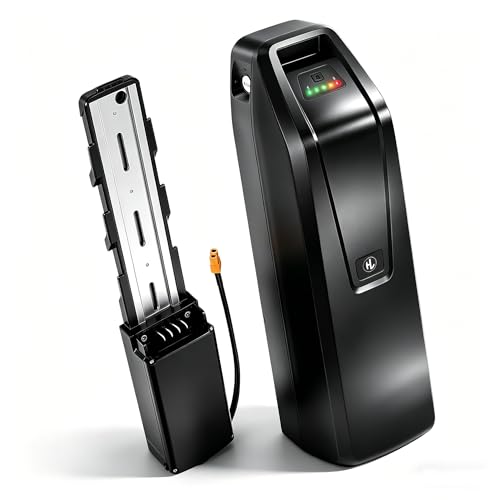
An affordable 48V 13Ah replacement with a 25A BMS resets your system by swapping out faulty packs that won’t recover.
TLALVG’s 48V 13Ah battery offers a budget-friendly way to ‘reset’ your system by simply replacing a pack that won’t come back. The 25A BMS board prevents common issues like short circuits and over-discharge that permanently lock cheaper batteries.
Built with Grade A cells, it aims for a long lifespan if you stick to the rated parameters. It charges up fully in about six to seven hours with the right charger.
The included base and safe lock make installation on compatible down-tube mounts straightforward, so no custom fabrication is needed.
This suits riders on a budget whose original battery is beyond saving via balancing or BMS tricks. The lighter 3. 9kg weight is a plus for smaller frames where heavy batteries mess with handling. XT60 connectors provide secure, vibration-resistant connections for rough terrain.
The main limitation is the lower 25A continuous rating compared to premium options, which might restrict peak assist on very powerful motors. Just verify your controller’s amperage needs match this spec to avoid tripping protection during aggressive acceleration or steep climbs.
|
4
|
VODIPOWER 48V Ebike Battery, 13Ah/16Ah/20Ah Lithium Battery Pack with 30A BMS for Electric |

A USB-equipped 48V pack with a 30A BMS lets you reset the system and charge devices while troubleshooting.
VODIPOWER’s 48V 13Ah battery combines standard e-bike power with a USB port, which is handy for field diagnostics. The integrated 30A BMS protects against overcharge and short circuits, the usual suspects that force resets.
An LED indicator lets you quickly check the state of charge without firing up the whole bike electronics during testing. With a security lock and waterproof housing, it stands up to theft and weather during long outdoor parking stints.
The female XT60 discharge connector matches most controllers for easy plug-and-play installation on 0-1000W systems.
This is practical for riders doing roadside diagnostics who need to keep their phone charged while figuring things out. The 5-pin base design ensures a secure mechanical connection, so vibrations won’t knock it loose. At 7. 7 pounds, it balances portability with enough capacity for typical commutes.
One drawback is the fixed 13Ah capacity, which limits range extension compared to larger variants in the same line. Also, confirm your battery compartment can fit the 14. 2-inch length before ordering to avoid fitment issues with compact frames or integrated enclosures.
|
5
|
48V Ebike Battery Built-in 30A BMS, Waterproof Design, Lighter Weight, Higher Energy Densi |

A waterproof 48V 20Ah pack with an upgraded 30A BMS aims to prevent future reset needs through superior protection.
LOLRKO’s 48V 20Ah battery focuses on prevention rather than cure, using an upgraded 30A BMS to guard against multiple fault types simultaneously. Higher energy density lithium cells replace traditional lead-acid packs, offering better stability under load.
The waterproof sealing eliminates water ingress failures that often require taking the pack apart to dry. Comprehensive protection covers overcharge, over-discharge, over-current, overload, and short circuits all at once. Plus, their 24-hour customer service is there for technical support if you run into installation questions or weird BMS behavior.
This targets riders who want long-term reliability to minimize future reset incidents through proactive protection. The 20Ah capacity significantly extends range over standard 13Ah packs, reducing how often you charge and wear on the cells. It’s suitable for tricycles and scooters too, thanks to versatile mounting compatibility.
Just make sure your charger specs match the included unit to maintain optimal cell balancing during maintenance charges. The heavier weight compared to lower-capacity options might affect handling on lightweight racing-style frames designed for minimal mass.
|
6
|
DIY E-Bike Repair Manual: Diagnose and Fix Battery, Motor, and Controller Problems Without |

A repair manual teaches systematic battery diagnosis, helping you decide between a reset and a replacement.
This DIY E-Bike Repair Manual gives you structured procedures to pinpoint exactly why a battery locked up. It covers BMS troubleshooting, cell testing methods, and controller communication protocols essential for accurate assessment. Step-by-step instructions help distinguish between recoverable protection trips and permanent cell degradation that needs replacement.
The technical explanations clarify why certain reset methods work while others risk damaging healthy components unnecessarily. The knowledge applies across multiple brands and chemistries, not just one proprietary system.
This is an essential reference for mechanically inclined riders who want to understand battery internals before attempting any resets. It enables confident decision-making about whether professional repair services offer value versus DIY approaches. It’s particularly useful for diagnosing intermittent faults that don’t show up consistently during shop visits.
Just note that it assumes you have basic multimeter skills and electrical safety awareness before starting. The digital format allows quick searching during active troubleshooting, unlike printed manuals that require flipping through dense sections.
|
7
|
Autoro Dual Battery Discharge Connector, E-Bike 20V-80V DC XT60 Port Adapter Capacity Doub |

A 50A dual-battery adapter enables safe parallel connection for voltage balancing without complex rewiring.
Autoro’s Dual Battery Discharge Connector simplifies parallel connections for voltage equalization during reset attempts. Built-in diodes prevent reverse current flow that could damage a weaker battery during balancing. It operates as an independent power source, maintaining separation between inputs to reduce cross-interference risks.
Auto power selection intelligently switches to the higher-voltage battery, ensuring uninterrupted supply during transitions. XT60 ports accommodate standard e-bike connectors, making setup tool-free for most hobbyists and pros alike.
This is useful for technicians managing multiple test batteries who need quick parallel connections for balancing. The 50A rating exceeds typical single-battery demands, providing headroom for high-draw motor testing. Its compact form factor integrates easily into existing wiring harnesses without permanent mods or soldering.
One constraint is the voltage matching requirement between connected batteries, preventing mixed-voltage experiments. It works best paired with identical battery models to ensure predictable balancing behavior and avoid unexpected cutoffs during extended discharge sessions.
|
8
|
SZWEDI 30A Dual Battery Balancer for 500W Electric Bike Two Battery Discharge Converter fo |

A 30A balancer for 500W-750W systems corrects moderate voltage discrepancies triggering BMS lockouts.
SZWEDI’s 30A Dual Battery Balancer targets mid-power e-bike systems experiencing voltage imbalance issues. Potted waterproof construction protects sensitive balancing circuitry from moisture damage during all-weather operation. Flame retardant materials reduce fire risk when connecting batteries with significant state-of-charge differences.
The aluminum housing dissipates heat generated during high-current balancing cycles more effectively than plastic alternatives. It’s compatible with regenerative braking systems, allowing energy recovery during deceleration without disrupting the balance function.
This is appropriate for 500W-750W motor systems where 40A versions exceed necessary capacity and add unnecessary cost. The smaller physical footprint eases installation in tight frame spaces near bottom bracket areas. It works reliably with same-voltage battery pairs sharing similar age and degradation characteristics.
The limitation includes a lower current ceiling, restricting use with high-performance motors drawing sustained 30A+ loads. Verify battery connector polarity matches balancer input orientation before first connection to prevent immediate component damage.
|
9
|
SZWEDI Dual Battery Pack Switch Balancer Double Battery Discharge Converter for E-Bike 500 |

A compact Gen II balancer fits inside frames for permanent voltage correction without external mounting hardware.
SZWEDI Generation II Dual Battery Balancer achieves remarkable miniaturization at just 34x45x18. 5mm weighing 73 grams. That small size enables internal frame mounting, hiding wiring completely from view and weather exposure. A wide 10-100V input range accommodates various battery voltages provided both packs share identical nominal ratings.
Antiflaming covers and flexible silicon wires enhance safety during installation in confined metal spaces. Included XT60 extension cables simplify routing to battery connection points without additional wire purchases or splicing work.
Perfect for custom builds prioritizing clean aesthetics with hidden electrical components inside frame tubes. It supports regen systems recovering braking energy while maintaining balanced discharge between dual battery sources. The lightweight design adds negligible mass compared to external balancers requiring separate mounting brackets or zip ties.
The constraint involves the same-voltage requirement, limiting flexibility for mixed battery configurations in experimental setups. Installation demands careful wire management to prevent chafing against sharp frame edges during long-term vibration exposure.
|
10
|
WGFOIP Ebike Tester, Portable Ebike Diagnostic Tester with Indicator |
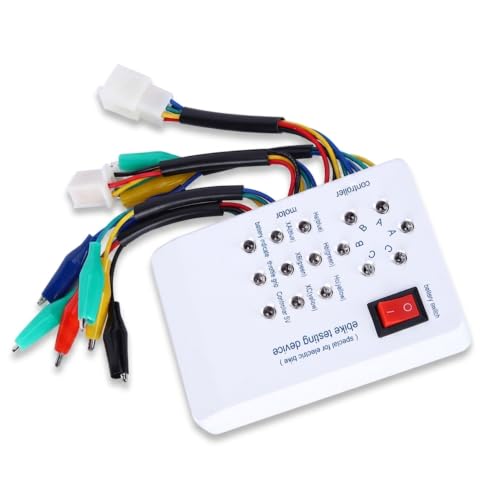
A portable diagnostic tester identifies whether a battery reset is needed or if motor/controller faults exist.
WGFOIP Ebike Tester isolates battery problems from motor and controller faults during reset troubleshooting sessions. Its self-diagnosis function verifies tester operation before connecting to expensive e-bike components, preventing misdiagnosis errors. Compact plastic construction survives drops and impacts common during field service work outside workshop environments.
Multi-device compatibility tests brushless motors, controllers, and brake levers using standardized connection interfaces. Lightweight portability enables carrying alongside regular tools without adding significant burden to mobile repair kits.
This is a critical first step before investing time in battery reset procedures that may not address the actual fault source. It eliminates guesswork when symptoms could originate from multiple system components showing similar failure behaviors. Field-use durability suits emergency roadside assessments determining whether a ride-home is possible safely.
The limitation includes inability to measure individual cell voltages required for detailed battery health assessment beyond pass/fail. Best combined with multimeter measurements for comprehensive diagnostics covering both electronic signals and raw electrical parameters.
These products cover the full spectrum of ebike battery reset scenarios, from diagnosis through correction to complete replacement. Diagnostic tools identify root causes before you intervene. Balancers address voltage imbalances triggering protective lockouts. Replacement packs eliminate reset needs entirely when cells suffer irreversible degradation.
Selecting the right solution depends on accurate fault identification rather than trial-and-error approaches that risk further damage.
Safe Reset Procedures After Diagnosis
Recommended Products


Once you’ve identified the specific fault type, following proper reset sequences prevents injury and equipment damage. Different fault categories require distinct approaches with varying risk levels and success probabilities.
Disconnect battery from controller and charger before beginning any reset procedure to eliminate shock risks.
Measure individual cell group voltages using multimeter probes on BMS sense wire connector pins carefully.
Connect balanced charger set to appropriate chemistry profile if cell groups show recoverable voltage differences.
Monitor charging process continuously watching for abnormal heating or swelling indicating internal cell damage.
Reconnect battery to controller only after confirming all cell groups read within manufacturer specified tolerance ranges.
Test system under light load initially before returning to normal riding patterns to verify reset success.
Successful resets depend entirely on accurate initial diagnosis distinguishing between reversible protection states and permanent damage. Attempting to reset physically damaged cells creates serious fire hazards regardless of procedure correctness. Always work in well-ventilated areas away from flammable materials when handling lithium batteries showing fault symptoms.
Keep a Class D fire extinguisher accessible during all battery work as standard ABC extinguishers fail against lithium fires. Document voltage readings before and after reset attempts, creating baseline data for future troubleshooting reference.
If uncertain about any step, consult qualified technicians rather than proceeding based on incomplete understanding of lithium battery chemistry risks involved.
Preventing Future Battery Lockouts
Recommended Products


Most battery resets become necessary due to preventable usage patterns accelerating degradation or triggering protection thresholds. Adopting better habits extends service life and reduces lockout frequency significantly over ownership periods.
Charging Discipline Matters Most
Avoid leaving batteries at full charge for extended periods as this accelerates calendar aging and increases internal resistance. Charge to eighty percent for daily commuting, reserving full charges only for maximum-range rides requiring complete capacity.
Never charge immediately after high-load riding when cells remain hot from discharge currents generating excess heat. Allow a thirty-minute cooling period before connecting the charger, enabling temperature normalization throughout the cell stack. Use only manufacturer-specified chargers matching battery voltage and chemistry profiles precisely to prevent overvoltage damage.
Store partially charged around fifty percent during extended non-use periods, maintaining cell stability without stress from full or empty states.
Temperature Awareness Prevents Damage
Lithium cells suffer permanent capacity loss when charged below freezing temperatures due to lithium plating on anodes. Bring batteries indoors reaching room temperature before connecting the charger during winter months consistently. Avoid direct sunlight exposure during summer parking as case temperatures can exceed safe operating limits rapidly.
High ambient temperatures combined with discharge heating compounds thermal stress, accelerating degradation mechanisms cumulatively. Monitor battery temperature during extended high-assist climbing sessions, reducing power if the casing becomes uncomfortably warm to touch. Thermal management represents the single most impactful factor determining long-term battery health beyond cycling frequency alone.
| Habit | Risk Level | Prevention Method |
|---|---|---|
| Deep discharge | High | Recharge at twenty percent remaining |
| Fast charging hot | Medium | Cool thirty minutes before charging |
| Full charge storage | Medium | Store at fifty percent state |
| Cold charging | High | Warm to room temperature first |
| Wrong charger | Critical | Use only matched specifications |
Resetting an ebike battery successfully requires identifying whether the lockout stems from reversible protection triggers or permanent cell failure before attempting any intervention. Start by measuring individual cell voltages to distinguish between recoverable imbalances and end-of-life degradation requiring replacement.
If cells show healthy voltage spread, try balanced charging with appropriate equipment while monitoring temperature closely. If readings indicate severe imbalance or physical damage, invest in quality replacement packs with robust BMS protection instead of risking unsafe bypass attempts.
Your next step should be purchasing a multimeter capable of measuring individual cell groups to begin accurate diagnosis today.

- 10 Best Battery For Generator Ev Battery Bank Marine 2026 - October 27, 2026
- 10 Best Battery For Generator Ev Battery Bank Lto 2026 - October 27, 2026
- 10 Best Battery For Generator Ev Battery Bank Low Voltage 2026 - October 27, 2026