Should I Replace My Car Battery Before It Dies?
Few things ruin a morning faster than turning the key and hearing nothing but a slow, agonizing click. I always tell drivers not to wait for that moment. Sure, squeezing another month out of an aging battery saves cash today, but it usually costs you a tow truck bill later.
Car batteries don’t just die without warning, they fade. If yours is dragging on cold mornings or struggling to power your headlights at idle, it’s already telling you something. Here is how to read those signs and which replacements actually hold up when you need them.
The Risk of Waiting for Battery Failure
Recommended Products


Batteries rarely quit overnight. They lose their edge slowly, which makes it easy to ignore the problem until you’re stuck in a parking lot. Knowing what happens inside the case helps you spot a failing unit before it strands you.
Inside every car battery, chemical reactions generate the current needed to start your engine. Over time, those reactions get sluggish. You might notice the starter motor cranking just a fraction slower, or the dashboard lights dimming slightly when you turn the key.
Heat is especially brutal, it literally cooks the moisture out of the cells. Cold weather doesn’t damage the battery as fast, but it demands more power right when the chemistry is least willing to give it.
A battery that barely survived August can easily fail on the first hard freeze in November. Running a weak battery also forces your alternator to work overtime, which can lead to expensive electrical headaches down the road. Swapping it out early keeps your voltage steady and your commute predictable.
Preventative vs Reactive Battery Replacement
| Factor | Preventative Change | Waiting for Failure |
|---|---|---|
| Convenience | Scheduled on your time | Happens at worst moment |
| Cost | Standard retail price | Potential towing fees |
| Stress Level | Low and controlled | High and urgent |
| Vehicle Health | Protects the alternator | Strains electrical system |
Reliable Battery Replacements To Avoid Being Stranded
Recommended Products

I would shortlist these options based on your specific BCI group size and how much electrical demand your vehicle actually has. Not every car needs the highest CCA rating, but matching the right tech to your daily drive matters.
|
1
|
ACDelco Gold Automotive Battery 94RAGM | PN 88864542 | 12V Car Battery AGM Group 94R/H7 Ba |

GM-backed engineering and AGM technology provide high reliability for luxury vehicles and sports cars.
The ACDelco Gold 94RAGM is a 12V AGM battery built for select Audi, Buick, and Cadillac models. It uses a pressurized valve system to keep the acid sealed inside, which means no messy leaks in your engine bay.
The high-density plates are designed to handle repeated starting cycles without wearing out quickly. It also comes with a 36-month warranty, which gives me some confidence in its long-term durability.
My read is that this fits best in higher-end vehicles that draw a lot of power even when parked. It handles demanding conditions better than untested generic brands. Just be careful with fitment, Group 94R (also known as H7) is a very specific size.
Double-check your owner’s manual or measure your old battery tray before ordering so you aren’t stuck with a unit that won’t seat properly.
|
2
|
Weize Platinum AGM Battery BCI Group 65 Automotive Battery, 12V 70ah, 120RC, 750CCA, 36 Mo |
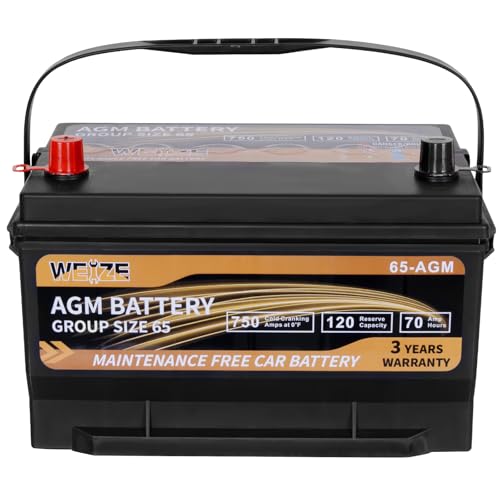
High 750 CCA and extreme temperature resistance make it ideal for harsh climates.
The Weize Platinum AGM Group 65 pushes 750 cold cranking amps from a 70Ah capacity. That is serious starting power for winter mornings.
Instead of liquid acid sloshing around, it uses glass fiber mats to hold the electrolyte, which makes it far more resistant to both blistering heat and deep freezes. This design also cuts down on internal corrosion over time.
I would point drivers in extreme climates toward this one, especially if you park outside year-round. Its low self-discharge rate means it holds a charge longer if your car sits unused for weeks.
One critical note: if your car originally came with an AGM battery, you cannot downgrade to a standard flooded battery. The charging system expects AGM behavior, so stick with what the manufacturer specified.
|
3
|
Mighty Max Battery MM-G35 Start and Stop Car BCI Group Size 35 12V 55Ah, 100RC, 650 CCA Re |

A compact Group 35 design with start-stop capability for smaller, modern vehicles.
The Mighty Max MM-G35 packs 650 CCA into a smaller Group 35 footprint. It offers a 100-minute reserve capacity, meaning it can keep essential electronics running if your alternator fails.
Because it is a sealed AGM design, it won’t spill if mounted at an angle, and it shrugs off the vibrations common in daily driving.
This is the battery I would look at for smaller sedans or crossovers equipped with start-stop technology. Start-stop systems punish conventional batteries because the engine fires dozens of times per trip, and the MM-G35 recovers from those shallow discharges quickly.
It likely won’t have the raw muscle needed for a heavy-duty truck with massive aftermarket audio gear, though.
|
4
|
Weize Platinum AGM Battery BCI Group 48-12v 70ah H6 Size 48 Automotive Battery, 120RC, 760 |

Strong 760 CCA and specialized design for power-hungry accessories and start-stop tech.
The Weize Platinum AGM Group 48 delivers 760 CCA alongside a 70Ah capacity. It is built to recharge significantly faster than older flooded batteries, which is exactly what modern cars with heavy infotainment systems and start-stop features require. The internal construction resists the heat generated by tightly packed engine bays.
If your vehicle runs a lot of screens, heated seats, or dashcams, I would consider this Group 48 (H6) option. It provides the steady voltage those accessories crave. Before buying, physically check where the positive and negative terminals sit on your current battery.
This Weize model uses tapered terminals with a specific left-negative, right-positive layout, and getting that wrong means your cables simply won’t reach.
|
5
|
Mighty Max Battery MM-H6 Start and Stop Car BCI Group Size 48 12V 70 AH, 120RC, 760 CCA Re |

Rugged construction and 120-minute reserve capacity ensure long-term starting reliability.
The Mighty Max MM-H6 is another Group 48 AGM battery, pushing 760 CCA. What stands out here is the 120-minute reserve capacity, that extra buffer can be a lifesaver if your charging system falters on a long drive.
It is fully sealed to prevent leaks and built in an ISO-certified facility, which generally points to tighter quality control during manufacturing.
I would lean toward this one if longevity and safety are your main priorities. It handles deep discharge cycles well, making it forgiving if you accidentally leave a light on overnight.
Dropping it into an H6-sized tray is usually straightforward, but always disconnect the negative terminal first when swapping it out.
|
6
|
Mighty Max Battery MM-H5 Start and Stop Car BCI Group Size 47 12V 60 AH, 100RC, 680 CCA Re |

Reliable 680 CCA power in a Group 47 size for steady, everyday performance.
The Mighty Max MM-H5 is a Group 47 AGM battery delivering 60Ah and 680 CCA. It is a slightly smaller package designed for steady, reliable starts across different seasons.
Like the other AGMs here, it is completely spill-proof and meets strict CE safety standards, so you don’t have to worry about acid venting into your engine bay.
For a standard commuter car that doesn’t have a massive list of power-hungry accessories, my read is that this hits the sweet spot. It balances physical size and cranking power efficiently.
However, if you regularly run a winch, heavy camp lighting, or off-grid inverters, the 60Ah capacity might drain faster than you’d like.
|
7
|
ACDelco Gold Automotive Battery 51RAGM | PN 88866315 | 12V Car Battery AGM Group 51R Batte |

Specifically engineered to fit the 2019-2022 Honda Insight with GM-backed quality.
The ACDelco Gold 51RAGM is a highly targeted replacement built specifically for the 2019-2022 Honda Insight. It uses AGM technology to deliver consistent starting power, and robust envelope separators inside the case help prevent short circuits over years of use.
It carries the same 36-month warranty found on other ACDelco Gold units.
If you drive this specific generation of the Insight, this battery removes all the guesswork. You don’t have to cross-reference dimensions or hope the terminals align, it is engineered for that exact tray. Naturally, that specificity is its only real limitation; it simply won’t work in larger vehicles or different applications.
|
8
|
Weize Platinum AGM Battery BCI Group 49-12v 95ah H8 Size 49 Automotive Battery, 160RC, 900 |

Massive 900 CCA and 95ah capacity for the most demanding power requirements.
The Weize Platinum AGM Group 49 is the heavyweight in this lineup, offering 900 CCA and a massive 95Ah capacity. With a 160-minute reserve rating, it is designed to support large engines and heavy-duty start-stop systems without breaking a sweat. It handles extreme cold starts that would stall smaller batteries.
I would reserve this for full-size SUVs, heavy trucks, or vehicles loaded with aftermarket electrical gear. It has the sheer output required to spin over a large diesel or gas V8 in freezing weather.
Just make sure your vehicle actually accepts a Group 49 tray, this is a physically large, heavy battery, and forcing it into a smaller compartment isn’t an option.
You will see everything from compact Group 35 units for efficient commuters to massive Group 49 blocks for heavy trucks. My advice is to match the BCI group size exactly, then look at the CCA and reserve capacity numbers relative to your local climate.
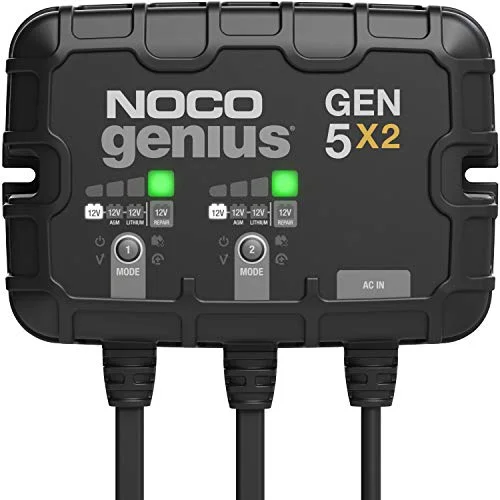
Once the right battery is bolted in, keeping it charged is the easiest part.
Warning Signs Your Battery Is Failing
Recommended Products


Cars usually warn you before the battery gives up entirely. You just have to know what to look for instead of waiting for total silence when you turn the key.
- Slow engine cranking when you turn the key.
- Dimming headlights or flickering interior cabin lights.
- A battery case that looks swollen or bloated.
- Corrosion buildup around the metal battery terminals.
- The battery warning light appearing on the dashboard.
- Frequent needs for a jump start in the morning.
A multimeter takes the guessing out of battery health. With the engine off, a healthy battery should read around 12. 6 volts. If you see it dropping below 12. 2 volts consistently, it is deeply discharged and likely nearing the end of its useful life.
If you take it for a long drive and the voltage still won’t hold, the internal plates are probably sulfated beyond repair. Most auto parts stores will test this for free in the parking lot, and it only takes a minute.
I recommend checking the voltage every six months or so. It turns a potential roadside emergency into a planned afternoon errand.
Maintaining Your New Battery for Longevity
Replacing the battery is only half the job. How you treat the new one dictates whether it lasts three years or five.
Clean terminal corrosion using a mixture of baking soda and water.
Ensure the battery hold-down bracket is tight to prevent vibration damage.
Avoid leaving headlights or interior lights on when parked.
Use a trickle charger during long periods of vehicle inactivity.
Drive your car for at least 20 minutes weekly to recharge cells.
Heat and cold are equally hard on batteries, just in different ways. Summer temperatures bake the moisture out of the cells and accelerate internal corrosion, while winter cold thickens engine oil and demands maximum cranking power when the battery is chemically weakest.
Parking in a garage whenever possible buffers these extremes. If you live somewhere that routinely drops below zero, a plug-in battery blanket is a cheap insurance policy. In hot climates, make sure the factory battery heat shield is still in place, people often throw them away during the first swap.
These small habits reduce stress on the cells and help you actually get the lifespan you paid for.
If your battery is pushing past the three-year mark or you hear the starter dragging on chilly mornings, don’t wait for it to fail on a highway ramp. Have the voltage checked this week.
Replacing it on your own schedule is infinitely cheaper, and less stressful, than paying for a jump start and a tow truck in the rain. Keep the terminals clean, watch the voltage, and your car will start every time you ask it to.

- 10 Best Battery For Generator Ev Battery Bank Marine 2026 - October 27, 2026
- 10 Best Battery For Generator Ev Battery Bank Lto 2026 - October 27, 2026
- 10 Best Battery For Generator Ev Battery Bank Low Voltage 2026 - October 27, 2026