What Are 1.5 Volt Batteries?
If you’ve ever squinted at a battery label and wondered what that 1. 5V actually means, you’re not alone. The number shows up on everything from tiny watch button cells to chunky D cells.
It’s the standard voltage for single-cell alkaline and carbon-zinc batteries, and it tells you what devices a battery can safely power. This article explains what 1. 5 volts means, why it matters for your gadgets, and which batteries fit the devices you actually own.
What The 1.5 Volt Number Actually Means
Recommended Products


Voltage is the push that moves electricity through a circuit. A 1.5V battery delivers a specific, predictable amount of that push, which is why device makers design around it.
Every battery has a nominal voltage, which is the average voltage it delivers during normal use. For a single alkaline or carbon-zinc cell, that nominal number is 1. 5 volts. It comes from the chemistry inside: zinc and manganese dioxide react to create roughly 1. 5 volts of electrical potential.
That number is not arbitrary. It is the industry standard that manufacturers of toys, clocks, flashlights, and remotes design their electronics around. If you put a battery with the wrong voltage into a device, the device may run weakly, behave erratically, or not work at all. A fresh 1.
5V battery actually measures a bit higher, around 1. 6 volts, and slowly drops toward 0. 9 volts as it drains. Devices are built to tolerate that range.
Common 1.5V Battery Sizes At A Glance
| Size | Typical Use | Voltage |
|---|---|---|
| AA | Remotes, toys, cameras | 1.5V |
| AAA | Small remotes, clocks | 1.5V |
| C | Flashlights, toys, radios | 1.5V |
| D | Large flashlights, lanterns | 1.5V |
| N | Key fobs, GPS trackers | 1.5V |
| LR44 button | Watches, calculators | 1.5V |
Notice that AA, AAA, C, D, N, and LR44 button cells all share the same 1. 5-volt rating even though their physical sizes differ wildly. Voltage is about chemistry, not size. What changes with size is capacity, meaning how long the battery lasts.
A D cell holds far more energy than an AAA, but both push electricity at the same 1. 5 volts. That is why a device designed for 1. 5V will accept any of these sizes if the physical compartment fits. It is also why you should never substitute a 3.
7V lithium cell for a 1. 5V alkaline in a device that expects the lower voltage.
Why Devices Are Built Around 1.5 Volts
Recommended Products


Manufacturers pick 1.5 volts because alkaline chemistry is cheap, safe, and widely available. That choice shapes the entire consumer electronics ecosystem.
A Shared Language For Gadgets
When a toy company designs a motor, it assumes a certain voltage will arrive from the battery compartment. That assumption is almost always 1. 5 volts per cell.
Because the standard is so universal, you can buy batteries from dozens of brands and they will all work in the same devices. This is why a Duracell N cell and an Amazon Basics C cell can both claim 1. 5 volts despite looking completely different.
The shared voltage rating is what makes interchangeable batteries possible across the entire consumer market.
What Happens When Voltage Drops
As a 1. 5V battery drains, its voltage falls. A device that needs a strong push may slow down, dim, or stop working before the battery is truly empty. This is why flashlights get dim and toys get sluggish.
Some electronics, like digital cameras, are picky about voltage and will shut off early. Others, like simple clocks, keep running on very little. Knowing that 1. 5V is a starting point, not a constant, helps you understand why fresh batteries revive a device that seemed dead.
- Match the voltage exactly: never substitute a 3V or 3.7V cell for a 1.5V one.
- Match the size to the compartment: AA, AAA, C, D, N, and button cells are not interchangeable.
- Replace all batteries in a device at once to avoid uneven drain.
- Store spares in a dry place; heat and humidity shorten shelf life.
- Check the expiration date before relying on a battery for emergencies.
Batteries That Deliver A True 1.5 Volts
Recommended Products


Now that you know what 1. 5 volts means, the practical question is which battery to buy for your device. The picks below cover the common 1. 5V sizes: C cells for flashlights and toys, N cells for key fobs, and LR44 button cells for watches and calculators.
Each one delivers the standard 1. 5-volt output your device expects.
|
1
|
Amazon Basics C Cell Alkaline All-Purpose Batteries, 1.5 Volt, 5-Year Shelf Life, Reliable |

A four-pack of C cell 1.5V alkalines for toys, clocks, and flashlights that need standard voltage.
This Amazon Basics four-pack delivers exactly the 1. 5-volt output that C-cell devices expect, whether that is a flashlight, a toy, or a wall clock. The alkaline chemistry provides long-lasting power, and the improved design carries a five-year leak-free shelf life.
It ships in Certified Frustration-Free Packaging, so you are not wrestling with plastic clamshells. A one-year limited warranty backs the purchase, which is a reasonable safety net for a budget battery.
Four cells is a smart starter quantity if you only have one or two C-cell devices and do not want a drawer full of spares. The limitation is capacity: four batteries drain fast if you have multiple high-drain toys or flashlights running at once.
For occasional use, though, this pack covers the basics without overspending.
|
2
|
Amazon Basics C Cell Alkaline All-Purpose Batteries, 1.5 Volt, Long-Lasting Reliable Power |

A 12-pack of C cell 1.5V batteries that keeps multiple flashlights and toys running without reordering.
This 12-pack of Amazon Basics C cell alkaline batteries delivers the same 1. 5-volt output as the smaller pack but in a quantity that suits households with several C-cell devices. Each battery provides long-lasting reliable power for toys, clocks, and flashlights.
The five-year leak-free shelf life means you can stock up and store them for emergencies. Frustration-Free Packaging makes opening the box quick, and the batteries are single-use, not rechargeable.
Twelve C cells is a lot of capacity, which is great for a family with multiple flashlights or a toy box full of battery-hungry items. The honest limitation is shelf space: C cells are chunky, and a dozen take up real room.
If you only own one C-cell device, the smaller pack is more sensible. For everyone else, this is the practical bulk buy.
|
3
|
Duracell N 1.5V Alkaline Battery, 2 Count Pack, N 1.5 Volt Battery, Long-Lasting for Key F |
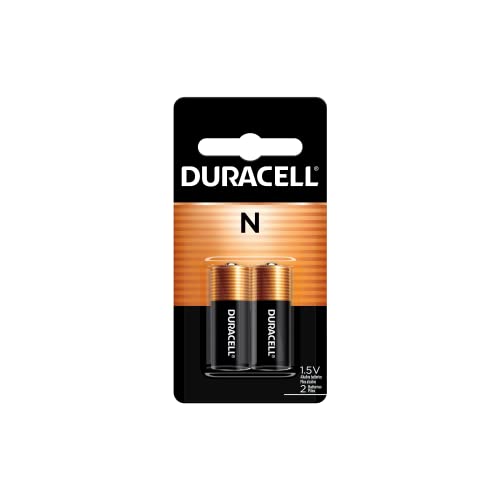
Duracell N cells at 1.5V for key fobs and GPS trackers that need a small, reliable power source.
The Duracell N battery is a 1. 5-volt alkaline cell built for small devices like key fobs, car alarms, GPS trackers, and remote controls. Duracell guarantees five years of storage life, so a spare pair can sit in a drawer and still work when you need it.
As the number one trusted battery brand, Duracell leans on quality assurance and a guarantee against defects in materials and workmanship. The two-count pack is sized for devices that use one or two N cells at a time.
N cells are less common than AA or AAA, so buying them in a two-pack makes sense for a single key fob or tracker rather than stocking a drawer. The limitation is price per cell: specialty sizes cost more than standard ones.
If you have several N-cell devices, you may want multiple packs. For one or two gadgets, this is the straightforward, trustworthy choice.
|
4
|
Amazon Basics 6-Pack LR44 Alkaline Button Cell Replacement Battery, 1.5 Volt, Long Lasting |
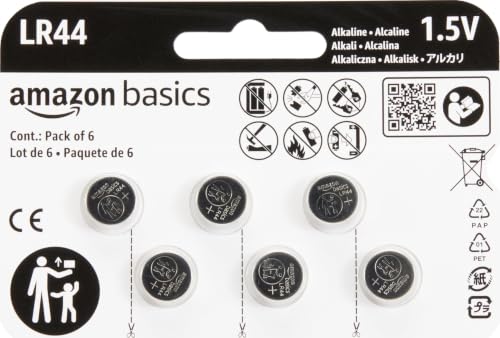
Six LR44 button cells at 1.5V for watches and calculators, mercury-free and easy to identify.
This six-pack of Amazon Basics LR44 button cell batteries delivers 1. 5 volts in the small coin format used by watches, calculators, and small toys. The cells are mercury-free, which matters if you are handling them around children or disposing of them.
Each battery is engraved with its model number for quick identification, so you will not confuse it with a different button size. They ship in child-resistant packaging and perform well in extreme temperatures.
Six cells is a sensible quantity for replacing a watch battery and keeping a couple of spares. The limitation is that LR44 is a specialty size, so if your device uses a different button cell, these will not fit.
For watches, calculators, and small toys that specify LR44 or its many cross-reference codes, this pack is a clean, mercury-free answer.
|
5
|
POWEROWL High Capacity LR44 Batteries 40 Pack, L1154F AG13 357 303 SR44 A76 Premium Alkali |

A 40-pack of high-capacity LR44 1.5V cells for anyone with many button-cell devices.
POWEROWL’s 40-pack of LR44 batteries covers a huge range of cross-reference models, including AG13, 357, 303, SR44, and A76. The high-density cells claim about 10 percent more energy density and 20 percent more monomer capacity than standard cells.
Power Preserve Technology uses an air- and liquid-tight seal with dual crimps and anti-corrosion components to lock in power until you need it. These 1. 5V alkaline button cells suit watches, calculators, and medical devices.
Forty cells is a serious stockpile, best for someone who repairs watches, runs a small shop, or owns many button-cell gadgets. The limitation is that button cells do slowly self-discharge, so a decade of spares may outlast their usefulness. Stored cool and dry, though, they hold up well.
If you only need two or three cells, this pack is overkill.
|
6
|
Voniko AG13 LR44 Batteries 20 Pack, [Ultra Power] Premium Alkaline 1.5 Volt LR44 Button Cel |

Twenty AG13 LR44 cells at 1.5V with double corrosion protection for toys and small electronics.
Voniko’s 20-pack of AG13 LR44 batteries focuses on safety with double corrosion protection, designed so you will not open a device to find leaked acid. The 1. 5V cells are low self-discharge and valid for up to five years when stored in a dry, cool place.
They work with toys, wireless doorbells, calculators, watches, mini radios, and game controllers. The pack covers a long list of cross-reference codes, from LR44 to A76 and 357.
Twenty cells hits a middle ground between a small replacement pack and a bulk stockpile, which suits a household with a handful of button-cell devices. The limitation is that these are not rechargeable, and Voniko warns against forced charging or mixing old and new cells.
Follow those rules and the anti-corrosion design should keep your devices safe.
|
7
|
POWEROWL LR44 Batteries 24 Count, High Capacity AG13 357 303 SR44 L1154F A76 Premium Alkal |

A 24-count of POWEROWL LR44 1.5V cells with power-preserve sealing for watches and medical devices.
This POWEROWL 24-count pack delivers LR44 button cells at 1. 5 volts with the same high-density construction as the larger pack. The cells fit a wide range of cross-reference models including AG13, 357, 303, SR44, and L1154F.
Power Preserve Technology seals in energy with dual crimps, a new zinc composition, and anti-corrosion parts. They are aimed at watches, calculators, and medical devices that need dependable, long-lasting button-cell power.
Twenty-four cells is a practical middle quantity, enough to keep a few devices running for years without committing to a 40-pack. The limitation is the same as any button cell: they are single-use and slowly lose charge over time.
If you own a watch, a calculator, and a medical device, this pack covers all three without excess.
|
8
|
Amazon Basics C Cell Alkaline Long-Lasting All-Purpose Batteries, 1.5 Volt, 5-Year Shelf L |

A 24-pack of C cell 1.5V batteries for heavy users who drain flashlights and toys often.
This Amazon Basics 24-pack of C cell alkaline batteries delivers 1. 5 volts for everyday devices like toys, clocks, and flashlights. The five-year leak-free shelf life lets you store the extras for emergencies or use them right away.
Frustration-Free Packaging makes the box easy to open, and the batteries are single-use rather than rechargeable. If you have already tried the 4-pack or 12-pack, this is the next step up in quantity.
Twenty-four C cells is a bulk buy best suited to large households, classrooms, or anyone running several high-drain devices. The limitation is storage: two dozen C cells take up significant drawer space. If your usage is light, the smaller packs are more practical.
For heavy, recurring use, this size cuts down on reordering.
|
9
|
PGSONIC 50 Pack LR44 Batteries, 1.5 Volt Alkaline Button Cell Batteries with Long Lasting |

Fifty LR44 1.5V cells in one value pack for watches, toys, and specialty tools.
PGSONIC’s 50-pack of LR44 batteries offers a large quantity of 1. 5V alkaline button cells at a value price. The cells replace a long list of models including AG13, 357, A76, CR44, SR44, and L1154. They work in watches, toys, calculators, laser pointers, digital cameras, remotes, and medical devices.
The manufacturer says they use selected grade AA raw materials and follow strict quality control, with leak-proof, mercury-free construction.
Fifty cells is the largest pack here, aimed at someone who wants a long-term supply without reordering. The limitation is that button cells self-discharge slowly, so even a big pack has a practical lifespan.
If you run a small business, a classroom, or a repair hobby, this value pack makes sense. For a single watch, it is far more than you need.
|
10
|
Amazon Basics 12-Pack D Cell Alkaline Batteries, 1.5 Volt, 5-Year Shelf Life, Long-Lasting |

A 12-pack of D cell 1.5V batteries for clocks, lanterns, and emergency supplies.
This Amazon Basics 12-pack of D cell alkaline batteries delivers 1. 5 volts for large devices like clocks, flashlights, and emergency lanterns. The five-year leak-free shelf life makes them a sensible choice for a storm kit or a drawer of backup power.
They are single-use, not rechargeable, and the jacket color may vary without affecting performance. Twelve D cells is a substantial amount of capacity for high-drain devices.
D cells are the biggest common household battery, so a 12-pack suits someone stocking an emergency kit or running several large flashlights. The limitation is that D cells are heavy and bulky, and they cost more per unit than smaller sizes.
If you only have one lantern, a smaller pack may be enough. For preparedness, this quantity is hard to beat.
Those ten options cover the main 1. 5V battery sizes you are likely to encounter: C, D, N, and LR44 button cells. Each one delivers the standard 1. 5-volt output your device was designed for.
The right pick depends on the size your gadget takes and how many spares you want on hand. Next, let’s look at how to choose and care for 1. 5V batteries so they last as long as possible.
How To Pick The Right 1.5V Battery For Your Device
Recommended Products


Buying a 1.5V battery is not just about voltage. Size, chemistry, and shelf life all matter. Here is how to match a battery to the device in your hand.
Open the battery compartment and note the size printed inside, such as AA, C, or LR44.
Check the old battery label for the voltage; most household cells read 1.5V.
Confirm the chemistry your device expects, usually alkaline for everyday gadgets.
Buy a quantity that matches your usage; small packs for one device, bulk for many.
Check the expiration date and store spares in a cool, dry place.
Which Size Fits Which Device
| Device | Common Size | Voltage |
|---|---|---|
| Wall clock | C or D | 1.5V |
| Flashlight | C or D | 1.5V |
| Wristwatch | LR44 button | 1.5V |
| Key fob | N cell | 1.5V |
| Calculator | LR44 button | 1.5V |
| Toy | C, D, or AA | 1.5V |
One common mistake is assuming all 1. 5V batteries are interchangeable. They are not, because physical size determines whether a cell fits the compartment. A C cell and an LR44 button both deliver 1. 5 volts, but you cannot swap them.
Another mistake is mixing old and new batteries in the same device. The older cell drains faster and can leak, damaging the compartment. Always replace the full set at once, and match the brand and chemistry when possible.
If a device takes four cells, buy a pack that covers all four plus spares.
Getting The Most Life Out Of Your 1.5V Batteries
A 1.5V battery only helps if it still has charge when you need it. Storage habits and usage patterns decide how long your cells actually last.
- Keep spares in a dry place at room temperature, away from direct sunlight.
- Leave batteries in original packaging so terminals cannot touch and short.
- Do not refrigerate alkaline batteries; condensation can cause corrosion.
- Remove batteries from devices you will not use for months.
- Track expiration dates and rotate older cells to the front of your drawer.
Shelf life is the number manufacturers print on the package, and for most alkaline 1. 5V cells it ranges from five to ten years. That number assumes proper storage in a cool, dry spot.
Heat is the enemy: a garage that bakes in summer will drain a battery’s shelf life faster than a climate-controlled closet. Humidity is the second enemy, because moisture encourages the corrosion that leads to leaks.
If you live in a humid climate, consider keeping spares in a sealed container with a desiccant packet. Rotating your stock so older batteries get used first also prevents waste.
Signs A 1.5V Cell Is Done
A device that dims, slows down, or behaves erratically is usually telling you its battery voltage has dropped. For a flashlight, that means a yellow beam instead of a white one. For a toy, it means sluggish movement. For a clock, it means the second hand stutters.
When you see these signs, swap in a fresh 1. 5V battery. Do not try to recharge a single-use alkaline cell, because forcing current into it can cause leakage or rupture.
Why Rechargeables Read Differently
Rechargeable NiMH batteries are often labeled 1. 2 volts, not 1. 5. That lower nominal voltage still works in most devices designed for 1. 5V alkalines, but some picky electronics may underperform. If you want rechargeable convenience, check that your device tolerates 1. 2V cells.
For devices that demand a true 1. 5V output, single-use alkaline remains the safer match. This is why the picks above are all single-use cells rated at the standard 1. 5 volts.
A 1. 5 volt battery is simply a single-cell alkaline or carbon-zinc battery that delivers the standard voltage most household devices are built around. The number tells you the electrical push, while the size tells you what fits.
Your next step is easy: open the battery compartment of the device you need to power, note the size printed inside, and pick a 1. 5V battery in that size from the list above. Match the size, check the expiration date, and you are set.

- 10 Best Battery For Generator Ev Battery Bank Marine 2026 - October 27, 2026
- 10 Best Battery For Generator Ev Battery Bank Lto 2026 - October 27, 2026
- 10 Best Battery For Generator Ev Battery Bank Low Voltage 2026 - October 27, 2026