Diesel Dual-Battery Systems: Cranking Demand and Parallel Connections
When you open up a diesel truck’s engine bay, you’ll find two batteries side by side, not just for redundancy, but because diesel engines demand far more power to start, especially in cold weather.
Unlike gas engines, diesel engines rely on high compression ratios (often 16:1 to 25:1) to ignite fuel without spark plugs. That means the starter motor needs to deliver a massive surge of current to turn over the engine, and glow plugs must also draw power before and during startup.
A single battery simply can’t handle all this demand simultaneously. That’s why diesel trucks use a two-battery system: to ensure both the starter and accessories get the amps they need without one battery failing first. This setup isn’t just about backup, it’s about performance and reliability in the harshest conditions.
Why Diesel Engines Demand More Cranking Power
Diesel engines work differently from gas engines, and those differences explain the two-battery setup. Understanding the physics helps you see why one battery often isn’t enough.
A diesel engine ignites fuel through compression, not a spark plug. That means the compression ratio is much higher, often 16:1 to 25:1 compared to 8:1 to 12:1 for gas engines. Higher compression requires a stronger starter motor, and that starter draws significantly more current.
In cold weather, diesel fuel thickens and the engine becomes even harder to turn over. Glow plugs also pull power before and during startup. Two batteries wired in parallel provide the reserve capacity and cold cranking amps needed to handle all of this simultaneously.
One battery would struggle, especially in winter.
Diesel vs Gas Starting Demands
| Factor | Gas Engine | Diesel Engine |
|---|---|---|
| Compression ratio | 8:1 to 12:1 | 16:1 to 25:1 |
| Starter current draw | 150-250 amps | 300-500+ amps |
| Cold-start aids | None usually | Glow plugs or grid heater |
| Typical battery setup | One battery | Two batteries in parallel |
How Two Batteries Work Together In A Diesel
Two batteries in a diesel aren’t just two separate power sources. They’re wired in parallel to double capacity while keeping voltage at 12 volts. Here’s how that arrangement functions.
Positive To Positive, Negative To Negative
In a parallel setup, both batteries connect positive terminal to positive terminal and negative to negative. Voltage stays at 12 volts, but the amp-hour capacity and cold cranking amps double. The starter sees one large pool of power instead of two smaller ones.
This matters because the starter draws a huge surge of current in the first seconds of cranking. Two batteries share that load, reducing strain on each one and extending overall battery life.
Balancing The Load
When two batteries are paralleled, they naturally balance their charge. If one is weaker, the stronger one will try to charge it, which can cause issues over time. That’s why matched batteries of the same age, type, and capacity are recommended.
A mismatched pair can lead to one battery doing most of the work and failing early. Regular maintenance and occasional charging help keep both batteries healthy and balanced.
- Replace both batteries at the same time, even if only one tests bad.
- Check terminal connections every few months for corrosion or looseness.
- Use a two-bank charger to maintain each battery independently during storage.
- Test both batteries under load before winter to catch weak cells early.
- Keep the battery box vented and secure to prevent vibration damage.
Gear To Keep Your Diesel’s Two Batteries Ready
A two-battery diesel system only works as well as its weakest battery. These chargers, boxes, and support tools help you maintain both batteries properly, so you’re not stranded with a no-start. Here are the options that make the most sense for a dual-battery diesel setup.
|
1
|
NOCO GEN5X2 12V 10A 2-Bank OnBoard Marine Battery Charger & Maintainer | Charges 2 Batteri |

NOCO’s two-bank design is tailored specifically for diesel trucks, where each battery must be charged independently to match the dual-system requirements.
The NOCO GEN5X2 is a 2-bank onboard charger designed to handle the demands of a diesel’s two-battery setup, delivering a total of 10 amps, 5 amps per bank. This output is precisely what a diesel engine needs to ensure both batteries are charged simultaneously without overloading them.
The charger supports multiple battery types, including standard 12V lead-acid, AGM, lithium, and even repair mode for batteries that have lost capacity. Its IP68 rating means it’s built to withstand the harsh conditions of a marine or truck engine bay, making it a reliable choice for permanent installation.
It can even revive batteries as low as 1 volt, ensuring you’re never left with a dead battery in a critical moment.
This charger is ideal for diesel owners looking for a compact yet powerful onboard solution. The thermal sensor adjusts charging based on ambient temperature, preventing overcharging in summer heat or undercharging in freezing winter conditions.
While it’s powerful for its size, the 5-amp-per-bank output might feel modest for very large deep-cycle batteries, like Group 31s. If you need faster charging for big batteries, a higher-amp model might be worth considering.
However, for routine maintenance, it’s more than capable of keeping your diesel batteries in top shape without overworking them.
|
2
|
NOCO GENIUS2X2 6/12V 2-Bank Battery Charger, Trickle Charger & Maintainer | Charges 2 Batt |

The GENIUS2X2 is flexible enough to handle both 6V and 12V batteries, making it a practical choice for diesel trucks that might also power equipment with smaller batteries.
The NOCO GENIUS2X2 is a versatile two-bank charger that works with both 6-volt and 12-volt lead-acid and lithium batteries, whether they’re in a diesel truck or a tractor, boat, or RV.
It charges two batteries at once, delivering 2 amps per bank, which is gentle enough for long-term maintenance but still effective for keeping batteries topped off.
The built-in desulfator is particularly useful for diesel batteries, as it breaks down sulfation, common in batteries that sit unused for extended periods, which helps restore capacity and extend their life.
The Force Mode lets you revive batteries that have been drained down to near zero volts, which is invaluable if you’ve left a diesel truck sitting for months.
It’s essentially an all-in-one charger, maintainer, and trickle charger, making it a convenient solution for anyone who needs to manage multiple battery systems.
This unit is perfect for diesel owners who also use 6V batteries in other vehicles or equipment. The 2-amp-per-bank output is designed for maintenance rather than rapid charging, so it’s safe for long-term use but may take longer to fully recharge a heavily depleted battery.
The compact design and simple interface make it easy to use, but you’ll need to provide your own mounting hardware if you want a permanent installation. It’s a solid choice for those who want a reliable, low-maintenance way to keep their batteries charged and healthy, especially in less demanding applications.
|
3
|
2-Bank, 4A (2A/Bank) Trickle Charger for Car Battery, 12V 6V Car Battery Charger, Automoti |

This compact 2-bank trickle charger is perfect for keeping diesel batteries charged without overloading them, especially if they’re already near full capacity.
This FirstPower Pro 2-bank trickle charger is designed to deliver 4 amps total, with 2 amps per bank, making it suitable for both 6V and 12V batteries. It’s a lightweight, compact unit that functions as a charger, maintainer, and desulfator, all in one.
The smart thermal sensor automatically adjusts charging based on ambient temperature, ensuring that your batteries aren’t overcharged in hot weather or undercharged in cold. LED indicators make it easy to monitor each battery’s charge status, and it supports a wide range of battery types, including lead-acid, AGM, gel, and lithium.
This makes it a great option for diesel owners who want to keep their batteries topped off without risking damage from improper charging.
This charger is a budget-friendly solution for anyone who needs basic maintenance for two batteries. The 2-amp-per-bank output is best suited for keeping batteries at or near full capacity rather than rapidly recharging deeply discharged ones.
It’s small enough to carry in a toolbox, and the spark-proof connections add an extra layer of safety. The main limitation is the low output, which means it won’t quickly revive a battery that’s been drained. For seasonal storage or regular maintenance, though, it does the job effectively and reliably.
|
4
|
Camco 55374 Double End-to-End Battery Box – Fits Two 6V GC2 or 12V Group 24/24M Batteries |
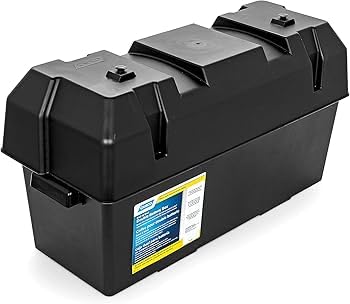
This dual battery box is built to securely hold two 6V or 12V batteries in a diesel system, protecting them from corrosion and ensuring proper ventilation.
The Camco 55374 Double End-to-End Battery Box is specifically designed to hold two 6V GC2 or two 12V Group 24/24M batteries, making it a practical choice for diesel trucks that use these specific battery types.
Constructed from heavy-duty, corrosion-resistant polypropylene, the box is built to withstand the harsh environments found in engine bays or marine applications. The vented design ensures proper airflow, which is crucial for battery safety and longevity.
It includes two straps and four strap clamps with screws for secure mounting, and it meets U. S. Coast Guard and ABYC specifications when used with two 6V GC2 batteries. It’s a simple, reliable way to organize and protect your batteries while keeping them accessible for maintenance or replacement.
This box is a smart choice if you need to relocate or secure two batteries in a truck bed, boat, or RV. The end-to-end configuration saves space compared to side-by-side designs, and the sturdy construction means it won’t easily break or degrade over time.
However, it doesn’t come with a lid, so you’ll need to ensure the installation location keeps the terminals protected from accidental contact. It’s also not designed for Group 31 batteries, which are common in some diesel trucks.
For Group 24 or GC2 batteries, though, it’s a solid, compliant, and practical solution.
|
5
|
Battery Tender Plus 2 Bank Multibank Charger – 2.5 AMP (1.25 AMPs Per Bank) – Smart 12V Mu |
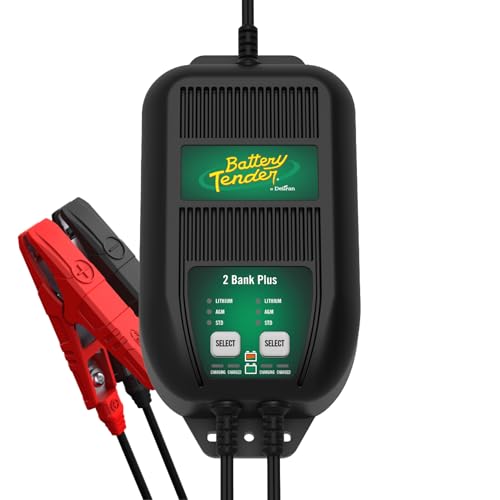
Battery Tender’s 2-bank charger ensures each diesel battery gets precise, independent maintenance without risking overcharging.
The Battery Tender Plus 2 Bank Multibank Charger delivers a total of 2. 5 amps, with 1. 25 amps per bank, to two 12V batteries independently. It uses a three-step charging program, initialization, bulk charge, and float mode, to optimize battery power while preventing overcharging.
The unit is spark-proof and reverse-polarity protected, adding an extra layer of safety. Temperature compensation adjusts the charge voltage based on ambient conditions, ensuring optimal performance in all weather.
It works with standard, AGM, and lithium LiFePO4 batteries and comes with a 2-year limited warranty, making it a reliable choice for diesel owners who want to maintain their batteries safely and efficiently.
This charger is a trusted name in battery maintenance, and its two independent stations make it ideal for diesel trucks that sit for weeks between uses. The 1. 25-amp-per-bank output is gentle and safe for long-term connection, which means it’s less likely to cause damage over time.
However, it’s not designed for rapid charging, so it’s best suited for maintenance rather than recovering a heavily drained battery. The solid-state LEDs clearly indicate the charging stage, making it easy to monitor progress. If you’re looking for a set-and-forget solution from a reputable brand, this is a dependable option.
|
6
|
Schumacher Electric Two-Bank 2A Car Battery Charger and Maintainer, 2-in-1 Solution, Simul |

Schumacher’s 2-bank charger automatically adjusts to both 6V and 12V batteries, simplifying the maintenance process for dual-battery diesel systems.
The Schumacher Electric SC1410 is a two-bank charger and maintainer that automatically detects whether your batteries are 6V or 12V, making it incredibly versatile for diesel trucks and other equipment.
It delivers a total of 2 amps, with 1 amp per bank, and uses a microprocessor-controlled system to gather battery data and tailor the charging process. This ensures that your batteries are charged quickly without risking damage to their capacity.
It works with standard, AGM, and gel cell batteries, and the reverse hook-up protection prevents any accidental damage from incorrect wiring. The unit is wall-mountable with the included hook, which keeps it out of the way and accessible for maintenance.
This charger is a practical choice for anyone who wants a simple, automated way to maintain two batteries. The 1-amp-per-bank output is very gentle, making it safe for indefinite use without overworking the batteries. It’s not designed for fast charging, so it won’t quickly revive a dead battery.
The wall-mountable design is a nice feature, as it keeps the unit off the floor and out of the way. If you have a diesel truck and another piece of equipment that also uses batteries, this can keep everything ready without requiring constant attention.
Just be aware that it’s not a high-output solution.
|
7
|
JUMPFORCE PRO 1000A Jump Starter w/ SafeStart-System – Extreme Winter Edition -22°F Cold S |

This jump starter is built for extreme cold, providing the power needed to start a diesel engine when both batteries are drained.
The JUMPFORCE PRO 1000A Jump Starter is designed to handle the cold-weather demands of diesel engines, with a rating of -22°F. It can start 6. 0L gas and 3. 0L diesel engines, making it a reliable backup for diesel trucks in freezing conditions.
The 1000A output delivers enough power to crank a dead diesel engine, and the SafeStart system prevents sparks, reverse connections, and overloads, ensuring safe use. It recharges fully in just 30 to 45 minutes via USB-C PD60W, which is much faster than typical jump starters.
Its compact size means it fits easily in a glovebox, and the rugged casing can withstand drops and moisture, making it durable for regular use.
This jump starter is a must-have for diesel owners in cold climates who want to avoid being stranded. The ability to start engines down to -22°F sets it apart from many other jump starters, and the fast recharge time means you can use it multiple times in a single session.
It’s built to handle the rigors of daily use, with a design that’s resistant to drops and moisture. The main limitation is that it’s a jump starter, not a charger, so it won’t maintain your batteries.
It’s a safety net for emergencies, especially when you’re dealing with a dual-battery system that might fail under extreme conditions. If you frequently face cold starts, having this jump starter on hand can give you peace of mind.
|
8
|
SEESII Cordless Diesel Transfer Pump, 1×4.0Ah Battery, Auto-Stop Nozzle | 12 GPM Electric |

This cordless diesel transfer pump lets you refuel equipment without draining your truck’s batteries, making it ideal for farms, jobsites, or RVs.
The SEESII Cordless Diesel Transfer Pump runs on a 4. 0Ah battery, not your vehicle’s electrical system, so it won’t drain your diesel truck’s starting batteries.
It delivers a flow rate of 12 GPM and includes an auto-stop nozzle that shuts off when the tank is full, reducing spills and waste. The kit comes with two 6. 6-foot hoses and is designed for diesel and kerosene fuel transfer.
With a 30-minute runtime per charge, it’s enough to transfer about four 55-gallon barrels, making it practical for farms, jobsites, RVs, and boats. The 260W copper motor provides strong suction and lift, ensuring efficient fuel transfer without straining your vehicle’s electrical system.
This pump is a game-changer for diesel owners who need to refuel equipment without idling their truck or risking battery drain. The auto-stop nozzle prevents spills, and the cordless design means no tangled cables to deal with.
The limitation is the 30-minute runtime, after which you’ll need a 15-minute rest before operating again. It also requires you to keep the included battery charged, so you’ll need to manage that separately. For occasional fuel transfer tasks, it’s incredibly convenient.
It won’t replace a bulk fuel system, but it���s a portable, self-contained solution that keeps your starting batteries safe.
|
9
|
SEESII Cordless Diesel Transfer Pump, 2×4.0Ah Batteries, Auto-Stop Nozzle | 12 GPM Electri |

With two 4.0Ah batteries, this pump doubles the runtime for extended diesel transfer jobs, ensuring you can keep working without interruption.
The SEESII Cordless Diesel Transfer Pump with 2×4. 0Ah batteries doubles the runtime of the single-battery version, providing up to 60 minutes of total operation. It delivers the same 12 GPM flow rate and includes the auto-stop nozzle for efficient fuel transfer. The kit comes with two 6.
6-foot hoses and two batteries, giving you enough runtime to transfer multiple barrels of diesel or kerosene in one session. The 260W motor maintains 16. 4 feet of suction and 32. 8 feet of lift, ensuring strong performance for fuel transfer tasks.
This version is completely cordless, so it won’t draw from your vehicle’s electrical system, making it ideal for diesel trucks, RVs, or boats.
This is the better choice if you frequently transfer fuel to multiple vehicles or equipment in one session. The second battery eliminates downtime, allowing you to swap and keep working without stopping.
However, the runtime is still limited by the 15-minute rest period after 30 minutes of continuous use, so it’s not designed for nonstop industrial transfer. The included batteries are proprietary, so you’ll need to keep track of them to ensure they’re charged.
For a portable, self-contained diesel transfer solution that protects your truck’s starting batteries, it’s a strong option that offers flexibility and convenience.
|
10
|
NOCO GENPRO10X2 12V 20A 2-Bank OnBoard Marine Battery Charger & Maintainer | Charges 2 Bat |

NOCO’s 20A 2-bank charger delivers the fast charging power needed to revive two large diesel batteries quickly, making it ideal for heavy-duty applications.
The NOCO GENPRO10X2 is a 2-bank onboard charger rated at 20 amps total, with 10 amps per bank. This high output is perfect for charging large diesel batteries, such as Group 31s, which often require more current to restore capacity.
It supports multiple battery types, including standard 12V lead-acid, AGM, lithium, and repair mode for batteries that have lost significant capacity. The IP68 waterproof rating means it can be permanently installed in harsh environments like marine or heavy-duty applications.
The thermal sensor adjusts charging based on temperature, ensuring optimal performance in all conditions. It can even revive batteries as low as 1 volt, including those that have been completely drained.
This charger is designed for diesel owners with large batteries who need faster charging times. The 10-amp-per-bank output significantly reduces charging time compared to lower-amp models, making it ideal for those who frequently deplete their batteries.
It’s built to handle vibration and moisture, making it a robust choice for marine and heavy-duty applications. The main downside is the higher price and larger size compared to the GEN5X2.
If you need to quickly recharge your batteries or handle heavy-duty charging tasks, the extra power is worth the investment. For basic maintenance, it might be overkill, but for those who need fast results, it’s an excellent choice.
A two-battery diesel system relies on both batteries working in harmony, and the right maintenance tools can keep them running smoothly.
These picks cover a range of needs: chargers to maintain both batteries, a secure housing solution for them, a jump starter for emergencies, and fuel pumps that won’t drain your starting batteries. The best choice depends on your specific situation, whether you’re focusing on maintenance, protection, or backup.
Most diesel owners will find that a two-bank charger is the first purchase that makes the biggest difference in keeping their system reliable. But if you need to relocate batteries, secure them, or handle fuel transfer without risking your electrical system, the right accessory can make all the difference.
Mistakes That Kill Diesel Batteries Early
Even with the right gear, a few common mistakes can shorten the life of both batteries in your diesel. Avoiding these will save you money and prevent no-start situations.
- Replacing only one battery when the other is weak, causing imbalance.
- Ignoring corroded terminals, which add resistance and reduce charging efficiency.
- Using a single-bank charger on one battery while leaving the other disconnected.
- Letting the truck sit for months without a maintainer connected.
- Mixing battery types or ages in a parallel setup, leading to early failure.
One of the most common mistakes is treating the two batteries as independent. In a parallel system, they work as a team. If one battery is older or weaker, it drags down the stronger one.
The alternator will try to charge both, but the weak battery can cause the good one to overwork and fail prematurely. Always replace both at the same time. Also, don’t assume a charger that works for one battery will properly maintain two.
A two-bank charger ensures each battery gets the right voltage and current without overcharging. Skipping this step can lead to sulfation and reduced capacity over time.
How To Test And Maintain Both Batteries
Regular testing and maintenance keep your diesel’s two batteries in top shape. Here’s a simple routine you can follow.
Test each battery separately with a load tester to check cold cranking amps.
Clean terminals and apply anti-corrosion spray to prevent buildup.
Check electrolyte levels in flooded batteries and top off with distilled water.
Connect a two-bank maintainer if the truck will sit for more than a week.
Inspect battery cables for fraying or loose connections and tighten as needed.
Replace both batteries together if either fails a load test or shows physical damage.
Testing each battery individually is key. A voltmeter can show surface charge, but a load tester reveals true health. If one battery drops below 9. 6 volts under load, it’s time to replace both. For AGM batteries, you can’t check electrolyte, but you can still load test.
Keep a log of test results and dates. If you notice one battery consistently charging slower or holding less charge, it’s a sign of imbalance. Address it early by replacing both. This routine takes about 15 minutes every few months and can double the life of your batteries.
Diesels use two batteries because the engine requires significantly more cranking power than a gas engine, especially in cold weather. The two batteries work in parallel to deliver the amps needed for the starter and glow plugs.
If you own a diesel, the first step is to check the age and health of both batteries. If they’re mismatched or older than four years, replace them as a pair. Then, consider investing in a two-bank maintainer to keep them topped off between drives.
This simple habit prevents most no-start surprises and ensures your system stays reliable. Without proper maintenance, one battery failing could leave you stranded, so it���s worth the effort to keep everything in top condition.

- Marine Chargers and Backup Batteries: 9 Options Compared (2026) - October 27, 2026
- LTO Cells vs. SLA Generator Batteries: 5 Options Compared (2026) - October 27, 2026
- 12V/24V Backup Batteries and the EcoFlow DELTA Pro 3 (2026) - October 27, 2026