Mini Cooper Battery Locations: Model Generations and Access Parts
If you‘re hunting for the battery in a Mini Cooper, you might be scratching your head looking under the hood. That’s because, unlike most cars, Mini hid it elsewhere. Depending on your model year, you could be digging beneath the rear seats or lifting the trunk floor.
Knowing exactly where to look before you panic saves a lot of time during an emergency. I’ve broken down the specific placements for different generations below, along with the tools and parts you’ll actually need to get the job done.
Locating Your Mini Cooper’s Hidden Power Source
Mini decided to move batteries out of the engine bay to balance weight distribution, which makes sense for handling but is a pain for maintenance. You can’t just pop the hood and check terminals; you need to know the specific access point for your car.
The older R50-R53 models play by different rules than the newer R56-R61 generations. Getting these distinctions right stops you from stripping screws on the wrong panel. Here is where you should be looking based on when your Mini rolled off the line.
Battery Locations by Model Generation
| Model Code | Years | Location |
|---|---|---|
| R50/R53 | 2002-2006 | Under Rear Seat Cushion |
| R55 Clubman | 2008-2014 | Trunk Floor Pan |
| R56 Hatch | 2007-2014 | Trunk Under Carpet |
| R57 Convertible | 2009-2015 | Behind Passenger Seat |
| F56/F55 | 2014-Present | Engine Bay Firewall |
Getting to the battery usually means peeling back interior trim, and those plastic clips are notorious for snapping if you rush.
My advice is to take your time and disconnect the negative terminal first, it’s the safest move since the positive side can easily short out against the metal body if your tool slips. You’ll want insulated tools to avoid any accidental sparks.
Check your owner’s manual for the exact fastener types; some Minis need specialized keys just to unbolt the seats. Also, don’t try to wrestle a heavy battery out by yourself, and make sure you have decent lighting to spot those hidden connectors tucked away in the corners.
Parts To Access And Maintain Your Mini Battery
Once you’ve found the battery, grabbing the right parts is crucial because standard replacements often miss the mark on unique Mini housings.
You might need specialized covers to keep moisture out of the trunk, or a charger that works through the cigarette port so you don’t have to dig into tight spaces again. For the modern start-stop systems, sensors are key to monitoring performance without guesswork.
These picks tackle the specific headaches Mini owners face, from corrosion to hard-to-reach terminals. Picking the right one here can really extend how long your vehicle runs reliably.
|
1
|
3V Rechargeable Battery 90° VL2020/HFN Replacement Battery |

Recharges key fob batteries that drain due to proximity issues.
This VL2020 rechargeable battery is a solid fix for Mini key fobs that seem to die too fast. Its semi-sealed design handles temperature swings well, which is handy if you leave your car in the sun or cold. It fits MINI R52 models specifically, so you aren’t guessing on compatibility.
Instead of buying disposables every few months, this gives you a durable power source for your daily locking and unlocking. It keeps the signal strong, which is a relief if you’ve been standing outside pressing buttons repeatedly.
I’d recommend this if your fob works intermittently even when you’re standing right next to the car. It cuts out the frustration of a remote that won’t cooperate. Just double-check your key fob model number before ordering, as it won’t fit every type.
You’ll need a small screwdriver to crack open the compartment, but it’s a straightforward swap. Keep in mind, this is strictly for the remote, not the main battery that starts the engine.
|
2
|
Copgge DIY Battery Cover Right Passenger Side Apron Firewall Cowl Replacement Battery Cove |

Replaces cracked covers exposing trunk-mounted batteries to water damage.
The Copgge DIY cover is a practical solution if your current one is cracked and letting water near the battery. It lets you replace just the cover instead of the whole rainwater collector assembly, which saves money. It secures with four self-tapping screws, so it stays put.
It’s compatible with the Clubman R55 and Hatchback R56, keeping moisture away from the terminals where it causes the most corrosion. Installing it yourself avoids the markup you’d pay at a dealership for a simple plastic piece.
This is ideal if you’ve noticed dampness or leaks around the cowl panel lately. Make sure to clean the area thoroughly before screwing it down to ensure a tight seal. The aftermarket quality holds up well against the elements, and it doesn’t interfere with the rainwater collector’s job.
It’s best used when the original plastic gets brittle and starts crumbling. You only need basic hand tools to get it installed, making it a quick weekend fix.
|
3
|
UPLUS BCI Group 48 Car Battery, AGM-L70-M 12V 70Ah 760CCA 120RC AGM H6 | L3 Maintenance Fr |

Provides high-cycle AGM power for F-series Minis with stop-start tech.
The UPLUS Group 48 AGM battery brings 760 CCA to the table, which is robust for getting things moving. It’s built for Minis with heavy electrical loads like nav systems and heated seats. With four times the cycle life of standard batteries, it handles the stop-and-go traffic grind much better.
The dimensions match BCI Group 48 specs exactly, so it slides in without modification. It’s maintenance-free and resists vibration, which is great for urban driving where you’re constantly stopping and starting.
If you need reliable winter performance, this is a strong candidate. Just measure your old battery first to confirm it matches, especially since the positive terminal is on the right.
Its deep-cycle capability supports your accessories even when the engine is idling, and the safety features prevent spills on rough roads. The warranty coverage adds a layer of security for what is a significant investment in your car’s reliability.
|
4
|
UPLUS BCI Group 47 Car Battery, AGM-L60-UP 12V 60Ah 660CCA 105RC AGM H5 | H5 L2 Maintenanc |

Fits smaller H5 slots in early R-generation hatchbacks efficiently.
This UPLUS Group 47 battery delivers 660 CCA, which is plenty for compact engine bays. It fits the international H5/L2 standard, making it a direct fit for many earlier R-generation hatchbacks.
The enhanced silver calcium alloy boosts its lifespan, and the maintenance-free design means you can install it and forget about upkeep. It handles vibration well, which matters if you’re driving on uneven city streets, and the vent caps are designed to resist leakage even during aggressive cornering.
It’s suitable for older models where space is tight. Just verify that the terminal orientation matches your current setup (left-negative). The low internal resistance helps it charge faster, which is useful for short trips. If your factory battery died suddenly, this is a reliable replacement.
Just ensure your voltage regulator is set up for AGM profiles to get the most out of it.
|
5
|
JMR 12V Battery Charger for Mini Cooper, 12V Cig. Port, No Lithium Mode | Trickle Charger |
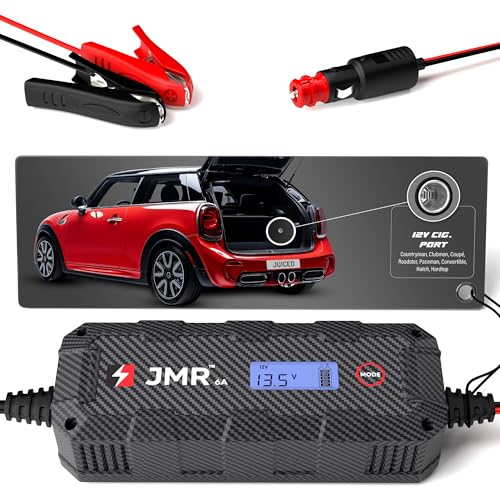
Charges via cigarette port, avoiding difficult battery access entirely.
The JMR charger is a clever workaround for Minis where the battery is buried under seats or in the trunk. It plugs straight into the 12V cigar port, so you don’t have to dismantle the interior.
It supports a wide range of chemistries including AGM and gel, and its eight-step smart program claims to repair sulfated cells. The manufacturer says it can increase battery life significantly, and it keeps your electronics safe while the car sits parked for weeks.
This is excellent for seasonal storage to prevent that dreaded dead battery when you return. The setup is truly plug-and-play, requiring zero technical know-how. The display gives you real-time progress, so you know exactly what’s happening. It meets OEM standards, so it shouldn’t void your warranty.
Just avoid the lithium mode unless you’re sure your battery supports it. Plus, it’s compact enough to toss in the glovebox for emergencies.
|
6
|
HELLA 010562901 Intelligent Battery Sensor, BMW & Mini (2005-2016) |

Monitors health sensors critical for diagnosing intermittent electrical faults.
The HELLA Intelligent Sensor keeps a constant watch on current, voltage, and temperature, ensuring your battery isn’t quietly failing. It manages charge states efficiently, which can help reduce emissions and improve overall energy use.
Compatible with BMW and Mini models from 2005 to 2016, it works with professional diagnostic tools like Mega Macs for calibration. It proactively alerts you to declining health, which can save you from being stranded by a sudden breakdown.
This is best left to mechanics who can diagnose complex electrical ghosts systematically. Installation needs professional expertise to place the sensor correctly. Its universal compatibility helps integrate it across various platforms, and the data logs it provides are invaluable for predicting failures before they happen.
It’s a critical component for keeping advanced driver assistance systems running smoothly.
|
7
|
UPLUS BCI Group 34/24 Car Battery, AGM-L55-UP 12V 55Ah 650CCA 120RC AGM | Maintenance Free |

Standard group size fits classic Cooper S engines reliably well.
The UPLUS Group 34/24 battery supplies 650 CCA, a solid number for classic Minis. It replaces standard sizes found in many older Coopers, using a calcium lead grid for low-resistance operation. With four times the cycling endurance of traditional flooded batteries, it lasts longer.
It also boasts fifteen times better vibration resistance, which is helpful if your classic Mini sees some spirited driving. It’s ideal for cars that might sit unused for weeks at a time.
Before ordering, verify the length is ten-point-eight-seven inches to ensure it fits your tray. The positive terminal is on the left, clearly marked. Its deep-cycle properties support accessory usage without draining the primary capacity, and the maintenance-free seal prevents electrolyte loss in hot weather.
It provides reliable ignition even in freezing temperatures, making it a cost-effective upgrade for aging factory units.
|
8
|
Odyssey Battery ODP-AGM47H5L2 Performance Series AGM Battery, Passenger Car |

Premium Odyssey AGM offers extreme reserve capacity for modified builds.
The Odyssey ODP-AGM47H5L2 is a beast, delivering an exceptional 1150 PHCA rating instantly. With sixty-five hundred cold cranking amps, it ensures rapid engine turnover, and the one-hundred five minutes reserve capacity can sustain electronics if the alternator fails.
PureFlow AGM technology minimizes internal resistance, and despite being lightweight, it suits performance-oriented modifications well. The SAE posts provide secure connection points for heavy-gauge cables.
This is targeted at enthusiasts adding significant audio or turbo upgrades. The higher price reflects superior engineering and materials. The negative terminal is on the left, matching specific chassis wiring.
The extended lifecycle justifies the initial cost for long-term ownership, and it handles deep discharge cycles better than standard automotive batteries. Professional installation is recommended to optimize charging system parameters immediately.
|
9
|
JMR 12V Battery Charger for Mini Cooper, 12V Cig. Port, Add Lithium Mode | Trickle Charger |

Adds lithium support for aftermarket conversions without accessing battery.
The updated JMR charger includes a dedicated Lithium LiFePO4 mode, expanding its utility beyond standard lead-acid batteries. It maintains compatibility with all previous non-electric Mini models and connects via the cigar port, eliminating the need for direct battery contact.
The smart eight-step algorithm adjusts output precisely for sensitive lithium chemistry, protecting expensive conversion kits from charging errors. The real-time display keeps you informed on the status.
This is essential for owners converting from lead-acid to lithium setups. The plug-and-play simplicity saves hours of troubleshooting complex wiring diagrams. It doesn’t void warranties when meeting manufacturer specifications. The compact design fits discreetly behind dashboard panels, and regular maintenance intervals reduce the frequency of full battery replacements eventually.
Secure payment methods verify authenticity of genuine JMR hardware components internally.
These items cover the full spectrum from locating hidden batteries to keeping them alive. Whether you’re replacing a corroded cover or upgrading to an AGM unit, the right choice matters.
Proper chargers can prevent premature death without forcing you to access tight spots, and sensors help diagnose those persistent electrical gremlins. Select parts that match your specific Mini generation to ensure safety and longevity for your vehicle’s power system.
Preventing Corrosion In Tight Spaces
Mini battery locations often suffer from poor ventilation, leading to moisture buildup and rapid terminal corrosion. Regular cleaning is the best defense against connectivity issues. I suggest inspecting seals annually for cracks that let water in, and applying dielectric grease sparingly after cleaning terminals.
Ensure drainage paths stay clear of leaves, as neglect here leads to slow drains and starting failures. Proactive care extends battery life significantly beyond what you’d expect.
- Check terminal tightness every six months manually.
- Clean corrosion with baking soda paste gently.
- Inspect insulation for rodent damage periodically.
- Test voltage load monthly with multimeter device.
- Replace covers showing signs of UV degradation.
Corrosion builds up faster in confined areas due to humidity, and condensation forms when temperatures fluctuate dramatically. Wipe down surrounding plastic trays during each checkup and ensure gaskets seal tightly against the body shell. Loose fittings create arcs that accelerate oxidation severely.
Use anti-corrosion spray products designed for marine environments, as they withstand salt air exposure better than standard options. Consistent attention keeps electrical connections pristine. Ignoring small spots invites major starting problems later.
Keep records of service dates, document any unusual smells or sounds, and stay vigilant about subtle changes in performance. Your Mini relies on clean power delivery, so treat the battery area like a vital organ system.
Prioritize cleanliness over speed during maintenance sessions; a thorough inspection beats a quick visual check every time.
Choosing The Right Replacement Chemistry
Not all batteries suit every Mini application equally. Start-stop systems demand AGM or EFB types strictly, as lead-acid fails prematurely under cyclic stress. Understand your vehicle’s specific electrical profile needs and match amp-hour ratings closely to original equipment specs. Incorrect sizing strains the alternator unnecessarily.
Consider climate impacts on chemical stability deeply, as hotter regions degrade plates faster uniformly across brands.
Absorbent Glass Mat Benefits
AGM batteries handle deep discharges exceptionally well and resist vibration damage inherent in sporty drives. Their sealed design prevents acid spills during tipping events, and faster recharging speeds benefit city driving patterns greatly. While the upfront cost is higher, it offsets the longer lifespan statistically proven.
They are essential for start-stop equipped Minis, a mandatory requirement nowadays.
Traditional Lead-Acid Limitations
Flooded batteries spill electrolytes if casing cracks open and have slower recharge rates that frustrate users with short commutes. Lower cycle life means frequent replacement intervals are needed. While the cheaper price attracts budget-conscious buyers initially, they are unsuitable for modern electronics-heavy configurations prone to failure.
The risk of acid burns increases during maintenance attempts, making them a risky choice for modern Minis.
Identify your Mini model code and year precisely.
Measure existing battery dimensions including height clearance.
Note terminal polarity layout left versus right side.
Confirm cold cranking amperage required for your engine.
Check if vehicle uses start-stop technology actively enabled.
Your Mini Cooper battery hides under rear seats, in trunks, or behind firewalls depending on age. Locate it using the table above before attempting service. Today, inspect your battery terminals for white powder buildup. Clean them with a wire brush and apply protective coating.
This simple step prevents unexpected no-start situations tomorrow morning.

- Marine Chargers and Backup Batteries: 9 Options Compared (2026) - October 27, 2026
- LTO Cells vs. SLA Generator Batteries: 5 Options Compared (2026) - October 27, 2026
- 12V/24V Backup Batteries and the EcoFlow DELTA Pro 3 (2026) - October 27, 2026