Matching 1.5V Batteries to Devices: Sizes and Chemistry
When a remote goes silent or a wall clock stops ticking, you usually need a 1. 5-volt battery immediately. The tricky part is that dozens of different battery sizes all share that exact same voltage rating. Grabbing the wrong physical size wastes time and leaves your device useless.
Knowing which 1. 5V cell fits your specific gadget matters far more than just matching the number printed on the side. This breakdown explains the common 1. 5-volt formats, where each one belongs, and highlights ten specific options to power your devices correctly.
Why So Many Different Batteries Share 1.5 Volts
Voltage tells you the electrical pressure a battery provides, but it says nothing about physical size or total energy capacity. Many distinct battery formats deliver exactly 1.5 volts. Understanding why helps you pick the right replacement without guessing.
Every standard alkaline cell produces roughly 1. 5 volts regardless of its physical dimensions. A tiny watch battery and a massive flashlight battery push electricity at the same pressure. The difference lies in how much total energy they store inside that chemical reaction.
Larger batteries hold more active material, so they sustain that 1. 5-volt output for much longer periods under heavy loads. Smaller cells run out quickly if asked to power demanding electronics. Manufacturers standardized this 1. 5-volt baseline decades ago for household convenience.
It allows engineers to design simple single-cell circuits for remotes, clocks, and toys. When a device needs more power, designers simply stack multiple 1. 5-volt cells together in series. Two cells create three volts, while four cells yield six volts.
Recognizing this stacking principle explains why your TV remote takes two small cells, while your large lantern might require four massive ones to achieve the necessary voltage.
Common 1.5-Volt Battery Sizes Compared
| Size Name | Typical Devices | Physical Profile |
|---|---|---|
| AA / AAA | Remotes, clocks, small toys | Cylindrical, medium to small |
| C Cell | Lanterns, musical instruments | Cylindrical, thick and heavy |
| D Cell | Large flashlights, boomboxes | Cylindrical, very large and heavy |
| N Cell | Key fobs, GPS trackers | Cylindrical, short and narrow |
| LR44 / AG13 | Watches, calculators, laser pointers | Flat button coin cell |
Matching The Right 1.5V Cell To Your Device
Knowing the voltage is only half the answer. The physical shape and the power drain of your device dictate which specific 1.5-volt battery you actually need to buy.
When Devices Eat Power Quickly
Flashlights, motorized toys, and portable radios draw current rapidly. These high-drain devices require physically larger 1. 5-volt batteries like C or D cells. The extra internal volume holds more alkaline paste to sustain the heavy load.
Using a smaller battery here causes rapid voltage drops, meaning the device will shut off prematurely even if the battery still holds some charge. I would always match the manufacturer’s recommended size for these power-hungry gadgets.
Brands like Duracell and Amazon Basics build their larger cells specifically to handle this stress without leaking under heavy discharge cycles.
When Devices Sip Power Slowly
Wall clocks, TV remotes, and digital thermometers consume very little electricity. These low-drain devices work perfectly with AA, AAA, or N cells. Button cells like the LR44 also thrive in these gentle environments; a tiny watch might run for years on a single 1. 5-volt coin battery.
Putting a massive D cell into a low-drain device offers no real advantage since the extra capacity simply goes unused while taking up unnecessary space. My read is that you should focus on shelf life rather than raw capacity when buying batteries for slow-draw electronics.
A five-year storage guarantee matters most for emergency backups in smoke detectors or rarely used remotes.
- Always check the old battery’s letter code before buying replacements.
- Never mix different brands or chemistries inside the same device.
- Remove batteries from electronics you plan to store for several months.
- Store spare 1.5-volt cells in a cool, dry drawer away from sunlight.
- Avoid forcing a battery into a compartment if the size feels wrong.
Ten 1.5-Volt Options To Power Your Devices
The following list covers the specific 1.5-volt batteries available right now. Each entry addresses a different size or use case mentioned above. I recommend matching the physical format to your device’s battery compartment before adding anything to your cart.
|
1
|
Duracell N 1.5V Alkaline Battery, 2 Count Pack, N 1.5 Volt Battery, Long-Lasting for Key F |
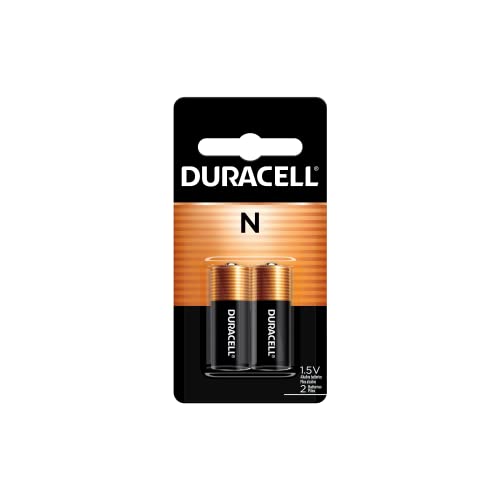
Delivers 1.5 volts in the compact N size required for key fobs and GPS trackers.
The Duracell N 1. 5V Alkaline Battery comes in a two-count pack designed for specialized electronics. Unlike common AA cells, this N-size cylinder is short and narrow. It supplies the standard 1. 5 volts needed by car alarms, key fobs, and GPS trackers.
Duracell guarantees these batteries remain viable for five years in storage, making them ideal for emergency devices you rarely activate.
This specific size fits niche gadgets that cannot accommodate bulkier batteries. If your vehicle’s keyless entry fob dies, this two-pack gets you back on the road. The main limitation is the N cell’s relatively small energy reserve compared to larger formats, so high-drain applications will deplete it quickly.
I would stick to using these strictly for the low-power specialty electronics they were engineered to support.
|
2
|
Amazon Basics C Cell Alkaline All-Purpose Batteries, 1.5 Volt, 5-Year Shelf Life, Reliable |

Provides standard 1.5-volt C cell power with a leak-free five-year shelf life for everyday gadgets.
Amazon Basics C Cell Alkaline All-Purpose Batteries deliver the classic 1. 5 volts in a thick cylindrical form. This four-pack targets medium-duty household items like wall clocks, older flashlights, and children’s toys.
The improved internal design promises a five-year leak-free shelf life, so storing them in an emergency kit ensures they remain safe and functional until a storm hits. They ship in standard retail packaging backed by a one-year limited warranty.
C cells bridge the gap between slim AA batteries and massive D cells, offering substantial runtime for devices that draw moderate current over long periods. This four-pack suits households that only need occasional replacements for a few specific gadgets.
However, if you maintain multiple lanterns or large musical instruments, buying in bulk proves more economical. Just keep these away from extreme heat to preserve that promised five-year shelf stability.
|
3
|
Amazon Basics C Cell Alkaline All-Purpose Batteries, 1.5 Volt, Long-Lasting Reliable Power |

Supplies twelve 1.5-volt C cells in frustration-free packaging for homes with multiple medium-drain devices.
This 12-pack of Amazon Basics C Cell Alkaline Batteries provides the same 1. 5-volt output as the smaller bundle. The larger quantity addresses homes running several C-powered devices simultaneously, as toys, large clocks, and portable radios often demand frequent swaps.
Having a dozen spares prevents sudden downtime during holidays or busy weekends. Like the four-pack, these feature a five-year leak-free shelf life and ship in certified frustration-free packaging.
Buying this twelve-count box lowers the cost per battery significantly compared to smaller packs. It serves families or workshops where C cells rotate through devices constantly. Remember that these are single-use alkaline batteries, not rechargeable units; attempting to recharge them risks leakage or rupture.
For users who cycle through C cells daily, exploring dedicated rechargeable options might save money long-term, but for reliable, grab-and-go 1. 5-volt power, this bulk alkaline pack delivers consistent performance.
|
4
|
Amazon Basics 6-Pack LR44 Alkaline Button Cell Replacement Battery, 1.5 Volt, Long Lasting |
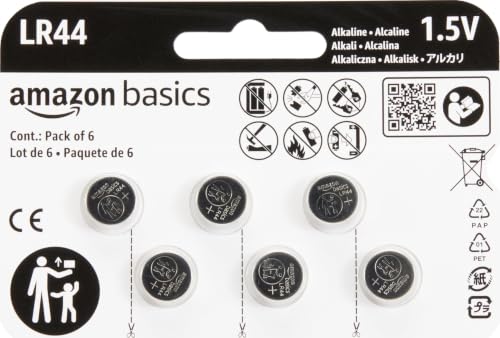
Offers six mercury-free 1.5-volt LR44 button cells engraved for easy identification in small electronics.
The Amazon Basics 6-Pack LR44 Alkaline Button Cell Replacement Battery delivers 1. 5 volts in a flat coin shape. These tiny cells power watches, calculators, and small electronic toys that lack room for cylindrical batteries. Each battery features an engraved model number for quick visual identification.
The mercury-free formula reduces environmental impact when you eventually dispose of them, and the child-resistant packaging adds a necessary layer of safety for homes with young children exploring drawers.
LR44 batteries excel in ultra-low-drain scenarios where longevity matters more than raw power output; a calculator might run for years on a single one of these 1. 5-volt coins. This six-pack covers basic replacement needs for a few household gadgets.
The primary limitation is the small quantity, if you repair electronics professionally or manage a classroom full of calculators, six units will disappear rapidly. I would consider larger bulk packs for heavier usage demands.
|
5
|
Energizer N Batteries, 2 Pack |
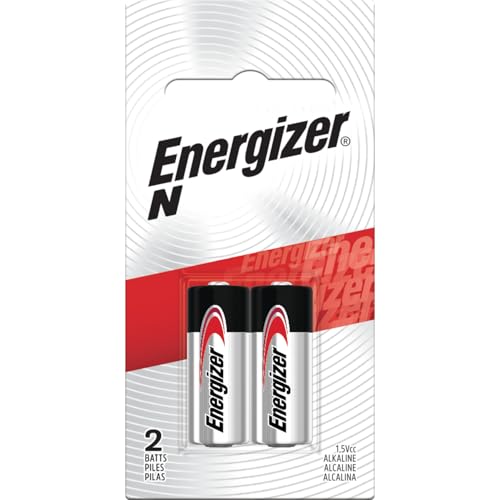
Replaces obscure N-size codes like E90 and MN9100 with a zero-mercury 1.5-volt Energizer cell.
Energizer N Batteries provide 1. 5 volts in the miniature N/E90 alkaline format. This two-pack serves as a direct replacement for numerous legacy battery codes, including 4001, 810, AM5, LR1, and MN9100. Such broad compatibility simplifies shopping when your device manual lists an obscure alphanumeric code.
Energizer formulated these zero-mercury cells to responsibly power gadgets while minimizing environmental harm during disposal.
These miniature cylinders frequently appear in vintage electronics, glucose monitors, and specific Bluetooth headsets. Their compact profile fits tight compartments that reject standard AA or AAA sizes. Users relying on medical devices like blood monitors benefit from Energizer’s strict quality control.
One drawback involves availability, as N cells remain harder to find locally than mainstream sizes. Keeping a spare two-pack on hand prevents frustrating delays when a critical health or communication device suddenly dies.
|
6
|
POWEROWL LR44 Batteries 24 Count, High Capacity AG13 357 303 SR44 L1154F A76 Premium Alkal |

Increases monomer capacity by twenty percent to extend 1.5-volt LR44 runtime in demanding button cell devices.
POWEROWL LR44 Batteries arrive in a generous 24-count package, each delivering 1. 5 volts of alkaline power. These button cells cover a massive list of equivalent models including AG13, 357, SR44, and A76.
POWEROWL uses high-density cells that boost energy density by ten percent over standard options, with monomer capacity increasing by twenty percent to translate directly into longer intervals between swaps. An air-tight seal with dual crimps locks that power inside until you need it.
Twenty-four batteries suit technicians, teachers, or hobbyists who replace button cells constantly. The enhanced capacity handles slightly higher drains better than basic grocery-store alternatives, benefiting watches, laser pointers, and medical devices with that extra endurance.
The main consideration is proper storage for the surplus units; while the anti-corrosion components protect the cells, leaving them in humid environments degrades any alkaline battery over time. I would store the extras in their original sealed packaging.
|
7
|
Fuspower LR44 Watch Battery 1.5V: 357 Alkaline Coin 10 Pack – AG13 Batteries for LED Light |

Guarantees stable 1.5-volt output through CE and RoHS certified alkaline chemistry for sensitive home electronics.
Fuspower LR44 Watch Battery 1. 5V comes in a convenient 10-pack tailored for small household electronics. Also known as 357 or AG13 cells, these alkaline coins maintain a steady 1. 5-volt output.
Fuspower emphasizes safety with a leak-proof, zero-mercury, and zero-cadmium formula, while advanced seal technology protects your valuable devices from corrosive acid damage. Each production batch undergoes strict quality inspections to meet CE, RoHS, and UL safety standards.
This ten-pack strikes a practical balance for average consumers, providing enough spares for LED lights, laser pointers, calculators, and thermometers without overwhelming your storage drawer. The certified safety standards offer peace of mind when placing batteries inside children’s toys.
However, these remain standard alkaline cells rather than premium silver oxide variants; audiophiles or precision instrument users sometimes prefer silver oxide for flatter discharge curves. For general household reliability, this Fuspower pack performs admirably.
|
8
|
Voniko AG13 LR44 Batteries 20 Pack, [Ultra Power] Premium Alkaline 1.5 Volt LR44 Button Cel |

Uses double corrosion protection to keep 1.5-volt LR44 power safely contained inside delicate toys and remotes.
Voniko AG13 LR44 Batteries ship in a 20-pack featuring premium 1. 5-volt alkaline chemistry. Voniko distinguishes this lineup with double corrosion protection built directly into the cell architecture.
Opening a device to find leaked acid ruins expensive electronics instantly, so these cells aim to prevent that disaster through refined safety engineering. The low self-discharge rate keeps them valid for up to five years in proper storage conditions.
Twenty units provide excellent coverage for wireless doorbells, mini radios, game controllers, and digital scales. The wide compatibility list matches AG13, CR44, SR44W, and dozens of other industry codes. Voniko explicitly warns against forced charging, as attempting to recharge these alkaline cells causes dangerous leaks.
I would always swap them out entirely rather than mixing fresh batteries with partially drained ones to ensure your small electronics stay powered safely for months at a time.
|
9
|
Duracell Coppertop D Batteries, 4 Count, 10-Year Shelf Life, Long-lasting |

Packs massive energy reserves into a 1.5-volt D cell guaranteed ready for ten years in emergency kits.
Duracell Coppertop D Batteries represent the largest common format delivering standard 1. 5-volt alkaline power. This four-count pack targets heavy-duty equipment like large flashlights, emergency weather radios, and portable lanterns. D cells contain significantly more active material than smaller sizes, sustaining high current draws effortlessly.
Duracell backs these specific batteries with an impressive 10-year storage guarantee, making that decade-long promise essential for storm prep kits and camping gear.
When the power grid fails, D-cell devices often become your primary light and communication sources, so reliable 1. 5-volt output isn’t negotiable during emergencies. These Coppertop cells deliver that dependability through guaranteed defect-free construction. The obvious trade-off involves their sheer physical bulk and weight.
Modern LED technology has reduced the need for D cells in everyday carry items, so I would reserve these massive batteries strictly for the high-drain, large-chassis equipment that genuinely requires their substantial energy capacity.
|
10
|
Amazon Basics 12-Pack LR44 Alkaline Button Cell Batteries, 1.5 Volt, Long Lasting Power, M |

Doubles the standard six-pack count to twelve 1.5-volt LR44 cells for broader small-device coverage.
Amazon Basics 12-Pack LR44 Alkaline Button Cell Batteries supply 1. 5 volts across a dozen individual coin cells. This larger quantity builds upon the six-pack version, offering better value for multi-device households. Like its smaller sibling, every battery features an engraved model number for instant identification.
The mercury-free composition ensures safer disposal, and child-resistant packaging remains a critical inclusion given the choking hazard these small discs present to toddlers.
Twelve batteries allow you to refresh an entire collection of calculators, watches, and novelty toys simultaneously. They perform reliably across extreme temperatures, making them suitable for outdoor sensors or garage thermometers.
The main consideration is ensuring your devices actually accept the LR44 footprint; confusing them with slightly thinner or wider coin cells leads to poor contact and device failure. I would verify the exact alphanumeric code stamped on your old battery before installing these replacements.
These ten options cover the major 1.5-volt formats available today. From tiny LR44 coins to heavy-duty D cells, each serves a distinct electrical purpose. Matching the physical size to your device ensures the voltage actually reaches the circuit properly.
How To Store 1.5-Volt Batteries Without Losing Power
Buying the correct 1.5-volt battery solves the immediate problem, but storing the remaining spares improperly creates new issues later. Heat and humidity silently drain alkaline cells before you ever install them.
Alkaline batteries slowly lose their charge through natural internal chemical reactions, a process that accelerates dramatically in warm or humid environments. Leaving spare 1. 5-volt cells inside a hot car glovebox ruins them within months.
The ideal storage spot maintains a consistent, cool temperature away from direct sunlight; a bedroom drawer or climate-controlled closet works perfectly. Avoid refrigerators despite older myths suggesting cold storage extends life, as condensation forms when you remove cold batteries into warm rooms, promoting terminal corrosion and damaging the outer casing.
Keep batteries inside their original blister packs until the moment you need them. Loose batteries rolling around in a junk drawer can short-circuit if their terminals touch metal objects like keys or coins.
A shorted battery heats up rapidly, potentially leaking caustic potassium hydroxide, so organized storage protects both your investment and your household safety.
Leave spare batteries sealed in their original manufacturer packaging until needed.
Choose a dark, dry drawer that maintains a stable room temperature year-round.
Never toss loose batteries into a container where positive and negative ends touch metal.
Check the expiration date printed on the package before storing them away.
Rotate your stock by using older packages first when replacing dead cells.
Signs Your Device Needs More Than Just 1.5 Volts
Sometimes a fresh 1.5-volt battery fails to revive a struggling gadget. The issue might involve total energy capacity rather than voltage. Recognizing these symptoms prevents endless battery swapping.
A device might turn on briefly then shut down immediately under load. This behavior often indicates the battery provides the correct 1. 5 volts but lacks sufficient current capacity. Small button cells struggle to power motors or bright LEDs continuously.
If your gadget demands high bursts of energy, a physically larger 1. 5-volt format becomes necessary, as engineers design devices around specific battery sizes for exactly this reason. Another common symptom involves dimming lights or slowing motors as the battery depletes. Alkaline cells gradually drop below 1.
5 volts as their chemicals exhaust; a reading of 1. 2 volts means the battery is effectively dead for sensitive electronics. Using a cheap multimeter to test suspect batteries saves frustration. Measure the voltage while the battery sits outside the device, and if it reads significantly below 1.
5 volts, discard it. Never attempt to squeeze extra life from heavily depleted alkaline cells in critical equipment like smoke detectors or medical monitors.
Troubleshooting Weak 1.5-Volt Performance
| Symptom | Likely Cause | Action To Take |
|---|---|---|
| Device powers on then dies instantly | Battery capacity too small for load | Upgrade to larger battery size if possible |
| Lights appear dim or flickering | Voltage dropped below usable threshold | Test with multimeter and replace cell |
| Battery compartment shows white crust | Alkaline leakage from old or mixed cells | Clean contacts with vinegar and cotton swab |
| Device runs hot during operation | Short circuit or wrong battery inserted | Remove battery immediately and inspect fit |
Many different physical battery sizes produce exactly 1. 5 volts, so matching the letter code matters more than the voltage number alone. Check the dead battery currently sitting in your device right now. Read the alphanumeric stamp on its side, whether that says LR44, D, C, or N.
Order a fresh pack that matches both that exact code and the quantity your gadget requires. Keeping a few verified spares stored in a cool drawer prevents future headaches when your remotes or clocks inevitably go silent again.

- Marine Chargers and Backup Batteries: 9 Options Compared (2026) - October 27, 2026
- LTO Cells vs. SLA Generator Batteries: 5 Options Compared (2026) - October 27, 2026
- 12V/24V Backup Batteries and the EcoFlow DELTA Pro 3 (2026) - October 27, 2026