How Long Does Tesla Battery Last In A Day?
If you’ve ever checked your Tesla’s range estimate before a road trip and wondered, *‘Will I make it? ’*, you’re not alone.
Battery life in electric vehicles isn’t just about the numbers on the screen, it’s about how you drive, where you drive, and even how you prep your car for the day. A brisk mountain commute in winter will drain your battery faster than a gentle city cruise in summer.
The good news? Understanding these variables lets you take control. This guide breaks down what *really* affects your daily battery life, from the hidden energy hogs in your cabin to the small tweaks that can stretch your range when it matters most.
Think of it as your playbook for getting the most out of every charge, without overcomplicating things.
Understanding Your Tesla Daily Battery Usage
Recommended Products

Your Tesla’s daily battery life isn’t set in stone. It’s more like a budget, one that gets spent faster on highways, in cold snaps, or when you’re blasting the heat in January. The ‘estimated range’ you see on the screen is a starting point, but real-world use tells a different story.
Here’s the thing about Tesla batteries: they’re smart, but they’re not mind readers. That 300-mile estimate? It assumes you’re cruising at a steady pace, with moderate climate control, and no sudden detours up a steep hill.
Push the pedal too hard, or let the battery dip into single digits in freezing temps, and watch that range shrink like a deflating balloon. Even something as simple as opening the sunroof on a hot day can sneakily drain power. The best way to keep tabs?
Glance at your energy graph mid-drive, it’s like a real-time report card on how your habits are affecting your battery. For example, I’d check that graph after a stoplight-heavy commute to see if my stop-and-go driving is eating up more juice than I realized.
Small adjustments, like easing off the accelerator or pre-conditioning the cabin while still plugged in, can add up to meaningful extra miles by the end of the day.
- High speeds significantly increase aerodynamic drag and reduce your overall daily battery range.
- Extreme heat or cold forces the battery thermal management system to work harder, consuming extra power.
- Frequent rapid acceleration drains the battery faster than maintaining a steady, moderate cruising speed.
- Using climate control, seat heaters, and infotainment features draws power from the main high-voltage battery pack.
- Hilly or mountainous terrain requires more energy to climb, which is only partially offset by regenerative braking.
Resources To Manage Electric Car Battery Life
From books that decode battery science to gear that keeps your 12V systems from failing at the worst moment, these picks help you manage, monitor, and maintain the power behind your EV, whether you’re planning a cross-country trip or just trying to avoid that ‘low battery’ panic on a Monday morning.
|
1
|
Electric Vehicle Batteries: From Sourcing to Second Life and Recycling (SAE Sustainable En |

This book is your backstage pass to how lithium-ion batteries tick, from the chemistry that makes them work to the recycling process that gives them a second life.
If you’ve ever scrolled past the ‘battery health’ section in your Tesla’s menu and thought, *‘What does this even mean? ’*, this book is for you.
*Electric Vehicle Batteries: From Sourcing to Second Life and Recycling* strips away the jargon to explain why your battery’s capacity might dip over time, how temperature plays a role, and what ‘second life’ actually means for old EV packs.
It’s not a manual for fixing your battery, but it *will* help you understand why your range feels a little shorter after a few years, and what you can do to slow that down.
My read is that this one’s best for curious owners who want to dive deeper than the owner’s manual allows.
It’s not light reading, but it’s the kind of book you’ll reference when you’re troubleshooting why your battery’s performance seems ‘off’ or wondering about the environmental impact of your car’s power source.
Skip it if you’re looking for quick fixes, but keep it handy if you like knowing *why* things work the way they do.
|
2
|
VANXIPOW 8000A Portable Car Battery Jump Starter with Air Compressor, 150PSI (9.0 L Gas/8. |
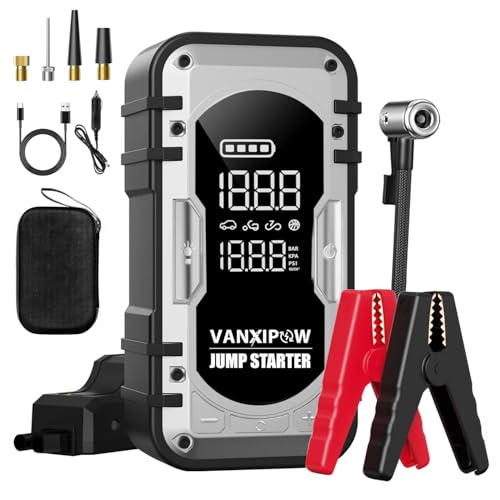
This portable jump starter is your emergency lifeline for the 12V systems that keep your lights, locks, and infotainment running, even if your main battery is on empty.
The VANXIPOW 8000A isn’t going to save your main EV battery, but if your 12V auxiliary battery dies, leaving you in the dark with a screen that won’t turn on, this thing will get you back on the road. It’s got enough juice to restart gas or diesel engines up to 9.
0L, which means it’s overkill for most EVs but a godsend if you’re stuck with dead door locks or a drained infotainment system.
The built-in air compressor and USB ports are nice bonuses, but the real star here is its safety features: 10 protections to keep you from frying the device (or yourself) during use.
I’d shortlist this for anyone who’s ever been stranded because their 12V battery gave out. It’s not cheap, but the peace of mind, knowing you can handle a minor battery failure without calling for a tow, might just be worth it.
Just remember: it’s for your car’s small battery, not the big one powering your drive.
|
3
|
8000A Jump Starter with Air Compressor, 180PSI Auto-Shutoff Tire Inflator | 12V Car Batter |

This jump starter packs a punch for emergencies, with smart safety features and a tire inflator to boot.
When your 12V battery decides to quit, you want something that doesn’t just *might* work, you want a tool that *will* work, no questions asked. This 8000A jump starter delivers that confidence with a peak current strong enough to restart even larger engines.
The auto-shutoff tire inflator is a standout, especially if you’re on a road trip where keeping your tires at the right pressure could mean the difference between a smooth drive and a battery-draining struggle up a hill.
The LED light and USB ports are the cherry on top, turning this into a multi-tool for breakdowns.
The safety protections here, like reverse polarity alerts and overheating prevention, make it a great choice for first-time users. That said, it’s still only for your 12V system, so don’t expect miracles if your main battery is completely drained.
Think of it as your backup for the little things that keep your EV running smoothly day to day.
|
4
|
Lithium LiFePO4 Car Battery Auto Battery, 12V 40Ah, 660CCA, 100RC Deep Cycle Start and Sto |

This LiFePO4 battery is a step up from your average lead-acid battery, offering longer life and better reliability for your 12V needs.
If your car’s 12V battery feels like it’s on its last legs, or you’re just tired of replacing it every few years, this lithium alternative might be the upgrade you need. It’s got the power to handle your vehicle’s electronics without the sulfation issues that plague lead-acid batteries over time.
The IP66 rating means it can handle rain, snow, or a spill without shorting out, and the BMS (battery management system) keeps it from overcharging or overheating. It’s not plug-and-play in every car, though, so I’d double-check the dimensions and terminal setup before buying to avoid any surprises during installation.
The real win here is longevity. These batteries often last twice as long as traditional ones, which adds up to fewer headaches and less money spent over time.
Just be mindful of the weight, it’s heavier than a lead-acid battery, so if your car’s battery tray isn’t built for it, you might need to tweak the setup. Still, for anyone frustrated with frequent 12V battery failures, this could be a game-changer.
|
5
|
12V Kids Charger for Ride On Car, 12V Various Electric Ride-on Toys Car Battery Charger,12 |

This charger keeps your kids’ electric ride-on toys powered up and ready for play, safely and efficiently.
If your household runs on electric toy cars, this charger is the unsung hero that keeps the fun going without frying the batteries. It’s designed specifically for 12V ride-on toys, with smart protections to stop overcharging and short circuits before they happen.
The LED indicators make it easy to see when the battery’s fully charged, so you’re not left guessing (or overcharging, which can wear out the battery faster). It’s not glamorous, but it’s exactly what you need to avoid coming home to dead toys mid-playtime.
The 5-foot cable gives you enough reach for most setups, and the safety certifications mean you can plug it in without worrying. Just make sure your toy’s charging port matches the 2. 1mm x 5. 5mm connector, some older models might need an adapter.
For parents who’ve ever dealt with a whiny child because their toy died five minutes into play, this charger is a small investment with big payoffs.
|
6
|
MUKIDY Kids Ride-on Car Licensed McLaren765LT for 3-6Years Old, Electric car 12V Battery P |

This electric ride-on car brings the excitement of a high-performance vehicle to kids, complete with realistic sounds and lights.
The MUKIDY McLaren765LT isn’t just a toy; it’s a mini electric car that feels *real*, down to the LED headlights and engine noises.
For kids aged 3-6, it’s a safe way to introduce them to the basics of battery-powered vehicles, how to charge them, how to drive (sort of), and even how to use a parent remote for extra safety.
The slow-start function and non-slip tires make it a solid choice for little drivers still learning the ropes. It’s not going to win any speed races, but it’s built to last and designed to make playtime feel like a genuine driving experience.
The biggest trade-off is the recharge time, 8-12 hours isn’t ideal if your kid wants to play multiple sessions in a day. But for short bursts of fun, it’s a durable, feature-packed option.
If you’re looking for a toy that grows with your child (or at least lasts through a few seasons of play), this one’s worth considering. Just set expectations: it’s not a replacement for a real car, but it’s a great intro to how batteries power vehicles.
|
7
|
Advances in Lithium-Ion Batteries for Electric Vehicles: Degradation Mechanism, Health Est |

This book dives into the science behind lithium-ion batteries, helping you understand how to extend their lifespan in your EV.
If you’ve ever wondered why your Tesla’s range seems to drop faster in winter or why ‘fast charging’ isn’t always the best idea, this book has the answers.
*Advances in Lithium-Ion Batteries for Electric Vehicles* breaks down the nitty-gritty of how batteries degrade over time, from charging cycles to temperature effects.
It’s not a how-to manual, but it *will* help you make smarter decisions, like avoiding those 100% charges when you’re not on a road trip or why preconditioning your battery in cold weather can save you miles down the line.
I’d recommend this to EV owners who like to geek out on the details. It’s dense, so it’s not a casual read, but if you’ve ever caught yourself Googling ‘why is my battery degrading faster than expected? ’, this book will give you the context to understand what’s really happening.
Think of it as the owner’s manual for battery nerds, useful for troubleshooting, but not exactly beach reading.
|
8
|
Schumacher Electric 1.5A Car Battery Charger & Maintainer, 6V/12V – SC1355 | Restores Batt |

This charger and maintainer is a set-it-and-forget-it solution for keeping your 12V battery healthy when it’s not in use.
If you’ve got a car that sits unused for weeks, or even months, this trickle charger is your secret weapon against a dead battery. It’s designed to keep your 12V system topped up without overcharging, which means no more jumping your battery when you finally get back on the road.
The auto-voltage detection makes it easy to use, and the 1. 5A charge rate is gentle enough to keep your battery happy over time. It’s not a quick fix for a completely dead battery, but it’s perfect for long-term storage or maintaining a battery that sees light use.
The real value here is in the prevention. I’d keep one of these in my garage or trunk if I have a secondary vehicle or a car that isn’t driven daily.
It’s a small investment that can save you from the hassle (and cost) of a dead battery down the line. Just don’t expect miracles if you’ve let your battery sit flat for months, this is for maintenance, not revival.
|
9
|
Fix Your Electric Car Without a Mechanic: Diagnose Battery Failures, Charging Problems, an |

This guide is your DIY troubleshooting bible for EV battery and charging issues, no mechanic required.
When your Tesla’s charging port acts up or the battery health warning pops up, this book can help you figure out if it’s a minor issue or something that needs professional attention.
It walks you through common EV problems, from software glitches to hardware quirks, with step-by-step fixes that might save you a trip to the dealership. That said, it’s not a replacement for a mechanic when it comes to high-voltage systems, some things are best left to the pros.
But for the little things, like resetting charging errors or diagnosing why your range seems off, it’s a handy resource.
The best part? It’s written in plain English, so you don’t need an engineering degree to follow along. I’d keep this on my bookshelf if I wanted to feel more confident about diagnosing issues before they turn into big (and expensive) problems.
Just remember: if the issue involves the main battery pack or high-voltage components, call a professional. This book is for the stuff you can tackle yourself.
|
10
|
Gotrax Ride on Toy for Toddlers 1.5-4, 12V Battery for 80Mins, Max 1.5MPH | Safe Replaceab |

This toddler-sized ATV delivers reliable playtime on a single charge, with safety features built in.
For little ones who love the idea of riding around like they’re in a real vehicle, this Gotrax toy ATV is a solid pick.
It’s got 80 minutes of playtime per charge, which is plenty for a morning of outdoor fun, and the anti-rollover design means it’s built to handle the bumps and turns of a toddler’s driving style. The 1.
5mph speed limit keeps things safe, and the replaceable battery means you won’t be stuck with a dead toy after a few months. It’s not going to win any awards for speed or realism, but it’s durable, easy to clean, and built for the rough-and-tumble energy of young kids.
The main limitation is that it’s not going to grow with your child, toddlers outgrow this kind of toy faster than they outgrow their baby clothes. But for the age group it’s designed for, it’s a great intro to electric vehicles and battery-powered fun.
If you’ve got a little one who’s obsessed with cars and batteries, this could be the perfect way to keep them entertained (and learning) for hours at a time.
Your battery’s daily performance isn’t just about the miles you drive, it’s about the little things you do (or don’t do) that add up over time.
Whether you’re swapping out a failing 12V battery, troubleshooting a charging quirk, or just trying to stretch your range on a road trip, the right tools and knowledge can make all the difference.
Start with smart habits, like preconditioning your car before a drive or keeping your tires inflated, and back them up with the gear that keeps your EV running smoothly. A little preparation now means fewer surprises later, and more miles to enjoy every day.
Maximizing Your Daily Battery Performance
Getting the most out of your battery isn’t about driving perfectly, it’s about working *with* your car’s quirks to make every charge count.
Here’s the truth: no one drives like a robot. We brake hard at red lights, speed up to merge onto highways, and sometimes forget to turn off the seat heaters.
The key to maximizing your daily range isn’t eliminating these habits, it’s understanding how they impact your battery and adjusting when it matters most. For example, I’d avoid blasting the A/C on a short errand run, but I wouldn’t stress over a few minutes of idle time at a traffic light.
Preconditioning your car while it’s still plugged in is one of the easiest wins; it lets you use grid power to heat or cool the cabin instead of draining your battery. And if you’re planning a longer trip, use your car’s navigation to map out charging stops, it’s smarter than guessing.
Small tweaks like these can add up to 10, 20, or even 30 extra miles by the end of the day, without requiring a major lifestyle overhaul.
Precondition your cabin while the car is plugged in to conserve power for your drive.
Maintain a steady, moderate speed on highways to reduce aerodynamic drag on your battery.
Use regenerative braking to your advantage by anticipating stops and coasting whenever possible.
Monitor your energy consumption graph to identify which features are draining your battery the fastest.
Check your tire pressure monthly to ensure optimal rolling efficiency for every mile you drive.
Long-Term Battery Health and Maintenance
Battery health isn’t a sprint, it’s a long game, and the choices you make today will shape how your car performs years down the road.
If there’s one rule of thumb for keeping your battery happy, it’s this: avoid the extremes. Letting it drain to 0% is like running a marathon on empty, it stresses the chemistry and speeds up wear.
On the flip side, keeping it at 100% all the time is like leaving your phone plugged in forever; it causes unnecessary strain. Most manufacturers suggest keeping your daily charge between 20% and 80% for optimal longevity. And if you’re storing your car for a while?
Aim for around 50%, enough to keep it alive without overworking the battery. Extreme temps are the real villain here, so if you’re parked outside in a heatwave or a deep freeze, try to move your car to a garage or use a sunshade.
It’s the little things, like not charging to full every night or parking in the shade, that add up to a battery that stays strong for thousands of miles.
- Avoid frequent deep discharges below 10% to prevent unnecessary stress on your battery cells.
- Limit your daily charging to 80-90% unless you are preparing for a very long road trip.
- Park in climate-controlled areas like a garage when temperatures are extremely high or very low.
- Use scheduled charging to ensure your battery finishes its charge cycle just before you depart.
- Keep your software updated, as manufacturers often release improvements to battery management systems over time.
Your Tesla’s battery is designed to handle hundreds of miles a day, but how you use it makes all the difference. Next time you’re behind the wheel, take a quick look at your energy graph, it’s like a real-time report card on your driving habits. Are you braking too hard?
Is the A/C running longer than usual? Small adjustments can turn a ‘maybe I’ll make it’ into a ‘no problem’ when it comes to range. And if you’re ever stuck with a dead 12V battery, a portable jump starter in your glovebox can be a lifesaver.
Drive smoothly, keep your tires inflated, and don’t forget to precondition your car before hitting the road. With a little mindfulness, you’ll get the most out of every charge, and more miles to enjoy along the way.

- 10 Best Battery For Generator Ev Battery Bank Marine 2026 - October 27, 2026
- 10 Best Battery For Generator Ev Battery Bank Lto 2026 - October 27, 2026
- 10 Best Battery For Generator Ev Battery Bank Low Voltage 2026 - October 27, 2026