What’s The Difference Between Alkaline And Lithium Batteries?
You’re standing in the battery aisle holding two AA packages that look almost identical, except one says alkaline and one says lithium. The price gap makes you pause. Maybe you’ve had alkalines leak inside a flashlight, or watched a trail camera die in the cold.
The chemistry inside those wrappers behaves very differently, and picking the wrong one can cost you a device. This breaks down how each type actually works, where each one wins, and which specific batteries match the jobs you’re trying to power.
Why Alkaline And Lithium Batteries Behave So Differently
Recommended Products


Both batteries push out 1.5 volts, so on paper they look interchangeable. The difference lives in the chemistry and how that chemistry handles load, cold, and time on the shelf. Understanding that gap explains why one costs more and why one can ruin a gadget you forgot about.
An alkaline battery generates power through a reaction between zinc and manganese dioxide. That reaction works fine, but it slows down under heavy drain and in cold weather. Voltage also sags gradually as the cell empties, so a flashlight dims and a camera gets sluggish before it quits.
Alkaline cells can also leak potassium hydroxide over time, which corrodes contacts. Lithium cells use lithium iron disulfide instead. That chemistry holds a steadier voltage, shrugs off extreme temperatures, and resists leaking. The tradeoff is price and the fact that most lithium AA and AAA cells are not rechargeable.
Neither type is universally better; each one fits a different kind of job.
Alkaline Versus Lithium At A Glance
| Factor | Alkaline | Lithium |
|---|---|---|
| Voltage under load | Sags gradually | Stays near 1.5V |
| Cold performance | Weak below freezing | Works to -40F |
| Shelf life | Up to 15 years | Up to 25 years |
| Leak risk | Higher over time | Very low |
| Cost per cell | Lower | Higher |
| Best for | Remotes, clocks, toys | Cameras, cold gear |
- Pick alkaline for low-drain items like wall clocks, remotes, and smoke detectors.
- Choose lithium for high-drain devices such as cameras, GPS units, and motorized toys.
- Use lithium when a device sits in freezing or scorching conditions outdoors.
- Store either type in a cool, dry place to slow self-discharge and leak risk.
- Never mix alkaline and lithium cells in the same device or battery tray.
- Swap alkalines out of rarely used gadgets to avoid corrosion damage.
Batteries That Match Each Job You’re Powering
Recommended Products


Once you know whether your device needs steady high-drain power or cheap low-drain energy, the choice gets simple. The batteries below split cleanly along that line. Some are lithium cells built for cameras, cold weather, and long storage. A few are alkaline cells that make sense for remotes and toys.
Match the chemistry to the device and you stop wasting money either way.
|
1
|
Energizer Ultimate Lithium AA Batteries (24 Pack), AA Lithium Batteries | Double A Batteri |

A 24-pack of lithium AAs built for high-drain gear and 25-year storage, the classic lithium answer.
This is a 24-pack of Energizer Ultimate Lithium AA batteries, the flagship example of what lithium chemistry buys you. Energizer calls them the world’s longest-lasting AA, and the specs back the claim for high-drain use.
They hold power up to 25 years in storage and run from -40F to 140F, so outdoor cameras and trail gear keep working through winter. The leak-proof construction matters if you leave batteries in a device for months.
The 24-count size suits anyone running several devices at once, like a set of Blink cameras plus a couple of flashlights. It’s the practical bulk buy if you’ve committed to lithium. The honest downside is cost: you pay a real premium per cell compared to alkaline.
If your devices are low-drain remotes, this pack is overkill and you’d be better served by cheaper alkaline cells.
|
2
|
Energizer Ultimate Lithium AA Batteries (8 Pack), 1.5V Lithium Double A Batteries |

An 8-pack of the same lithium AA chemistry, sized for trying it without a bulk commitment.
This 8-pack of Energizer Ultimate Lithium AA batteries delivers the same core benefits as the larger packs in a smaller, easier-to-justify size. You get the 25-year shelf life, the -40F to 140F operating range, and the leak-proof build. Each cell is 1.
5V lithium, so it fits any standard AA slot. For someone curious about lithium but not ready to buy 24 cells, this is the sensible entry point.
Eight cells covers a couple of cameras or one demanding device with spares. It’s a good fit for a single trail camera or a handheld GPS you use seasonally. The limitation is value per cell: buying in this quantity costs more per battery than the 24-pack.
If you already know lithium works for you, sizing up saves money over time.
|
3
|
BEVIGOR 1.5V Long-Lasting Lithium Batteries AA 24 Pack, 20-Year Shelf Life | Reliable Powe |

A 24-pack of 1.5V lithium AAs that keeps full voltage until nearly empty, unlike alkalines.
BEVIGOR’s 24-pack of 1. 5V lithium AA batteries leans hard into the voltage-stability argument. The brand points out that these hold a steady 1. 5V almost to the end, while alkalines fade gradually. That matters for devices that misbehave as voltage drops.
They also carry a 20-year shelf life with under 1% annual self-discharge, plus a three-layer safety build covering leaks, short circuits, and pressure. The -40F to 140F range covers outdoor security and trail cameras.
This pack fits someone who wants lithium performance without paying Energizer prices. It’s aimed at Blink cameras, microphones, and alarm systems where steady voltage keeps things reliable.
The catch is brand familiarity: BEVIGOR doesn’t carry the same track record as the legacy names, so some buyers prefer to test one device first. The cells are non-rechargeable, so plan for replacements.
|
4
|
Energizer 123 Lithium Batteries (6 Pack), 3V Photo Batteries | Ready for smart home device |

A 6-pack of 3V lithium photo cells for cameras and smart home gear, not standard AA slots.
This is a 6-pack of Energizer 123 lithium batteries, a 3V photo cell rather than a 1. 5V AA. These fit devices with a specific CR123 or CR123A slot: DSLR cameras, tactical flashlights, and some smart home sensors.
Energizer rates them for up to 10 years in storage and notes they replace 5018LC, CR123, CR123A, CR17345, and EL123 part numbers. They deliver serious power for high-tech gear that draws hard.
Buy this pack if you own a camera body, a bright flashlight, or a security sensor that takes 123 cells. Photographers and security installers tend to keep spares on hand.
The key limitation is fit: these will not go into an AA or AAA compartment, so check your device label first. If your gear takes standard AAs, this pack is the wrong chemistry and the wrong size.
|
5
|
Energizer Ultimate Lithium AAA Batteries (8 Pack), Lithium Triple A Batteries |
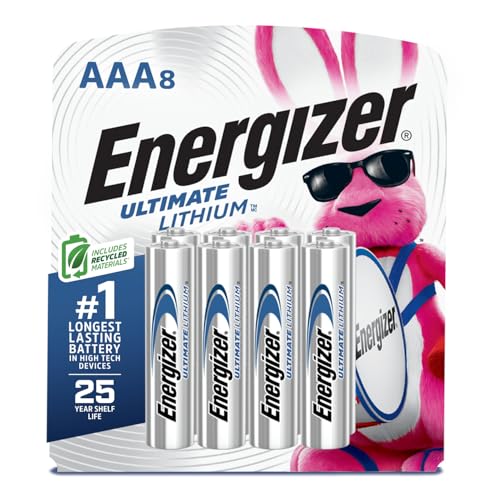
An 8-pack of lithium AAA cells for small high-drain devices that need the same cold-weather edge.
This 8-pack of Energizer Ultimate Lithium AAA batteries brings the lithium advantage to smaller devices. Energizer calls them the number one longest-lasting AAA in high-tech gear. The same -40F to 140F range and leak-proof construction apply, and the cells hold power up to 25 years in storage.
If you’ve been frustrated by alkalines dying fast in a headlamp or a small camera, this is the lithium fix in AAA size.
These suit headlamps, bike lights, small flashlights, and any AAA device that runs hot or lives outdoors. The pack size covers a few devices with spares. The limitation mirrors all lithium cells: higher cost per battery than alkaline AAA.
For a low-drain item like a clock or a remote, alkaline AAA still makes more financial sense.
|
6
|
Energizer Ultimate Lithium AA Batteries (4 Pack), 1.5V Lithium Double A Batteries |

A 4-pack of lithium AAs, the smallest commitment for one critical device.
This 4-pack of Energizer Ultimate Lithium AA batteries is the minimal way to get lithium performance. You still get the world’s-longest-lasting AA claim, the -40F to 140F range, the leak-proof build, and up to 25 years of storage life.
Four cells is enough for one camera or one flashlight with a spare pair. It’s a sensible pick if you want to test lithium in a single device before committing further.
This size fits someone with one demanding gadget, like a security camera or a handheld game. It’s also a reasonable emergency-kit addition since the cells stay fresh for decades. The obvious limitation is price per cell: four-packs carry the highest cost per battery of any size here.
If you like the results, buying the 24-pack next time cuts your per-cell cost noticeably.
|
7
|
Duracell CR123A 3V Lithium Battery, 2 Count, 10-Year Storage, Long-lasting | Reliable lith |

A 2-count of Duracell CR123A 3V cells with a 10-year storage guarantee for security gear.
This is a 2-count of Duracell CR123A 3V lithium batteries, aimed squarely at high-performance applications. Duracell lists tactical flashlights, Ring, Nest Cam, and Arlo cameras, alarm sensors, and professional cameras as targets.
The high-energy lithium chemistry beats standard alkaline in high-drain devices, and the cells perform from sub-freezing to high heat. A 10-year storage guarantee means spares stay ready for years. Law enforcement and security pros lean on this cell for gear that can’t fail.
Buy this if you own a Ring or Arlo camera, an alarm sensor, or a tactical light that takes 123A cells. Two cells covers a single device swap with one spare.
The limitation is quantity and fit: two is a small count for a multi-camera setup, and these won’t fit AA compartments. For a whole home security system, you’ll want a larger multi-pack.
|
8
|
Energizer AA Batteries, MAX Double AA Battery Alkaline, 4 Count |

A 4-pack of Energizer MAX alkaline AAs, the right chemistry for remotes and toys.
This 4-pack of Energizer MAX AA alkaline batteries represents the other side of the answer. These are standard alkaline cells, and Energizer rates them up to 100% longer lasting than minimum average duration standards. They hold power for up to 15 years in storage.
For low-drain devices like TV remotes, wall clocks, and simple toys, alkaline chemistry delivers everything you need at a fraction of lithium cost.
This pack fits everyday household needs where drain is low and cost matters. It’s the practical choice for a drawer of remotes or a child’s toy.
The honest limitation is high-drain and cold performance: alkalines sag under load and weaken in freezing weather, and they can leak if left in a device for years. For cameras or outdoor gear, lithium is the better answer.
|
9
|
Energizer AA Batteries, Ultimate Double A Battery Lithium, 12 Count | Double A Batteries, |

A 12-pack of lithium AAs that splits the difference between small and bulk sizes.
This 12-pack of Energizer Ultimate Lithium AA batteries lands between the small and large sizes. You get the longest-lasting AA claim, leak-proof construction, and power for smart home devices, outdoor surveillance, digital cameras, and handheld games. Energizer rates storage at up to 20 years here.
Twelve cells covers a few devices without the upfront cost of a 24-pack, which makes it a flexible middle option.
This size suits a household with two or three high-drain devices, like a couple of cameras plus a flashlight. It’s also a good emergency-kit stock since the cells stay fresh for two decades. The limitation is the same as all lithium: higher cost per cell than alkaline.
If your devices are low-drain, alkaline still wins on price.
|
10
|
Energizer Ultimate Lithium AA Batteries (2 Pack), 1.5V Lithium Double A Batteries |

A 2-pack of lithium AAs for a single emergency spare or one-device top-up.
This 2-pack of Energizer Ultimate Lithium AA batteries is the smallest lithium option here. It carries the same core specs: the world’s-longest-lasting AA claim, -40F to 140F performance, leak-proof build, and up to 25 years of storage life.
Two cells is a minimal purchase, best treated as a spare pair for a critical device or a glovebox emergency stash.
Buy this if you need a backup pair for one device, like a flashlight you keep in the car. It’s also a low-commitment way to see how lithium performs in a single gadget.
The limitation is stark: two cells at this size is the most expensive way per battery to buy lithium. If you expect to need more, sizing up saves real money.
The pattern across these picks is straightforward. Lithium cells win for cameras, cold weather, long storage, and any device that drains hard. Alkaline cells win for remotes, clocks, and toys where drain is low and price matters.
The size you buy is mostly about how many devices you’re feeding, not about performance. Match the chemistry to the job first, then pick the pack size that fits your drawer.
Mistakes That Kill Battery Life And Damage Devices
Recommended Products

Knowing the chemistry difference only helps if you use it correctly. A few common habits shorten battery life, waste money, and sometimes destroy the device you’re trying to power. These are the errors worth avoiding once you’ve picked your cells.
- Never mix alkaline and lithium cells in one device; uneven voltage drains both faster.
- Don’t leave alkaline batteries in rarely used gadgets for years, since leaks corrode contacts.
- Avoid storing batteries in hot cars or damp basements, which speed self-discharge.
- Don’t buy lithium for a wall clock; you’ll pay more for no real benefit.
- Skip recharging any cell labeled non-rechargeable, including all lithium AAs here.
- Don’t judge a battery by voltage alone; load behavior matters more in real devices.
Check what the device does: constant low drain or short bursts of high drain?
Check where it lives: indoors, outdoors, freezing, or hot conditions.
Check how often you’ll swap cells: monthly, yearly, or once every few years.
Match high drain, cold, or long storage to lithium; match low drain and low cost to alkaline.
Buy the pack size that covers your device count without leaving cells unused for years.
One subtle point trips people up: voltage ratings look identical, so shoppers assume the cells are interchangeable. In a remote control, they almost are. In a camera or a cold-weather sensor, they are not.
Lithium holds its voltage under load, so the device runs at full performance until the cell is nearly done. Alkaline sags, so the device gets sluggish and may misbehave before the battery is truly empty. That’s why a device can seem broken on alkalines and work perfectly on lithium.
It’s also why mixing the two in one tray creates an imbalance that drains the weaker cell first.
When To Replace Each Type And What To Watch For
Battery replacement isn’t just about a device dying. Different chemistries fail in different ways, and catching the warning signs early protects your gear. Here’s how to time replacements and spot trouble before it costs you a device.
Replacement Signals By Chemistry
| Signal | Alkaline | Lithium |
|---|---|---|
| Early warning | Dimming, sluggish response | Sudden drop near end |
| Leak signs | White crust, sticky residue | Rare, but check anyway |
| Cold failure | Quits below freezing | Keeps working to -40F |
| Typical swap | Months in high drain | Much longer in same device |
| Storage check | Replace after 10-15 years | Replace after 20-25 years |
Why Alkaline Cells Leak
Alkaline batteries can leak potassium hydroxide as they age or discharge. The residue is corrosive and eats metal contacts. This risk climbs when a cell sits in a device for a long time or runs completely flat.
That’s why the old advice to pull batteries from gadgets you won’t use for months still holds. Lithium cells leak far less often, which is one reason they suit devices that sit untouched for long stretches.
Spotting Trouble Early
Inspect battery compartments every few months, especially in devices you rarely open. Look for white powder, sticky film, or discolored contacts. If you find residue, remove the cells with gloves and clean the contacts gently.
A device that suddenly stops working may just have a leaking alkaline cell rather than a real fault. Catching it early usually saves the device; ignoring it often doesn’t.
Timing replacements comes down to how hard the device works and which chemistry you chose. In a high-drain camera, alkaline cells might need swapping every few weeks, while lithium cells in the same slot can last months. In a low-drain remote, alkaline cells often run a year or more.
The practical move is to note when you install cells and check performance periodically. If a device that used to run fine starts acting up, test the batteries before assuming the device failed. More often than not, the cells are the culprit.
Alkaline batteries are cheap, fine for low-drain devices like remotes and clocks, but they sag under load and can leak. Lithium batteries cost more, hold steady voltage, survive extreme cold, and last far longer in storage and high-drain gear. So the difference comes down to the job.
If you’re powering cameras, outdoor sensors, or anything that runs hard or sits in the cold, reach for lithium. If you’re feeding remotes and toys, alkaline does the job for less. Today, check one device in your home and match its chemistry to how it actually runs.

- 10 Best Battery For Generator Ev Battery Bank Marine 2026 - October 27, 2026
- 10 Best Battery For Generator Ev Battery Bank Lto 2026 - October 27, 2026
- 10 Best Battery For Generator Ev Battery Bank Low Voltage 2026 - October 27, 2026