Alkaline vs. Lithium Batteries: Performance, Price and Device Loads
You’re standing in the battery aisle, staring at two packs of AAs that both say 1. 5 volts, and one costs three times as much. So what’s the actual difference?
It comes down to what’s inside the cell: alkaline uses a zinc and manganese dioxide recipe in a water-based electrolyte, while lithium packs lithium metal or compounds in a non-aqueous electrolyte.
That changes how much energy fits in the same size, how steadily voltage holds up as the battery drains, and how the cell behaves in cold or after years on a shelf. Alkaline wins on price and works fine for remotes and clocks.
Lithium wins on runtime, weight, and extreme conditions, which is why it shows up in cameras, security sensors, and outdoor gear. This guide walks through the real distinctions and then points to specific batteries that put each chemistry to work.
Why Alkaline and Lithium Batteries Behave So Differently
The voltage label looks identical, but the chemistry inside each cell changes how power flows through your devices. Understanding these core differences explains why one battery dies in a month and another lasts a season.
Alkaline batteries use zinc and manganese dioxide in a water-based electrolyte. That liquid chemistry is cheap to produce and works fine for low-drain devices like remotes and clocks.
Lithium batteries use lithium metal or lithium compounds in a non-aqueous electrolyte, which packs more energy into each cell and holds voltage steadier as it drains. The trade-off is cost: lithium cells can run several times the price of alkaline.
That higher price buys longer runtime in high-drain gadgets, better cold-weather performance, and a shelf life measured in decades rather than years. Neither chemistry is universally better; the right pick depends on what you’re powering and where it sits.
Alkaline vs Lithium at a Glance
| Factor | Alkaline | Lithium |
|---|---|---|
| Typical cost per cell | Low | Higher |
| Energy density | Moderate | High |
| Shelf life | 5-15 years | 10-25 years |
| Cold weather performance | Drops sharply | Holds to -40°F |
| Best for | Low-drain devices | High-drain and outdoor gear |
| Leak risk over time | Higher | Very low |
- Choose alkaline for remotes, clocks, and smoke detectors where drain is low and cost matters.
- Choose lithium for cameras, security cams, and flashlights that pull heavy current.
- Pick lithium if the device sits in a garage, shed, or anywhere temperatures swing hard.
- Pick alkaline if you’ll use the battery within a year or two and want to save money.
- Avoid alkaline in devices you’ll store unused for years, since leaks become a real risk.
When the Difference Actually Shows Up in Your Devices
The chemistry gap stays invisible in a TV remote. It becomes obvious the moment your device demands real current, sits in the cold, or waits years between uses.
Cameras, Flashlights, and Security Cams
A digital camera or outdoor security camera pulls bursts of high current. Alkaline cells sag under that load, so voltage drops and the device slows or shuts off early. Lithium cells hold their voltage almost to the end, which means more shots, more footage, and fewer mid-shift failures.
If your gear runs on AA or AAA and drains fast, lithium usually pays for itself in fewer replacements.
Low-Drain Devices Hide the Difference
A wall clock or TV remote sips power so slowly that alkaline chemistry handles it easily for a year or more. Spending lithium prices here rarely makes sense.
The exception is a device you’ll leave untouched for years, like a backup flashlight in a car or a rarely used emergency radio. In that case, lithium’s shelf life and leak resistance justify the extra cost.
Check the device manual for its recommended battery chemistry and voltage.
Ask how often you’ll replace the battery: monthly means lithium, yearly means alkaline.
Note where the device lives. Cold, heat, or humidity push you toward lithium.
Weigh the cost per replacement against the hassle of swapping batteries often.
Batteries That Show the Alkaline vs Lithium Split
These picks put both chemistries side by side in real products. Some are lithium cells built for cameras, security gear, and cold weather. One is a classic alkaline for everyday low-drain jobs. Seeing the specs on actual batteries makes the chemistry difference concrete rather than abstract.
|
1
|
Energizer Ultimate Lithium AA Batteries (24 Pack), AA Lithium Batteries | Double A Batteri |

A 24-pack of lithium AA cells built for high-drain devices and extreme cold.
This 24-pack of Energizer Ultimate Lithium AA batteries is the lithium side of the comparison in bulk form. Energizer calls them the world’s longest-lasting AA batteries, and the specs back the claim: leak-proof construction, a 25-year storage life, and performance from -40°F to 140°F.
For anyone powering smart home devices, Blink outdoor cameras, or handheld games, this is the chemistry that holds voltage under heavy load instead of sagging like alkaline.
The obvious limitation is price. You pay a premium per cell compared to alkaline, so this pack only makes sense if your devices drain fast or sit outdoors. Buyers running remotes and clocks will waste money here.
But for a household with several security cameras or a photographer who burns through AAs, the 24-count size cuts the per-battery cost and keeps spares on hand.
|
2
|
Energizer Ultimate Lithium AA Batteries (8 Pack), 1.5V Lithium Double A Batteries |

An 8-pack of the same lithium AA cells for testing the chemistry without bulk commitment.
This 8-pack of Energizer Ultimate Lithium AA batteries offers the same chemistry as the larger packs in a smaller, trial-friendly size. You get the 25-year shelf life, the leak-proof guarantee, and the -40°F to 140°F operating range that defines lithium performance.
If you want to see how lithium handles your camera or flashlight before committing to a 24-pack, this is the practical entry point.
Eight cells go quickly if you have several high-drain devices running at once, so heavy users will outgrow this pack fast. The per-battery cost also runs higher than bulk sizes.
That said, it fits a drawer, travels easily in a camera bag, and lets you compare runtime against alkaline in your own gear without a big upfront spend.
|
3
|
BEVIGOR 1.5V Long-Lasting Lithium Batteries AA 24 Pack, 20-Year Shelf Life | Reliable Powe |

A 24-pack of 1.5V lithium AAs with a 20-year shelf life and steady output.
BEVIGOR’s 24-pack of 1. 5V lithium AA batteries targets the same high-drain jobs as premium brands but leans on steady voltage as its selling point. The listing notes these cells maintain full voltage nearly to the end, unlike alkalines that gradually lose power.
With a 20-year shelf life, under 1% yearly self-discharge, and three-layer leak, explosion, and short-circuit protection, it’s a lithium option aimed at Blink cameras, flashlights, and alarm systems.
The 20-year shelf life sits slightly below the 25-year figure from Energizer, and brand recognition is lower, which matters if you value proven track records.
For budget-conscious buyers who still want lithium chemistry for outdoor security or trail cameras, though, the 24-count size and wide -40°F to 140°F range make it a reasonable alternative to spendier name brands.
|
4
|
Energizer 123 Lithium Batteries (6 Pack), 3V Photo Batteries | Ready for smart home device |

A 6-pack of 3V lithium 123 cells for cameras and smart home gear.
This 6-pack of Energizer 123 lithium batteries steps away from the AA comparison into 3V photo cells. These are the batteries that power high-tech devices like cameras, flashlights, and smart home sensors, and they replace CR123, CR123A, CR17345, and EL123 cells.
The 10-year storage life and lithium chemistry make them a natural fit wherever alkaline simply isn’t offered as an option.
These aren’t interchangeable with AA or AAA devices, so they only help if your gear specifically calls for 123 cells. The 6-count size also runs out fast for photographers shooting regularly.
Still, for a home security sensor or a compact flashlight that needs 3V lithium, this pack delivers the dependable chemistry without forcing you into a specialty store.
|
5
|
Energizer Ultimate Lithium AAA Batteries (8 Pack), Lithium Triple A Batteries |
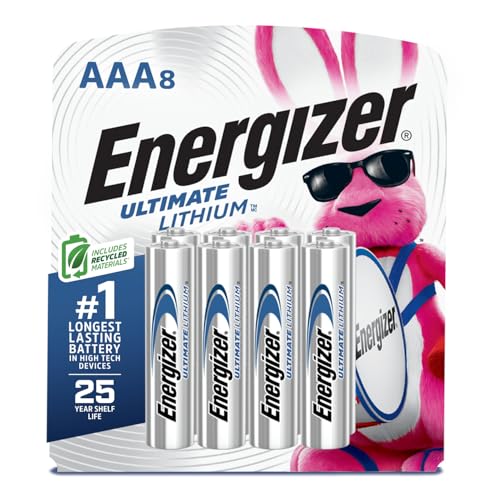
An 8-pack of lithium AAA cells for small high-drain devices and cold weather.
This 8-pack of Energizer Ultimate Lithium AAA batteries brings the lithium advantage to the smaller AAA size. Energizer calls them the longest-lasting AAA batteries in high-tech devices, and they share the family traits: leak-proof construction, a 25-year storage life, and reliable use from -40°F to 140°F.
If your headlamp, small flashlight, or compact device runs on AAA, this is the lithium answer to alkaline’s quick drain.
AAA devices often draw less current than AA gear, so the lithium premium is harder to justify for something like a TV remote. The real payoff shows up in headlamps, bike lights, and outdoor gadgets used in cold conditions.
Eight cells cover a couple of devices, and the long shelf life means spares stay ready for seasons.
|
6
|
Energizer Ultimate Lithium AA Batteries (4 Pack), 1.5V Lithium Double A Batteries |

A 4-pack of lithium AA cells for a small, low-commitment trial.
This 4-pack of Energizer Ultimate Lithium AA batteries is the smallest standard pack of the flagship lithium line. You still get the world’s longest-lasting AA claim, the 25-year storage life, the leak-proof guarantee, and the -40°F to 140°F range.
It’s the simplest way to drop lithium cells into one camera or flashlight and watch how they outlast the alkaline batteries you’d normally use.
Four cells won’t last long across multiple devices, and the per-battery price is the highest of the Energizer lithium packs. This is a tester or travel pack, not a household stock-up.
Buy it to compare runtime in a single high-drain gadget, then size up once you’ve seen the difference for yourself.
|
7
|
Duracell CR123A 3V Lithium Battery, 2 Count, 10-Year Storage, Long-lasting | Reliable lith |

A 2-count of 3V lithium CR123A cells for tactical and security devices.
This 2-count of Duracell CR123A 3V lithium batteries covers the other common 3V photo cell format. Duracell guarantees 10 years of storage and notes these cells carry more energy density than standard alkaline in high-drain devices.
They power tactical flashlights, Ring, Nest, and Arlo security cameras, alarm sensors, and professional cameras, which is exactly where alkaline chemistry falls short.
Two cells disappear quickly if you’re running several security cameras or a flashlight you use nightly. The price per cell also runs high in a small pack.
For a single camera or a spare set in an emergency kit, though, the 10-year storage guarantee means these sit ready without losing charge, which is the whole point of lithium in this format.
|
8
|
Energizer AA Batteries, MAX Double AA Battery Alkaline, 4 Count |

A 4-pack of classic alkaline AAs for everyday low-drain devices.
This 4-pack of Energizer MAX AA alkaline batteries represents the alkaline side of the comparison. Energizer calls these its longest-lasting MAX AAs, with a more efficient cell design and up to 15 years of storage.
They’re built for toys, flashlights, and everyday items like remotes, where the slow, steady drain suits alkaline chemistry and the lower price per cell makes sense.
Put these in a high-drain camera or an outdoor sensor and they’ll fade faster than lithium, especially in cold weather. That’s the honest trade-off of alkaline.
But for a drawer full of remotes, a kid’s toy, or a wall clock, they deliver dependable power at a fraction of lithium’s cost, and the 15-year shelf life covers most household needs.
|
9
|
Energizer Ultimate Lithium AA Batteries (2 Pack), 1.5V Lithium Double A Batteries |

A 2-pack of lithium AA cells for a quick single-device swap.
This 2-pack of Energizer Ultimate Lithium AA batteries is the smallest possible way to try the chemistry. It carries the same core specs as the larger packs: the world’s longest-lasting AA claim, leak-proof construction, a 25-year storage life, and operation from -40°F to 140°F.
If you have one flashlight or camera that keeps eating alkaline batteries, this is a low-cost experiment.
Two cells is barely a starter pack, and the per-battery cost is the highest in the line. It’s not a stocking option. It is, however, a convenient way to keep a single critical device running or to test lithium in your own gear before buying in bulk.
Think of it as a sample, not a supply.
|
10
|
Duracell CR2 3V High Power Lithium Battery, 2 Count, 10-Year Storage |

A 2-count of 3V lithium CR2 cells for compact cameras and rangefinders.
This 2-count of Duracell CR2 3V High Power Lithium batteries covers the CR2 format, a smaller 3V cell used in compact cameras, specialty flashlights, laser rangefinders, and optical equipment.
Duracell guarantees 10 years of storage and builds these for high-drain specialty devices, with reliable output across a wide temperature range for outdoor and field use.
CR2 cells are niche, so this pack only helps if your device specifically requires them. Two batteries won’t cover heavy use, and the format costs more than common AA or AAA sizes.
For a rangefinder, film camera, or compact flashlight that needs CR2, though, having a guaranteed 10-year pair on hand solves a problem alkaline can’t touch.
The picks above split cleanly along chemistry lines. Lithium cells from Energizer, BEVIGOR, and Duracell handle cameras, security gear, and cold weather, while the Energizer MAX alkaline pack covers remotes and toys. Match the battery to the device‘s drain and environment, and the alkaline versus lithium question answers itself.
Mistakes That Make Either Battery Underperform
Even the right chemistry fails if you store it badly, mix brands, or leave cells in a device for years. These habits quietly shorten battery life and, in alkaline’s case, risk damaging your gear.
- Never mix alkaline and lithium cells in the same device, since uneven voltage drains one faster.
- Don’t leave alkaline batteries in a device you’ll store unused, as leaks can corrode contacts.
- Avoid storing any battery in a hot car or damp garage, which shortens shelf life.
- Don’t assume a higher price guarantees fit, since voltage and size must match the device.
- Skip recharging non-rechargeable cells, because lithium and alkaline primaries can leak or rupture.
One of the most common mistakes is treating all 1. 5V batteries as interchangeable. They fit the same slot, but alkaline and lithium behave differently under load. A device designed around lithium’s steady voltage may cut off early on alkaline, while a low-drain gadget wastes lithium’s potential.
Mixing old and new cells is another quiet killer, because the weaker cell drags the stronger one down and can trigger leaks. Storing batteries loose in a drawer with metal objects risks short circuits too.
A little discipline about matching chemistry to device and keeping cells in their original packaging goes a long way toward getting the runtime you paid for.
How To Store and Swap Batteries Without Wasting Money
Battery chemistry rewards good habits. A few storage and replacement rules keep both alkaline and lithium cells performing at their rated shelf life instead of dying in a drawer.
Keep batteries in original packaging, away from heat, moisture, and loose metal objects.
Store lithium spares for devices you rarely use, since their 10 to 25 year shelf life holds up.
Replace all cells in a device at once with the same brand and chemistry to avoid uneven drain.
Date new packs when you buy them so you know how long they’ve sat before use.
Check stored alkaline cells yearly and remove any that show leakage or corrosion.
Shelf Life and Storage Cheat Sheet
| Chemistry | Typical Shelf Life | Storage Tip |
|---|---|---|
| Alkaline AA/AAA | 5-15 years | Cool, dry drawer |
| Lithium AA/AAA | 20-25 years | Any climate, low leak risk |
| Lithium CR123A/CR2 | 10 years | Keep in camera bag or kit |
Storage conditions matter more than most people expect. Heat accelerates self-discharge in both chemistries, so a garage shelf in summer is a poor home for spare cells.
Lithium handles temperature swings better, which is why it suits emergency kits and outdoor gear, but even lithium benefits from a cool, dry spot. Buying in bulk saves money only if you’ll use the cells within their shelf life, so match pack size to your actual burn rate.
If you replace batteries once a year, a small pack of lithium or a modest alkaline pack beats a giant box that ages on the shelf.
The difference between alkaline and lithium batteries comes down to chemistry: alkaline is cheap and fine for low-drain devices, while lithium delivers steadier voltage, longer shelf life, and better cold-weather performance for high-drain gear. Today, check what your most-used device actually is. If it’s a remote or clock, grab alkaline.
If it’s a camera, flashlight, or outdoor sensor, go lithium and stop replacing batteries so often.

- Marine Chargers and Backup Batteries: 9 Options Compared (2026) - October 27, 2026
- LTO Cells vs. SLA Generator Batteries: 5 Options Compared (2026) - October 27, 2026
- 12V/24V Backup Batteries and the EcoFlow DELTA Pro 3 (2026) - October 27, 2026