Installing a Smoke Alarm Battery: Cell Types and Replacement Steps
Swapping out a smoke alarm battery is one of those small chores that feels trivial until you realize what happens when it’s neglected. A dead cell doesn’t just mean silence; it means no warning.
While most units still rely on the standard 9V block, some newer models have shifted to lithium CR123A cells. The mechanics differ slightly depending on who made your detector, but the goal remains the same: keep the device alive and alert.
Below, I’ll walk through the basics and point you toward batteries that actually stick around.
Why Smoke Alarms Need Fresh Batteries
Recommended Products


Smoke alarms don’t run on hope, they run on stored energy. Even if yours is hardwired into your home’s electrical system, there’s almost certainly a backup battery inside. When that power fades, you might get annoying chirps before the worst case scenario: total silence during an emergency.
Treating this as routine maintenance rather than a reactive fix changes everything.
The whole point of a smoke detector is to buy you minutes, precious time to wake up, grab your kids, and get outside. That safety net frays quickly if the battery is weak.
Manufacturers generally advise swapping cells every six months to a year, regardless of whether the alarm has complained yet.
It’s worth remembering that the National Fire Protection Association notes nearly three in five home fire deaths happen in places with non-functioning alarms, often simply because the battery was missing or drained. This isn’t about being tidy; it’s about staying alive.
Older units are particularly prone to sensor drift, so they demand even closer attention.
- Chirping or beeping sounds at regular intervals indicate a low battery.
- The alarm fails to sound during a test, even after pressing the test button.
- The battery is over a year old, regardless of whether it seems functional.
- Visible corrosion or leakage on the battery terminals requires immediate replacement.
- The alarm’s display (if available) shows a low-battery warning.
- You’ve recently moved into a new home and haven’t verified the alarm’s status.
Step-by-Step Battery Replacement Process
Recommended Products
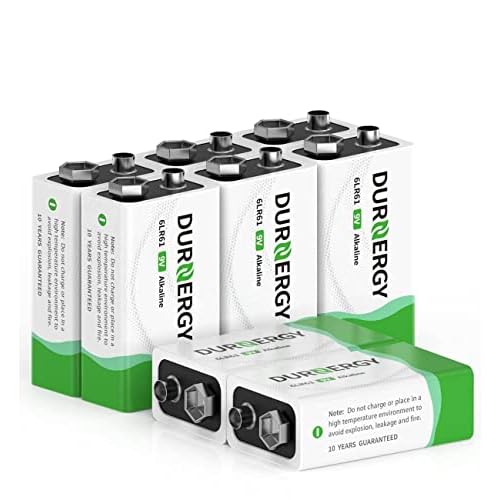

Changing the battery itself is rarely complicated, but skipping a step can leave you thinking you’re protected when you aren’t. Whether your unit runs solely on batteries or plugs into the wall, the workflow is similar. Take your time, handle the components gently, and always verify the result.
Locate the smoke alarm on your ceiling or wall and identify the battery compartment, usually on the back or side.
Open the compartment by sliding or lifting the cover, or by twisting the alarm off its base if it’s a mounted unit.
Remove the old battery, noting its orientation (positive/negative terminals) to match the new one correctly.
Insert the new battery, ensuring the terminals align with the alarm’s markings. Most 9V batteries have a snap connector.
Close the compartment securely and reattach the alarm to its base if you removed it.
Press the test button to confirm the alarm sounds loudly. If it doesn’t, recheck the battery orientation and connections.
Check your specific model first. Most use a snap-on 9V, but some older or cheaper variants take AA or AAA pairs. Hardwired systems usually hide a backup slot for power outages.
If you’ve got an interconnected setup, changing one battery won’t disrupt the others, but it’s a good prompt to inspect the rest. And here’s a crucial exception: if your alarm boasts a sealed 10-year lithium battery, you cannot swap it. Once that decade is up, the entire unit needs replacing.
Don’t try to force open a sealed casing, you’ll likely break the housing and compromise its integrity.
Reliable Batteries for Smoke Alarm Safety
Recommended Products

Not all 9V blocks are created equal, especially for safety devices. Compatibility matters, but so does how well the battery holds its charge over years of sitting idle. The options below stand out for their shelf life and consistency in low-drain applications.
Pick based on what fits your current detectors and how many spares you want on hand.
|
1
|
Amazon Basics 8-Pack 9V Long-Lasting Alkaline Batteries for Smoke Detector, Electronics & |

Amazon Basics’ 8-pack offers a straightforward, budget-friendly way to stock up on 5-year shelf-life alkaline cells.
If you just need reliable power without paying for brand prestige, these Amazon Basics 9V alkalines do the job. They come in a bulk pack, which makes sense since you’ll likely replace multiple alarms at once.
The five-year leak-free shelf life means you can toss them in a drawer for emergencies and trust they’ll still work later. Opening them is hassle-free, too, which sounds minor until you’re trying to swap a battery while standing on a chair.
Keep in mind these are disposable alkaline cells, not rechargeables. For a smoke detector, that’s actually fine, the drain rate is low enough that they last well. But if you’re using them in high-drain toys or wireless mics, they’ll die faster.
Their broad compatibility covers garage remotes and radios, but I’d stick to buying them specifically for alarms and occasional backups due to that long storage window.
|
2
|
Energizer Alkaline Power 9V Batteries (8 Pack), Long-Lasting | Smoke detector battery for |

Energizer’s Alkaline Power line balances name-brand reliability with practical longevity for everyday safety devices.
Energizer has been a household staple for decades, and their 9V Alkaline Power batteries continue that tradition. Sold in 8-packs, they’re designed to hold steady power for smoke detectors, clocks, and handheld meters.
What appeals to me here is the focus on emergency readiness, they’re built to sit on a shelf for up to five years and still deliver. Plus, the packaging incorporates recycled materials, which is a nice touch if you’re mindful of waste.
While dependable, they aren’t necessarily going to outperform premium lines in heavy-duty scenarios. But for a smoke alarm? That distinction hardly matters. The consistent, low-output nature of these cells suits safety devices perfectly.
If you prefer sticking with recognized brands for peace of mind, this is a sensible middle ground between cost and confidence.
|
3
|
DURACELL Coppertop 9V Battery, 6 Count, Smoke Detector Battery |
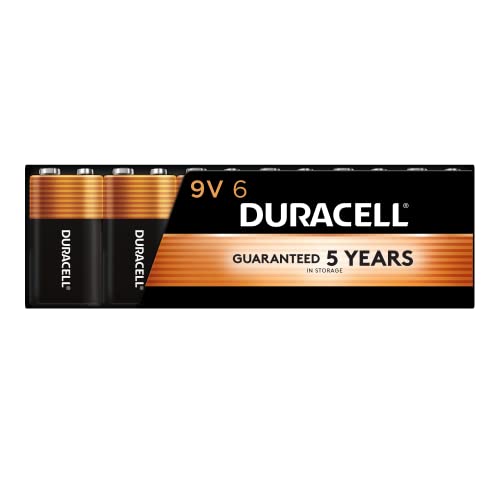
Duracell Coppertop 9Vs bring professional-grade durability and a strong track record for critical home safety equipment.
When it comes to things you literally can’t afford to fail, Duracell Coppertops are often the default recommendation. These 6-count packs emphasize their role in home safety, backing it up with a five-year storage guarantee.
They’re robust enough for walkie-talkies and medical gear, which suggests a level of consistency that’s reassuring for smoke and CO detectors. The branding leans heavily into ‘annual check’ reminders, encouraging you to stay proactive.
Yes, they tend to cost more per unit than store brands. Is that justified? For a device protecting your family, probably. You’re paying for proven leakage resistance and stable voltage output over time.
There’s no rechargeability here, but given the long shelf life, that’s rarely an issue for infrequently used safety gear.
|
4
|
Duracell Coppertop 9V Battery, 2 Count, Smoke Detector, Long-lasting |
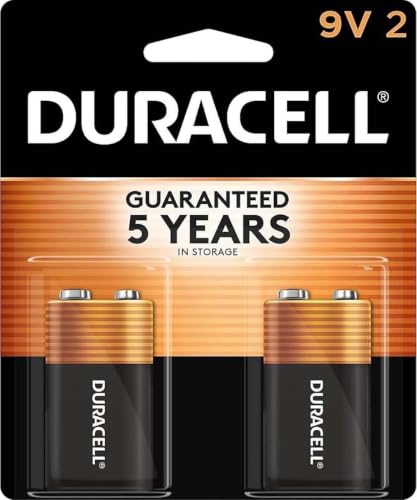
A compact 2-pack of Duracell Coppertops for quick fixes or single-alarm households.
Not everyone needs eight batteries lying around. This 2-count Duracell pack serves households with just one or two alarms, or anyone wanting a spare tucked in a bedside drawer. It carries the same five-year guarantee and professional reliability rating as the larger boxes.
The smaller footprint makes it easier to manage inventory without cluttering your supply closet.
For multi-unit homes, you’ll end up buying several of these, which might feel inefficient compared to bulk packs. But if you only replace one battery a year, this minimizes waste and upfront cost. It’s a pragmatic option for minimalists who still want the reassurance of a top-tier brand.
|
5
|
XUNIUZERO 9V Batteries 6F22 Square Battery (4 Pack) for Smoke Detector Alarm System, Wirel |

XUNIUZERO provides a carbon-zinc alternative focused on environmental safety and temperature resilience.
XUNIUZERO takes a different approach with these 9V batteries, utilizing carbon-zinc chemistry instead of alkaline. They highlight their mercury-, cadmium-, and lead-free composition, appealing to buyers concerned about hazardous waste disposal.
The steel casing is corrosion-resistant, and they’re rated to perform in extremes, from freezing -4°F garages to hot attics hitting 140°F. For fixed installations where temperature fluctuates wildly, this stability is valuable.
Carbon-zinc batteries typically have shorter lifespans than alkalines under load, but smoke detectors draw very little power, so this disadvantage is muted. The trade-off is price and eco-profile versus peak performance.
If you’re outfitting a rental property or a secondary home where budget and disposal ease matter more than brand recognition, these are worth considering.
|
6
|
Energizer MAX 9V Batteries (4 Pack), 9 Volt Alkaline Batteries |

Energizer MAX 9Vs offer trusted alkaline performance in a convenient 4-pack size.
The Energizer MAX series is widely available and consistently rated for general-purpose electronics. In this 4-pack configuration, they provide solid alkaline power for smoke detectors, safety sensors, and basic gadgets.
Like their siblings, they promise up to five years of shelf life, making them suitable for stocking up without worrying about expiration dates looming next month.
This size hits a sweet spot for average homes, not too much bulk, not too scarce. You get the Energizer reliability without committing to an 8-pack. If you rotate batteries regularly or live alone, four might be exactly what you need for a year’s worth of replacements plus a spare.
|
7
|
Amazon Basics 4-Pack 9V Long-Lasting Alkaline Batteries for Smoke Detector, Electronics & |

Amazon Basics 4-Pack delivers the same core value proposition as the larger bundle in a more manageable quantity.
If the 8-pack felt excessive, this 4-pack from Amazon Basics offers identical specs in a tighter package. You still get the five-year leak-free assurance and easy-open packaging. It’s essentially the same product, scaled down for lighter usage patterns.
For someone maintaining one or two alarms, this prevents having unused batteries gathering dust (or potentially leaking, though unlikely) after years.
Again, these are single-use alkalines. They excel in static devices like alarms but won’t impress in active gaming controllers or portable speakers. The main benefit here is flexibility, you can test the waters with a smaller commitment before deciding if you want to bulk-buy for future replacements.
|
8
|
PKCELL 9V Batteries 10 Pack 9 Volt Battery for Smoke Alarms | 6F22 Square Battery Carbon Z |

PKCELL focuses exclusively on smoke detector compatibility with steady, low-drain carbon-zinc power.
PKCELL markets these 10-packs specifically for alarms and detectors, stripping away unnecessary features for other devices. The carbon-zinc build ensures uninterrupted operation for 24/7 monitoring roles. Their leak-proof construction aims to protect sensitive internal circuitry in detectors, which is smart engineering for devices that sit dormant for long periods.
Because they’re optimized for low-drain tasks, they fit smoke alarms better than high-consumption electronics. The downside? Carbon-zinc tech generally trails alkaline in overall capacity. But again, for a device that sips power slowly, this gap narrows significantly. It’s a niche product doing one thing well, albeit without major brand cachet.
|
9
|
HW CR123A 3V Lithium Battery 6-Pack, 1700mAh High Capacity 123 Batteries | 10-year shelf l |

HW CR123A Lithium batteries cater to modern alarms requiring higher voltage and extended lifespan.
Newer generation alarms sometimes switch to CR123A lithium cells for longer service intervals. HW offers a 6-pack with substantial 1700mAh capacity, beating typical 1500mAh competitors. Certified UL/RoHS and resistant to extreme temps (-40°F to 158°F), these are built for harsh conditions and longevity.
If your manual specifies CR123A, this is a direct upgrade path.
Lithium costs more upfront but lasts longer, reducing replacement frequency. For hard-to-reach ceilings or remote cabins, minimizing maintenance visits is worth the premium. Just note: these are non-rechargeable despite being lithium-based. Ensure your device accepts CR123A format before purchasing, as they don’t interchange with standard 9Vs.
|
10
|
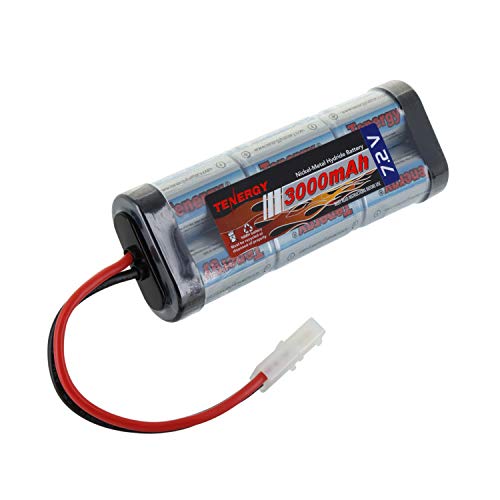
DURNERGY 9V Batteries, 9 Volt Batteries 8 Pack,10-Year Shelf Life, 9V Batteries for Smoke |

DURNERGY promises exceptional 10-year shelf life for long-term storage reliability.
DURNERGY stakes its claim on duration, offering an 8-pack with a claimed 10-year shelf life. That’s double the industry standard for alkalines. Using corrosion-resistant shells and avoiding harmful metals, they position themselves as both durable and environmentally conscious.
For users who hate frequent shopping trips or worry about batteries dying in drawers, this longevity is the primary selling point.
Ten years is ambitious for any chemical battery, but if achieved, it drastically lowers maintenance overhead. They serve 6-8 times longer than ordinary carbon cells in comparable tests. While lesser-known than Duracell or Energizer, the spec sheet reads strongly for passive storage applications like emergency kits and backup alarm supplies.
From economical bulk buys to specialized lithium upgrades, these selections address varying needs in home safety maintenance. Whether you prioritize brand trust, eco-friendly materials, or sheer shelf endurance, there’s a fitting option among these ten.
Ultimately, the best battery is one that matches your detector’s specs and stays fresh until you need it.
Testing Your Smoke Alarm After Replacement
Recommended Products


Inserting a new battery doesn’t automatically mean success. Verification is essential. A faulty connection or defective cell can render the replacement useless. Spend thirty seconds testing, it’s the difference between assumed safety and confirmed protection.
Press and hold the test button on the alarm for a few seconds until it beeps loudly.
Listen for the alarm’s siren, which should be continuous and loud enough to hear throughout the home.
If the alarm doesn’t sound, recheck the battery orientation and connections, then retry the test.
Test all interconnected alarms if your system links multiple units; one test should trigger all alarms.
Repeat the test monthly to ensure ongoing functionality, and replace batteries as needed.
- Forgetting to reattach the alarm to its base after replacing the battery.
- Using expired or low-quality batteries that may fail prematurely.
- Ignoring the alarm’s manual for model-specific battery requirements.
- Assuming hardwired alarms don’t need battery checks; backup batteries still degrade.
- Testing the alarm only once a year; monthly checks are recommended.
When to Replace the Entire Smoke Alarm
Batteries wear out, but so do the alarms themselves. Sensors degrade, electronics age, and housings accumulate dust. No amount of fresh power compensates for an expired unit. Recognizing when the hardware itself reaches end-of-life is vital for true home security.
Standard smoke alarms have a functional lifespan of roughly ten years. Beyond that mark, sensitivity drops unpredictably. Check the date stamped on the back panel. If it’s past its prime, replace the whole assembly, not just the battery.
Some modern units feature sealed 10-year batteries; when those expire, the entire detector must go. Keeping an old alarm ‘alive’ with new batteries creates a false sense of security that could prove fatal.
| Sign It’s Time to Replace | Action Required | Why It Matters |
|---|---|---|
| Alarm is over 10 years old | Replace the entire unit | Sensors degrade and lose sensitivity |
| Frequent false alarms | Test or replace the alarm | May indicate sensor failure |
| Chirping persists after battery replacement | Replace the alarm | Could signal end-of-life for the unit |
| Visible damage or corrosion | Replace immediately | Compromises functionality and safety |
Maintaining Smoke Alarms for Long-Term Safety
Recommended Products


Maintenance goes beyond swaps. Dust clogs sensors, poor placement misses early smoke signs, and ignored interconnects limit coverage. Simple habits ensure your detection network operates at full capacity when it counts most.
- Test alarms monthly using the test button to confirm they’re working.
- Replace batteries at least once a year, or as soon as the low-battery warning chirps.
- Clean alarms every six months by gently vacuuming dust from the vents.
- Ensure alarms are installed in every bedroom, outside sleeping areas, and on each level of the home.
- Avoid placing alarms near kitchens, bathrooms, or heating appliances to reduce false alarms.
- Replace the entire alarm every 10 years, or as recommended by the manufacturer.
Think of your alarms as sentinels that need grooming. Vacuum vents quarterly to remove cobwebs and dust that blind photoelectric sensors. Verify placement: kitchens and bathrooms generate steam that triggers false alarms, so move them nearby but not directly adjacent.
Bedroom doors should close at night to slow fire spread, relying on hallway alarms to wake you. Interconnected systems amplify safety, one trigger alerts the whole house. Consistent care transforms cheap plastic boxes into effective lifesavers.
Battery replacement shouldn’t be an ordeal. It’s a brief intervention that maintains a continuous shield against fire risks. Select a compatible, reliable cell, install it firmly, and test immediately. Set a recurring reminder now, perhaps tied to daylight saving time shifts, to audit your alarms annually.
Your vigilance today determines your survival tomorrow.

- Marine Chargers and Backup Batteries: 9 Options Compared (2026) - October 27, 2026
- LTO Cells vs. SLA Generator Batteries: 5 Options Compared (2026) - October 27, 2026
- 12V/24V Backup Batteries and the EcoFlow DELTA Pro 3 (2026) - October 27, 2026