Stacking Coin Cell Batteries: Safety Risks And Circuit Best Practices
Taping two coin cell batteries together is a common shortcut for powering small LED projects, but it frequently leads to short circuits or premature battery failure. While stacking them in series adds voltage, these cells lack the current capacity and protection circuits found in larger lithium-ion packs. Before you connect them, check the voltage rating on your device and ensure your stack does not exceed the maximum input limit of your components.
Stacking coin cell batteries in series adds their voltages together, such as combining two 3V CR2032 batteries to reach 6V. This configuration is physically possible but risky due to high internal resistance and the lack of venting or protection. Always use a proper battery holder to prevent accidental shorts across the thin metal edges.
Stacking Coin Cell Batteries For Increased Voltage
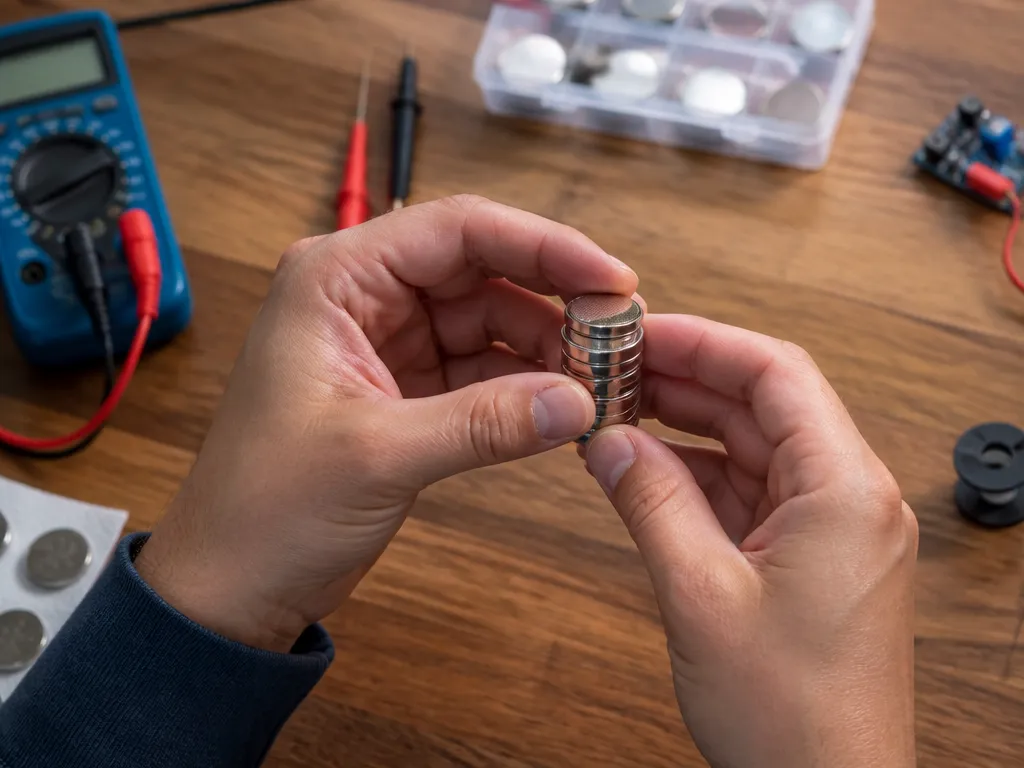
Series configuration adds the voltage of individual cells together, allowing two 3V coin cells to create a 6V power source. This method works by connecting the positive terminal of one battery directly to the negative terminal of the next, effectively creating a single power chain.
Projects requiring higher voltage often use this technique to power components that exceed the standard 3V output of a single CR2032. Microcontrollers and high-brightness LEDs generally demand a stable voltage floor to function, and adding cells in series provides the necessary push to overcome these thresholds.
Practical Considerations For Series Stacking
Connecting batteries in this manner requires physical stability to prevent intermittent connections or short circuits. Because coin cells lack wire leads, you must use a battery holder or a custom enclosure to maintain constant pressure between the stacked units. If the cells move apart even slightly, the circuit will break or arc, potentially damaging sensitive electronics.
Safety Warning: Never mix batteries of different ages, brands, or chemical compositions in a stack. Mixing a fresh cell with a depleted one can cause the weaker cell to undergo forced discharge, which leads to overheating, leakage, or potential fire risks.
For instance, an LED project might require a 6V supply to reach full brightness. Placing two 3V CR2032 cells in a holder intended for dual-cell series usage provides the needed 6V. Always check the datasheet for your specific LED or microcontroller before applying the higher voltage to avoid burning out the component.
Physical mounting remains the biggest challenge in these DIY builds. Standard conductive tape or simple electrical tape often fails to provide the consistent pressure required for a reliable series connection. Using a purpose-built dual-cell battery holder provides a much safer and more consistent interface than attempting to tape loose cells together.
Electrical Risks And Internal Resistance
Coin cells possess high internal resistance, which creates significant voltage sag when these batteries are forced to deliver high current. Connecting multiple cells in a series configuration compounds this effect, as the total internal resistance of the stack is the sum of every individual cell.
Voltage sag occurs because the chemical reaction inside a small, thin-profile cell cannot keep up with the demand of a high-drain load. When you pull current from a stack, the voltage drops rapidly under load, often rendering the increased total voltage useless for circuits that require a steady, stable power supply. This behavior is particularly problematic for devices like high-intensity LEDs or radio transmitters that need consistent power to function correctly.
Performance Limitations
Internal resistance limits the practical applications for serial arrangements. While you might calculate a theoretical voltage of 6 volts by stacking two 3-volt lithium cells, the actual usable voltage will drop much lower the moment the device tries to draw meaningful current. This makes them poor choices for motors or any component requiring a sustained surge of power.
Warning: Never attempt to charge a stack of coin cells. They lack the protection circuitry found in modern lithium-ion battery packs, and forcing current into a series stack can lead to venting, leakage, or thermal runaway.
For instance, an LED circuit might flash brightly for a second and then dim immediately as the internal resistance of the stacked cells dominates the circuit. This makes them unsuitable for anything beyond extremely low-power, intermittent tasks like memory backup or simple logic signals.
Safety Hazards Of Manual Stacking

Manual alignment of coin cells creates an immediate risk of short-circuiting because the metal casing of the battery serves as both the positive and negative terminal. If a conductive object or a misaligned cell bridges the side wall to the top surface, current flows directly through the steel housing instead of the intended circuit.
Short-circuits in these small cells generate intense heat in seconds because the internal resistance is extremely low. This rapid energy release can melt plastic insulation, burn fingers, or cause the electrolyte to vent.
Thermal Risks And Structural Failure
Thermal runaway occurs when the heat generated by a short-circuit triggers internal chemical reactions that produce even more heat. Once a coin cell enters this state, it often ruptures or leaks hazardous electrolyte materials. You cannot stop this process once it begins, as the chemical energy is self-sustaining until the cell is depleted or physically destroyed.
Warning: Never attempt to solder wires directly to the surface of a coin cell. The heat from a soldering iron can damage the internal seal and trigger an immediate vent or fire.
For instance, if you use a conductive metal clip to hold a stack together, the clip creates a secondary path for electricity. If the clip touches the side of the bottom cell and the top of the top cell simultaneously, you have created a dead short across the entire battery assembly.
| Risk Factor | Immediate Consequence |
|---|---|
| Skin Oils | Increased resistance and heat |
| Metal Clips | High probability of short-circuit |
| Soldering | Permanent seal failure and leakage |
Always inspect the edges of your cells for any signs of swelling or deformation before assembly. A battery that has been previously shorted may look normal but possess a compromised internal structure that poses a fire risk if placed back into service.
Battery Holders Versus Diy Stacking
Dedicated battery holders provide constant mechanical pressure that maintains a low-resistance electrical path. DIY stacking with tape or glue often fails because coin cells have small contact surfaces that easily shift or oxidize.
Mechanical Pressure And Resistance
Electrical resistance increases when the contact area between two batteries is small or uneven. DIY methods like tape do not provide the consistent downward force needed to break through microscopic surface oxidation.
This lack of pressure leads to intermittent power failures. A device might work while sitting still but shut down the moment it is moved or bumped.
For example, a sensor powered by taped cells may report erratic voltage levels. This happens because the contact resistance fluctuates as the tape stretches or the batteries shift.
Recommended Series Hardware
Series battery holders are the best tool for voltage expansion. These components use molded plastic to keep cells separated and nickel-plated springs to ensure a tight fit.
These holders prevent accidental shorts by enclosing the battery sides. They also provide a clean termination point for wires, which avoids the danger of soldering directly to a cell.
In practice, using a pre-made 2-cell or 4-cell holder ensures the circuit receives a steady voltage. It also makes replacing a dead cell a matter of seconds rather than a tedious process of peeling tape.
Always match the holder dimensions exactly to the battery model.
Voltage Compatibility And Device Protection
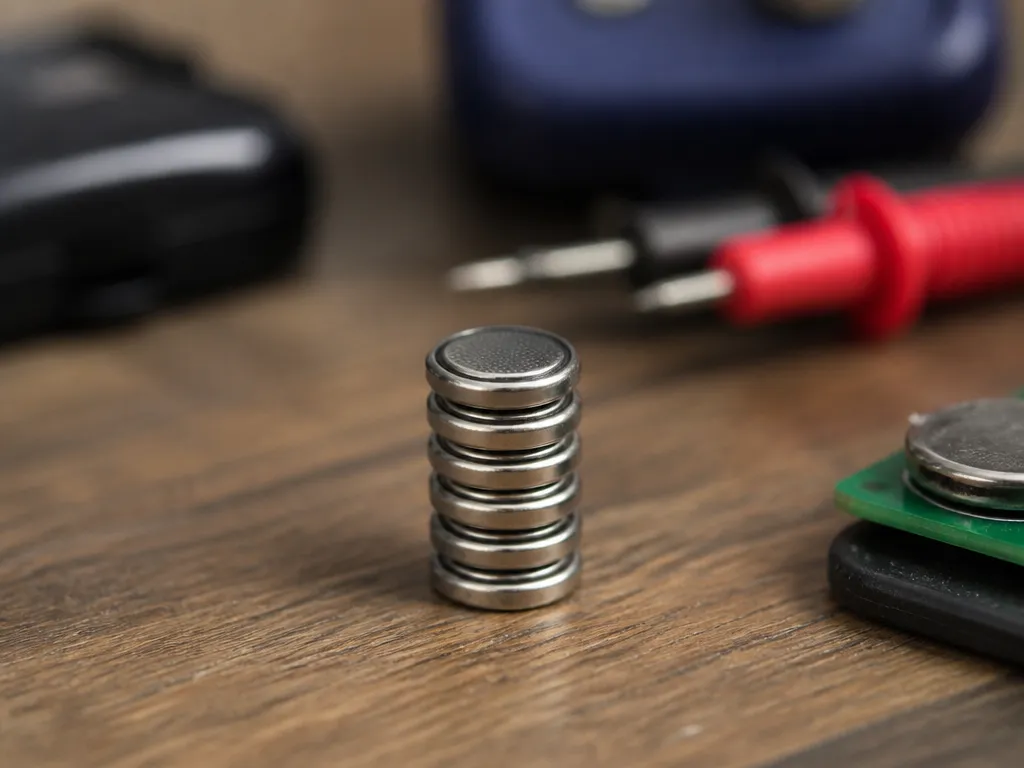
Stacking batteries in series adds their individual voltages together. Exceeding the rated voltage of a circuit component causes permanent hardware failure or immediate burnout.
Most electronics have a strict upper limit for power input. A device designed for a single 3V CR2032 will likely be destroyed if powered by a 6V stack of two cells.
Verifying Component Limits
Checking the manufacturer datasheet is the only reliable way to determine voltage limits. Look for the “Absolute Maximum Ratings” section to find the exact point where the chip fails.
Battery voltage drops as the cells discharge. A stack that starts at 6V might drop to 5.4V over time, which can cause a regulator to stop functioning if the “dropout voltage” is too high.
Warning: Never guess the voltage tolerance of a component. Even a slight overvoltage can create permanent damage.
Capacity Mismatch And Performance Issues
Using coin cells with different capacities or charge levels in series connections creates significant performance problems and safety hazards. The cell with lower capacity will deplete first, potentially causing reverse polarity that damages the battery or creates dangerous conditions.
In series configurations, all cells experience the same current flow. When cells have mismatched capacities, the weaker cell reaches full discharge while others still have charge remaining. This forces the discharged cell into reverse voltage territory, which can lead to overheating, gas generation, or even rupture.
The following table illustrates how capacity mismatch affects battery performance in series connections:
| Cell Configuration | Runtime | Safety Risk | Efficiency |
|---|---|---|---|
| Identical new cells | Optimal | Low | 95-98% |
| Mixed ages (same chemistry) | Reduced by 15-30% | Moderate | 70-85% |
| Different chemistries | Unpredictable | High | 50-70% |
| Significantly mismatched capacities | Poor | Critical | Below 50% |
Always use identical coin cells when stacking for series connections. Check manufacturing dates, ensure consistent charge levels, and avoid mixing different battery chemistries like lithium and alkaline cells in the same circuit. When in doubt, replace all cells at the same time with a matched set from the same production batch.
Quick Summary
Stacking coin cell batteries is a common shortcut for powering small LED projects, but frequently leads to short circuits or premature battery failure. While stacking them in series adds voltage, these cells lack the current capacity and protection circuits found in larger lithium-ion packs. Before connecting them, check the voltage rating on your device and ensure your stack does not exceed the maximum input limit of your components. Always use a proper battery holder to prevent accidental shorts across the thin metal edges.
When stacking batteries, verify polarity by ensuring the positive side of the bottom cell faces the negative side of the top cell. Never mix batteries of different ages, brands, or chemical compositions in a stack, as this can cause the weaker cell to undergo forced discharge, leading to overheating or potential fire risks. Coin cells have high internal resistance which creates significant voltage sag when delivering high current, making them poor choices for motors or components requiring sustained power. If your battery stack feels warm to the touch, disconnect it immediately to avoid potential chemical leakage and component damage.
Frequently Asked Questions
Is It Safe To Stack Two Coin Cell Batteries Together To Increase Voltage?
You should never stack coin cell batteries in a device unless the battery compartment is specifically designed to hold them in series. Stacking them manually creates a risk of short circuits, overheating, or battery leakage because coin cells are not built to handle the physical pressure or electrical load of being forced together.
What Happens If I Put Stacked Coin Cell Batteries Into A Device That Only Expects One?
Doubling the voltage by stacking two 3-volt batteries will output 6 volts, which is likely to permanently damage the internal circuitry of a device designed for a 3-volt input. You risk blowing capacitors or burning out delicate components that cannot handle the excess electrical pressure.
Can I Stack Rechargeable Coin Cells To Get More Capacity?
Stacking batteries does not increase capacity, as the total milliampere-hour rating remains limited to the lowest capacity cell in the stack. Furthermore, charging stacked batteries is dangerous and often impossible with standard consumer chargers, as the charger cannot properly monitor the individual voltage of each cell to prevent fire or explosion.
How Can I Tell If My Coin Cell Batteries Are Too Old To Use?
You can check the health of a coin cell by using a digital multimeter to measure its voltage, which should be close to 3.0 volts for a fresh lithium cell. If the reading is consistently below 2.5 volts under a light load, the battery is depleted and should be replaced rather than combined with others to try and extend its life.
What Is The Biggest Mistake People Make When Replacing Coin Cell Batteries?
The most common error is mixing batteries of different brands, chemistries, or usage levels in the same device. Always replace all batteries in a multi-cell compartment at the same time with identical cells from the same manufacturer to ensure balanced power delivery and prevent one battery from over-discharging the other.

- 10 Lithium Battery For Luminous Inverter 2026 - September 28, 2026
- 10 Lithium Battery For Lawn Mower 2026 - September 28, 2026
- 10 Best Lithium Battery For Livescope Ice Bundle 2026 - September 28, 2026