What Causes Car Battery Corrosion?
That crusty white or blue-green buildup on your battery terminals isn’t just ugly, it’s actively eating away at your electrical connections. I’ve seen plenty of cars struggle to start simply because corrosion was choking the current flow between the battery and the cables.
Figuring out what causes this mess is the first step, and picking the right cleaner makes getting rid of it a lot less frustrating.
Why Car Battery Corrosion Forms
Recommended Products

Battery corrosion happens when hydrogen gas vented from the sulfuric acid inside your battery meets the lead on your terminals. Add in humidity or temperature swings, and that chemical reaction speeds up fast.
At its core, car battery corrosion is a chemistry problem. Sulfuric acid inside the battery releases hydrogen gas through the vents, which then reacts with the lead posts to form lead sulfate, that familiar white or bluish crust.
Once that layer builds up, it increases electrical resistance, forcing your starter motor to work harder just to turn over the engine. Moisture and condensation act as accelerants here.
If you live somewhere hot, faster evaporation leaves behind concentrated acid deposits; if you’re dealing with cold winters, the reaction slows down but still quietly accumulates over time.
- Overcharging the battery increases acid fumes and acceleration of corrosion.
- Poor ventilation traps hydrogen gas near terminals, worsening reactions.
- Older batteries with worn seals leak acid more easily onto terminals.
- Salt air in coastal areas introduces additional corrosive elements to the mix.
- Loose or dirty connections expose more metal surface to acid fumes.
- Extreme temperature swings create condensation that mixes with acid residues.
How Corrosion Affects Your Vehicle
Recommended Products


Corrosion doesn’t just sit there looking bad. Even a thin film acts like an insulator, draining power, causing hard starts, or tricking your dashboard into throwing false warning lights.
Increased Resistance
Think of corrosion as a roadblock for electrons. It blocks the smooth transfer of electricity between the battery and your car’s wiring. This added resistance forces the battery to push harder, dropping its overall efficiency.
I’ve read enough mechanic reports to know that severe buildup can completely prevent a fully charged battery from delivering enough current to crank the engine.
Voltage Drops and System Stress
Modern cars are incredibly sensitive to voltage drops. When corroded terminals cause fluctuations, the sensors and computers get confused.
My read is that if your headlights are dimming randomly, your infotainment screen is glitching, or you’re pulling weird error codes, dirty terminals should be one of the first things you check.
Symptoms of Corrosion Damage
| Symptom | Cause | Impact |
|---|---|---|
| Hard starting | Poor electrical connection | Engine cranks slowly or fails to turn over |
| Dashboard warnings | Voltage fluctuations | False check engine or battery alerts |
| Dim headlights | Reduced current flow | Weaker lighting and accessory performance |
| Frequent jumps | Chronic poor connections | Battery dies prematurely despite charges |
Tools To Remove and Prevent Battery Corrosion
Recommended Products


The products below tackle this problem from different angles, some neutralize the acid chemically, others scrub it away mechanically, and a few coat the terminals to stop it from coming back. Here is how I would shortlist them based on what they actually do.
|
1
|
CRC Tech Grade Battery Cleaner w/Acid Indicator – 11 oz | Battery Acid Cleaner, Terminal a |

Detects acid with color-change indicator while dissolving corrosion for thorough cleaning.
CRC Tech Grade Battery Cleaner stands out because it includes an acid indicator that turns pink the moment it touches battery acid. That visual cue takes the guesswork out of figuring out where the active corrosion is hiding.
This 11 oz spray targets terminals, posts, cables, and trays, neutralizing the buildup so you can wash it away. It’s built for fleet maintenance, but it works just as well in a home garage.
I would shortlist this if you want confirmation that you’re actually hitting the acidic spots before you start scrubbing. The spray nozzle makes it easy to reach awkward angles around cable clamps.
Just keep in mind it doesn’t come with a brush, so if the crust is thick, you’ll need to supply your own elbow grease. Best for people who like seeing the chemistry work in real time.
|
2
|
NOCO NCP2 M401 Battery Terminal Cleaner and Protector Kit with Brush | Clean and protect c |

All-in-one kit cleans, scrubs, and seals terminals to stop corrosion long-term.
NOCO NCP2 M401 bundles a cleaner, a brush, and a protector into a single package. You spray the cleaner to neutralize and dissolve the corrosion, use the included brush to scrub the posts, and finish by applying a protective coating that blocks acid fumes and moisture.
It handles both the immediate mess and the long-term prevention in one go.
My read is that this is the most logical starting point if you don’t already have any tools on hand. The protector coating is designed to last the life of the battery, which means less weekend maintenance later.
The spray-and-rinse process is straightforward, though the kit itself is a bit bulky if your engine bay is tightly packed. I’d lean toward this if convenience matters more to you than buying individual components.
|
3
|
CRC Battery Terminal Protector Spray – Anti-Corrosion Coating – 7.5 oz | Battery Terminal |

Spray-on protector creates a soft coating to block future corrosion.
CRC Battery Terminal Protector Spray isn’t a cleaner, it’s a shield. It lays down a lead-free, soft coating over your terminals, cables, and bulkhead connectors to block acid fumes and moisture from reaching the metal. At 7.
5 oz, it’s strictly a preventive measure, meant to be used after you’ve already scrubbed the terminals clean or when you install a brand-new battery.
I would grab this specifically for the final step of a cleaning job, or to treat a fresh battery before corrosion even starts. It helps maintain solid electrical connections and reduces the chance of waking up to a no-start situation.
Just don’t buy this expecting it to eat through existing crust. It’s purely for protection, making it ideal for anyone focused on keeping their setup clean long-term.
|
4
|
NOCO E404 12.25 Oz Battery Terminal Cleaner Spray and Corrosion Cleaner with Acid Detector |
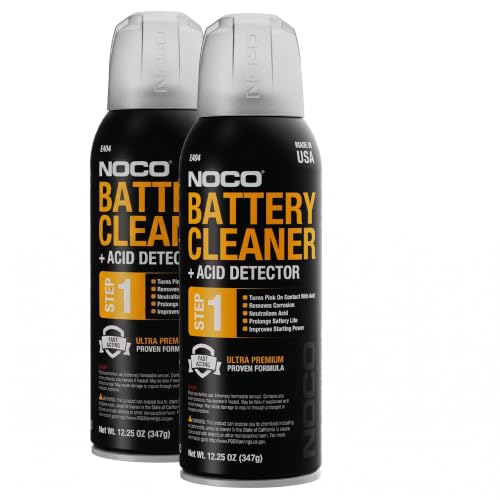
Fast-acting spray with acid detector for quick, visible corrosion removal.
NOCO E404 comes as a two-pack of 12. 25 oz sprays that foam up to break down tough buildup almost immediately. Like the CRC option, it features a pink acid indicator so you can see exactly where the active corrosion is reacting.
By clearing those barriers, it restores the current flow needed for reliable cranking.
If you want fast results without a lot of manual labor, this is what I would look at first. The foaming action does the heavy lifting, and the acid detector gives you peace of mind that you haven’t missed a spot.
You will likely need to rinse it off afterward, which might be annoying depending on your workspace, but for sheer speed and verification, it gets the job done efficiently.
|
5
|
TKDMR Battery Terminal Cleaners (2 pcs),12 pcs Battery Terminal Anti-Corrosion Fiber Washe |

Combines cleaning brushes with color-coded washers to block future corrosion.
TKDMR skips the chemicals and focuses on hardware. You get two stainless steel terminal cleaning brushes and 12 anti-corrosion fiber washers, six red for positive, six green for negative. The brushes scrape away the crust from posts and clamps, while the washers sit under the terminals to block acid fumes.
The inner rings on the washers pop out if you need them to fit larger posts.
This setup appeals to me if you prefer mechanical cleaning over spraying chemicals everywhere. The brushes are sturdy enough for stubborn deposits, and having twelve washers means you can outfit multiple batteries or keep spares in your toolbox.
Since there’s no chemical neutralizer included, I’d pair these brushes with a basic baking soda solution or a separate spray if the corrosion is heavy.
|
6
|
Battery Terminal Cleaner Tool Kit, 2-Pack Battery Post Wire Brush with Metal Case and 10 A |

Metal-case brushes and washers offer durable, portable corrosion removal.
This two-pack kit gives you dual-ended battery post brushes housed in metal cases, plus 10 color-coded fiber washers (5 red, 5 green). The stainless steel bristles handle tough oxidation, while the double-ended design lets you clean both the round posts and the inside of the cable clamps without switching tools.
The washers fit standard 6V and 12V setups to block acid mist.
I would toss this in a glovebox or tool bag because the metal cases lock shut and protect the bristles from getting bent. It’s a purely mechanical approach, so again, you’re relying on scrubbing rather than chemical dissolution.
If you manage a small fleet or travel frequently and need something durable that won’t leak or spill, this is a practical pick.
|
7
|
ZOKYUYS 4 in 1 Car Battery Cleaning Brush,Anti-Corrosion Battery Terminals,Copper Pipes Cl |

4-in-1 brush cleans terminals, pipes, and threads for versatile use.
ZOKYUYS designed this 4-in-1 brush to handle battery terminals, copper pipes, and threaded fittings. It uses steel wire bristles set into an ABS plastic handle, allowing you to scrub away rust and debris without gouging softer metals. The compact shape fits into tight engine bays easily.
My read is that this is best for someone who wants a single brush that lives in a general utility drawer rather than a dedicated automotive toolkit.
It lacks the specialized features you see in battery-specific kits, there are no acid indicators or protective washers, but if you also do plumbing or soldering prep, the versatility makes sense. I wouldn’t choose it solely for battery maintenance if better options are available.
|
8
|
Battery Brush Cable Cleaner with 8Pcs Protector Fiber & 1Pcs Brush |

Spiral brush and fiber washers provide deep cleaning and protection.
This kit pairs a spiral-shaped brush with four color-coded fiber washers (two red, two green). The spiral design is the main draw here, as it reaches deeper into the gaps between the terminal post and the cable clamp where straight brushes often miss.
It works on both top-post and side-post batteries, and the washers provide a basic barrier against future fumes.
I’d consider this for occasional, light-duty maintenance. The spiral brush genuinely excels at getting into awkward crevices, but you only get four washers, which limits how many batteries you can treat before needing replacements.
If you prioritize getting deep into the connection points over stocking up on spare parts, this kit does that specific job well.
|
9
|
East Penn 00321 Battery Cleaner Spray – 15 oz. |

East Penn spray removes corrosion with a low flash point for safety.
East Penn 00321 is a 15 oz spray formulated to dissolve corrosion on terminals and connectors. What stands out on the spec sheet is its low flash point (-18°C), which makes it a safer bet for varied temperature environments, including marine applications where sparks and fumes are a serious concern.
The spray format handles tight spaces easily.
This feels like a no-nonsense, utilitarian option. It doesn’t include fancy acid-detecting dyes or protective coatings, it just sprays on and breaks down the crust.
I would shortlist it if you need a straightforward, safe solvent for occasional cleanup, especially if you’re working on boats or equipment stored in unheated garages where temperature safety matters.
|
10
|
LotFancy Battery Terminal Cleaners (2 pcs), Plus 12 pcs Battery Terminal Anti-Corrosion Fi |

2 brushes and 12 washers offer a complete, color-coded cleaning kit.
LotFancy provides two dual-ended terminal cleaners alongside 12 anti-corrosion fiber washers (six red, six green). The brushes handle both posts and clamps, while the washers feature removable inner rings to accommodate larger terminals. It supports both top and side post configurations, giving you plenty of hardware to work with.
If you want a reusable mechanical kit with enough washers to cover several vehicles, this is what I would look at. The color-coding prevents the classic mistake of mixing up positive and negative sides during reassembly.
Like the other brush-only options, it relies entirely on physical scrubbing, so plan to use a separate chemical spray if the corrosion has been neglected for years.
Dissolving the crust, scrubbing the metal, or sealing it against future acid fumes, these products take different paths to the same goal.
Whether you prefer a chemical spray that changes color on contact or a simple wire brush and washer combo, matching the tool to how much buildup you actually have saves time and keeps your electrical system running properly.
How to Clean Corrosion Safely
Recommended Products


Scraping blindly at a battery can damage the lead posts or expose you to sulfuric acid. A methodical approach protects both you and the vehicle’s wiring.
Disconnect the battery, starting with the negative terminal to avoid short circuits.
Inspect terminals for severe damage or swelling before cleaning.
Apply cleaner or scrub with a brush, focusing on posts and clamp interiors.
Rinse with water if using a chemical cleaner, then dry thoroughly.
Reconnect terminals, applying protective spray or washers as needed.
- Wear gloves and eye protection to avoid contact with acid or cleaner.
- Work in a well-ventilated area to avoid inhaling fumes.
- Avoid using metal tools that can create sparks near the battery.
- Never lean over the battery while cleaning to prevent acid splashes.
- Dispose of used cleaners and washers according to local regulations.
Preventing Future Corrosion Buildup
Once the terminals are bare and clean, keeping them that way requires very little effort. A few proactive habits stop the chemical reaction before it starts again.
Prevention really just comes down to blocking moisture and acid fumes from touching bare metal. After you finish cleaning, I would apply a thin layer of terminal grease, petroleum jelly, or one of the dedicated protector sprays mentioned above.
Check the connections every few months, especially if your car sits unused for long stretches or lives in a humid climate. Make sure the clamps are tight; loose connections create tiny gaps where acid vapor escapes and settles.
If you’re storing a vehicle for the winter, disconnecting the battery or hooking it up to a smart trickle charger prevents the slow discharge that often accelerates corrosion.
Preventive Maintenance Schedule
| Task | Frequency | Tools Needed |
|---|---|---|
| Inspect terminals for corrosion | Every 3 months | Flashlight, gloves |
| Clean terminals | Every 6 months or as needed | Cleaner, brush, water |
| Apply protective coating | After each cleaning | Protector spray or grease |
| Check clamp tightness | Every oil change | Wrench |
| Test battery voltage | Every 6 months | Multimeter |
When to Replace Instead of Clean
Sometimes the crust on the terminals is a symptom of a battery that is already failing. Knowing when to stop cleaning and start shopping for a replacement saves wasted effort.
Physical Damage
Look closely at the battery case itself. If the plastic is cracked, bulging, or actively weeping fluid, no amount of terminal cleaner will fix the underlying problem. Swelling usually means internal plates are failing or the battery has been overcharged, while cracks let moisture directly into the cells.
I would replace a battery showing these physical signs immediately to avoid acid leaking onto your engine bay components.
Persistent Electrical Issues
If you scrub the terminals perfectly clean but the car still struggles to start, the lights stay dim, or you constantly need jump starts, the battery’s internal capacity is likely shot. Take it to an auto parts store for a load test, or check it yourself with a multimeter.
A resting voltage consistently below 12. 4V, or a sharp drop when you try to crank the engine, tells you the battery is done. Cleaning the terminals was worth trying, but at that point, you need new hardware.
- Terminals corrode repeatedly within weeks of cleaning.
- Battery is over 3-5 years old, the typical lifespan.
- Foul, rotten-egg smell indicates internal sulfuric acid leaks.
- Battery struggles to hold a charge even after cleaning terminals.
- Visible damage to the case or terminals, such as warping or discoloration.
That crust on your battery terminals is just hydrogen gas reacting with lead, but it’s enough to leave you stranded in a parking lot.
Pop the hood and take a look today, if you see white or greenish powder building up around the posts, grab one of the sprays or brushes from the list above and clear it out. Ten minutes of maintenance now beats waiting for a tow truck later.

- 10 Best Battery For Generator Ev Battery Bank Marine 2026 - October 27, 2026
- 10 Best Battery For Generator Ev Battery Bank Lto 2026 - October 27, 2026
- 10 Best Battery For Generator Ev Battery Bank Low Voltage 2026 - October 27, 2026