What Does Battery Ah Mean?
When you see a battery labeled 35Ah or 300Ah, that ‘Ah’ is amp-hours. It’s basically the battery’s way of telling you how long it can keep delivering power before it’s done. But what does that actually mean when you’re shopping?
Whether you’re wiring up a solar shed, outfitting a golf cart, or grabbing a fresh pack for your drill, understanding amp-hours helps you avoid running dead in the middle of a job. Here’s how that number translates to real-world runtime.
What Battery Ah Really Measures
Amp-hours are the closest thing a battery has to a fuel tank size: they tell you how much electrical charge is actually stored inside.
This is where we break down what that number really measures, and why it often matters more than voltage alone when you’re comparing batteries of the same type.
Think of amp-hours as the mileage rating on a car’s tank. A 1Ah battery can deliver 1 amp of current for an hour; a 35Ah battery can deliver 35 amps for one hour, or 1 amp for 35 hours, or anything in between.
Higher Ah generally means more stored energy and longer runtime, but real-world performance shifts based on how fast you draw that power, the temperature, and how old the battery is.
Voltage And Capacity
Voltage is the electrical pressure pushing the electrons, while amp-hours measure how much charge is actually available. A 12V 35Ah battery and a 6V 70Ah battery both store roughly the same total energy. To compare them fairly, multiply volts by amp-hours to get watt-hours.
That’s why focusing on Ah alone can lead you to the wrong choice.
Discharge Rate Matters
Batteries are honest under slow, steady loads but pessimistic under heavy draws. A 300Ah battery at a 20-hour rate may deliver noticeably less capacity if you’re pulling current hard over minutes instead of hours. Most manufacturers rate Ah at a specific discharge time, usually 20 hours.
If you’re running a big load, check those fine-print specs or you might be surprised by shorter runtime.
Why Battery Ah Matters For Your Choice
Once you understand amp-hours, the next step is matching that rating to what you actually need to power. This is where specifications meet real daily use, whether that’s keeping a mobility scooter running or getting through a long day with cordless tools.
- Calculate your daily amp-hour draw to size the battery correctly.
- Choose higher ah for longer runtime between charges or replacements.
- Account for temperature effects; cold reduces available capacity.
- Factor in depth of discharge limits to preserve battery life.
- Verify ah ratings match the discharge rate your device uses.
Comparing Ah Across Common Devices
| Device Type | Typical Ah Rating | Runtime Estimate |
|---|---|---|
| Power Tool Battery | 1.5 to 6.0 Ah | Minutes of use |
| Golf Cart Battery | 100 to 225 Ah | 18 to 36 holes |
| RV Deep Cycle | 100 to 400 Ah | Days of appliance use |
| Car Starter Battery | 40 to 80 Ah | Engine cranking only |
Picks That Show Battery Ah In Real Devices
These picks show how amp-hour ratings shape real products, from heavy storage packs to small decorative lights. Each one reflects the trade-off between capacity, physical size, and the demands of the device it’s meant to power.
|
1
|
Renogy 300Ah LiFePO4 Lithium Battery, 12V Mini Size Deep Cycle Battery | 200A BMS, Deep Cy |
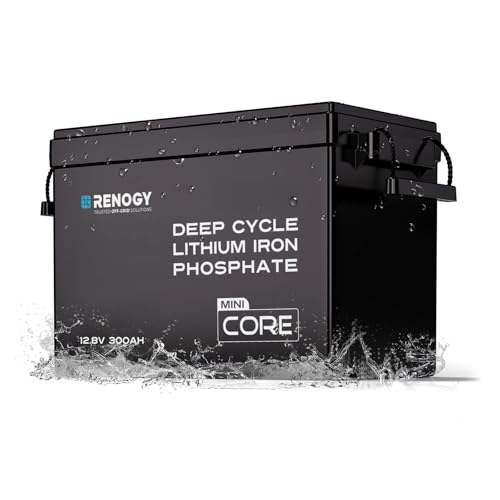
A 300Ah capacity shows how large amp-hour ratings enable long-lasting power for demanding systems.
The Renogy 300Ah LiFePO4 battery packs enough stored energy to deliver serious off-grid runtime. At 12V that works out to roughly 3,840 watt-hours, enough to keep small appliances or a solar setup running for days rather than hours.
The deep-cycle design is built around extended discharge rather than quick bursts, which suits its intended use.
This is clearly aimed at RV owners and solar setups that need sustained power, and the compact build helps justify the premium over bulkier alternatives. The integrated BMS adds cold-weather protection that matters in winter deployments.
The trade-offs are real: it’s heavy enough to need careful mounting, and the price point puts it firmly in the long-term-investment category rather than a budget replacement.
|
2
|
Interstate Batteries 12V 35Ah SLA AGM Deep Cycle Battery Insert Terminal |

A 35Ah rating demonstrates how amp-hours size batteries for mobility and daily deep-cycle use.
The Interstate 35Ah AGM battery is sized squarely for mobility rigs that need reliable, repeated deep cycling. Its sealed AGM construction keeps it spill-proof and low-maintenance, which matters when it’s installed in a wheelchair or scooter that’s moving in and out of homes and vehicles.
Users tend to value its maintenance-free operation and the insert terminal that matches common mobility connectors. With 35Ah at 12V it’s not going to surprise anyone with high output, but that’s not the point here. It’s a workhorse capacity for daily recharge cycles in mobility applications.
|
3
|
Electric Dirt Bike for Teens Adults, 50 Miles Long Range, 4000W Peak Motor | Up to 40 MPH, |

A 24Ah pack shows how amp-hours balance runtime and portability in electric vehicles.
This electric dirt bike’s 48V 24Ah battery translates to a practical riding range around 50 miles under moderate conditions. That’s enough to feel like a real outing, not just a quick ride around the block.
The removable pack and seat-unlock mechanism make indoor charging straightforward, which most owners end up appreciating. Peak motor output is high, so aggressive riding or sustained hill climbing will pull the range down noticeably.
For what it’s worth, that’s typical of electric two-wheelers rather than a flaw in the rating itself.
|
4
|
BLACK + DECKER BL4018-XJ 4.0 Ah Lithium Ion Battery, 18 V |

A 4.0 Ah pack shows how amp-hours size batteries for high-power cordless tools.
The Black + Decker 4.0 Ah pack gives 18V tools a longer runway before recharge, which matters most when you’re doing sustained cutting or grinding work. Higher capacity here means fewer interruptions during a long job.
Its compatibility across the 18V system makes it a practical upgrade over lower-Ah packs. The lack of memory effect and low self-discharge are the kind of details that keep pros coming back.
The cost premium over smaller packs is real, so most buyers weigh it against their actual usage patterns rather than assuming it’s automatically worth it.
|
5
|
18-Volt ONE+ Cordless Hybrid Floor Dryer Fan 4.0 Ah LITHIUM+ Battery & Charger |

A 4.0 Ah pack illustrates how amp-hours determine runtime for fans and blowers.
Powering Ryobi’s hybrid floor dryer, the 4.0 Ah LITHIUM+ pack delivers enough runtime to cover a full drying pass without hunting for an outlet. Combined with the included charger, it keeps the tool ready for repeated use on job sites.
The dual power option adds genuine flexibility, letting you switch between battery and AC depending on the situation. The ONE+ compatibility across 125+ tools is the main selling point for users already in that ecosystem.
Some owners do note the compact charger feels slower than fast-charge alternatives, which can matter if turnaround time is tight.
|
6
|
Electric Dirt Bike for Teens Adults, 50 Miles Long Range, 4000W Peak Motor | Up to 40 MPH, |

A 24Ah rating shows how amp-hours size batteries for balanced range in e-bikes.
This dirt bike’s 48V 24Ah battery is tuned for roughly 50 miles of range, striking a balance between runtime and the weight of carrying a large pack on an off-road machine. For most riders that ends up being enough for a solid afternoon of trail use rather than multi-day touring.
TÜV safety certification is a genuine plus for parents concerned about electric vehicle standards. The hydraulic brakes and full lighting array add confidence for mixed-condition riding. Real-world range drops quickly under hard acceleration or steep terrain, which is worth factoring in before purchase.
|
7
|
Ryobi ONE+ HP User Guide: Setup, Battery Compatibility, and Real-World Performance Tips fo |

A 24Ah pack shows how amp-hours size batteries for sustained electric bike power.
This is the companion guide covering Ryobi ONE+ battery compatibility and how amp-hour ratings translate to actual tool runtime. It walks through matching Ah to task duration across the system rather than treating capacity as a single universal number.
Includes setup steps and maintenance tips that keep the whole system working together. For readers who are new to cordless platforms, it clarifies how an Ah rating affects daily workflow.
Since it’s a guide rather than a physical product, there’s no hands-on testing involved, just documentation of how the ratings work in practice.
|
8
|
Illuminated Christian Scripture Keepsake Ornaments (#C) | Acrylic Xmas Tree Decor with Ran |

Built-in button cells show how small amp-hour ratings power low-drain decorative devices.
This ornament runs on small button-cell batteries with inherently low amp-hour capacity. With efficient LEDs the draw stays small enough that the modest capacity still delivers many hours of seasonal glow, which is honestly what most buyers care about for a decorative piece.
It ships ready to hang with batteries included, which saves the hassle of hunting down the right size. Eight available designs add variety for collectors who like coordinating but not matching sets. Replacement batteries are inexpensive and widely available, so ongoing ownership cost stays low.
|
9
|
Illuminated Christian Scripture Keepsake Ornaments (#H) | Acrylic Xmas Tree Decor with Ran |

Low amp-hour cells show how capacity sizing serves compact, low-power decorative devices.
The #H ornament leans on button-cell batteries with minimal amp-hour capacity. Efficient LED lighting stretches that small charge across weeks of evening use, which is exactly the behavior most people want from holiday decor.
The acrylic shell is reasonably durable for household use, a practical choice given that these often end up in spaces with kids or pets. Eight scene options let collectors expand displays gradually without committing to large, heavy pieces.
The battery life is predictable rather than impressive, which fits the application well.
|
10
|
Illuminated Christian Scripture Keepsake Ornaments (#B) | Acrylic Xmas Tree Decor with Ran |

Small amp-hour cells show how compact capacity fits low-drain decorative lighting needs.
Running on button-cell batteries with similarly low amp-hour ratings, the #B ornament is sized for the long, slow draw that decorative LEDs require. Weeks of nightly glow on a fresh set of batteries is the realistic expectation here.
It ships as one random design from eight options, so buyers get variety without control over which specific scene arrives. The acrylic construction holds up well across multiple holiday seasons for most purchasers. Since it’s seasonal, battery replacement happens infrequently enough that the modest capacity isn’t a frequent concern.
Across these picks, amp-hour ratings show up at every scale, from multi-kilowatt storage systems down to seasonal lights. What ties them together is the same core principle: capacity has to suit both the load and the runtime you actually expect.
Matching Battery Ah To Your Real Load
Now that amp-hours make more sense, the next step is sizing a battery that actually matches your real power draw rather than just the biggest number on the label.
Start by listing the devices you actually plan to run and how long each one operates per day. Add up the total amp-hours you’ll be drawing, then size your battery so that daily draw stays comfortably below its rated capacity.
Most practical advice points to keeping daily draw under half the rated Ah to maintain stable voltage and extend overall lifespan.
List each powered device with its amperage and runtime in hours.
Multiply amperage by hours to find amp-hours drawn per day for each device.
Sum all daily amp-hours to get total consumption.
Double that total to find the minimum battery ah rating needed.
Choose a battery whose ah exceeds that minimum by a safe margin.
Extending Battery Life Through Proper Ah Use
Getting the sizing right is only half of it. The other half is using those amp-hours wisely so each charge actually goes as far as you need it to.
Battery Type Ah Guidelines
| Battery Type | Safe Discharge % Of Ah | Typical Cycle Life |
|---|---|---|
| Lead-Acid (Flooded) | 50% of rated ah | 300 to 500 cycles |
| AGM | 50 to 60% of rated ah | 500 to 800 cycles |
| Lithium (LiFePO4) | 80 to 100% of rated ah | 2000 to 5000 cycles |
| Lithium-Ion | 80% of rated ah | 500 to 1500 cycles |
- Never fully drain lead-acid batteries below 50 percent of their ah.
- Use smart chargers that respect ah limits and battery chemistry.
- Store batteries at partial charge in cool, dry conditions.
- Monitor voltage during discharge to avoid over-draining rated ah.
- Rotate multiple batteries to balance ah usage and extend overall lifespan.
Battery Ah is really just a measure of how much electrical charge is available over time. To pick the right one, estimate your actual daily draw and then choose a battery with comfortably more capacity than that.
Auditing how many amps each device uses is the single most useful habit for anyone sizing batteries, whether it’s for tools, solar, or seasonal lighting.

- 10 Best Battery For Generator Ev Battery Bank Marine 2026 - October 27, 2026
- 10 Best Battery For Generator Ev Battery Bank Lto 2026 - October 27, 2026
- 10 Best Battery For Generator Ev Battery Bank Low Voltage 2026 - October 27, 2026