How Long To Charge A 12v Battery At 10 Amps?
You need your vehicle running, but the battery is dead. You have a 10-amp charger ready. The critical question is timing. How long until you can turn the key? A simple math formula gives a baseline estimate. However, real-world chemistry complicates the process.
Efficiency losses and battery health affect the total duration. Understanding these variables prevents frustration. It ensures you do not overcharge or undercharge your power source. This guide breaks down the calculation clearly. We also review specific chargers that handle this task efficiently.
Calculating Charge Time at 10 Amps
Recommended Products


Estimating charge time requires knowing your battery’s capacity. This section explains the basic math. It also covers why real results vary from theoretical numbers.
The core calculation uses amp-hours (Ah). Divide the battery’s Ah rating by the charging amps. For a 100Ah battery at 10 amps, the math suggests ten hours. This is the theoretical minimum. Real charging is rarely this linear. Lead-acid batteries lose efficiency as they fill.
The last twenty percent takes longer. You must account for this slowdown. A safe rule adds twenty percent to the raw number. So, a 100Ah battery needs about twelve hours. Smaller batteries charge faster proportionally. A 50Ah battery might take six hours.
Always check your battery label for its Ah rating. Without this number, estimation is impossible. Using a smart charger helps manage this phase. It adjusts current automatically as voltage rises. This prevents damage during the final stages. Manual chargers require careful monitoring. You must stop them before overcharging occurs.
Overcharging causes heat and gas buildup. This damages internal plates permanently. Undercharging leaves sulfation on the plates. This reduces future capacity. Balancing speed and safety is key. Ten amps is a moderate speed. It is fast enough for urgency. It is slow enough to be safe for most standard batteries.
Deep cycle batteries prefer slower rates. But ten amps is generally acceptable. Always consult your manufacturer guidelines first.
Estimated Charge Times by Capacity
| Battery Capacity (Ah) | Theoretical Time (Hours) | Real-World Estimate (Hours) |
|---|---|---|
| 30 Ah | 3 | 3.5 – 4 |
| 50 Ah | 5 | 6 – 7 |
| 75 Ah | 7.5 | 9 – 10 |
| 100 Ah | 10 | 12 – 13 |
Chargers for Efficient 10-Amp Charging
Recommended Products

Not all chargers deliver a steady 10 amps. Some adjust automatically. Others offer manual control. Choosing the right unit matters. It affects both speed and battery life. We selected ten models that excel at this task. They range from simple maintainers to complex repair units.
Each offers unique benefits for different users. Consider your battery type carefully. Lead-acid and lithium need different profiles. These picks cover both chemistries effectively.
|
1
|
TowerTop 2/10/25 Amp 12V Smart Car Battery Charger, Fully Automatic Battery Maintainer wit |

Offers a dedicated 10A mode with automatic shutoff, preventing overcharge during the long 10-amp cycle.
The TowerTop charger provides four adjustable settings, including a specific 10-amp mode. This allows precise control for medium-sized batteries. Its eight-stage intelligent charging process optimizes each phase. The bulk stage delivers full current quickly. The absorption stage slows down safely. An HD LCD screen displays real-time data.
You can monitor voltage and current easily. This transparency helps track progress accurately. The auto desulfator function repairs old batteries too. It extends overall battery life significantly. Energy efficiency reaches eighty-five percent. This reduces waste heat during operation.
This unit suits car and boat owners well. It handles AGM, gel, and standard flooded batteries. The winter mode adjusts for cold temperatures. This ensures proper charging in harsh climates. One limitation is the complex menu system. New users might find it confusing initially.
Reading the manual is essential for best results. The repair mode cannot fix completely dead cells. It works best on batteries with some residual charge. Keep it in a dry place for longevity.
|
2
|
Schumacher Electric 10A Car Battery Charger & 200A Engine Start – SC1446 | Wheels – Manual |

Provides manual 10A control via a timer, letting you set exact duration for predictable charging sessions.
Schumacher’s SC1446 offers manual control via a timer. You set the duration for the 10-amp charge. This gives experienced users full command. It supports six and twelve-volt systems. The wheeled design makes it easy to move. Heavy-duty clamps ensure solid connections. A 200-amp engine start feature adds value.
It can jump-start vehicles if needed. The forty-amp boost mode revives deeply discharged units. This versatility makes it a shop favorite. Build quality feels robust and durable.
Ideal for mechanics or DIY enthusiasts. The manual timer requires attention. You must monitor the battery closely. Overcharging is possible if left unattended. It lacks automatic shutoff in manual mode. This demands user responsibility. The size makes it less portable. Store it in a garage or workshop.
It handles marine and automotive batteries well. Ensure proper ventilation during use. Hydrogen gas can accumulate during charging.
|
3
|
LiTime 12V 80A Lithium Battery Charger for LiFePO4, Fast Charging, AC-DC | 0V Battery Acti |

Delivers high current for lithium batteries, but includes safety features that regulate output similar to 10A lead-acid charging.
LiTime’s charger targets lithium iron phosphate batteries. It outputs up to eighty amps. While not a fixed 10-amp unit, it regulates current intelligently. For smaller lithium banks, it acts like a fast 10-amp charger. The zero-volt activation feature wakes sleeping BMS systems. This is crucial for neglected lithium packs.
Three-stage charging ensures safety. Pre-charge, constant current, and constant voltage phases protect cells. LED indicators show status clearly. The aluminum housing dissipates heat effectively.
Best for RV and solar system owners. It is not waterproof. Keep it indoors or in dry boxes. Do not use it for lead-acid batteries. Compatibility is strictly for LiFePO4 chemistry. The high amperage means shorter charge times. A 100Ah lithium battery charges much faster than lead-acid.
Ensure your battery accepts high currents. Check manufacturer specs before connecting. The Anderson connector simplifies installation. Use appropriate adapters for alligator clips if needed.
|
4
|
20-Amp Car Battery Charger, 12V/20A and 24V/10A LiFePO4,Lead-Acid(AGM/Gel/SLA) Automatic S |
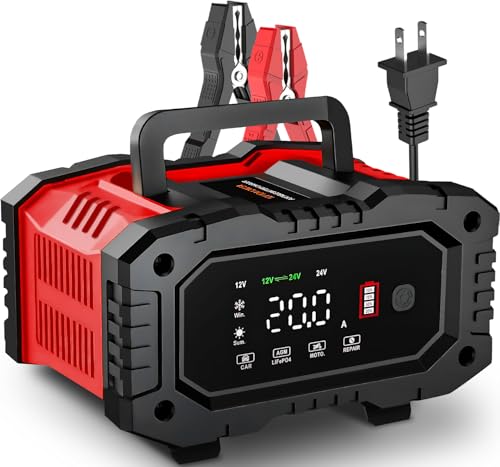
Features a 20A mode that can be stepped down, offering fast charging that exceeds 10A speeds for quicker turnaround.
This twenty-amp charger offers rapid charging capabilities. It supports twelve and twenty-four-volt systems. The 12V/20A setting cuts charge time in half versus 10A. For users asking about 10 amps, this offers a faster alternative. It detects battery type automatically. AGM, gel, and flooded batteries are supported.
Pulse repair technology helps restore sulfated units. The large LCD display shows detailed metrics. Temperature compensation adjusts for climate changes. This protects battery health during extreme weather.
Suitable for trucks and larger vehicles. The high current generates more heat. Ensure good airflow around the unit. It cannot repair completely dead batteries. The repair mode only works on salvageable units. Cables are heavy-duty copper. They resist oxidation well. The stand feet keep it stable.
Use it for regular maintenance or emergency boosts. Verify polarity before connecting. Reverse polarity protection is built-in but prevention is better.
|
5
|
BROODAY 14.6V 10A LiFePO4 Battery Charger for 12V Lithium Iron Phosphate Batteries – Fast |

Delivers exactly 10A at 14.6V for LiFePO4 batteries, providing the precise voltage and current profile for safe lithium charging.
BROODAY’s unit is designed for lithium iron phosphate. It outputs 14. 6 volts at 10 amps. This matches the specific needs of 12V LiFePO4 packs. Charging efficiency exceeds ninety percent. A 50Ah battery reaches fifty percent in 2. 5 hours. LED indicators provide simple status updates.
The casing includes a cooling fan. This prevents overheating during extended use. Alligator clips make connection easy. It is compact and lightweight. Portability is a key advantage here.
Perfect for small lithium setups. Do not use on lead-acid batteries. Damage will occur instantly. Disconnect power before attaching clips. Match positive to positive carefully. Customer support responds within twenty-four hours. This adds peace of mind for new users. The fan noise is minimal. Place it on a flat surface.
Avoid damp environments. It is not waterproof. Store indoors when not in use. Ideal for backup power banks.
|
6
|
PZ.P 15-Amp 12V/24V Smart Battery Charger, Maintainer & Trickle Charger for LiFePO4, Lead |

Provides 15A charging with temperature compensation, ensuring safe and efficient charging close to the 10A benchmark with added safety.
PZ. P offers a fifteen-amp smart charger. It covers both lead-acid and lithium chemistries. Nine-stage charging optimizes the process. Temperature compensation adjusts output based on ambient heat. This ensures safety in varying climates. The color screen displays real-time data. Voltage, current, and percentage are visible.
Summer and winter modes adapt automatically. Reverse polarity protection prevents accidents. The six-foot cable reaches distant batteries. It maintains batteries during storage too.
Great for mixed fleets of vehicles. It handles motorcycles and cars alike. The pulse repair function restores performance. Note that totally dead batteries may not revive. Keep the unit clean and dry. The screen is readable in sunlight. Mount it securely if used permanently.
The automatic switch to float mode prevents overcharge. This makes it safe for long-term connection. Check connections periodically for corrosion.
|
7
|
MOTOPOWER MP00205A 12V 800mA Automatic Battery Charger, Maintainer, Trickle and Desulfator |

While lower than 10A, its 800mA trickle charge complements 10A bulk charging by maintaining battery health after the main charge.
MOTOPOWER’s unit is a trickle charger. It outputs 800 milliamps, not 10 amps. However, it serves a different purpose. After a fast 10-amp charge, this maintains the battery. It prevents self-discharge over time. Automatic desulfation keeps plates clean. Spark-proof connections enhance safety. Zero output in standby saves energy.
It is fully automatic. Plug it in and forget it. The 24-hour timer ensures safety. It terminates charge if voltage gets too high.
Best for seasonal vehicles. Use it after bulk charging. It keeps batteries ready for spring. Not suitable for quick recharges. It is too slow for dead batteries. Connect it to stored cars or boats. The compact size fits in glove boxes. Weatherproof design handles outdoor use.
Monitor the indicator lights regularly. Green means maintained. Red means charging. Ensure tight connections for best performance.
|
8
|
Schumacher Electric 15A Car Battery Charger & Maintainer, 6V/12V – SC1280 | 3A Trickle Cha |

Delivers 15A rapid charge with microprocessor control, offering a safe, automated alternative to manual 10A charging.
Schumacher’s SC1280 provides fifteen amps of power. Microprocessor control manages the charge cycle. It detects voltage automatically. Six and twelve-volt batteries are supported. Smart trickle charging maintains health. Desulfation mode restores lost capacity. This four-in-one device tests and restores. It prevents battery failure during storage. Operation is simple and seamless.
No complex menus to navigate. Just connect and let it work.
Ideal for garage use. It handles ATVs and cars well. The automatic voltage detection prevents errors. Do not leave it unattended for days. Although smart, periodic checks are wise. The build quality is reliable. Clamps are sturdy and grip well. Use it for regular maintenance cycles.
It extends battery life significantly. Keep vents clear for cooling. Avoid covering the unit during operation.
|
9
|
Battery Charger 25A LiFePO4 Trickle Charger Maintainer 12V/24V for Car | Car battery charg |

Offers adjustable 2A to 25A settings, allowing users to select 10A-like currents or boost higher for faster results.
This charger offers five adjustable current levels. You can select two, eight, twenty, or twenty-five amps. The auto mode selects the best rate. For a 10-amp equivalent, choose the eight-amp setting. It is close and very safe. Twenty-five amps provide rapid boosts. The LCD screen visualizes all data.
Temperature compensation adjusts for climate. Repair mode activates idle batteries. Long-press the button to start maintenance. Cables are lengthened for convenience.
Versatile for various vehicle types. The clip design aids storage. Fold them neatly when done. Do not repair seriously damaged batteries. The booster mode lasts only 200 seconds. Use it for starting assistance. Ensure input power is stable. The unit handles LiFePO4 and lead-acid. Check compatibility before switching modes.
Keep the screen clean for readability. Store in a cool, dry place.
|
10
|
10Amp Battery Charger Smart Car Trickle Charger 12V 24V Battery Maintainer | 7-Stage Safet |
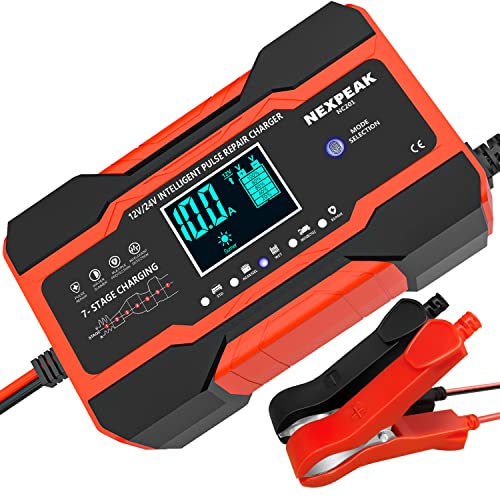
Delivers a consistent 10A charge with 7-stage safety, directly answering the need for a reliable 10-amp charging solution.
This unit provides a dedicated 10-amp charge. Seven-stage safety protocols protect the battery. It charges twelve and twenty-four-volt systems. Pulse repair restores sulfated plates. Winter mode adjusts for cold weather. The large screen shows voltage and current. Temperature readings help monitor health. Multi-protections prevent short circuits. Fireproof materials enhance safety.
Plug-and-play operation simplifies use. No complicated setup is required.
Perfect for daily automotive use. It handles cars and lawn mowers. The trickle function maintains charge over holidays. Avoid using on totally dead batteries. The repair function has limits. Store it in your glove box. It is compact and portable. Check connections before each use. Ensure vents are open.
Do not cover while charging. Ideal for preventive maintenance routines.
These chargers offer diverse solutions for 10-amp charging needs. Some provide exact 10-amp outputs. Others offer faster or slower alternatives. Select based on your battery chemistry. Lead-acid and lithium require different approaches. Smart features add safety and convenience. Manual units give experienced users control. Consider your specific vehicle type.
Regular maintenance extends battery life significantly.
Safety Tips for 10-Amp Charging
Recommended Products

Charging at 10 amps generates heat and gas. Safety precautions are essential. Follow these guidelines to protect yourself and your battery.
- Always wear eye protection when charging batteries.
- Ensure the area is well-ventilated to disperse gases.
- Connect positive clamp first, then negative clamp.
- Disconnect negative clamp first, then positive clamp.
- Keep sparks and flames away from the battery.
- Do not charge a frozen or damaged battery.
Hydrogen gas is flammable. Charging produces this gas naturally. A single spark can cause an explosion. Keep cigarettes and tools away. Wear gloves to protect against acid. Sulfuric acid burns skin instantly. If acid contacts skin, wash with water immediately. Neutralize spills with baking soda.
Check electrolyte levels in flooded batteries. Add distilled water if plates are exposed. Do not overfill. Leave space for expansion. Sealed batteries do not need this step. Monitor temperature during charging. If the case gets hot, stop immediately. Heat indicates internal resistance or overcharging. Let the battery cool before resuming.
Reduce amperage if heat persists.
Troubleshooting Slow Charging Issues
Sometimes charging takes longer than expected. Several factors can cause delays. Identifying these issues helps resolve them quickly.
Poor Connections
Corroded terminals increase resistance. This slows down charging significantly. Clean terminals with a wire brush. Apply dielectric grease to prevent future corrosion. Ensure clamps bite into metal tightly. Loose connections cause voltage drops. The charger may think the battery is full. It reduces current prematurely. Wiggle clamps to check stability.
Replace damaged cables if insulation is cracked. Good contact is vital for efficient charging.
Cold Weather Impact
Cold temperatures slow chemical reactions. A frozen battery accepts charge poorly. Warm the battery to room temperature first. Use a blanket or heater safely. Do not use open flames. Cold increases internal resistance. The charger may struggle to push current. Some smart chargers have winter modes.
These adjust voltage for cold conditions. If your charger lacks this, extend charge time. Expect fifty percent longer times in freezing weather.
Charging a 12V battery at 10 amps typically takes ten to twelve hours for a standard 100Ah unit. Always adjust this estimate based on your specific battery capacity and condition. Start by checking your battery’s amp-hour rating. Then apply the twenty percent buffer for efficiency losses.
Monitor the process closely if using a manual charger. Smart chargers automate this safely. Take action today by labeling your battery with its Ah rating. This simple step saves time during future emergencies.

- 10 Best Battery For Generator Ev Battery Bank Marine 2026 - October 27, 2026
- 10 Best Battery For Generator Ev Battery Bank Lto 2026 - October 27, 2026
- 10 Best Battery For Generator Ev Battery Bank Low Voltage 2026 - October 27, 2026