Can You Jump A Lawn Mower With A Car Battery?
Jumping a lawn mower with a car battery works in many cases, but it isn’t always safe or appropriate. Most gas mowers run on a 12V lead-acid battery, the same nominal voltage as many cars, yet amperage, wiring, and safety needs differ. A poor connection, a damaged battery, or a misstep can spark, blow a fuse, or fry the starter circuit.
You can jump a lawn mower with a car battery, but only under the right conditions. Verify voltage compatibility, inspect both batteries, and follow a careful connection order and safety practices. If in doubt, use a dedicated jump pack or a charger instead of a car battery.
Key Takeaways
- Voltage check. Most mowers are 12V; confirm the mower battery is 12V before attempting any jump.
- Turn everything off. Car and mower must be off, keys removed, and no metal jewelry during connections.
- One cable at a time. Attach red to positive terminals first, then black to a grounding point on the mower.
- Limit the run time. Let the car idle for 5-10 minutes to transfer charge, then try the mower; avoid cranking for long periods.
- Don’t jump Li-ion or high-voltage models. Battery-powered and non-12V mowers generally require a charger or replacement, not a car jump.
—
Can You Jump a Lawn Mower With a Car Battery?
Recommended Products


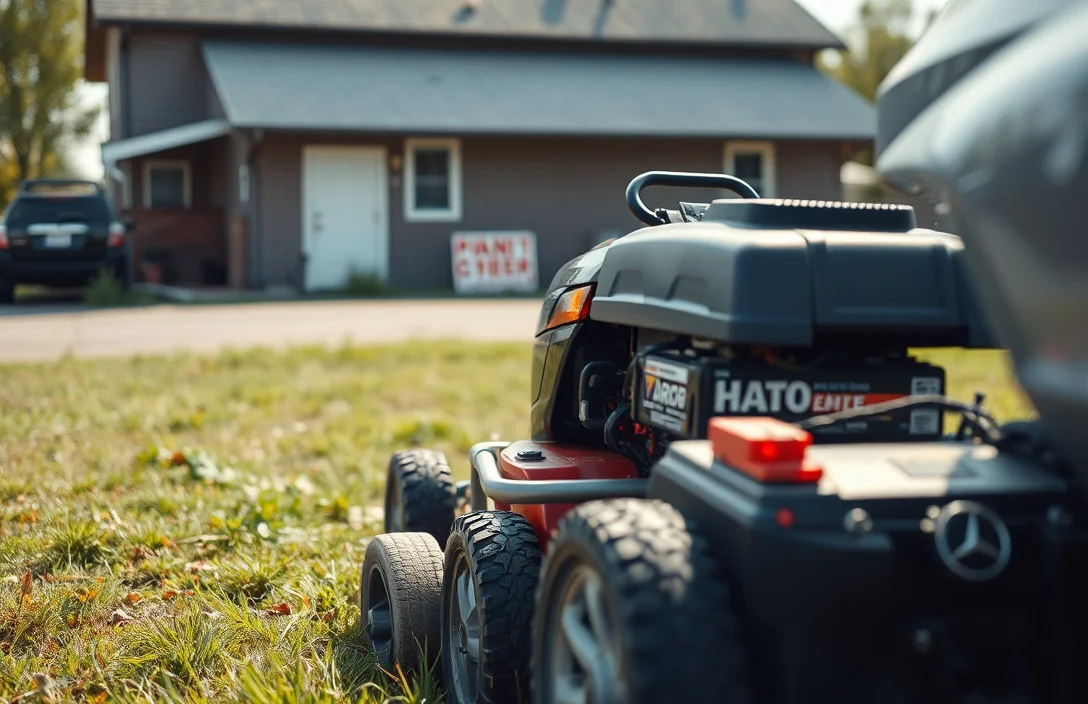
Yes, you can, but only if the mower uses a 12V lead-acid battery and you follow strict safety steps. A car battery can provide enough current to crank a mower’s starter, but the car’s higher amperage and the system’s wiring can cause trouble if you bypass the mower’s protective paths. Always verify voltage, inspect both batteries for damage, and proceed with caution. If the mower has a damaged battery, or if you see corrosion, skip the jump and start with a charger or replacement.
The most common scenario is a dead mower battery that shares 12V with cars. The car’s battery is not meant to power a mower for long; it’s meant to start an engine. Therefore, jump-starting should be treated as a temporary nudge, not a fix. After starting the mower, remove connections promptly and run the mower normally to keep the battery from stalling again. If the mower won’t start after a brief boost, the battery likely needs replacement.
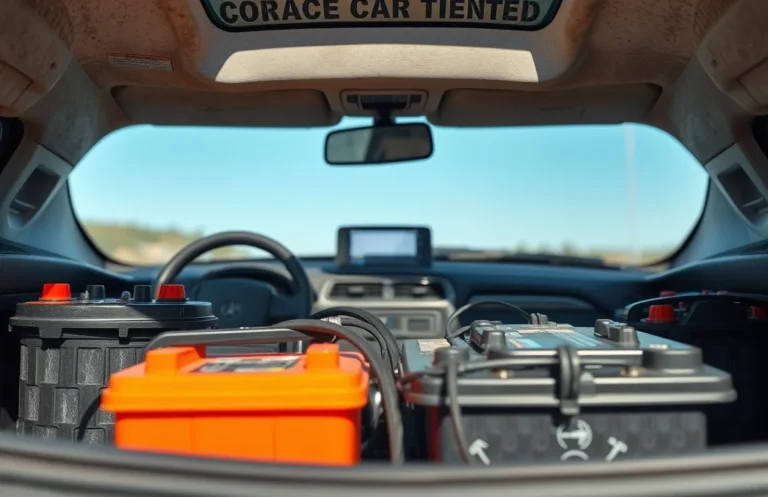
You can use a car’s 12V battery to deliver a controlled spark to the mower’s starter. Start with the car off, connect the red clamp to the mower’s positive terminal, then connect the other red clamp to the car’s positive terminal. Connect the black clamp to the car’s negative terminal, and connect the other black clamp to a metal, unpainted surface on the mower as a ground. Do not allow the clamps to touch each other while connected. Start the car, run it for a few minutes, then try to start the mower. If the mower starts, disconnect in reverse order after the engine is running. If it doesn’t start, stop and reassess the battery health or look for other issues like a bad starter or fuel problems.
In short, jump-starting a mower from a car is a viable quick fix for a dead battery on many gas-powered mowers, but it isn’t a universal solution. Always confirm 12V compatibility, use proper safety gear, and limit the boost duration to minimize risk. If you’re unsure, use a dedicated jump pack or a battery charger instead.
—
What You Need Before You Try
Recommended Products


Treat this as a safety-critical operation with real risks. Confirm the mower’s battery is 12V lead-acid. If you’re unsure, don’t improvise. Most mowers in the United States fall into this category, but there are exceptions, especially older models and specialty units. If the mower uses a different voltage, don’t attempt a car jump.
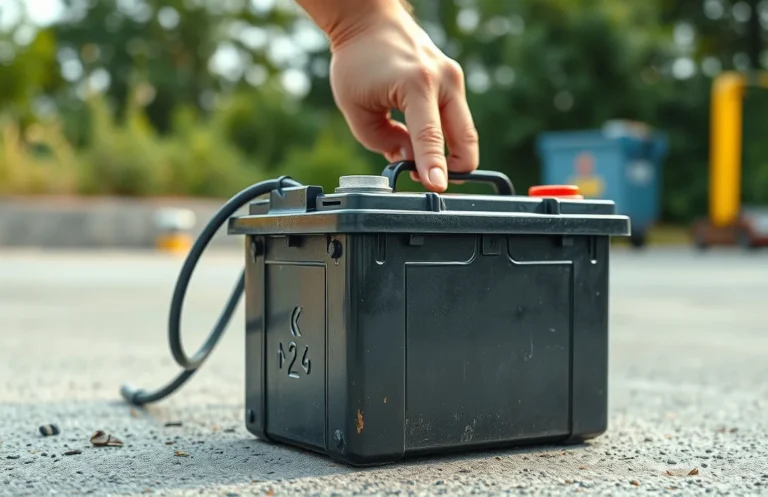
Inspect both batteries for cracks, bulging cases, or corroded terminals. Clean terminals with a wire brush and a baking-soda solution if needed, then dry thoroughly. Damaged terminals can arc or leak corrosive gas. Wear gloves and eye protection. Ensure the area is well-ventilated and away from flames or sparks.
Check your tools. Use proper jumper cables rated for automotive use, with heavy gauge wires. If you don’t have cables long enough, don’t improvise with household wires or makeshift clamps. Have a fire-safe location: a flat, dry surface with ample space for both vehicles to sit without touching.
Prepare the vehicles. The mower and car must be on level ground, and both engines off with keys removed. The car battery should not be connected to accessories while you’re making the initial connections. If the mower has a separate fuse near the starter, locate and respect it; a blown fuse may indicate a bigger electrical problem.
For example, if you’re attempting a jump in a driveway, park the car parallel to the mower with at least 2-3 feet of clearance. Open the mower’s hood or access panel to locate the battery terminals. Identify the positive and negative terminals before you touch anything. Mapping out battery locations reduces the chance of a wrong connection and sparks.
—
Step-by-Step Jump Start Procedure
Recommended Products


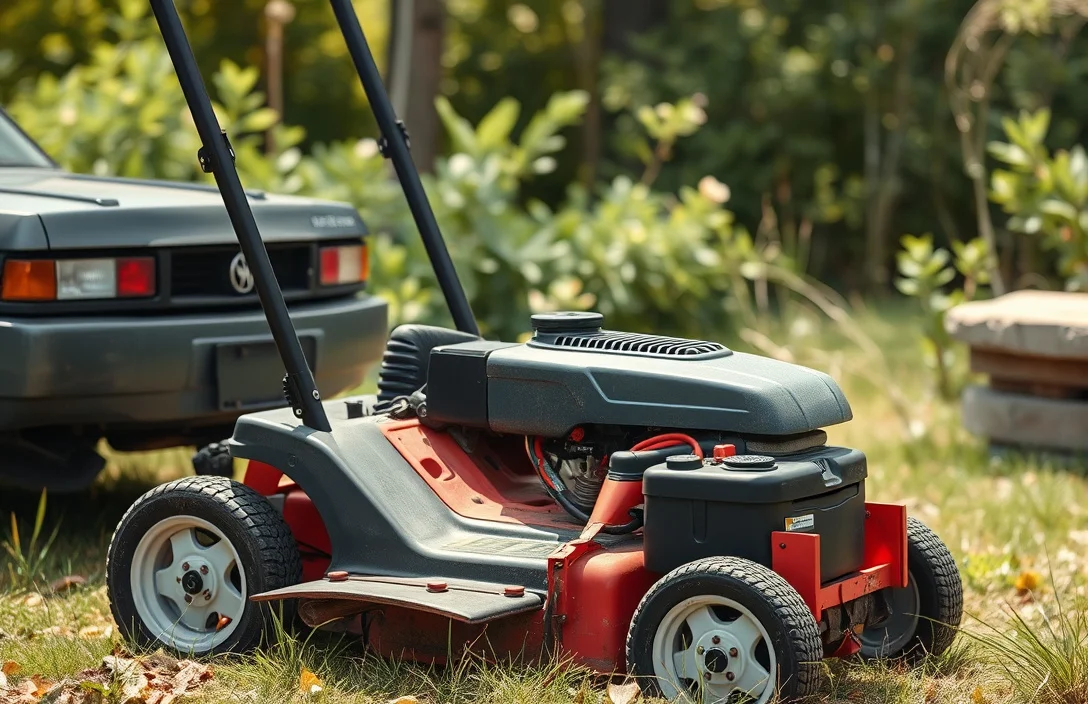
Ensure no fuel or fuel vapor is nearby. Follow these steps for a typical 12V lead-acid mower battery.
First, connect the positive cables. Attach the red clamp to the mower’s positive terminal, and then connect the other red clamp to the car’s positive terminal. Ensure both connections are tight and free of corrosion. Double-check that the clamps are secure and not touching anything metal except their respective terminals.
Second, connect the negative side to ground. Attach the black clamp to the car’s negative terminal, then connect the other black clamp to a solid, unpainted metal surface on the mower, away from the battery. Do not clip the black clamp to the mower’s negative terminal; use a grounding point instead to reduce flare-ups.
Third, start the car. Let the engine run for 5-10 minutes to transfer charge to the mower battery. Do not attempt to start the mower during this time; this step reduces the risk of sparking when you first connect the mower starter circuit.
Fourth, attempt to start the mower. Turn the mower’s ignition or start switch. If it does not crank, wait another minute or two, then try again. If the mower still won’t start, disconnect in reverse order: first remove the black ground clamp, then the red clamps from the car and mower. If the mower still won’t start after the boost, the battery may be too far gone or another fault exists.
Fifth, disconnect and inspect. Once the mower starts, let it run to charge the battery for a few minutes, then carefully remove the clamps in reverse order. Close the hood or panel, secure all tools, and store everything safely. If the mower only starts with the car engine running, you may need a dedicated charger or a new battery.
A short boost is often enough to start a healthy 12V mower battery. If you notice smoke, a burning smell, or excessive heat from the clamps or cables, stop immediately and disconnect. Reassess the situation, as those signals indicate you are pushing components beyond their safe limits.
—
Mower Types and Jump-Start Compatibility
Recommended Products


Not all mowers tolerate a car jump-start. Use this quick reference to gauge feasibility and risk. The table highlights common configurations and practical notes.
| Mower Type | Battery Type/Voltage | Jump-Start Feasibility (Notes) |
|---|---|---|
| Gas push mower | 12V lead-acid | Jump-start possible if battery is in good health; follow standard steps and ground properly. |
| Riding mower | 12V lead-acid | Possible, but check the manual for ground points and fuse locations; avoid high current on older wiring. |
| Ryobi 40V (Li-ion) | 40V Li-ion | Generally cannot be jump-started from a 12V car battery; use a charger or replace the pack. |
| Electric mower (battery-powered) | Various (12-80V) | Cannot be jump-started with a car battery; recharge or swap batteries instead. |
| Older 6V mower | 6V lead-acid | Requires 6V source or specific charger; a 12V car jump is not appropriate. |
A John Deere riding mower with a 12V lead-acid battery follows the same jump-start steps as a push mower, but confirm the ground point near the engine. A Ryobi 40V mower’s battery is not compatible with a car jump, so use a charger or replace it. Mismatches can blow fuses or damage the charger circuits.
If you’re unsure about the mower’s battery type, locate the label on the battery itself or refer to the owner’s manual. The label usually lists voltage, cold-cranking amps (CCA), and amp-hours (Ah). This information helps you decide whether a car jump is feasible. When in doubt, use a dedicated jump pack or a smart charger designed for the mower’s battery chemistry.
—
Risks, Common Mistakes, and How to Avoid Them
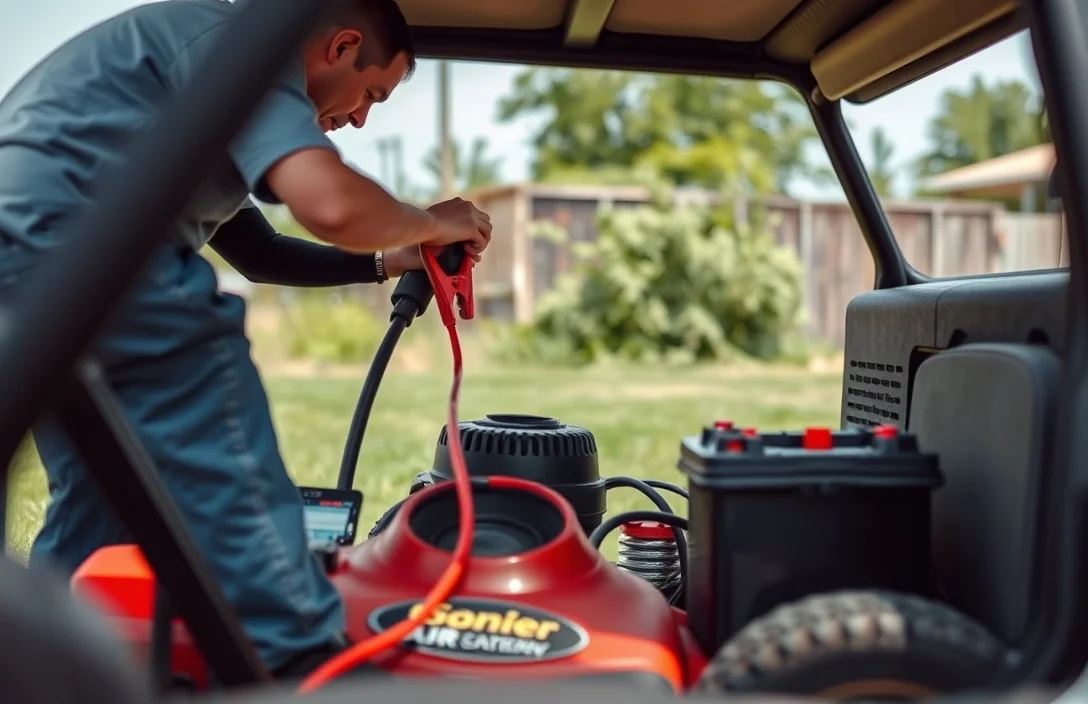
Jump-starting a lawn mower from a car battery carries real risks. A poor connection or a mis-timed boost can cause sparks, electrolyte spray, or battery damage. The most common misstep is reversing polarity or connecting to the wrong terminal, which can fry the mower’s starter or blow a fuse.
Another frequent mistake is attempting to jump a mower with a damaged battery or corroded posts. In that case, the boost is unlikely to start the mower and could worsen battery damage. If you see cracks in the battery case or a swollen battery, replace it rather than attempt another boost. A damaged battery is a safety hazard and should be handled by a professional or disposed of per local guidelines.
The risk of explosion, while uncommon, is real when vented hydrogen gas accumulates near sparks. Jump in a well-ventilated area and away from open flames. If you notice a strong sulfur smell, or if the battery is venting, step back and call it a day. Don’t take a second chance with damaged equipment.
Quick-start tips to avoid mistakes: verify 12V, disconnect accessories, remove the mower’s spark plug cap if recommended by the manual, and maintain a safe distance from metal jewelry and watches. Avoid using a car with a dead or weak battery; the car may not provide a stable boost. If a boost is needed again soon, replace the mower’s battery rather than forcing it.
A common error is leaving the car running while you attempt to crank the mower. This can supply excessive current to the mower’s starter and heat up wiring. Turn on the car only after the clamps are in place, and remove them in reverse order after the mower starts or the boost is complete.
—
Alternatives to Jump Starting From a Car
Recommended Products


Use a dedicated jump pack designed for lawn equipment to reduce risk. A mower-specific jump pack is thermally protected and has a lower current profile suited to small batteries. It can deliver a controlled boost without the risks associated with a car’s battery.
Another option is to use a trickle charger or a full battery charger to revive the mower battery. A slow, steady charge over several hours can restore enough power to start the mower and recharge the battery for longer-term reliability. If a new battery is cheap and readily available, replacing the old one is often more reliable than repeated boosts.
Fuel, spark, and air issues sometimes masquerade as a dead battery. If the mower still won’t start after a boost, do not assume the battery is the sole problem. Check the fuel system, air filter, and spark plug condition. A non-technical diagnostic from a pro can save time and prevent unsafe attempts.
Many users keep a small jump pack in the garage for those inevitable dead-battery moments. The pack is lighter, easier to handle, and more forgiving than a car battery in a tight space. For long-term reliability, pairing a targeted charger with a fresh battery is often the best approach.
—
Maintenance and Best Practices After Jump-Starting
After a boost, monitor the mower’s performance. Run the engine for a few minutes to see if the battery recharges sufficiently. If the mower starts reliably, inspect the battery terminals and apply a light coat of terminal protector to prevent corrosion. Clean terminals and tight connections reduce future no-crank situations.
If the mower continues to have trouble starting, test the battery with a multimeter. A healthy 12V battery should read around 12.6-12.8 volts when fully charged. A reading below 12.0 volts usually indicates a weak cell or a failing battery. In that case, replacement is typically cheaper than repeated boosts and troubleshooting.
Regular maintenance matters. Keep terminals clean, avoid leaving a battery discharged for long periods, and cycle the battery with a full charge every few weeks if the mower is seasonal. For lithium-based mower packs, follow the manufacturer’s charging guidelines; Li-ion chemistries require appropriate chargers and BMS protection, and a car jump is almost never appropriate.
—
Practical Verdict and Next
If your mower battery is healthy and the mower uses a 12V lead-acid pack, a car jump can get you mowing again, but only with careful prep and safe technique. If the battery is old, damaged, or you’re unsure about voltage, choose a dedicated jump pack or a charger instead. Use a fresh battery when in doubt and maintain a routine to avoid relying on risky boosts.
Next step: confirm the mower’s voltage and battery type, gather proper jumper cables or a mower-specific jump pack, and have safety gear ready. If you’re unsure about any step, consult the mower’s manual or bring the mower to a shop for testing. A cautious approach now saves time and money later.
—
FAQ
How do I know my mower battery is 12V?
A: Look at the label on the battery or check the owner’s manual. Most gas mowers use 12V lead-acid batteries, and the label will show the voltage and cold-cranking amps. If the label shows 6V or another voltage, don’t jump from a 12V car battery.
How long should I run the car to boost the mower?
A: Let the car run for about 5-10 minutes while the clamps are attached. This duration allows enough current transfer without overheating the battery or cables.
Is it safe to jump a lithium-ion mower battery with a car?
A: No. Li-ion mower packs (including many 40V systems) usually require a charger or replacement and a BMS-aware setup. Do not attempt to jump-start these from a car battery.
What’s the safest alternative if the mower won’t start after a boost?
A: Use a dedicated battery charger or a mower-specific jump pack. If the mower still won’t start after charging, replace the battery and recheck the fuel and spark systems.
Can I damage my mower by trying to jump-start it?
A: Yes. A wrong polarity, a loose ground connection, or overcurrent can damage the starter, fuse, or wiring. Always verify polarity, connect to a proper ground, and avoid prolonged cranking. If you’re unsure, consult a professional.

- 10 Best Battery For Generator Battery Safety System 2026 - October 12, 2026
- 10 Best Battery For Generator Battery Safety Option 2026 - October 12, 2026
- 10 Best Battery For Generator Battery Safety 2026 - October 12, 2026